Learn from the contradictions of the “Miracle on the Han River” and turn what you learn into stories, research, educational tools, or practical action in Vietnam.
Learn in South Korea, then return ready to do something with it
South Korea is often told as an East Asian success story: after the war, it rose from one of the region’s poorest countries to a global centre for industry, technology and culture. Alongside Singapore, Taiwan and Hong Kong, it is known as one of Asia’s “Four Tigers” and for the “Miracle on the Han River”. Yet this miracle also carries difficult questions: soaring housing costs, high suicide rates, a low birth rate, population ageing and social inequality. How has economic growth changed everyday life? Who benefits, and who is left behind? What responses are possible, and what can Vietnam learn from South Korea’s development story?
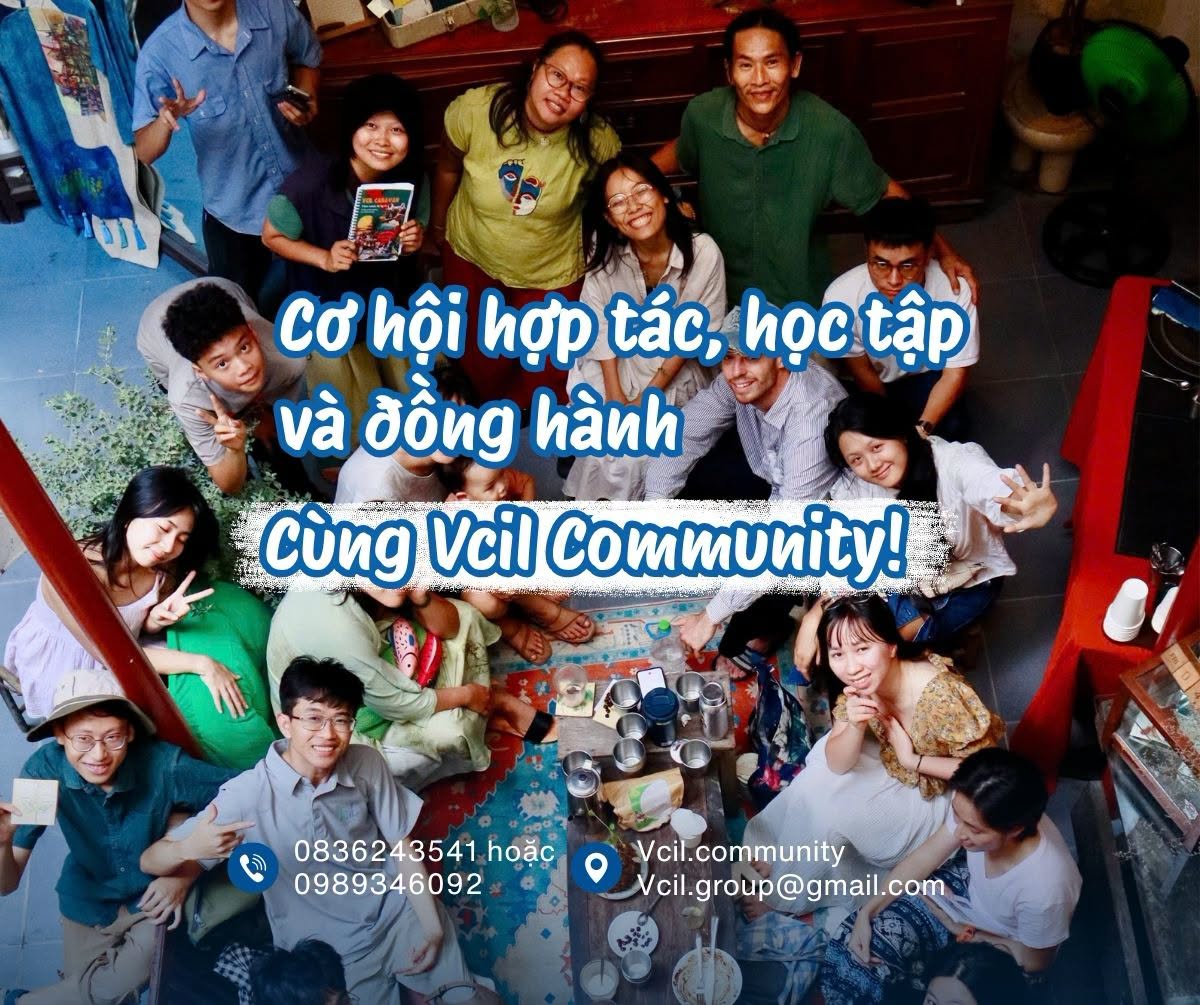
Korea Alternatives Fellowship 2026 is a scholarship and financial-support programme connected to Vcil Travel School South Korea IV: “From the Miracle on the Han River to Alternative Pathways”. We are looking for people who do more than visit South Korea: people ready to observe, ask questions, listen, seek collaboration, expand their networks and turn what they learn into meaningful stories, research, educational tools or practical action in Vietnam.
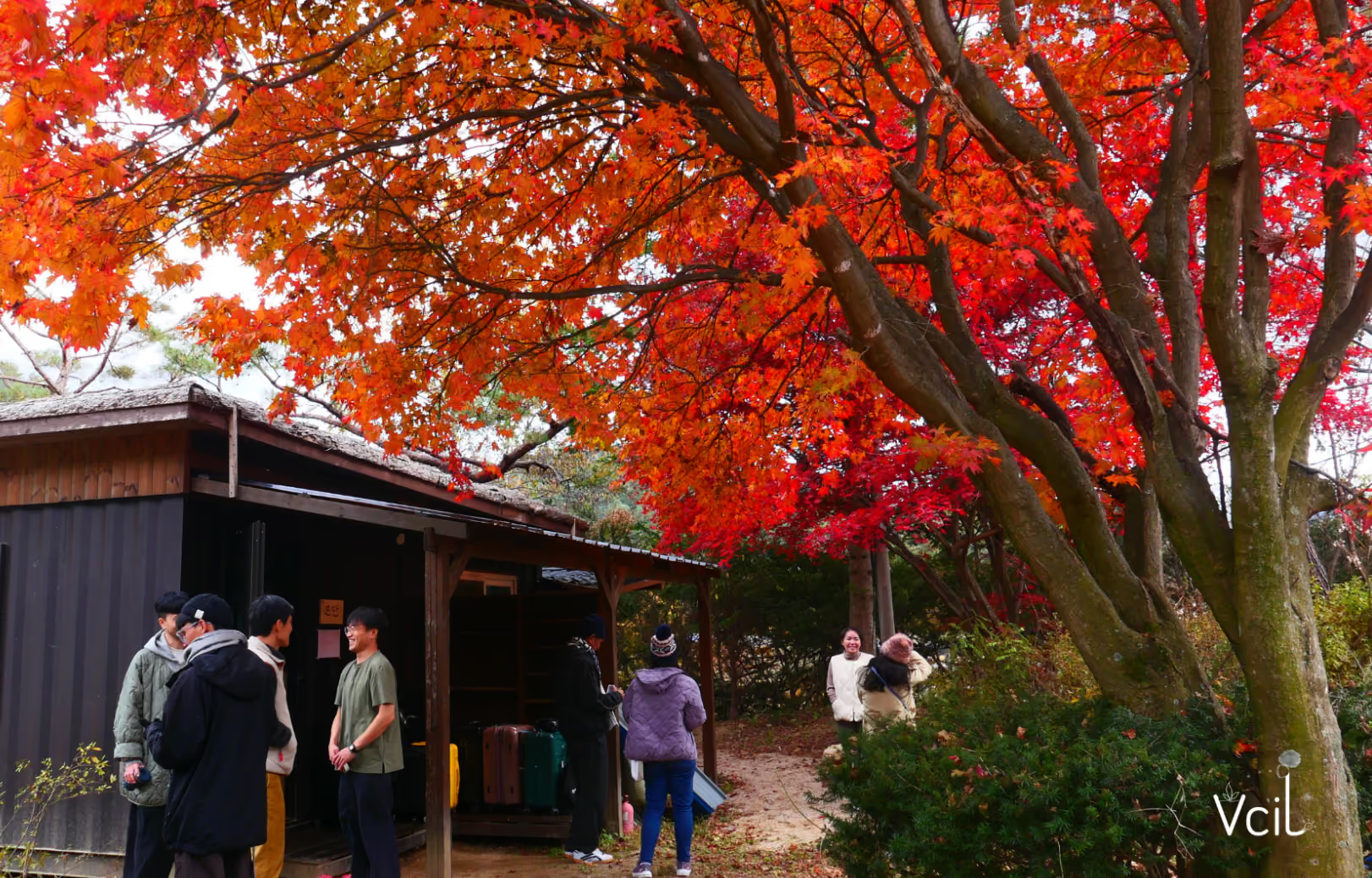
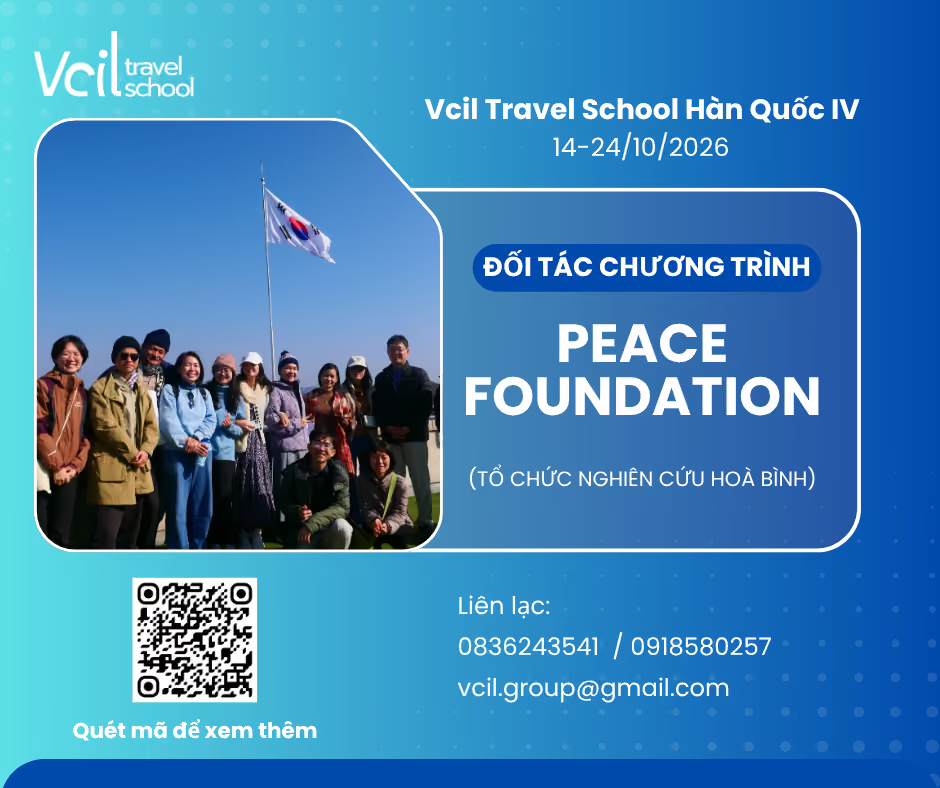
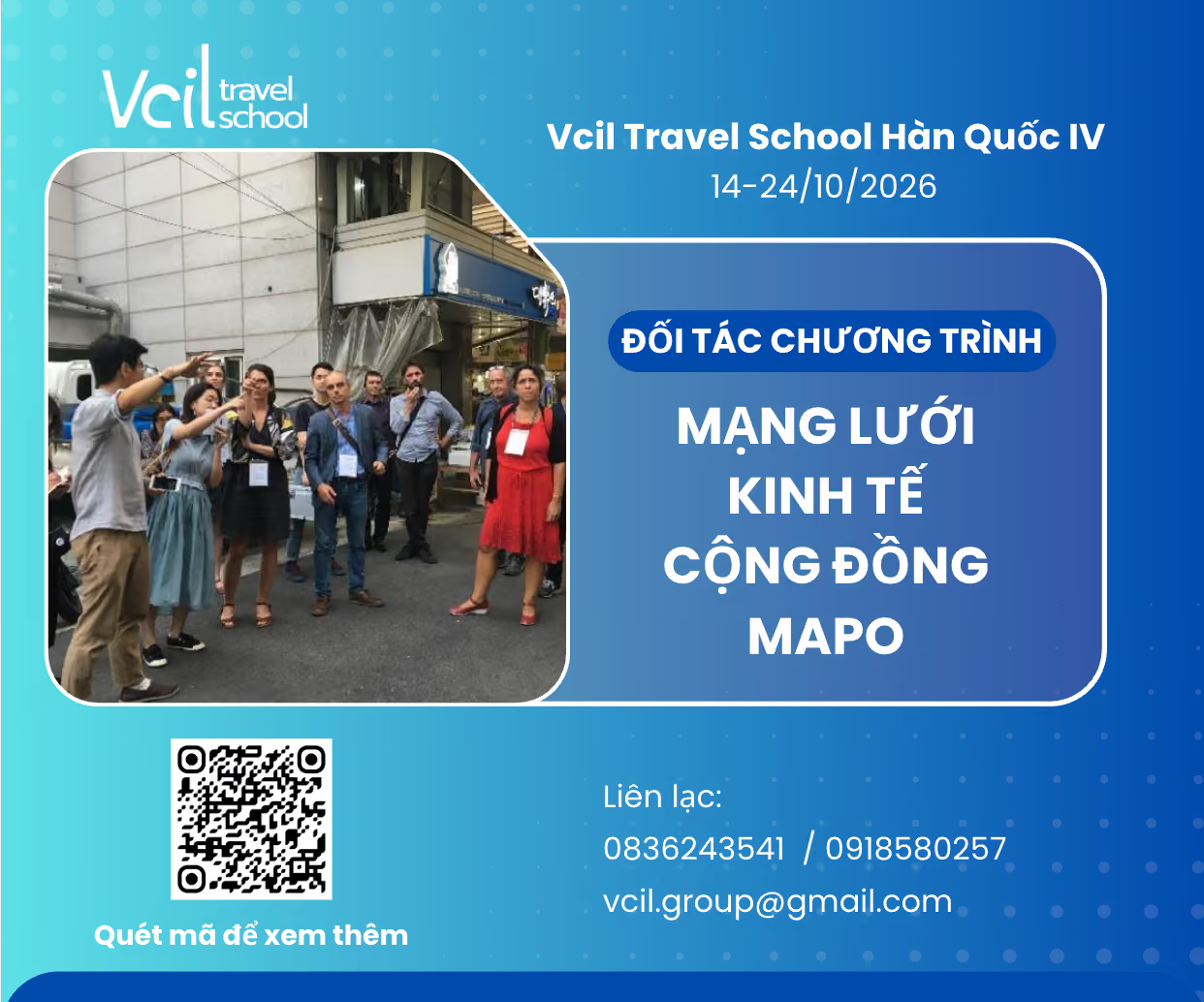
Fellows will join Vcil Travel School South Korea IV, taking place 14–24 October 2026. The journey moves through Seoul and communities in Ulsan and Busan, meeting social initiatives and community leaders.
This is an intensive experiential-learning programme with substantial walking and travel on public transport. Accommodation is basic and may include dormitories or shared community living. Participants learn through field visits, workshops and conversations with experts, researchers, local communities and people building social initiatives in South Korea.
Key themes include:
Modern history, East Asian development models and the contradictions of South Korea’s growth.
Peace on the Korean Peninsula and social initiatives for peace.
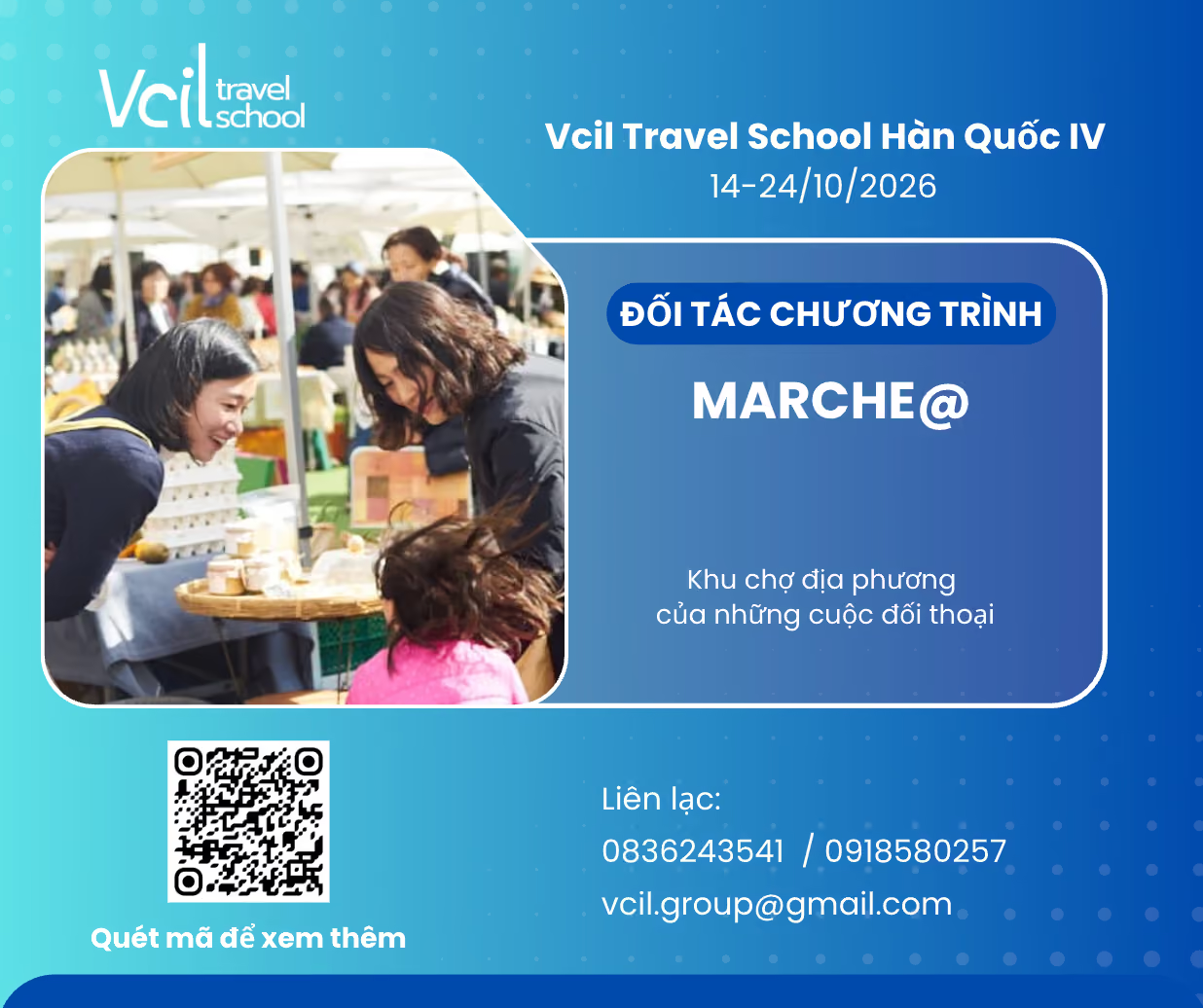
Grassroots social initiatives.
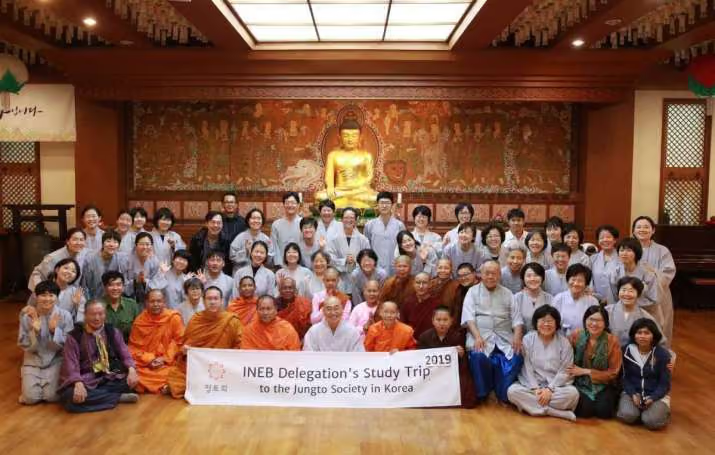
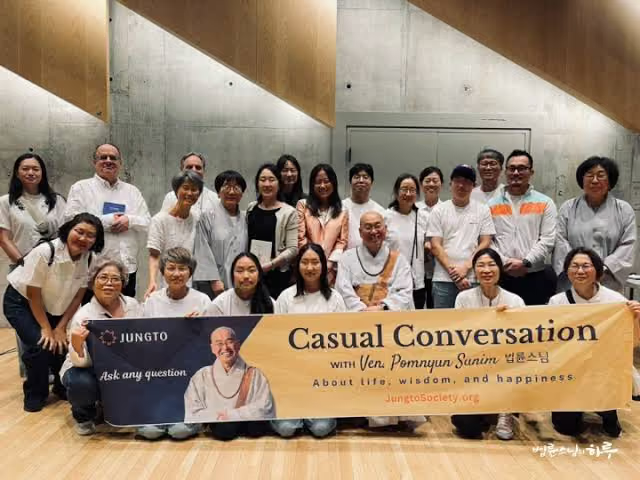
Religious renewal, volunteering, simple living and community organising.
The fellowship is open to people aged 18 and above who can join the full field journey and complete the post-trip outputs. We especially encourage applications from:
People working in journalism, film, photography, podcasting, design, independent writing or in-depth communications.
Students, emerging researchers, educators and learning designers.
Community practitioners, cooperatives, social enterprises, non-profits and social initiatives.
People developing an initiative that can be applied after the journey in their community, classroom or organisation.
People with limited financial resources, from areas with fewer opportunities to access international programmes, or working in community roles with low income.
You do not need a large following, a university degree, prior international travel or professional equipment. What matters is clear learning motivation, a strong fit with the programme and a realistic commitment to post-trip outputs.
You should have enough English to learn, communicate and exchange. This is not a strict requirement: interpretation support can be arranged where needed. Because the journey involves simple living conditions and physical activity, please consider your capacity to participate carefully.
03 · Three fellowship tracks
Find the track that fits you
01
Storytelling Fellow
For people who tell stories through text, images, sound or other media. You may develop a short film, photo essay, podcast, long-form article, multimedia story or an in-depth explanatory series around an issue or community encountered on the journey.
A strong fit for journalists, filmmakers, photographers, podcasters, designers, independent writers and impact communicators.
02
Learning & Research Fellow
For students, emerging researchers, educators and learning designers. Outputs may include a case study, policy brief, Korea–Vietnam comparison, learning toolkit, workshop or ecosystem map.
03
Community Action Fellow
For community practitioners, cooperatives, social enterprises, civil-society or faith-based organisations, and local initiatives. You may develop a pilot plan, community workshop or a practical experiment inspired by the commons, cooperation, volunteering or collaborative consumption.
04 · Support
Expected scholarship awards
We expect to select 6–8 fellows within a group of 10–15 participants, with the following levels of support:
Lead Fellow01 award
100% of the programme fee
Learning Fellow02 awards
50% of the programme fee
Emerging Fellow03–04 awards
30% of the programme fee
Access GrantFlexible
10–30% support, depending on need and Vcil Community’s available fund
Scholarship percentages are calculated against the official programme fee. The current public fee is USD 1,100 (VND 29,000,000). It includes accommodation, scheduled lunches, in-country transport in South Korea, insurance, materials and programme delivery. It does not include return flights, visas, breakfasts and dinners in Seoul and Busan, or personal expenses outside the programme.
Participants may discuss instalment options under Vcil Travel School policy, if needed.
05 · Commitment
What do fellows commit to?
Participate fully in onboarding and the South Korea journey.
Create one substantial main output within 4–6 weeks after the trip.
Run one sharing or application activity in Vietnam within 8 weeks after the trip.
Respect consent, privacy and the voice of local partners and communities; verify information and avoid extractive use of community imagery.
Share drafts that mention local partners or people for a check of accuracy and sensitivity before publication.
Proactively update the team when support or changes are needed.
06 · Outputs
Minimum output framework
Each fellow must complete 01 main output and 02 field notes / short reflections.
Item
Minimum requirement
Expected timing
Field notes
02 pieces, each 300–500 words or an equivalent format (3–5 minute audio/video)
During the journey or within 7 days after returning
Main output
01 output meeting the standard for the selected track below
4–6 weeks after the journey
Sharing / application
01 sharing session, workshop, class, discussion, pilot or online introduction with at least 15 direct participants; or another suitable outreach format
Within 8 weeks after the journey
Completion report
Product link and a 300–500 word reflection on learning and next steps
Within 7 days after the sharing activity
Main-output standards by track
Storytelling
Choose one minimum format: A 1,500–2,500 word long-form article; or a 12–20 image edited photo essay with captions / a total of 800–1,200 words; or a 15–25 minute podcast with transcript; or a 6–12 minute video / short film with English subtitles; or a multimedia story with an equivalent volume of content.
Learning & Research
Choose one minimum format: A 2,000–3,500 word case study or comparative essay with at least five sources and two field observations / interviews where appropriate; or a 1,200–1,800 word policy brief with a one-page visual summary; or a 15–25 page learning toolkit with a 60–90 minute lesson / workshop plan; or an ecosystem map with a 1,200–1,800 word explanation.
Community Action
Choose one minimum format: One real-world pilot or workshop with at least 15 participants or one partner organisation, plus an implementation plan, at least one usable tool (for example a guide, form, agenda or canvas) and an 800–1,200 word reflection report. If the pilot cannot happen due to external conditions, the fellow will complete an action design together with a letter of interest from the intended partner or community.
Commitment by support level
These three levels offer a quick way to understand the commitments. The exact scope of each output will still be agreed in the Learning Agreement before the journey, based on the track, support level and each fellow’s practical conditions.
Level 1 · 30%
Complete
Minimum threshold: 01 main output and 02 field notes / short reflections.
Level 2 · 50%
Extend
Standard scope: 01 main output, 02 field notes / short reflections and 01 supporting output to share the learning.
Level 3 · 100%
Lead
Flagship scope: 01 main output, 02 field notes / short reflections, 01 supporting output and co-leading or co-preparing a public sharing session with Vcil.
Support level
Additional commitment
30% – Emerging Fellow
Complete all common requirements and 01 main output at the minimum threshold.
50% – Learning Fellow
Complete all common requirements, 01 main output and 01 supporting output: a 500–800 word summary, a 3–5 minute video / audio, or a 5–7 slide deck / guide for sharing the learning.
100% – Lead Fellow
Complete all common requirements, 01 flagship main output, 01 supporting output, and co-lead or co-prepare a public sharing session with Vcil.
Fellows retain authorship of their work. Vcil Community and Vcil Travel School may use outputs covered by this commitment for education, website, reporting and communications, always crediting the author. Any commercial use or transfer to a third party requires a separate agreement.
07 · Selection
Criteria and application materials
Applications will be reviewed for fit with the spirit of deep learning, slow travel and community responsibility; the quality of the learning question; capability or potential for community impact; the feasibility of application in a community, classroom or organisation; collaborative spirit; and financial-support need.
Your application is expected to include:
Online application form.
A portfolio or 1–3 representative works. If you do not yet have a portfolio, you may submit a sample piece.
A short proposal for a post-trip output or pilot.
Information on financial-support needs and the amount you can contribute.
A referee (not required at the application stage; may be contacted after shortlisting).
08 · Timeline
Indicative selection timeline
Applications open14 August 2026
Application deadline23:59, 25 August 2026 (Vietnam time)
Interviews29–30 August 2026
Results announced5 September 2026
Onboarding30 September 2026
South Korea journey14–24 October 2026
Outputs completed4–6 weeks after the journey
A few notes before applying
The journey will only go ahead if the required number of registrations and suitable financial resources are secured. The fellowship does not guarantee a visa: participants are responsible for meeting immigration and health requirements, while Vcil will provide programme-related documentation within its scope. The transfer / refund policy in the event of a visa refusal will be sent by email.