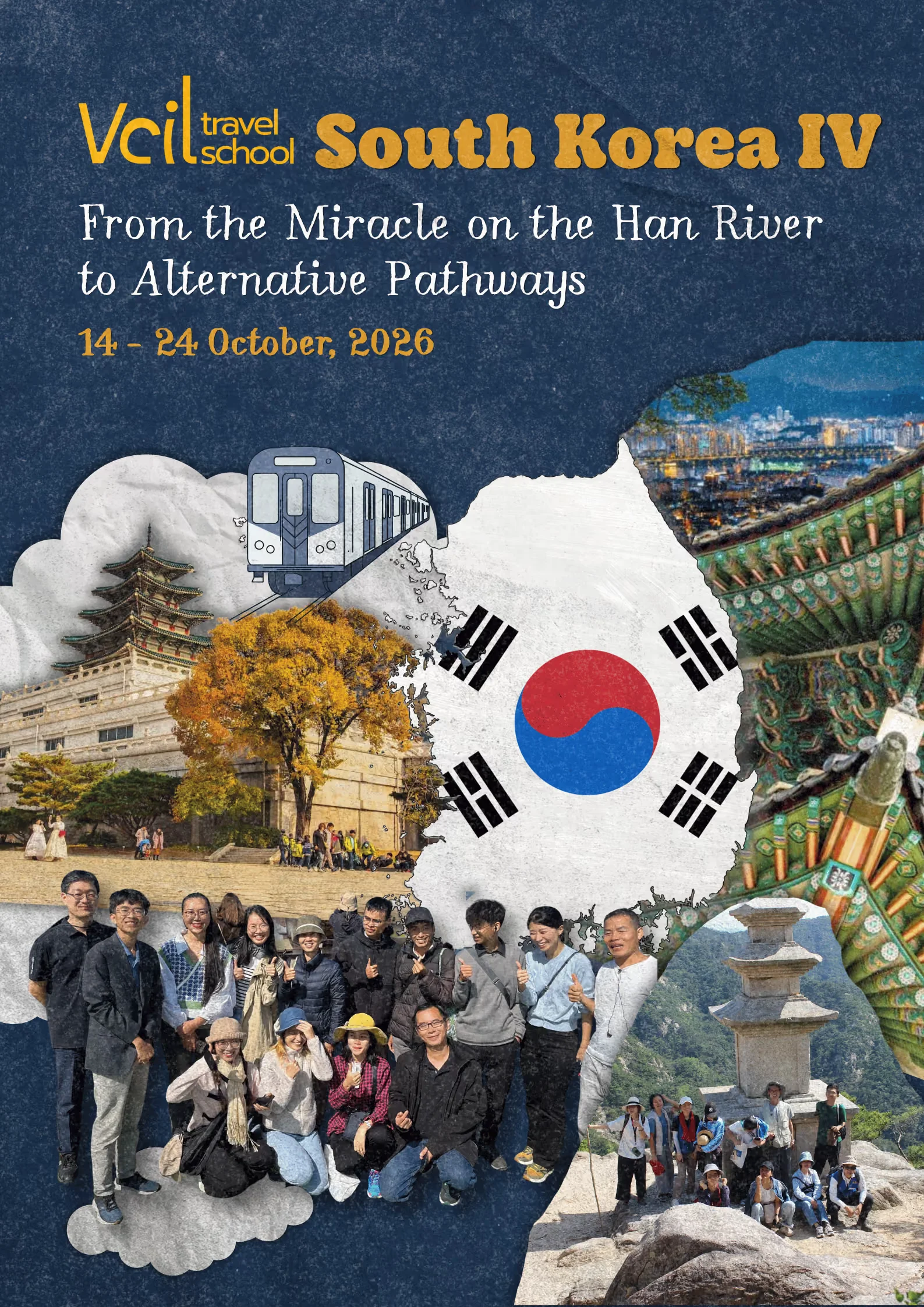
Vcil Travel School 2026 – South Korea IV: From the Miracle on the Han River to Alternative Pathways
–
It promises to be a programme that offers not only memorable experiences and lasting memories, but also practical knowledge and lessons
Vcil Travel School runs international learning journeys: we live like locals, work alongside the organisations and communities we visit, and learn from the context of each place. More about Vcil Travel School
–
It promises to be a programme that offers not only memorable experiences and lasting memories, but also practical knowledge and lessons
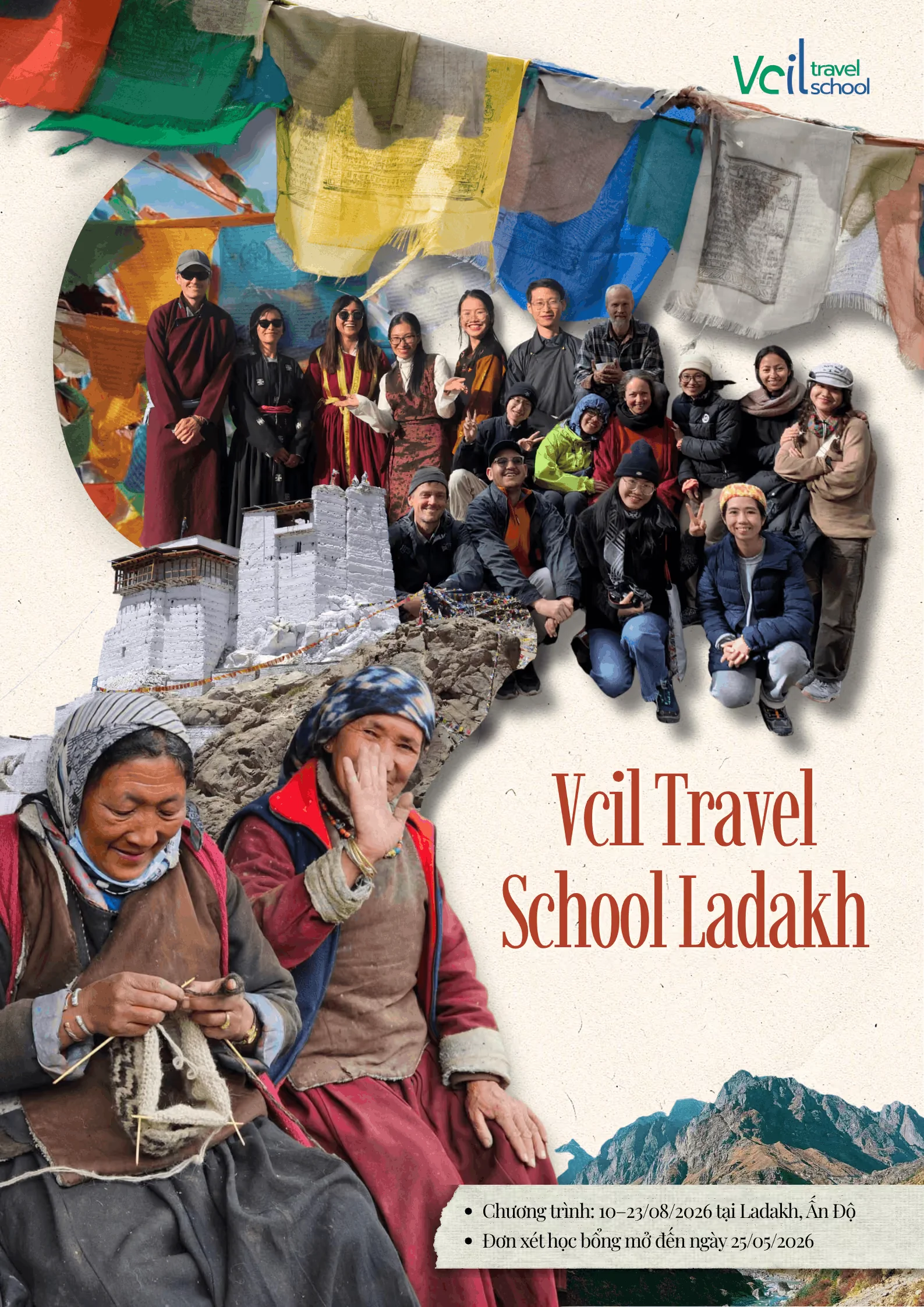
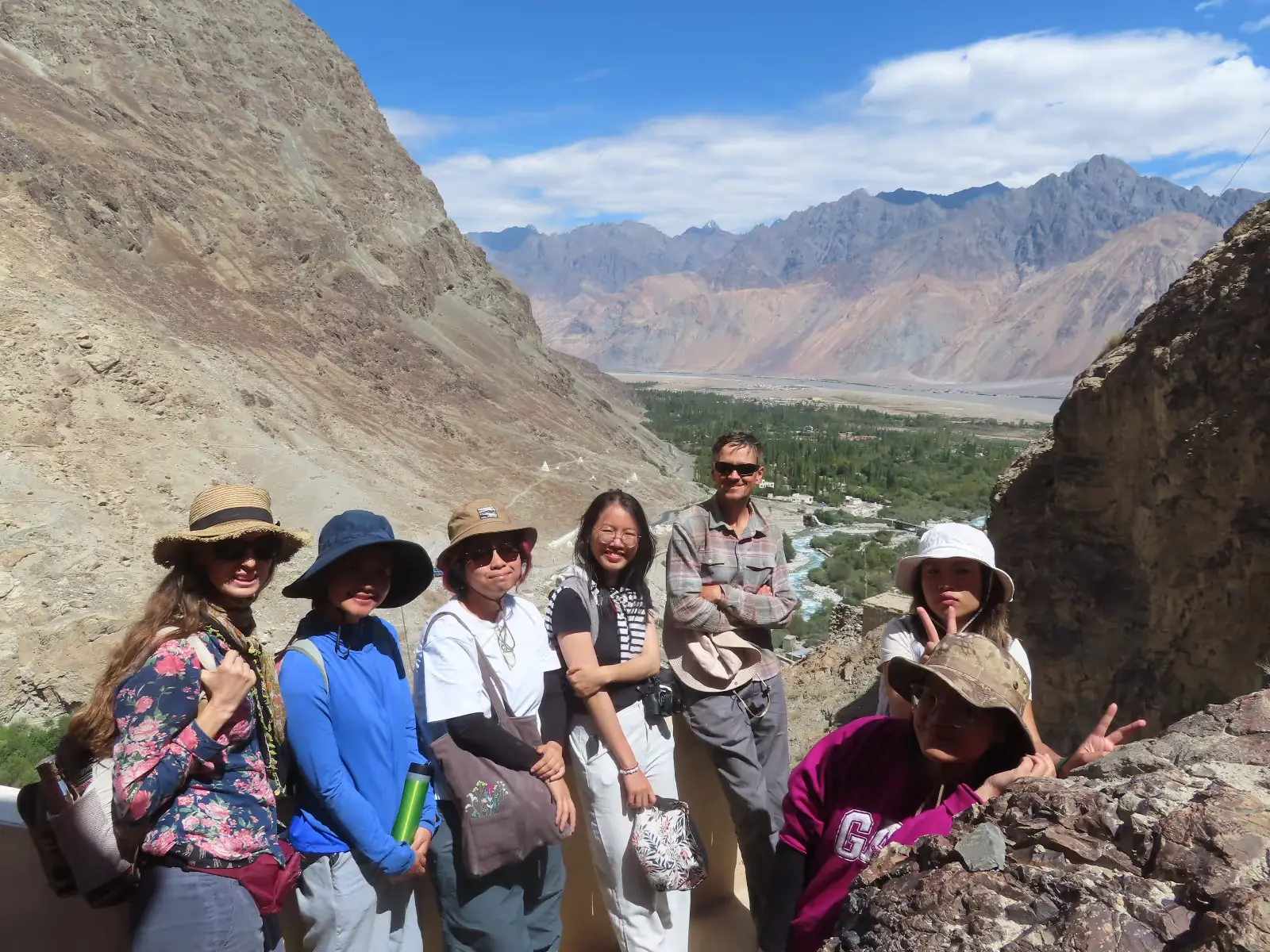
Mindful travel & sustainable living in Little Tibet.
Get updates when a new program opens, or message the Travel School team if you have a question.
About Vcil Travel School
Vcil Travel School is an international experiential learning and travel program that utilizes context-based learning in a multicultural environment. By integrating with local community development, Vcil Travel School aims to innovate and rethink both education and tourism.
With this vision, Vcil Travel School moves education beyond the four walls of a classroom into interaction with the vast world outside. Here, learners engage and gain experience by working directly with local organizations and diverse communities.
Through this approach, the program not only creates positive impacts on local communities but also provides a space for participants to immerse themselves in different contexts and environments.
Consequently, participants have the opportunity to re-evaluate their mindsets and lifestyles while challenging their own perspectives. These elements serve as the raw materials for profound inner transformation, while simultaneously broadening horizons, developing knowledge, and fostering international cooperation.
Since its inception in 2018, we have operated numerous learning programs across various countries, including Cambodia, Thailand, South Korea, and India. Each program features a unique theme tailored to the specific land where it is hosted.
Vcil Travel School connects participants from diverse backgrounds, professions, and interests to explore learning themes together. We also collaborate with NGOs, local communities, and schools, inviting influential individuals and experts to facilitate these programs.
To ensure meaningful and impactful experiences, we apply the following educational approaches and regenerative travel principles:
Traveling with a conscious and proactive mindset. It focuses on being intentionally present and enjoying the environment, culture, and interactions with people in a thoughtful and respectful manner. This concept stems from the principles of meditation, involving non-judgmental awareness of thoughts and feelings while being fully focused on the present experience.
Experiencing daily life as a local resident, such as using public transportation or eating local cuisine or joining with local people to do their work.
Engaging in and contributing to activities that support the local community—ranging from elderly care and organic farming to waste recycling. The goal is to enhance understanding of the social context and build connections with local people.
Learners “immerse” themselves deeply in the context of the land. The program is designed to facilitate connections with various cultural facets. Activities are not limited to intellectual pursuits (such as discussions and lectures with experts) but also include workshops and cultural exchanges.
Avoid products from multinational corporations that may harm local economies or the environment.
Purchase local handicrafts and support local shops, guesthouses, and trekking agencies to ensure your spending contributes directly to the community.
This method fosters a collaborative and dynamic environment. Participants share their knowledge, experiences, and insights, creating a rich tapestry of learning. This approach emphasizes mutual exchange, allowing everyone to contribute to and benefit from diverse perspectives.
Programs apply field research methods, offering participants the chance to directly study the culture, environment, and community dynamics. By immersing themselves in the local setting, participants can conduct on-site interviews and gather valuable data, connecting theory with practical analysis.
This model encourages the active involvement of all participants. Instead of passively receiving information, individuals engage in hands-on activities, discussions, and projects, taking ownership of their learning journey.
Journey to Happy and Sustainable Education.
September 6–16, 2018
Shifting Worldviews towards Building New Narratives/Societies.
Held in Thailand & Auroville, India. December 4–30, 2019
Mindful Travel and Sustainable Living.
August 27 – September 10, 2022
Alternative Education and Livelihood.
October 3–15, 2022
New Consciousness, New Society.
January 4–10, 2023
From the Miracle on the Han River to Alternative Paths.
Held in Seoul, Ulsan, and Busan. October 8–18, 2023