You are using the member interface.
Log out of the member interface →

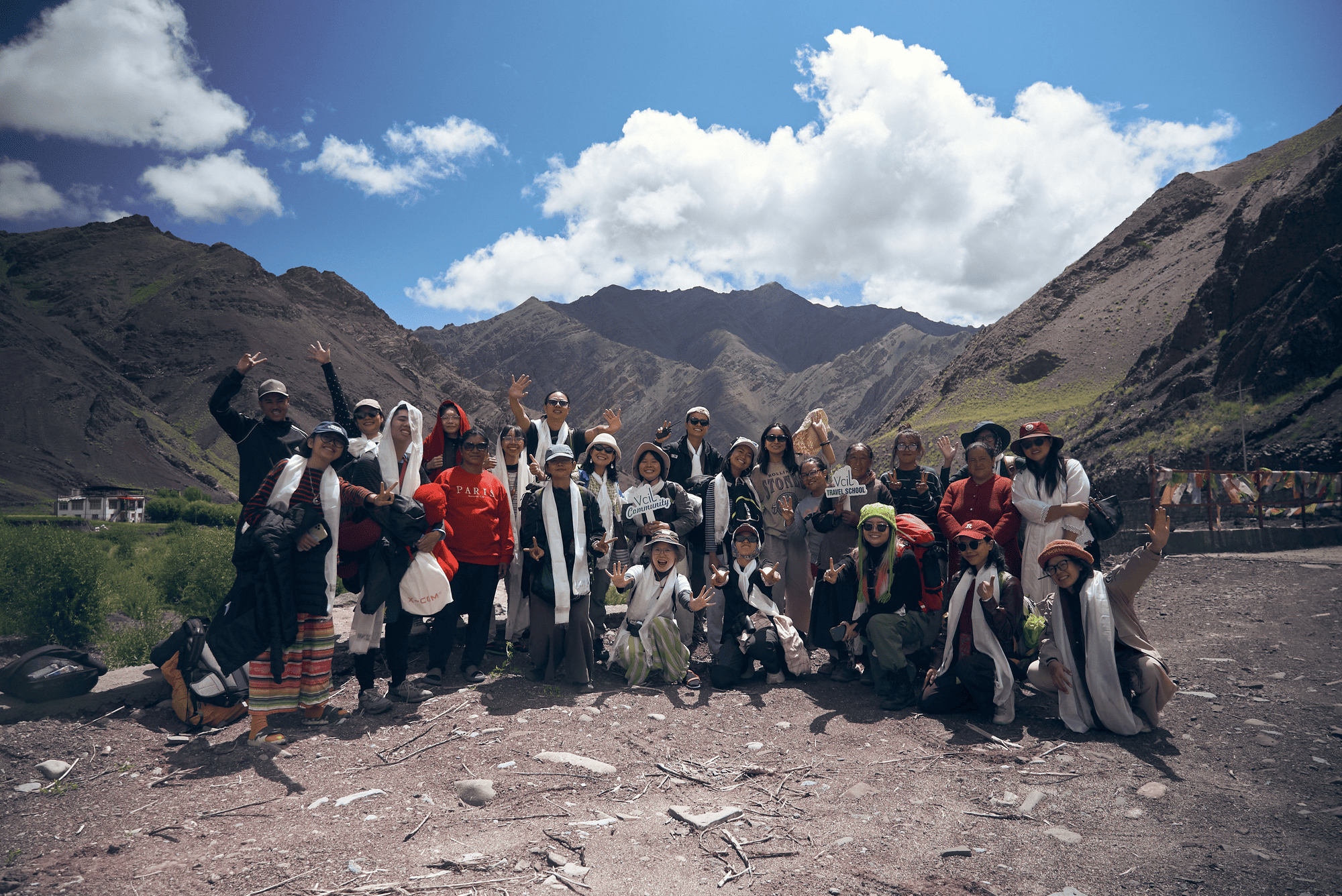
During their days at Dubuk, Vcil Travel School participants will practise Balwoo Gongyang, the traditional meal ritual of the Korean Buddhist monastic community. On the surface it is simply a way of eating with four bowls. But each movement of receiving food, eating in silence, washing the bowls and finishing everything you took turns a daily need into a lesson in interdependence.
“Balwoo” (발우, 鉢盂) is the name for a monastic's bowl, derived from the Sanskrit patra; “gongyang” means an offering, or receiving a meal with reverence. A Korean balwoo set usually consists of four nesting bowls: a rice bowl, a soup bowl, a water bowl and a bowl for side dishes.[1]
The practice has its roots in monastic life at the time of the Buddha and was passed down through the Buddhist traditions, but the specific ritual form in Korea was shaped within the country's own temple culture. Balwoo Gongyang should therefore be understood both as part of a broad Buddhist history and as a living cultural practice, not an “unchanging formula” from more than two thousand years ago.[2]
The Templestay guidebook names five values: equality, cleanliness, moderation, unity and gratitude. Everyone receives the same food regardless of rank; you take only what you can eat; you eat together in one space, mindful of nature and of the people who made the meal possible.[1]
The ritual is directed by the sound of a bamboo clapper. Diners unfold their cloth, lay out the bowls, receive water to rinse them, then receive rice, soup and side dishes. Before eating there is a moment of contemplation, and a small portion is set aside for other living beings. Everyone begins and finishes together, keeping a pace that is neither too fast nor too slow.[1]
What usually leaves the strongest impression is the ending: a very small amount of water is used to clean the bowls, and no food is left behind. But if we see this only as a “zero-waste tip”, we miss the more important part. No waste is the result of a chain of choices: taking just enough, eating attentively, taking responsibility for what you received, and moving in step with the group.
Korean temple food generally avoids meat and, by tradition, the five pungent vegetables, relying instead on seasonal vegetables, local produce and fermented foods.[3] But the ecological footprint of Balwoo Gongyang is not only in its plant-based menu. It also lies in the mechanism that limits excess, the reusable bowls, and the way “waste” becomes something the diner has to see directly.
In the modern food system, the distance between the eater and the soil, the water, the grower, the cook and the person who clears the rubbish keeps widening. The ritual brings those relationships back to the table. Food is not merely a commodity; it is the outcome of land, climate, labour and countless conditions that no individual creates alone.
Eating the same food, starting at the same time and caring for your own bowl create a small but tangible material equality. Yet the ritual also raises a question about discipline: does moving in unison create connection, or pressure for those whose bodies have different needs? A practice is meaningful only when a community can hold its shared spirit while also caring for the elderly, people with disabilities, allergies or particular dietary needs.
In Vietnam, food is both the centre of family life and a place where waste is easily normalised: ordering too much to show hospitality, leaving food because “we've paid for it”, or leaving the clearing up to a group of people who are rarely seen. Balwoo Gongyang is not a model to copy wholesale into every meal. It suggests principles that can travel: take just enough first and then take more; recognise together the effort of the cook; share the work after the meal; and measure “eating green” not only by what is served but by how much is thrown away.
Is “enough” a personal feeling or a capacity that can be trained? Who laboured so that this meal could appear? Why do we leave food so easily when we do not have to deal with the leftovers ourselves? How could a Vietnamese organisation design shared meals that reduce waste without turning discipline into coercion?
1. Cultural Corps of Korean Buddhism, 2022 Templestay Handbook for Travel Guides, pp. 120–121: https://webzine.templestay.com/ebook/access/ecatalogt.jsp?Dir=98&callmode=normal&catimage=&eclang=ko&start=120&um=s 2. Baekyangsa Templestay, Balwoogongyang (monastic meal): https://baekyangsa.templestay.com/en/MI000000000000000020/html/view.do 3. Korea Tourism Organization, Korean Temple Food: A Sustainable Cuisine Inspired by Buddhist Teachings: https://english.visitkorea.or.kr/svc/contents/contentsView.do?vcontsId=227777 4. Templestay Webzine, Formal Monastic Meal Barugongyang: https://webzine.templestay.com/ebook/access/ecatalogt.jsp?Dir=102&callmode=normal&catimage=&eclang=ko&start=82&um=s
Nội dung đầy đủ của bài viết này chỉ dành cho Hội viên Vcil. Đăng nhập để đọc tiếp phần còn lại.

International Travel & Experiential Learning Program Uses Context-Based Learning Methods in a Multicultural Environment