You are using the member interface.
Log out of the member interface →

 ← Bản tin
Thông tin dưới đây chỉ dành riêng cho Hội viên Vcil
Để đảm bảo quyền lợi của bạn cũng như cộng đồng Hội viên Vcil, mong bạn đừng chia sẻ thông tin này nhé!
Bạn có thể chia sẻ thông tin về dự án dành cho công chúng bằng cách sao chép link này:
A conversation about regenerative agriculture, community-based learning, and the Sufficiency Economy Philosophy in Thailand
Nếp Mới – New Patterns of Living and Learning: a monthly learning space to co-create a new civilisation
Vcil Community aims to build a new civilisation centred on wellbeing and regeneration. To realise this vision, we encourage rethinking how we live, act and imagine the future.
Inspired by the word “Nếp” in Vietnamese – which carries the ingrained patterns of culture, habits and daily life – Vcil Community initiated Nếp Mới to create a nurturing space for new ways of living: prioritising sustainable happiness and regenerating true wealth. It is a community space that helps people recognise and shed outdated patterns, draw on collective wisdom, and reimagine how we live, connect and learn.
At Nếp Mới #3 this June, the topic of discussion was "A conversation about Natural Agriculture and Alternative Education in Thailand with Tang". In this session we discussed the ongoing global challenges in more depth, while exploring regenerative solutions tied to concrete practice from the Agri-nature Network of Thailand.
Below is a write-up of what was shared at Nếp Mới #3, held on 18 June."
A little about myself: my main work is as a secretary, teacher, lecturer and facilitator of educational programmes. Together with the community, I design and organise learning programmes in Thailand around natural agriculture, alternative education and regenerative livelihood.
Growing up in Bangkok without any agricultural background, I never imagined that farming would become central to my work today. My family are city people, quite removed from the rural traditions that have nourished Thailand for generations. However, twelve years ago, a chance encounter sparked a journey that connected me with the land, with community, and with an indigenous wisdom dressed in modern clothes.
After graduating from university, while working at a company, I had the chance to interview a remarkable man named Ajarn Yak, a former deputy minister of Thailand's Ministry of Agriculture and Cooperatives. What he shared about natural agriculture as a solution to Thailand's multi-faceted challenges was truly inspiring and eye-opening for me. His vision of farming in cooperation with nature rather than against it, of building community rather than isolating individuals, opened up possibilities I had never considered.
This encounter led me into the Agri-Nature Network, a grassroots movement of “ordinary people” who came together to share knowledge on combining indigenous wisdom to use and regenerate natural resources. Their goal was simple yet profound: to create benefit not only for their own communities, but for the whole of Thailand.
To understand what natural agriculture means, we first have to understand the Thai word for agriculture itself: "kasettakam." The root "kaset" comes from Sanskrit, but in Pali it becomes "kassi," meaning land. So agriculture, in its deepest Thai sense, is about what we do with the land – how we relate to it, care for it, and learn from it. And we have taken this spirit and applied it to natural agriculture.
The basic principle guiding natural agriculture is very simple: we do not fight nature; instead, we learn from nature. This philosophy rests on the cultural beliefs and rituals that have honoured the land for thousands of years across the river basins of Southeast Asia. We must learn to live in harmony with nature, while adapting to the practical constraints of land ownership and the legal frameworks of modern life.
After industrialisation in Thailand, families who once had large areas of farmland lost their land, and only a little was left to cultivate. In response to this worrying trend, King Rama IX introduced new agricultural concepts focused on self-reliance: designing the plot so it can store water, maintain biodiversity, and produce necessities such as bio-fertiliser. In this way, danger was turned into opportunity, and the constraints of industrialisation into a chance to respond and innovate.
Thailand lies within the monsoon belt, and is therefore blessed by nature with abundant rainfall. Thanks to favourable natural and climatic conditions, Thai agriculture has flourished. The core challenge is to find ways to keep this precious water on our land through effective and optimal plot design and management.
The Agri-Nature Network draws heavily on indigenous wisdom from northeastern Thailand, especially the "Kok Non Na" system. This approach divides the land we have into three zones: "Kok" refers to high mounds perfect for trees and vegetables; "Non" describes flat land ideal for growing rice; and "Na" represents the low-lying areas that naturally hold water.
Ajarn Yak adapted this traditional wisdom for modern small-scale farming. Instead of vast, unbroken rice fields, the new model creates raised edges around the rice paddies, providing space for diverse planting while improving water retention. The soil obtained from digging ponds is piled up to form a mound. This design creates a closed system in which every element serves multiple purposes.
This design is based on one simple principle and idea: keep every drop of water that enters your land. This is not only about irrigation – it is about creating resilient ecosystems that can thrive regardless of external pressures.
Ajarn Yak's journey from national development planner to agricultural innovator came from deep insights into the spirit and culture of Thai people. After working at the Office of the National Economic and Social Development Council of Thailand, he witnessed the bureaucratic barriers that prevented Thailand's sustainable development. This left him disappointed and powerless. However, instead of remaining frustrated within the bureaucratic political system, he chose to resign and commit himself to creating comprehensive change from the roots.
He realised something important: to mobilise the whole population in renewing the country, mass education was essential. Agriculture was the perfect vehicle for that goal, because agriculture is the livelihood and lies deep in the hearts of most Thai people. Starting in the 1980s, he initiated what would become a decades-long movement – agricultural practice based on the Sufficiency Economy Philosophy.
For nearly thirty years, Ajarn Yak focused on non-formal education for farmers, helping them shift from chemical-dependent industrial farming to natural methods based on available organic resources. This approach emphasises resilience through self-reliance – making fertilisers, herbicides and pesticides at home from herbs instead of buying expensive and toxic commercial products.
The Sufficiency Economy Philosophy extends even beyond agricultural application, into the realm of rethinking economics. Instead of growing mainly to sell on the market, the focus of farming starts from the foundation: grow what you eat, grow what you can use daily, and grow what benefits the soil. This represents a fundamental reordering of priorities: household economy before commercial economy, community resilience before market dependence.
Only twelve years ago did Thai law begin to allow individuals and families to establish their own educational institutions. This legal opening created the opportunity to formalise what had been happening informally for decades: alternative education, especially homeschooling, recognised by the education system. The result was the founding of Pudalay School, a learning centre that not only applies alternative education – but embodies a new way of living with an entirely new philosophy – marking a comprehensive shift from the roots.
The school operates on a model that mirrors how monasteries or ashrams work, where students live with their teachers, learning not only academic subjects but a whole way of life. Students from grade 1 to grade 12 live and study on the Mab Ueang campus, and also travel across Thailand with the network, learning from different centres while contributing to community activities.
Over the years, 60 to 80 students have graduated from Pudalay School. As proof of the education's effectiveness, the school is now managed by its former students themselves. Alumni have returned as the management team to run the school. The original teachers, like me, have moved into more of a facilitating and coaching role. The school has become self-operating, self-running, and led by people who have lived and absorbed the values it stands for.
After some time, the Network realised that some students and parents wanted their children to also study at universities with similar values. So we partnered with the Arsom Silp Institute of the Arts to create a Bachelor's programme in Social Entrepreneurship. This four-year programme has run for almost a decade, with five cohorts graduated; and we have now expanded to welcome students of all ages to enrol – including parents – who can study alongside their children.
Recently, the programme has evolved to meet changing learning preferences by offering short, intensive courses. For example, tomorrow we launch the short programme "Applying AI to Create Water-Retention Solutions in the Highlands," integrating natural agriculture principles, Kok Non Na landscape design, and modern technology to help students design plots effectively and manage rainwater. This pilot project, developed in collaboration with the Ministry of Higher Education, represents an innovative initiative that applies traditional wisdom combined with modern technology.
One participant shared that the Agri-Nature Network's root-level approach to education is very comprehensive and profound. They suggested that Vcil Community study this model, and said they could lobby the government to legalise and replicate it in many places in Vietnam.
Hearing this, Tang responded: the beauty of the approach of Pudalay School, or of the network, is that you do not have to wait for perfect conditions or legal permission to begin. When people express interest in starting alternative schools in their communities, I always stress that each community can start by creating a real working example. Try to find a piece of land, perhaps degraded land, and regenerate it into a food forest – and prove that organic, wholesome food is feasible. Then create a space with clean water – where children can swim – and turn the land itself into a classroom that can teach all kinds of skills and knowledge. And so an alternative school is born.
You can start immediately in any way you like, for example an evening school, a weekend programme, or a holiday learning centre. What matters is creating a world of your own, a microclimate – where children – and adults – can experience a different way of living. The prerequisite is to create a fertile and abundant piece of land – from there, everything else follows.
Everything Ajarn Yak and the network have practised and continue to practise comes from the foundation of the Sufficiency Economy Philosophy, introduced by King Rama IX in 1974. The King's vision was one in which Thailand could ensure that everyone had enough to eat and live healthily, before moving on to more complex levels of development. And national development should proceed step by step, slowly but surely.
This philosophy emerged in response to the gaps created by the country's industrialisation. While the traditional Thai way of life was enough to meet people's needs, industrial development created stark inequalities in society. The focus on growth-addicted economic development produced predictable results: the rich got richer while the poor got poorer. Today, 2.3 million Thais – about 3.5% of the population – live below the poverty line, lacking the basic conditions to get through each day.
After setting out the sufficiency economy philosophy, King Rama IX spent his seventy-year reign demonstrating the feasibility of the Sufficiency Economy through the Royal Initiatives, where Ajarn Yak served for sixteen years. This practical experience, together with the King's approach, provided the foundation for the grassroots movement he later initiated.
All of this work rests on the foundation of the sufficiency economy philosophy, introduced by King Rama IX in 1974. The King's vision was that national development should proceed step by step, ensuring that everyone has enough to live and eat before advancing to more complex levels of development.
This philosophy emerged in response to the gaps created by industrialisation. While traditional Thailand was enough to meet people's needs, industrial development created severe inequality. The focus on a growth economy produced predictable results: the rich grew richer while the poor grew poorer. Today, 2.3 million Thais — about 3.5% of the population — live below the poverty line, lacking sufficient resources to survive from day to day.
King Rama IX spent his seventy-year reign demonstrating the feasibility of the Sufficiency Economy Philosophy through the Royal Initiatives, where Ajarn Yak served for sixteen years. This practical experience together with the King's approach provided the foundation for the grassroots movement he later initiated.
Government bureaucracy often gets stuck in purely conceptual discussions – things that sound wonderful to ordinary people, but which they cannot turn from abstract concepts into practical action. So Ajarn Yak developed a practical framework: called the nine steps of the sufficiency economy livelihood. These nine steps are visualised as a house with four pillars.
The first four steps – the pillars – represent the things you can be self-reliant in:
This framework embodies King Rama IX's concept of "3 kinds of trees for 4 benefits" – plant for food, utility and materials, and receive ecological health as a bonus.
The advanced steps, once those 4 foundational pillars are built, are about building community and sharing:
5. Making merit – giving the best of what we have to those we respect and love, such as the monks and teachers we revere
6. Sharing – supporting the needy and the poor in the community
7. Processing – using local wisdom to preserve and process what we produce to add value
8. Trade – engaging in trade only after sufficiency has been established – yes, this philosophy puts selling near the very end, not growing to sell as farmers usually do today.
9. Building networks – creating communities and networks to help one another and share these ideas of sufficiency and happiness with others.
This sequence deliberately places trade eighth instead of first, representing a fundamental shift in economic thinking. Money becomes a tool for sharing and trade rather than the main driver of farming. The goal is sufficiency first, community second, and market participation third.
The Buddhist foundation of giving
Behind the concept of sufficiency lies the foundation of Buddhism – Thailand's national religion. Buddhism teaches us to care for others and not be selfish. This is not unique to Thai people – it reflects Eastern cultural tradition in general, where people are encouraged to make merit and do good for others before seeking personal gain. Making merit and accumulating good deeds has become part of the cultural fabric through the influence of Buddhism, shaping how we approach community and mutual support.
The emphasis on giving to teachers, monks and respected elders first – as set out in the fifth step of the Sufficiency Economy Philosophy – reflects the concept of gratitude rather than a regard for hierarchy. It is about honouring those who have given us knowledge, opportunity and guidance. This does not mean blind respect for all authority, but a conscious appreciation of the specific individuals who have contributed to our growth.
Personally, I feel grateful to my teachers – not only Ajarn Yak, but many teachers who gave me opportunities to learn, to grow and to gain knowledge. This gratitude naturally shows in repaying them first, not out of obligation but from genuine appreciation.
In the current economic system, people too often chase greed and personal gain, or money and power. Ajarn Yak uses merit-making as a deliberate incentive to change this mindset, wanting to convey the message that if you are not greedy, if you are not selfish, you can have a fulfilling life. Merit-making becomes a practical strategy to change how people think about success and wealth.
When we first presented this concept, many people did not believe in it. They had been taught and conditioned to think that personal gain must come first. But some people did believe in giving, generosity and helping others, and began practising merit-making. When these believers "succeeded" in having happy lives, others observed it and were gradually convinced.
This follows the theory of the diffusion of innovation: only 2% of the population will immediately understand and adopt new ideas, while another 12% become early adopters. This means we only need to work with and produce results for 14% of the population for a new way of living, habit or mindset to be established; and it eventually spreads to the rest. The key is to do the hard work smartly – focus on those who believe and adopt early instead of trying to convince everyone at once.
This is the network's approach to driving social innovation movements: instead of going wide, we go deep and work with the right people.
Addressing the root cause: sufficiency of mind
The root cause of most social and economic problems lies in human thinking. The sufficiency economy addresses not only material sufficiency – having enough food, goods and resources – but also spiritual sufficiency. As King Rama IX said: "If you have enough and you do not have much greed, we will live together in peace."
This spiritual sufficiency can solve fundamental problems, but discussing it often feels like talking about religion or belief – it becomes a never-ending conversation because we are human, and human nature includes both selfishness and generosity. This is reason enough for us to continue what we are doing, knowing that even if we cannot change everyone, we can create examples that inspire others and gradually shift cultural norms.
Sufficiency of mind means cultivating contentment with enough, instead of always seeking more. It means recognising that true security comes from community resilience rather than individual accumulation. It means understanding that our wellbeing is linked to the wellbeing of others and to the health of the land that nourishes us all.
Across Southeast Asia, we face a worrying trend: farmers make up only 5–7% of the population yet are responsible for feeding the entire nation. In many countries, agriculture has become associated with poverty and hopelessness, creating a dangerous cycle as young people abandon rural life for office jobs in the city. This perception threatens our collective food security and cuts us off from the indigenous wisdom of generations of grandparents and ancestors.
The solution to this, in my view, begins with reshaping what is necessary and foundational for us to teach children. Instead of creating a sense that agriculture is a career with no future, we need to help them understand that producing food is truly a vital life skill. In an uncertain future, shaped in part by climate change and potential conflicts, the ability to produce your own food may become the most important capability anyone can possess.
This means teaching children how to create their own microclimates (microclimates are stable areas where temperature and humidity stay balanced despite extreme weather outside). Reforestation helps create stable microclimates for each distinct area – so forests are absolutely essential. Trees help stabilise both temperature and humidity, creating the conditions needed for food production.
At Pudalay School, students do not just learn about agriculture – they learn how to live. They know where food grows in the surrounding forest and how to turn forest produce into food, drinks and nutritious meals. They can also live in both the traditional and modern worlds, even starting businesses selling forest products to visitors to the school or at markets, while maintaining their connection to the land.
Knowledge about forests, food and related topics is now more accessible than ever thanks to the internet. We can connect with agricultural innovators, study successful and failed experiments, and adapt proven methods to local conditions. The question is, with those resources available – do we have the determination to realise this vision or not.
City life poses very particular challenges for food security. Urban environments are often very isolating – we usually do not know who our neighbours are, making individual self-sufficiency almost impossible. Although apartment-growing techniques exist, they have no real practical value, because they cannot provide full food security for urban residents.
So the Agri-Nature Network developed a creative initiative to fill this urban gap. We invited Bangkok city residents to build and establish relationships with people in the city's outskirts, and to create eco-villages within a two-hour walk of the urban centre. This is not just about convenience – it is about preparing for crises.
When urban crises occur, the first response is usually mass evacuation by car, leading to traffic jams that leave people trapped in the city. By establishing safe spaces within walking distance, we create viable escape routes that do not depend on vehicles or existing infrastructure – things that may not work in an emergency.
The first eco-village we developed is in northeastern Bangkok (called Arsa Shaona Mahanakorn) – an example that proves this solution in practice. It provides food, water, shelter and enough space for urban refugees to survive for a long period. This represents a fundamental shift in thinking: instead of trying to shrink the solution to fit urban constraints, we expand our community network to include other networks and communities in the countryside.
So the question is: “In alternative education and community work, how can we confront this problem? For those who care about health and the environment, what practices or approaches can help raise awareness, make sound choices and build a genuinely healthy lifestyle in a world as manipulative as today's?”
The corporate-run food system is one of the biggest challenges for those of us who want to live green and healthy. Large companies use their financial power to influence scientists and manipulate research, creating false beliefs and understandings about processed foods, supplements and synthetic nutrients. They market these products aggressively while using money and power to deceive consumers and generate enormous profits at the cost of the whole community's health.
The Agri-Nature Network addresses this by creating alternative marketing systems that prioritise community health over corporate profit. Since most of us cannot produce everything we need – I can grow some vegetables and fruit in Bangkok, but I cannot produce rice – we must come together as a network to share and exchange fairly with one another.
We founded the Grandpa Market, embodying the eighth step of the sufficiency economy: exchange and trade. This market works as a platform connecting members of the network to share their wholesome products; it may look like an ordinary farmers' market, but there is an important difference here. Farmers usually prefer to stay and work in their own area rather than travel into town or the city, so the Grandpa Market enables distribution and trade without requiring farmers to leave their work and their land.
The Grandpa Market operates on a five-level pricing system aimed at accessibility across diverse needs and financial capacities:
This system allows organic, natural food to keep its true value and be appreciated and protected within a community that understands and values what it really represents. In the ordinary market, organic cabbage cannot compete with chemically grown cabbage on price alone – consumers will not pay more unless they understand the value of the production process.
The core thing people need to understand is that the value lies not in the product itself, but in the whole production process. This means producers can choose customers who appreciate their methods instead of competing in a race to the bottom on price. With online technology, customers can even pre-order products, creating a guaranteed market for farmers.
This model can easily be replicated in Vietnam or other countries, and eventually we can connect these networks across borders. We just need to remember one principle to hold firm: create communities that value sustainable processes over cheap products.
Beyond plant-based food, we have also addressed protein needs through fish-farming projects in cooperation with local people. Fish represents one of the most environmentally sustainable protein sources compared with chicken, beef or pork. By working with fish farms that use natural methods, we can provide healthy, affordable protein within our network while minimising environmental impact.
This integrated approach – combining plant and animal systems within a sustainability framework – ensures that community members can access complete sources of nutrition without depending on an industrial food system that prioritises profit over health.
There is a health project that Ajarn Yak has proven effective, and he tested it on himself. He encouraged everyone in the network to take care of their own health. He did not just say it; he pioneered the movement of self-care himself. He lost 10 kg during this experiment. He began a healthy lifestyle with very simple actions: cutting out sweets, drinking more water, exercising a little. And so he became a shining example for everyone to follow.
He also began building a team to advise and give health guidance to everyone in the community, in the villages and in the network. This advisory team teaches people how to monitor and meet their own nutrition and health needs. For example, calculating body weight to determine how much water is enough to drink.
We also came up with "campaigns" and "competitions" among ourselves. For example, we challenged members to reach their daily water-intake goal and share their progress in the group chat. These are quite fun activities in our community to promote health awareness through very basic things.
We once had a challenge that involved asking: "Have you been to the toilet today?" Then everyone tracked themselves, ticked it off and reported to the group. I am the one who always says I envy everyone because I cannot go easily. But some people came and checked in via the group chat, saying "Oh my, they've gone for the third time in one day." That is how we start conversations about health in the community.
We have an expert who acts as a health coach for everyone. She asks people to photograph their meals and send them to her for analysis and advice. She gives feedback, suggesting things like "Could you add some vegetables?" or "Cut down on the fried food." The interesting thing is when we get a kind of "healthy peer pressure", like "Oh, this person has been to the toilet three times," or "Oh, that guy has cut down on industrial food." This pushes me to think "Okay, I'll drink more water," or "I need to eat less industrial food too." That is how community health campaigns work.
When I hear you talk about consuming and trading wholesome products, I think that sometimes you may have a good product, but nobody buys it, because everyone in the world today "hears about" the need to "eat beef" or "eat more protein" and lots of other "advice" from advertising and mass media; this makes it hard to find the right consumers. The environment and space of being in a community, together with its activities, create important mechanisms. I want to stress this again: mechanisms within the community are what we need to create deliberately in order to truly create healthy communities.
The mechanism I am referring to here comes in many forms; in our case it was a new marketing mechanism through the Grandpa Market. This form of marketing did not come in the early stage; it came in a later stage. The early stage of the movement focused on success cases: aimed at securing our basic needs, a piece of land of our own, a forest of our own, a community practising, working and supporting one another. These foundational elements had to be established before more complex systems such as an alternative market were created.
One of our most important current initiatives concerns seed saving and biodiversity, led by Jon Jandai. This work addresses a fundamental weakness in our food system: the disappearance of genetic diversity in crops and the dependence on hybrid seeds that cannot adapt to changing climate conditions.
As Vũ shared and witnessed in Japan, even having money does not guarantee access to food when supply chains are disrupted or when climate conditions exceed the tolerance of available crop varieties. Native seeds, with their superior climate adaptability, then become an invaluable resource for survival, because they have already adapted to the local climate and soil.
Ajarn Yak developed an initiative he calls "zero-baht seedlings" – essentially caring for the natural seedlings that sprout under large trees. Every large tree can produce many seedlings, yet they usually die in the shade of the mother tree. By carefully nurturing these natural seedlings, there is no longer any need to spend money buying seedlings.
This method has recently taken on international significance through an unexpected collaboration – the Saudi Green Initiative. This initiative needs 10 billion trees to reforest the desert, creating enormous demand for seedlings. Instead of treating this as a commercial opportunity, Ajarn Yak saw it as an act of merit-making – a Buddhist practice of giving in order to create good karma.
The campaign aims to produce 5 million seedlings – and give them as gifts from the Thai Buddhist community to the Muslim community of Saudi Arabia; with the message that restoring and regenerating nature can reconcile religious and cultural differences. Participants made merit together through giving, and at the same time developed skills that could later become a source of livelihood.
This embodies our core philosophy: "Our loss is our gain." By giving away our knowledge, seedlings and time, we create abundance together instead of scarcity and want. Merit-making becomes the path to prosperity, but a prosperity based on community benefit rather than individual accumulation.
In our network there are many different people and initiatives promoting action to preserve seeds. I can share the initiatives of Jon Jandai and Ajarn Yak.
I would say that Jon Jandai's audience is people with a modern lifestyle, not those who have lived and grown up in farming. Ajarn Yak's audience, on the other hand, is local farmers who have spent their whole lives farming. So the way Jon Jandai talks about seed saving revolves around the impact of seed companies and the importance of keeping seeds, or the importance of saving seeds – to have your own seed sovereignty. That is how P Jon Jandai communicates with the public, because this approach suits urban people and new-generation farmers; and he founded a social enterprise together with one of these new-generation farmers, and now they run courses and training programmes to share this knowledge. And that is how Jon Jandai reaches modern people.
The other method, which Ajarn Yak is pursuing – because as I said, Ajarn Yak's audience is dedicated farmers, people who are more committed to and practised in farming – is that he usually talks about saving the small trees under the mother tree, or even the seeds we see on large trees, or even the seeds from the fruit we eat.
So he wanted to ask everyone to start making these seedlings, and he used a campaign in which we make merit together with the monks, and the monks have connections and cooperation with Saudi Arabia. Saudi Arabia is implementing the Green Initiative and needs 10 billion trees to plant in the desert.
So the Saudi Green Initiative and many private companies in Thailand want to sell trees to Saudi Arabia. And there are deals between governments – many things – but the problem is they have the money to buy, but not enough seedlings to sell, because producing seedlings is costly and requires a lot of resources.
So he urged everyone to make zero-baht seedlings, which is a way to reduce the investment in new seedlings. So, zero-baht seedlings, and we make merit first, just like the nine steps of the sufficiency economy. We already have the mother tree. We already have the seedlings underneath; we just need to care for them and we make merit. We will give them as a gift to Saudi Arabia.
That is the new campaign Ajarn Yak is currently running. And he set a target of 5 million seedlings that we give away, share, make merit through the monks from a Buddhist country giving to a Muslim country – Saudi Arabia.
So you can imagine how Ajarn Yak thinks about sharing first – not only as merit-making or doing good, but as another way to create a movement at the local level. But if you start learning to make zero-baht seedlings, you can also make a living from it.
Ajarn Yak sent the message to everyone that "If you start learning, if you start doing, we start by making merit first, then people will come to know us through this, and you can make a living from it." So he does not attract people with money; he attracts people through making merit. But making merit, sharing what you have, will make you rich – this is what he teaches.
I think one of the keys is that we continually adapt to constant change and always find new initiatives and agricultural technical innovations so we can communicate and drive movements.
Speaking of this, I want to share with you – if you really want to start a social movement, the movement must be driven by innovation. So we need to identify what the key innovation we are using is.
One innovation I can give as an example in the Agri-Nature Network is the zero-baht seedling. In alternative education at present, we are experimenting with Artificial Intelligence (AI) to solve water problems in the highlands. These innovations are the integration of what already exists with new knowledge, and they become a new initiative we experiment with. That is how we avoid becoming obsolete. That is how we adapt. If we do not adapt, we too will be disrupted.
Two weeks ago, we also organised short courses – three six-day courses on community coaching, because we work with communities and they have success cases in their own communities, but they do not know how to spread those successful models. So to be able to replicate successful models, communities need more skills, and we identified the core skill – the coaching skill to become a teacher, to be able to scale and spread knowledge. We are always observing needs and challenges that give rise to new initiatives.
Social movements sustain themselves through continuous adaptation and innovation. The Agri-Nature Network stays relevant by constantly integrating established concepts with emerging technologies and methods. Our "AI for Highland Water Solutions" programme is a prime example of this approach, combining traditional Kok Non Na landscape design with artificial intelligence for land planning and rainwater calculation.
We also respond to emerging needs within our network. For example, when community leaders achieved local success but struggled to expand their impact, we developed intensive six-day courses on community coaching. These programmes equip local agents with the skills needed to teach and spread knowledge in their regions.
This continuous innovation ensures that traditional wisdom stays alive and applicable to contemporary challenges. Instead of becoming artefacts kept in a museum, these methods evolve to meet current needs while maintaining their fundamental principles.
The most valuable lesson I want to stress is the importance of experiential learning. Experiential learning takes you into a specific context, lets you see real things, and gives meaning to the concepts you have heard through many senses.
If you have the chance to join experiential learning classes, it will bring a great deal of meaning and deepen what I have just shared. You will feel the Sufficiency Economy Philosophy more clearly in the environment where these practices take place.
Experiential learning is one of the innovations in alternative education that Pudalay School applies. We take students to real crisis sites to show them the current situation and the current challenges the country faces, rather than just skimming the surface.
Students are taken to interview people, ask questions, and live with the root causes of problems – with farmers and many others. This allows them to understand the situation naturally, and this method answers their questions more effectively than theory-based learning.
As we face an uncertain future marked by climate change, resource depletion and social inequality, I hope the experiences in Thailand bring hope and inspiration for each individual and community to commit and act. They prove that solutions do not need to wait for government policy or technological breakthroughs. They can start with people committed to working with nature, building community and sharing the abundance they have.
The journey from Bangkok city dweller to alternative educator taught me that change sometimes begins with a chance conversation, a moment of inspiration that opens new possibilities. But inspiration alone is not enough – it must be followed by the patient work of creating living examples, building relationships and continually adapting to emerging challenges.
In sharing these stories and methods, we hope to sow seeds that will grow according to the unique conditions of each place and community. After all, that is what natural agriculture teaches us: work with what you have, learn from your specific environment, and trust in the regenerative power of patient, careful care.
The future of food security, education and community resilience lies not in complex technologies or distant experts, but in rediscovering and restoring the indigenous wisdom that has sustained human communities for millennia. It is time to stop waiting for others to solve our challenges and start creating solutions for ourselves, one seed at a time, one learner at a time, one community at a time.
🌱 Register here: https://nas.io/vcilmembers/events/nepmoi3
⏰ Time: 19:00, Wednesday, June 18, 2025
🎉 Format: Online via Zoom
✨ Language: English (Vietnamese translation available)
In a world facing numerous systemic crises – from climate change, environmental degradation, economic instability, to deep fractures in social structures – the development model based on unlimited growth increasingly reveals severe limitations, both ethically and in terms of sustainability.
The Sufficiency Economy Philosophy (SEP), developed in Thailand, emerges as an alternative path to the current capitalist economic system. Unlike the values and motivations of a profit-centered economy, SEP emphasizes self-reliance and the resilience of communities and nature. This philosophy proposes a new set of values about life goals and ways of living in harmony with nature and community.
In light of this philosophy, natural farming practices become not merely agricultural techniques, but a profound expression of a different relationship with the earth – one based on cooperation rather than conquest, sustainability rather than extraction.
At Nếp Mới #3, we have the opportunity to learn from P'Tang, a practitioner and educator who has dedicated decades to implementing these principles. Through conversations with P'Tang, we will explore how alternative education and natural farming practices interweave, and how they offer pathways toward more sustainable, equitable, and meaningful ways of living.
- Sufficiency Economy Philosophy: principles and practical applications
- Natural farming as a practice of ecological and social regeneration
- Alternative education models that foster critical thinking and community engagement
- From consumption to production: reimagining our relationship with food and nature
See you at Nếp Mới #3!
You can register as a member to attend Nếp Mới #3 for free. Detailed information is in the comments section.
Fanpage: Vcil Community
Phone/Whatsapp/Zalo: 0836243541 (Huy)
Email: vcil.group@gmail.com
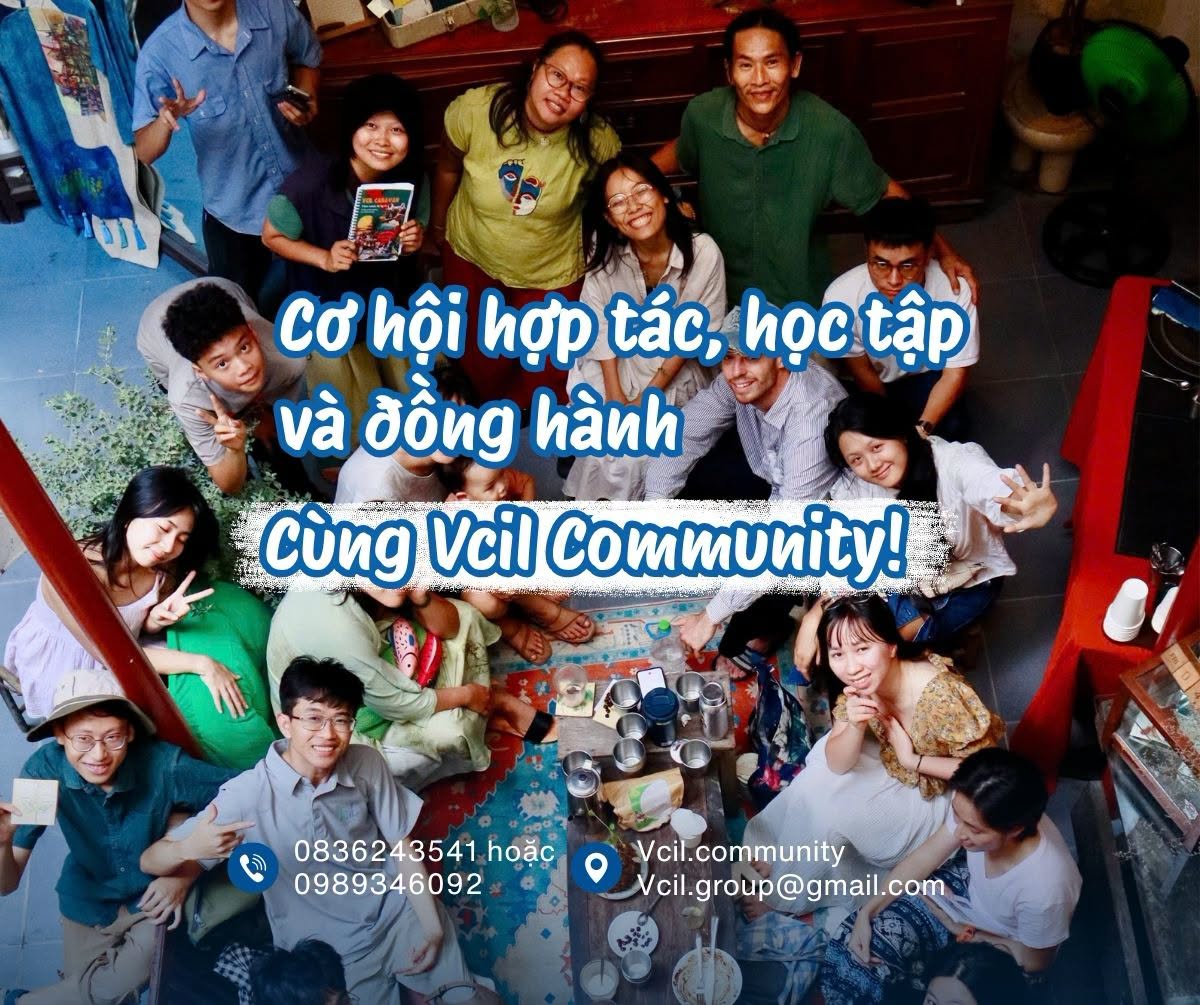
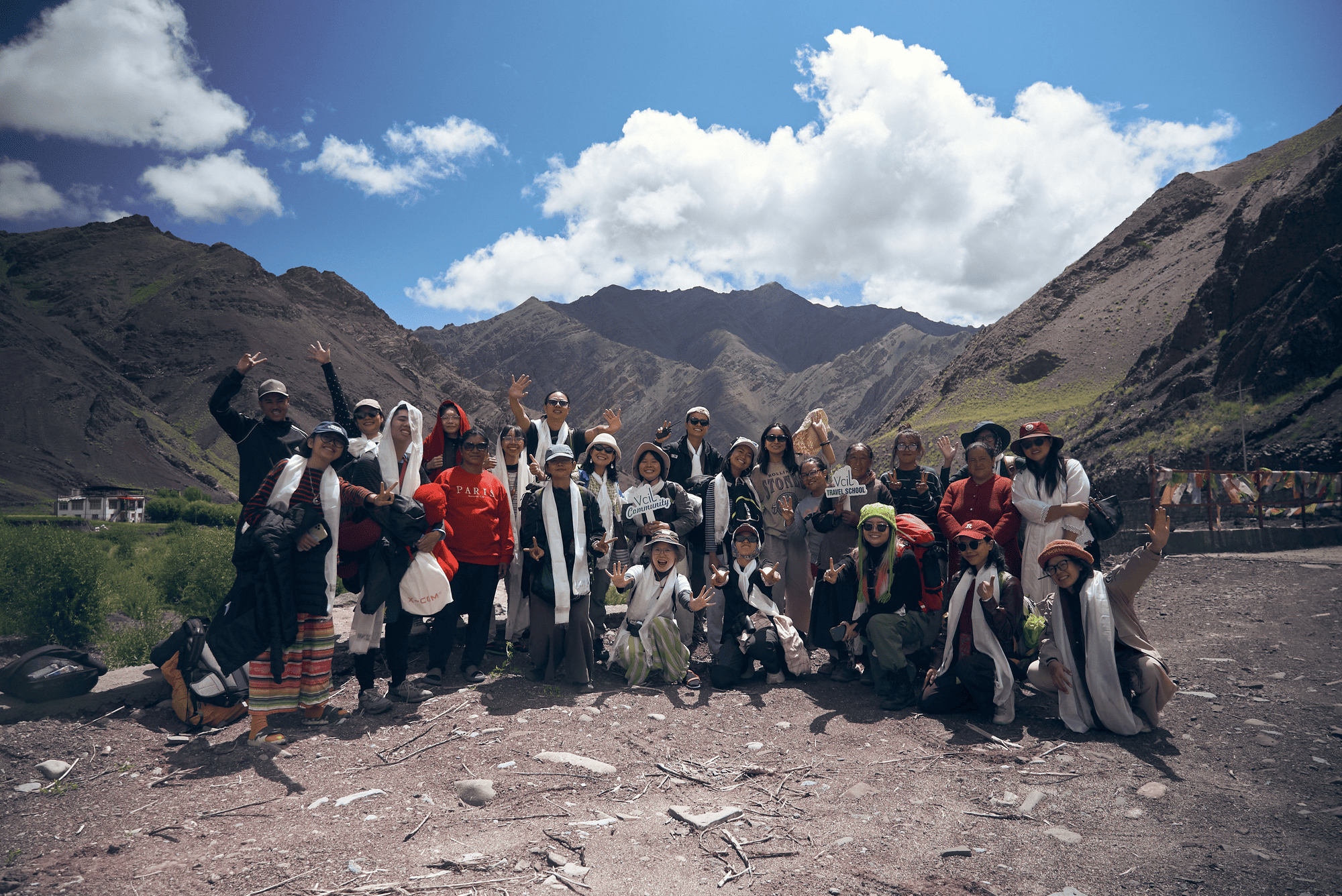

New Ways will invite scholars, experts, and people with practical experience to share about essential and familiar topics in life