You are using the member interface.
Log out of the member interface →

 ← Bản tin
Thông tin dưới đây chỉ dành riêng cho Hội viên Vcil
Để đảm bảo quyền lợi của bạn cũng như cộng đồng Hội viên Vcil, mong bạn đừng chia sẻ thông tin này nhé!
Bạn có thể chia sẻ thông tin về dự án dành cho công chúng bằng cách sao chép link này:
What You Will Learn in the "Transforming Conflict with Mindfulness" Course
When observing conflicts within families, teams, or organizations, we often tend to view them as interpersonal issues: who is right, who is wrong, and who is the cause of the friction. This approach often fails to resolve the underlying problems and the conflicts themselves.
In this course, teacher Chanchai offers a broader perspective: many conflicts do not stem solely from individuals, but are consequences of the social structures we live within. One of the foundational concepts introduced is structural violence (Structural Violence).
This concept refers to the harm people suffer not because of a direct act by an individual, but because of how society is organized and operated. Inequalities in economic, political, educational, or cultural systems can create more barriers for certain groups in accessing their basic needs and opportunities. When these inequalities persist, they gradually generate pressure, trauma, and conflict at both the individual and community levels.
Structural violence can manifest in many different forms. It may appear as social designs that fail to account for the needs of people with disabilities; policies that do not adequately address the concerns of ethnic minority communities; or prejudices regarding gender, skin color, ethnicity, or social class that place certain groups at a greater disadvantage in life.
Structural violence can manifest in many different forms. It may appear as social designs that fail to account for the needs of people with disabilities; policies that do not adequately address the concerns of ethnic minority communities; or prejudices regarding gender, skin color, ethnicity, or social class that place certain groups at a greater disadvantage in life.
One example discussed in the course is patriarchy (patriarchy). In many contexts, men often hold more advantages in accessing power, leadership opportunities, or higher income levels. However, this very structure also creates pressure on men. They are often expected to be successful, to be the primary breadwinners for their families, to be strong, and to suppress their emotions. When they fail to meet these expectations, many fall into feelings of failure, insecurity, or resentment. These internal pressures can further impact their relationships within the family, the workplace, and the community.
Conversely, a woman who aspires to take on a leadership role may face prejudices that women are not suited for management positions or are less trusted in their leadership capabilities. Such biases not only affect their career opportunities and income but also create internal conflict as well as tension in the workplace and society.
These structures of inequality do not only impact individuals; they can also ripple outward into conflicts within families, organizations, and communities. Therefore, to understand and transform conflict, we must look beyond individual behavior and observe the conditions, contexts, and structures that have contributed to shaping those behaviors.
It is worth noting that, in many cases, we tend to attribute these issues to an individual's character or competence rather than examining the structures that shape their behavior and opportunities. When someone fails to meet societal expectations, they are easily labeled as "incompetent," "incapable," or "unsuitable," even though such judgments may have been influenced by pre-existing norms and biases.
For this reason, one of the key practices in conflict transformation is learning to look beyond the individual to identify the context and structures affecting them. When we become aware of these factors, we are less quick to judge and more capable of approaching conflict with greater understanding and clarity.
However, not all conflict stems from structural violence. Many conflicts arise from differences in culture, worldviews, needs, life values, or the personal traumas that each individual carries. Therefore, throughout the course, participants are introduced to various perspectives to understand the causes, processes, and significance of conflict. In addition to theoretical content, the program dedicates significant time to practical exercises, helping learners work directly with real-life conflicts.
One of the most significant shifts in perspective that the course provides is how we view conflict. Instead of seeing conflict as something to be avoided or eliminated, the course invites everyone to view it as a natural part of relationships. These very differences, clashes, and tensions can become a gateway for us to understand ourselves, understand others, and understand the structures that affect us both.
In this view, conflict is not the opposite of connection, but rather an opportunity for connection to deepen. Without conflict, many differences would remain hidden, and we would have little opportunity to learn, grow, or build mutual understanding. Therefore, the goal is not to eliminate conflict, but to learn how to transform it into material for the growth of individuals, organizations, and communities alike.
If conflict is a gateway to understanding one another, the next question is: what do we need to understand?
The course's first answer is not others, but ourselves.
Everyone grows up in different economic, social, cultural, and family contexts. These experiences gradually shape our values, worldview, reactions to conflict, love languages, and how we express ourselves. Therefore, how we handle conflict reveals a great deal about who we are.
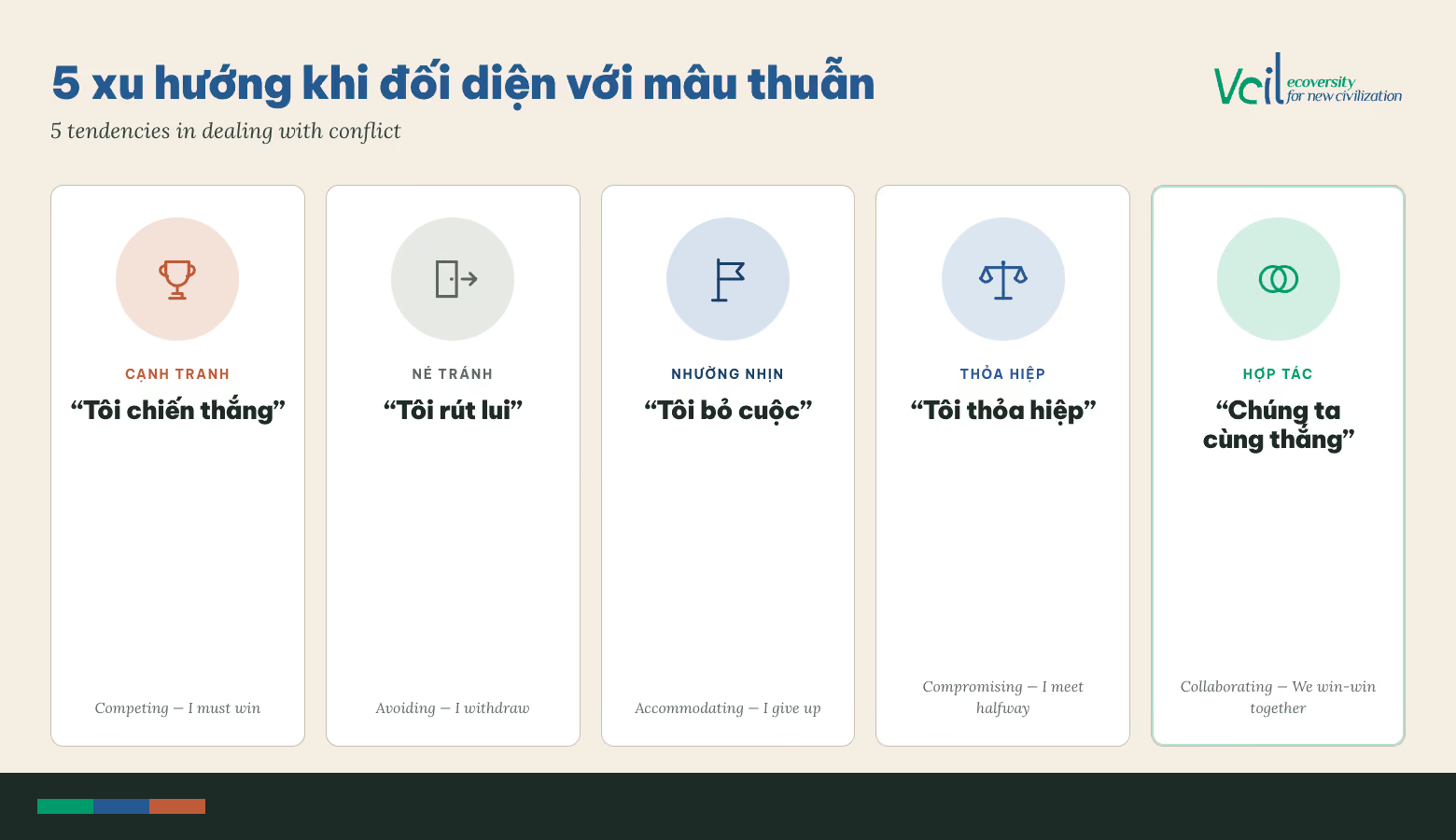
Five conflict response styles
According to the instructors, people typically exhibit five common tendencies when entering a conflict:
To help everyone better understand these tendencies, each person was free to choose a slogan that best reflected how they typically react when conflict arises. Afterward, everyone broke into groups to observe the emotions, thoughts, beliefs, and needs hidden behind each style.
Interestingly, the majority of people chose the “I withdraw” or “I give up”groups, and absolutely no one chose “We win together”This partly reflects how we currently handle conflict in our daily lives.
After breaking into groups, each team was invited to choose an action that embodied the spirit of their selected slogan, while observing their own body language, emotions, and energy. Through this, everyone began to realize that behind every reaction lie very different beliefs, needs, and psychological strategies.
For the “I withdraw”group, many shared that they often give up after a few attempts. Instead of continuing to face the conflict, they choose to leave the situation because it makes them feel more emotionally comfortable.
They described feeling “frozen,” unsure of how to react when conflict arises. The emotions and energy of the conversation become too intense, leaving them exhausted. It is this exhaustion that leads them to choose withdrawal. Their bodies also reflect this, appearing hunched, small, and closed off.
Interestingly, behind this withdrawal is not indifference. What they truly desire is to preserve the relationship and avoid causing further harm. For them, withdrawing is a psychological strategy to protect that.
The important thing is that these are all things happening within them when conflict arises.
Similarly, the “I give up” group also desires harmony in their relationships and often chooses to go with the flow. Their body language also clearly shows avoidance and a reluctance to face tension.
Upon listening to the two groups above, the first reaction from the “I must win” group was anger. They felt that withdrawing or giving up showed a lack of seriousness and a lack of respect for the relationship.
To them, if you truly value a relationship, the other person needs to show it through concrete actions—by facing and solving problems together, rather than avoiding them. Therefore, the desire to clarify issues or push others to act is their way of showing care and connection. It is the “love language” they value.
Constantly taking on the role of leader and driving action also reflects a deeper need: they want to be noticed, heard, and valued.
When those efforts are met with avoidance or withdrawal, they feel angry because they interpret it as the other person not caring about them or the relationship.
Interestingly, "winning" isn't actually what they want. What they truly desire is clarity, dialogue, and finding a solution together.
Interestingly, when the "I withdraw" and "I give up" groups listen to the "I must win"group, their first reaction is... fear.
The intense energy of the "I must win" group leaves them feeling overwhelmed. Often, this energy triggers internal trauma and defense mechanisms. They feel unheard and perceive the "I must win" group as willing to break relationships to get what they want.
In other words, the need to preserve relationships felt by the "I withdraw" and "I give up" groups is interpreted by the "I must win"group as a lack of interest and responsibility. Meanwhile, the "I must win" group's attempt to connect "I must win" is perceived by the other two groups as overwhelming and threatening.
What surprises many people is that, behind these seemingly opposite reactions, all three groups are trying to protect something very similar — a relationship they value. It is just that each person uses a different strategy. If we only react based on mere tendencies, the cycles of dissatisfaction and frustration are endless.
As the groups began to open up to one another, everyone gradually gained a better understanding of the needs, intentions, and values behind each tendency. Instead of blame or resentment, understanding and empathy began to emerge.
Through this activity, we realized that no tendency is inherently good or bad. Each one simply reflects a different way that people have learned to adapt, protect themselves, and preserve what they value. Therefore, instead of being trapped in a familiar pattern of reaction, we are fully capable of choosing a response that is better suited to each situation.
At the end of the activity, the instructors invited everyone to choose their position once again.
There was a significant shift: almost no one wanted to stay in their original position. Most of the people in the “I must win” group moved to “We both win”, while many in the “I withdraw” and “I give up” groups proactively stepped toward “I must win” or “I compromise”.
There is something very difficult to fully convey in this recap, and that is the change in the energy of the entire room. Body posture, eye contact, tone of voice, and the way everyone carried themselves all became different as they stepped into their new positions.
What changes is not just where each person stands, but how they see themselves and the person in front of them. This is also the first step in the process of learning how to transform conflict: understanding your own tendencies, recognizing the tendencies of others, and knowing that you always have the ability to choose a different way to respond.
Interestingly, in the first round of choices, no one in the class chose "Win-win". Only after listening and understanding more about the needs, values, and internal processes of the different groups did many people proactively shift to this position.
That made us realize that "Win-win" is not merely a choice, but a skill that must be practiced.
Unlike the other tendencies, "Win-win" does not react based on the immediate behavior, words, or emotions of the other person. Instead, it begins by listening to understand what is happening behind those reactions: what the other person is trying to protect, what their needs are, and what values are important to them.
It is also a shift from the question "What do I need?" or "What do they need?", to a broader question: "What do we need to move forward together?"
To do that, the first requirement is awareness. We need to identify our own needs, concerns, and important values, while also learning to listen to understand the needs and values of others.
Through this activity, we gradually realized that:
When we see those needs, rather than just looking at external behaviors, we are much more likely to find solutions that meet the interests of all parties. This is also what the course calls "We both win" — not so that everyone gets everything they want, but so that each person's important needs are seen and respected.
However, identifying the needs of others is only half the journey. Another question raised in the course is: What prevents us from listening and responding in a "We both win" way, even when we know that is what we want?
The answer begins with each of us. To understand the needs of others, we must first understand our own; to understand what our behaviors, words, and emotions are trying to satisfy within us. Only when we recognize those processes can we regulate ourselves and enter into conflict with greater awareness.
This is also the content of the next part of the course: what conflict reflects about human needs, and how to return to a state of Self through the lenses of Nonviolent Communication (NVC) and Internal Family Systems (IFS).
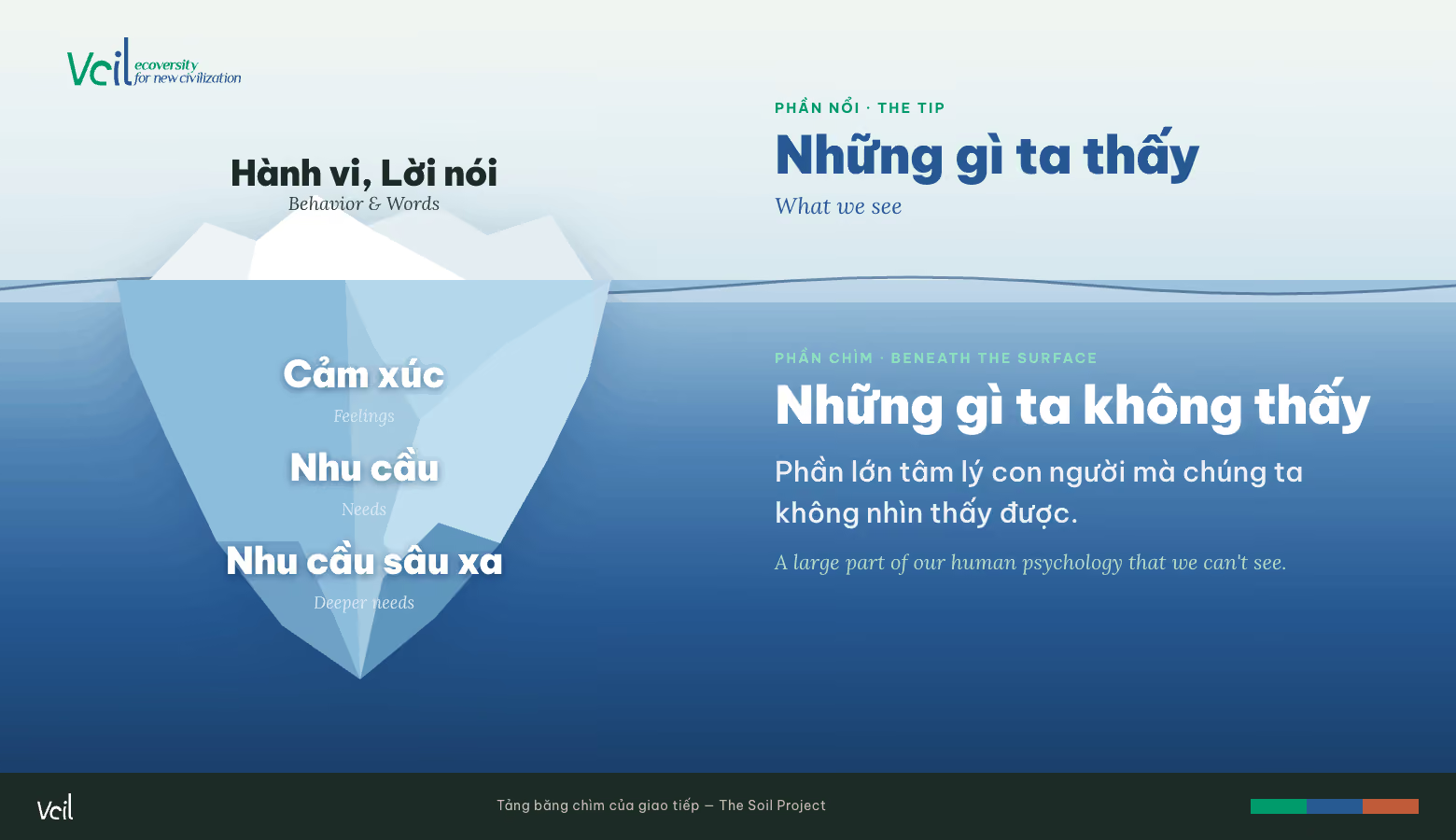
In the course, we learned that many behaviors, ways of acting, and words expressed are just the tip of the iceberg. Behind them are various emotions and needs that require fulfillment. Therefore, what is displayed are methods a person uses to try to meet their needs. Often, these reactions are instinctive and unconscious, so instead of truly helping to meet those needs, they sometimes cause conflict and discomfort for others. However, if we learn how to understand and meet these needs, we will have more proactive choices and be able to reach our true needs.
One of the things we learned is that many behaviors, words, or ways of acting are just the tip of the iceberg. Behind that are always emotions and needs waiting to be met.
In other words, what we show on the outside is just a strategy to try and meet an internal need. However, these strategies mostly operate unconsciously. As a result, instead of helping our needs get met, they sometimes create misunderstandings, frustration, or conflict with those around us.
If we learn to identify our needs, we will have more options to meet them in a proactive, conscious, and healthy way.
One of the tools the teachers introduced is the Needs Cards.
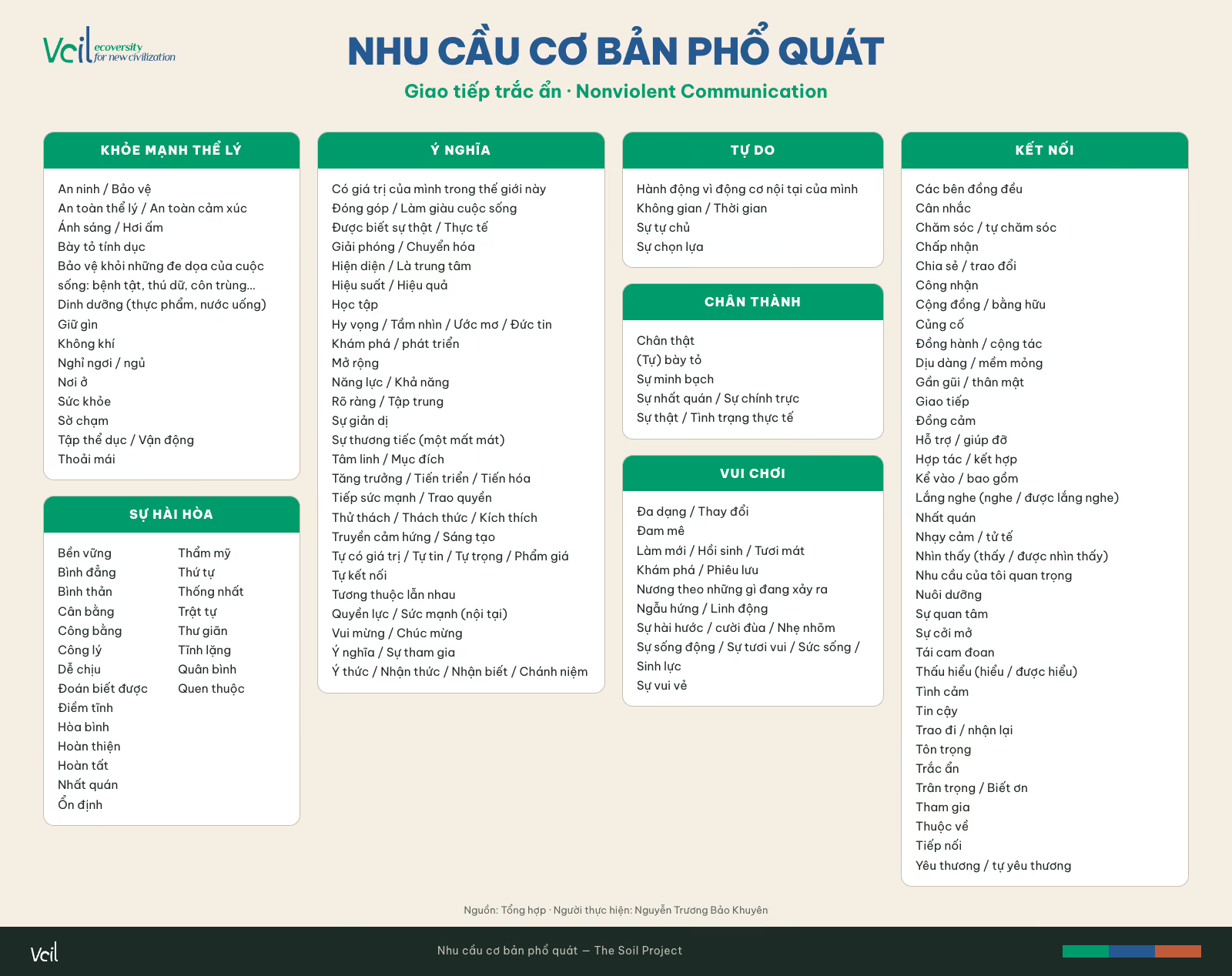
Each person takes some quiet time to look through the cards and select the words that best reflect their current needs. Afterward, we are invited to take time to feel what it would be like if those needs were truly met, while also brainstorming different ways to fulfill them—either through our own actions or by making requests of others.
The interesting thing is that everyone connects with their needs in very different ways. Some feel it through their body, while others do so through images, memories, sounds, or natural movements. There is no right or wrong way; the important thing is to learn to listen to your own strongest channel of information.
During the practice, everyone had their own unique way of connecting with their needs. After connecting with hers, Chieu Ky wanted to sing a song from her favorite Japanese movie. Mai allowed her "inner child" to emerge: she laughed, talked, and used the innocent language and gestures of a young child. Meanwhile, Loto expressed her needs through very free and expansive movements.
These are moments that are very difficult to put into words. We could clearly feel the shift in energy, presence, gaze, body, and spirit in each person when their needs were truly touched. That is also the answer to the question: what happens when a person's needs are met?
Jane shared that needs are the life force of every person.
When we connect with our needs, we have more options to meet them in a proactive, conscious, and healthy way, rather than just reacting out of unconscious habits.
For example, in a romantic relationship, a person might frequently feel jealous, angry, or withdraw into silence when they feel neglected. From the perspective of NVC, these reactions are not needs, but rather strategies to try to meet a deeper need.
If you pause and ask yourself: “What is it that I truly need?”, you might realize that you are longing to be loved, seen, acknowledged, or connected. Once we touch upon the true need, we can find healthier ways to meet it, rather than simply repeating familiar reactions.
Viewed in this light, many seemingly “incomprehensible” behaviors begin to make sense. A parent might scold their child because they are trying to meet a need for care and protection. A colleague who loses their temper may be driven by a need for accountability or a desire to see a task completed. Even feelings of boredom, lack of motivation, or burnout are sometimes signals that an important need is not being met.
Therefore, understanding your needs and how you meet them is a foundation for self-awareness, emotional regulation, and conflict resolution.
Another lesson we carry with us is: each person needs to be proactive and take responsibility for their own needs.
We can certainly ask others for support, but we can also find many different ways to meet those needs ourselves.
For instance, if you realize you have a need for rest, you could sleep, meditate, take a walk in nature, go on a trip, read a book, ask someone for a massage, or choose any other method that works for you. When we have more options, we are no longer completely dependent on one person or one specific situation to feel happy.
Perhaps that is also when we begin to connect with our own life force .
1. How can I identify my needs if I am a more rational, logical person?
The instructors suggest starting with a deck of needs cards. Reading and selecting the words that resonate most with you will help you connect with your needs more easily, rather than trying to “think” your way through what you need.
2. What if I don’t feel anything at all?
Everyone processes information differently. Some are more attuned to physical sensations, while others connect through images, memories, or sounds.
So, instead of just asking “What are you feeling?”, we can try a variety of different questions:
Questions like these help many people connect with their needs more easily.
3. How can you meet your needs?
You can ask others for support or take the initiative to find various ways to meet that need. The important thing is that there isn't just one single way to do it.
4. How do you distinguish true needs from things you think you “have to” do?
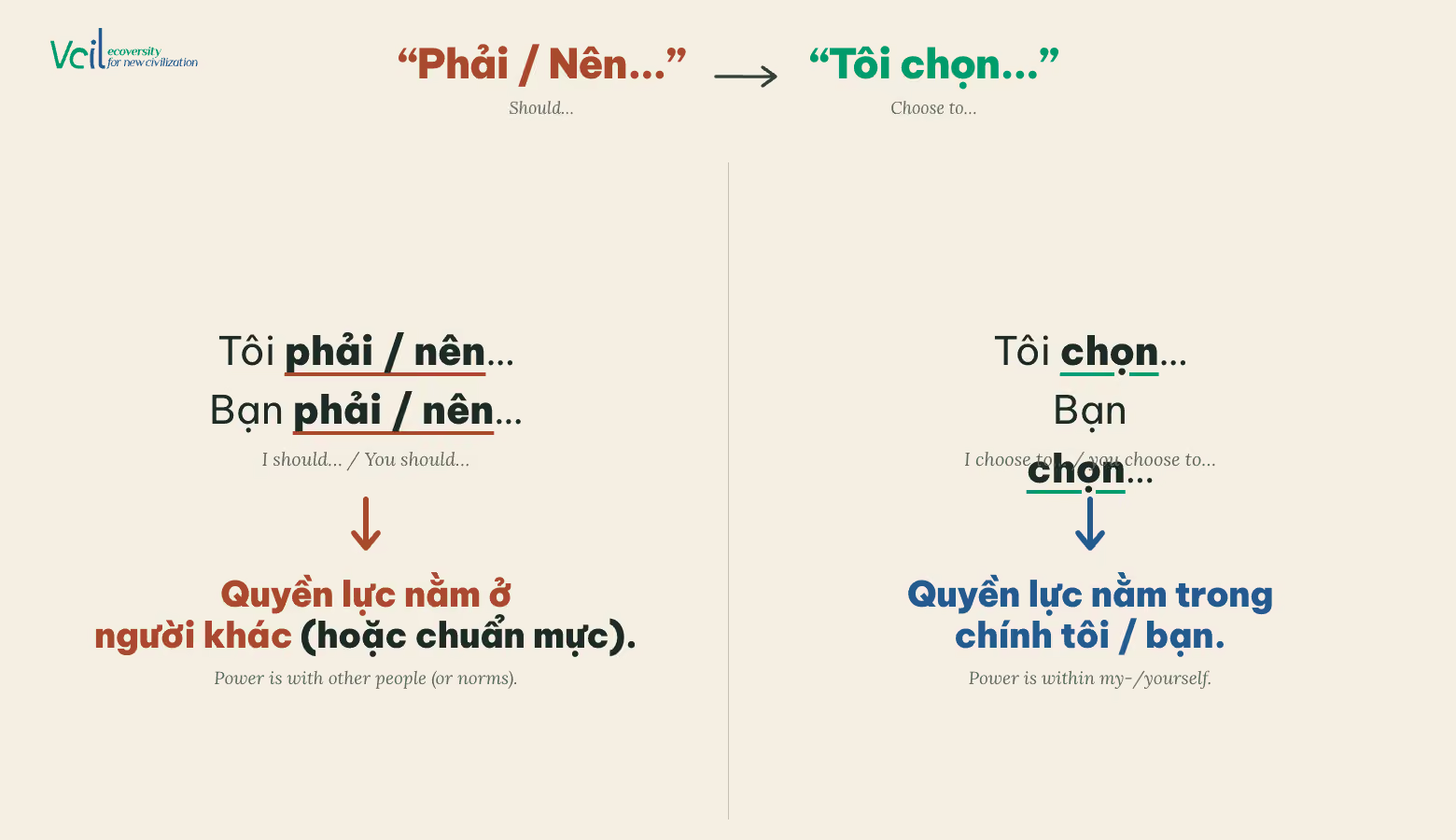
The instructors suggest that internal voices starting with “I have to…”, “I should…” often reflect external expectations, standards, or pressures rather than your own genuine needs.
If we only live by these “haves” and “shoulds,” we easily become exhausted, drained of energy, and disconnected from ourselves.
Instead, the instructors invite us to try changing our language.
Instead of saying "I have to...", try saying "I choose to...".
This is more than just a change in wording. It is a shift in responsibility and agency. When we say "I choose to", we simultaneously accept responsibility for that choice. No one else is making the decision for us, and it is in those very moments that we have the opportunity to connect with our inner source of strength and vitality.
It is not easy to work through conflict if we are not in a calm and centered state. In reality, most of the time we react to conflict based on pre-existing emotions, habits, or defense mechanisms, rather than from a place of clarity.
According to Internal Family Systems (IFS), there are many different "parts" within each of us. Each part carries its own personality, values, beliefs, and ways of reacting. Depending on the situation, different parts emerge to guide our behavior. This is a completely normal human experience. The movie Inside Out is a perfect illustration of this theory.
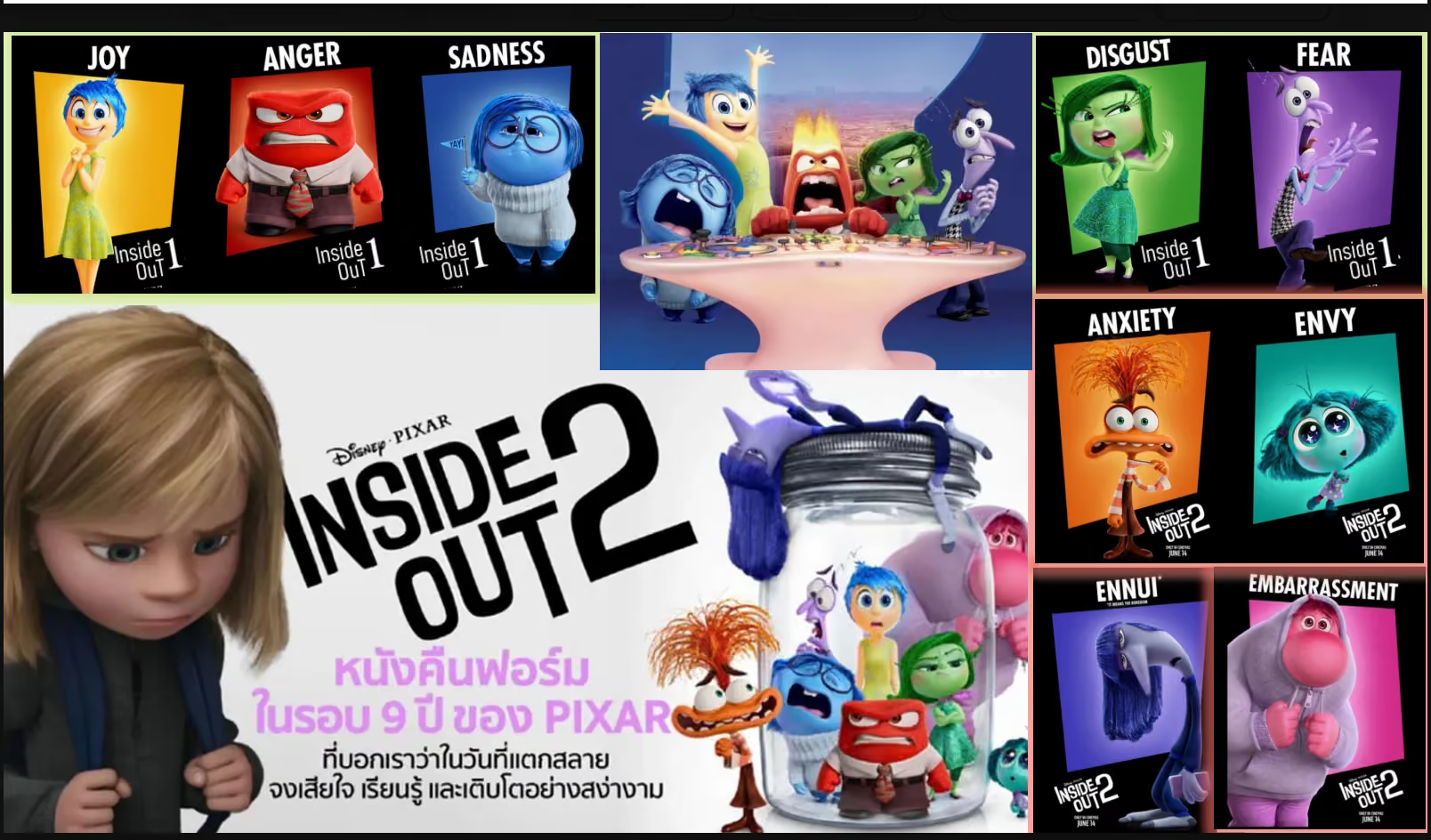
We have all likely experienced this. Sometimes we are one person at home, another at work or school, and yet another version when we are with friends. Even within the same day, we might react very differently from morning to evening. From the IFS perspective, this is because different "parts" are taking turns showing up.
Many of these "parts" are formed from past experiences or psychological trauma. They emerge with a very positive intention: to protect us from the pain we have endured. However, when these "protective parts" are constantly on high alert and taking the wheel, they can cause us to react automatically, impulsively, or fall into repetitive, old patterns.
Teachers often use a very intuitive analogy: each person's life is like a bus, and the "parts" are like passengers on that bus. Sometimes, a passenger who is angry, fearful, or anxious rushes to the driver's seat and takes the wheel. When that happens, the whole bus follows that part's emotions.
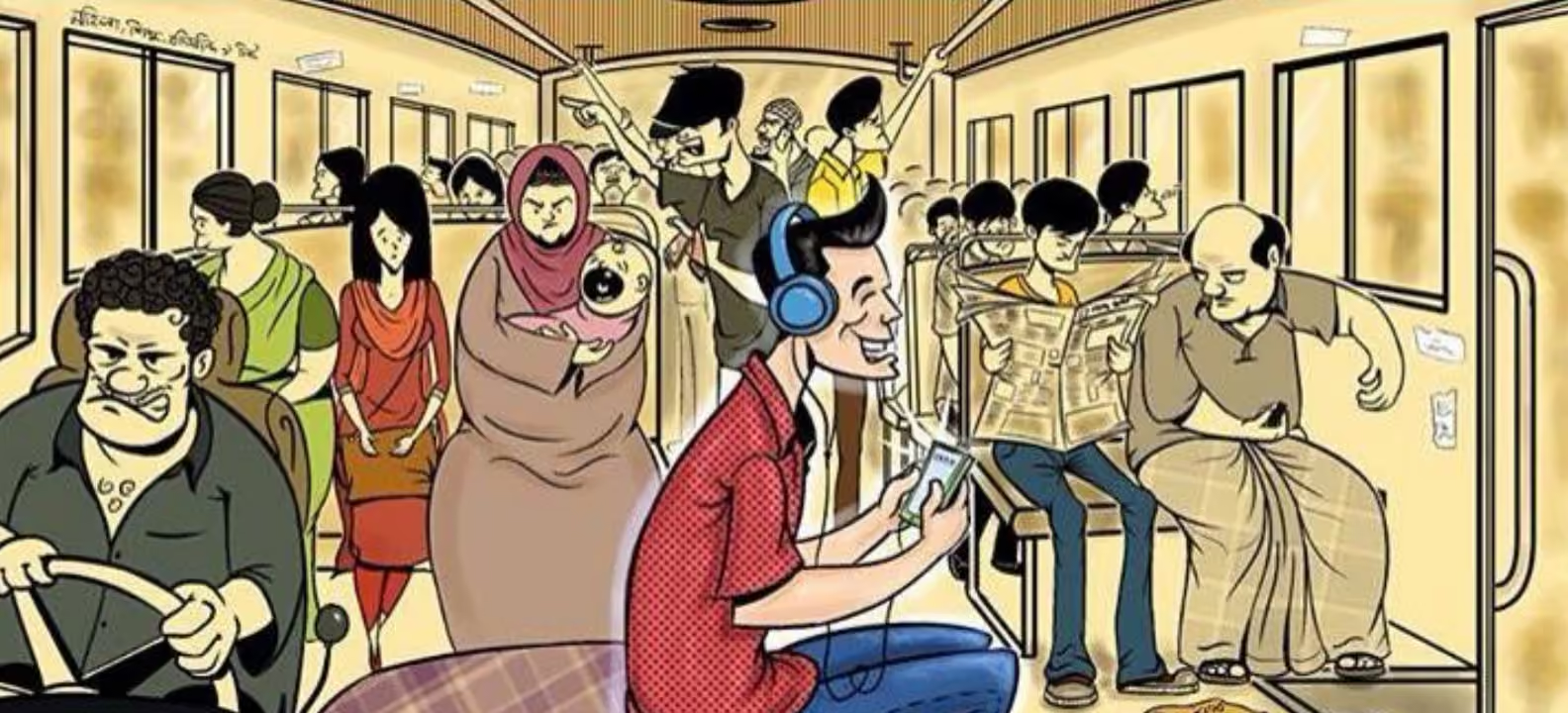
What we need to do is not to eliminate or fight these "parts." They all have their own roles and significance. The important thing is to invite them to move back to the passenger seats, so that Self becomes the driver.
In IFS, Self is not just another "part," but the core state inherent within everyone. Many traditions refer to this state by various names, such as Higher Self, Buddha Nature , or one's deepest essence.
When in a state of Self, we possess enough calmness, clarity, and compassion to work through conflict. Richard Schwartz, the developer of the IFS model, describes this state through eight qualities often referred to as the 8Cs: Calmness, Clarity, Curiosity, Compassion, Confidence, Courage, Creativity and Connectedness.
Therefore, instead of trying to control your emotions or forcing yourself to be calm, the key is to learn how to return to Self.
In this course, instructors introduce various ways to practice this. For some, it is connecting with nature: sunlight, trees, rivers, or the sound of birds can help them find peace. For others, it is learning to identify the "parts" that emerge, talking to them, and gradually allowing Self to lead. It could also mean returning to connect with your deepest needs, as shared in the previous section.
If we cannot return to Self, we are prone to reacting from our "protective parts" when facing conflict, which escalates tension and unintentionally causes hurt. Each person is a unique Internal Family System, with "parts" carrying different experiences, beliefs, and defense mechanisms; dialogue can easily become a clash of these defenses. When these "protective parts" interact instead of Self, conflict is easily heightened and becomes harder to resolve.
When Self is in the driver's seat, we are no longer swept away by automatic reactions. Instead, we have more space to view issues holistically, understand the context, empathize with the other person, and choose a more appropriate response. This is also a crucial foundation for transforming conflict in a healthy way.
One of the perspectives that gave us the most to think about in the course is: we do not enter into conflict as completely equal individuals. Many participants shared that this insight helped them better understand how society functions, reducing feelings of insecurity and difficulty in their interactions with others.
In daily life, we constantly compare ourselves to others, whether consciously or unconsciously. We compare age, gender, education level, profession, income, social status, communication skills, appearance, nationality, and more. It is these very differences that gradually create relationships of rank, power, and privilege.
Whether we like it or not, everyone is born into different hierarchies. Part of this comes from the circumstances of our birth; part comes from how society perceives us and grants us certain advantages or disadvantages. These very differences influence how we are treated, heard, trusted, and given opportunities in life.
Interestingly, many of these forms of power operate unconsciously.
Jane shared that in her many collaborations with Chanchai, there were numerous instances where ideas she proposed were later credited to him, even though he himself confirmed he had never said them.
According to their analysis, this is an example of gender privilege. In many contexts, society unconsciously assumes that men's opinions are more valuable or reliable than women's. Consequently, people easily attribute an idea to the man in the room, even when that is not the case.
Another example comes from the very space where the course is taking place.
Jane shared that the room was designed by a male architect, so many details do not truly reflect the experiences of women. The soundproofing is poor, the curtains are quite thin, and the bathroom areas or private spaces do not feel secure. For many men, these might not be issues. But for her and many female students, these details significantly affect their sense of safety while in that space.
Another member from South Korea also recounted that, despite being divorced and having no remaining legal ties to her ex-husband, she is still frequently asked to provide his information when handling bank procedures. This reflects an unconscious assumption that men are still the ones with higher status or greater reliability in financial transactions.
Similar examples appear among many other groups of people.
Older adults often face difficulties because many facilities, products, and technologies are designed primarily for younger people. At the same time, they are easily excluded from the labor market due to age-related biases.
Or, many policies are built based on the experiences of heterosexual people, leaving the LGBT+ community largely invisible during the design and implementation of those policies.
It is worth noting that most of these inequalities do not necessarily stem from individual malice, but rather from assumptions deeply embedded in how a system is designed and operated.
To better understand these differences, the instructors introduced the model of Arnold Mindell and Max Schupbach. According to them, an individual's or group's rank and power/privilege do not come solely from social status, but are formed from various different sources.
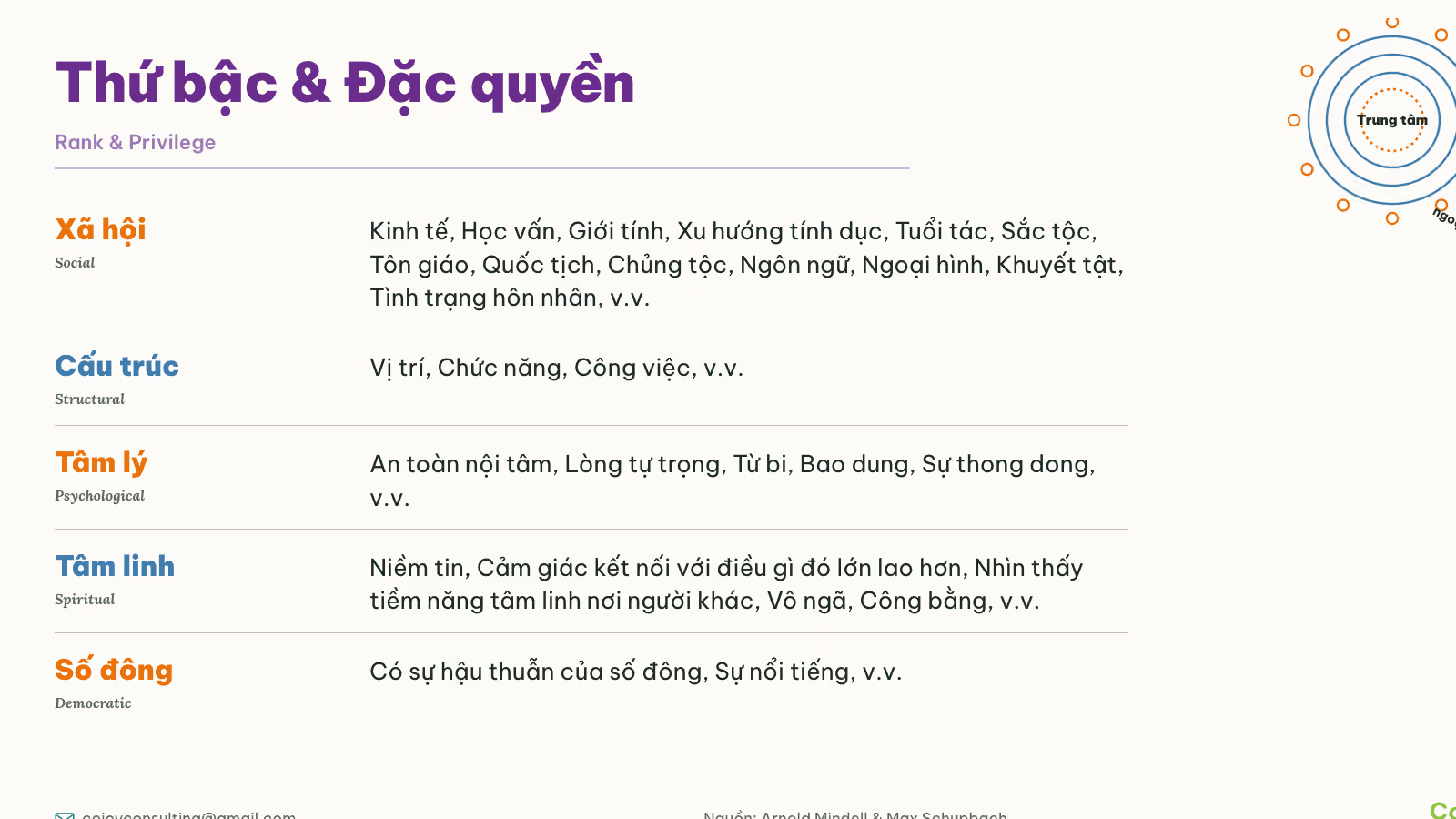
One of the most important things we have learned is: no one can completely escape power or privilege. The key is not to deny them, but to be Aware, Own, and Use them responsibly.
Conversely, denying or rejecting one's own privilege in many contexts is synonymous with denying the responsibility that comes with power., and that easily leads to misunderstandings, inequality, and conflict.
To illustrate this, Jane shares a discussion from the racial equality movement in the United States. During the exchange, a white woman remarked: “Why do we have to fight for rights? We could just live as equals and love one another.”
That statement immediately drew a sharp reaction from many Black participants. It wasn’t because the woman had malicious intent, but because she was viewing the issue through the lens of her own experience, failing to recognize the privileges she held. As a white person, she had not experienced the systemic injustices that the Black community has faced and continues to face, such as discrimination in education, employment, housing, career opportunities, or how they are treated within the legal system.
Because she failed to see these differences in experience, her call to “be equal and love one another” inadvertently denied the reality that many people are still fighting for basic rights that others take for granted.
From this example, we realize that recognizing one’s own privilege is not about creating a sense of guilt or deciding who is right and who is wrong. More importantly, it is about helping each person become aware of their position in relationships and using that power responsibly. This is especially crucial in relationships where power imbalances already exist, such as between parents and children, managers and employees, heterosexuals and the LGBT+ community, non-disabled and disabled people, or between any groups that possess different resources and privileges.
Finally, rank is dynamic. No one is always in a “high” or “low” position in every situation. A person may have many advantages in terms of wealth, education, or status, but face disadvantages regarding gender, health, or emotional expression. Conversely, someone in a weaker position in one aspect may possess significant resources in another.
Therefore, instead of viewing power as something to be owned or competed for, Mindell and Schupbach invite us to see it as a set of resources that constantly shifts depending on the context and the relationships involved. Perhaps, by recognizing this fluidity, we can approach conflict with more humility, empathy, and responsibility.
How do you work with those who have “higher” rank?
A question raised in class was: How do you work with people who have higher rank or power than you?
Through the participants' sharing, we identified a common trend. When receiving feedback from a boss, teacher, parent, or someone in a higher position, many people immediately think: “There must be something wrong with me,” “I’m not good enough,” or “I’m inadequate.”
In conflict situations, those in lower positions also tend to remain silent, withdraw, or concede, assuming that the person with more power must be right.
However, this does not always reflect the truth. Many feelings of inferiority or withdrawal stem from the power imbalance in the relationship itself, rather than from one’s actual value or competence.
Therefore, instead of immediately shrinking away or trying to please the other person, the instructors invite us to first return to ourselves. What do I need right now? Do I need to be heard, need clarity, need respect, or do I need more support?
Once we connect with our needs, it becomes easier to express them to others, rather than simply reacting out of fear or insecurity. We can proactively make specific requests, such as needing more time, needing further clarification, or needing a different way of receiving feedback that works better for us.
The interesting thing is that when a conversation stems from needs, rather than from defensiveness or feelings of inadequacy, the quality of the relationship shifts. We no longer speak from a position of being "lesser," but from the position of a person who is conscious of their own needs and dignity.
The previous sections have established a fundamental yet essential foundation for gradually navigating conflict. In general, we need to identify our tendencies when facing disagreements, then delve into our own needs, and subsequently connect with our "Self." From there, we gain enough empathy, composure, and self-control to face conflict.
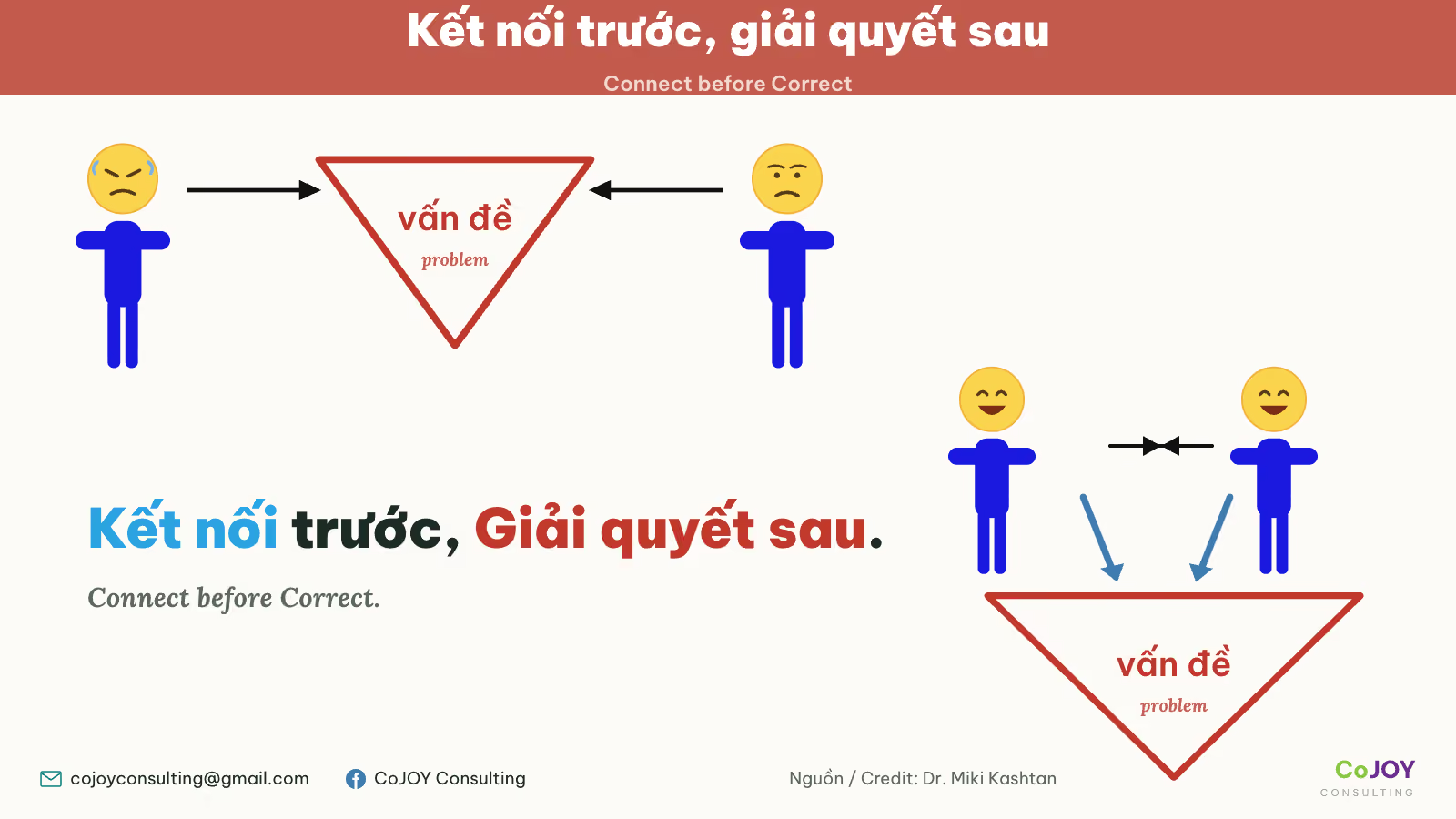
The core principle for transforming conflict is "connect before correct." Without connection, two people in conflict will not listen to each other and cannot transform the conflict. Conversely, if we only seek connection without a solution, the root problem remains unresolved. Only when both parties can connect and share a desire to resolve the conflict can we establish common goals and mutual understanding to find a win-win solution.
Conflict is an inevitable part of life. It arises in our families, workplaces, communities, and even within ourselves. Yet, most of us have never been taught how to understand and engage with conflict in a healthy way. When conflict arises, our typical reaction is to avoid it, confront it, or try to determine who is right and who is wrong.
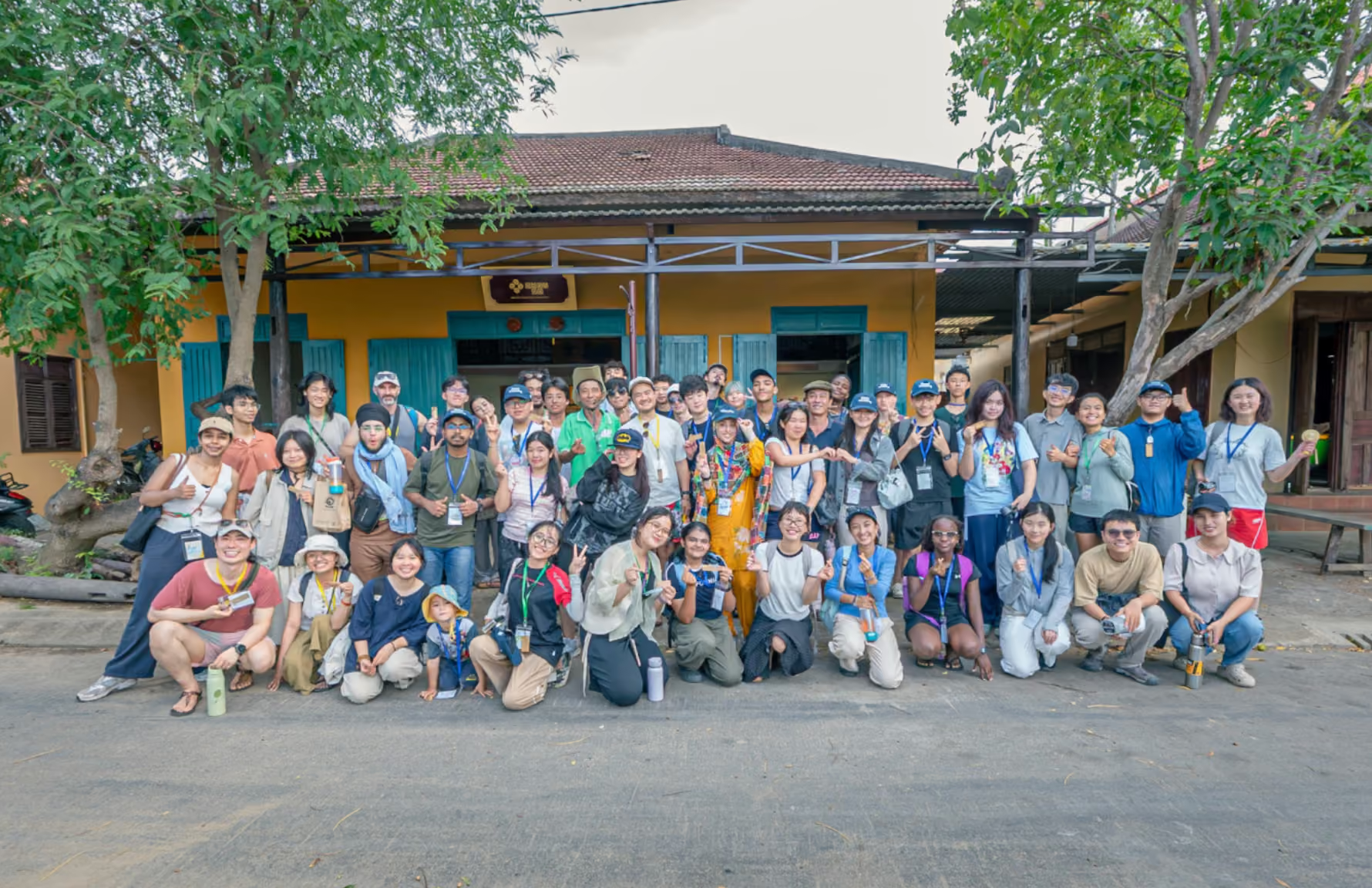
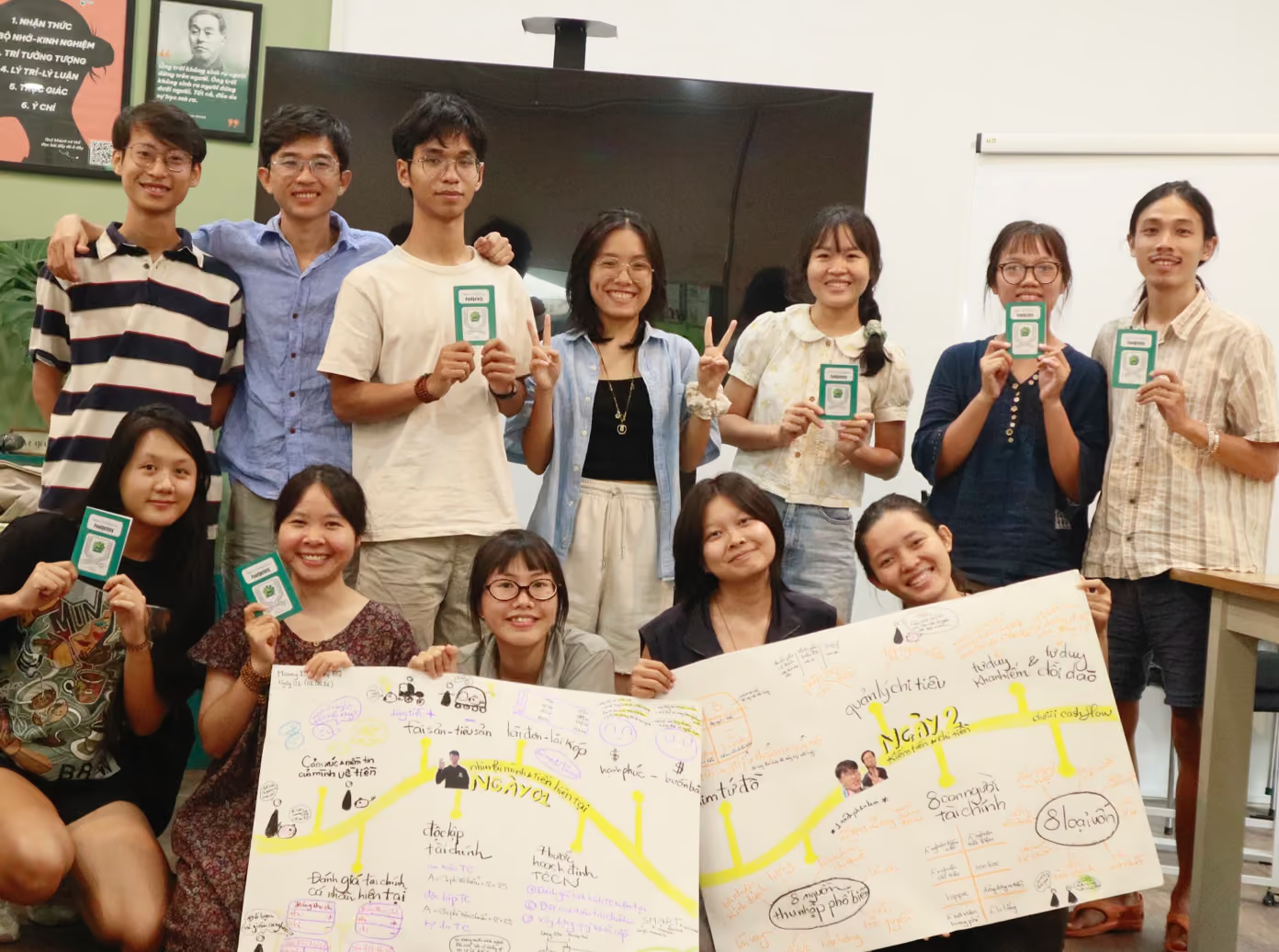
From June 12–16, the Vcil Community and The Soil Project hosted the course “Transforming Conflict Through Awareness” at Triem Tay Gardens (Hoi An), with the participation of members from The Soil Project and the Vcil Community. Over five days, participants explored a different approach: instead of focusing solely on the symptoms of conflict, the program encouraged everyone to learn how to identify what is happening within their own bodies, emotions, and minds, thereby understanding others and entering into conflict with greater mindfulness.
One of the core principles throughout the course was: to transform what happens on the outside, one must first learn to identify and regulate what is happening within oneself.
With that approach, the program was designed in three stages: understanding self – understanding others – transforming conflict.
The program content was structured as follows:
- Recognizing personal tendencies, habits, values, and reactions, and understanding the mechanisms and meanings behind one's own behaviors. From there, finding ways to self-regulate before engaging with conflict.
- Understanding the core factors that create conflict: social structures, power, hierarchy, and privilege.
- Building on these two foundations, participants began to learn and practice how to engage with conflict in a healthy way.
- Practicing conflict resolution and creating a community that is healthy with conflict.
This recap is intended to help our members grasp the fundamental concepts of conflict transformation and to document the meaningful and engaging activities that took place during the five-day program. You can view the program description here: https://vcil.community/ecoversity/chuyen-hoa-mau-thuan
Article content: