You are using the member interface.
Log out of the member interface →

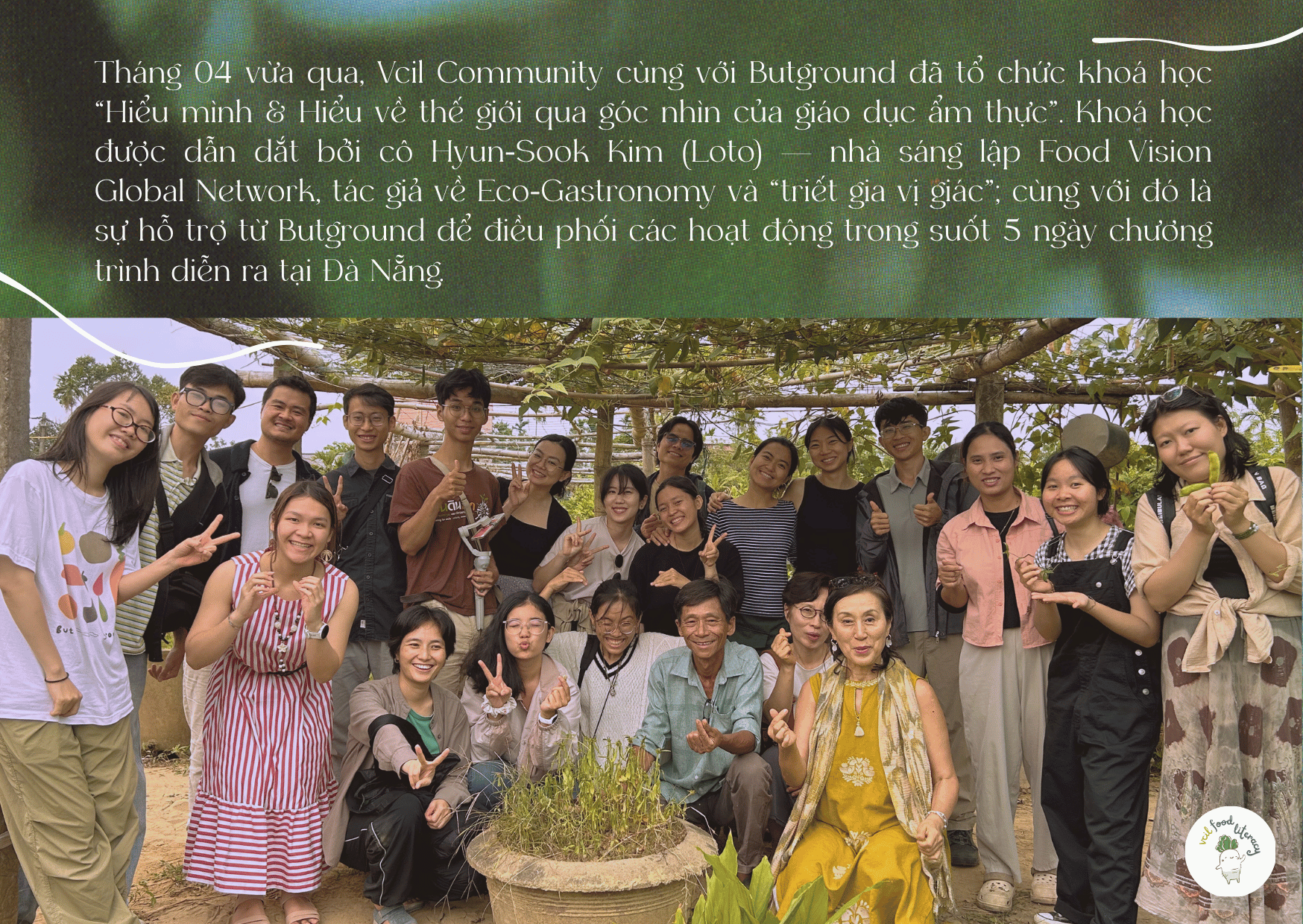
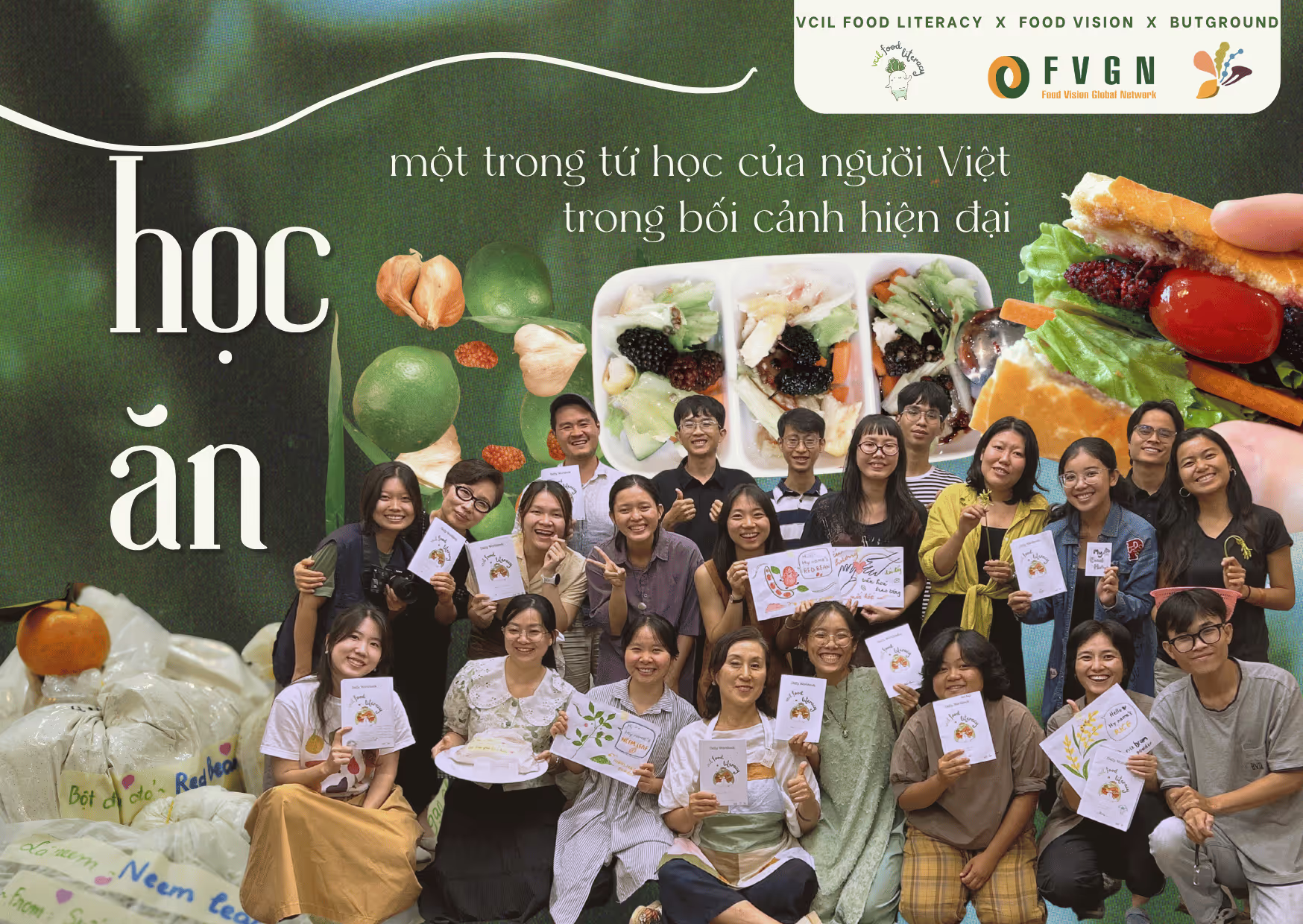
Last April, Vcil Community, in collaboration with Butground, organized the course “Understanding Ourselves & Understanding the World Through the Lens of Food Education.” The course was facilitated by Hyun-Sook Kim—founder of Food Vision Global Network, an author on Eco-Gastronomy and a “philosopher of taste,” with support from Butground in coordinating activities throughout the five-day program in Da Nang. The program welcomed members of the Vcil community from all three regions of the country. We all arrived at the workshop with a shared desire: to better understand one of the most essential and important activities in our daily lives—eating.
We cannot survive without eating. Perhaps that is why, in the Vietnamese “four learnings”— “Learn how to eat, learn how to speak, learn how to wrap, learn how to open” —learning how to eat comes first. But how should we eat? What does it mean to eat in a nourishing way? How does our eating affect the world? And what does the way we eat reveal about ourselves? These were the fundamental questions we explored together. Participants brought a variety of concerns: some wanted to change their eating habits to improve their health; some wanted to understand themselves through their daily food choices; others sought to restore their relationship with food and nature; while some were interested in understanding the food chain to live more consciously and sustainably.
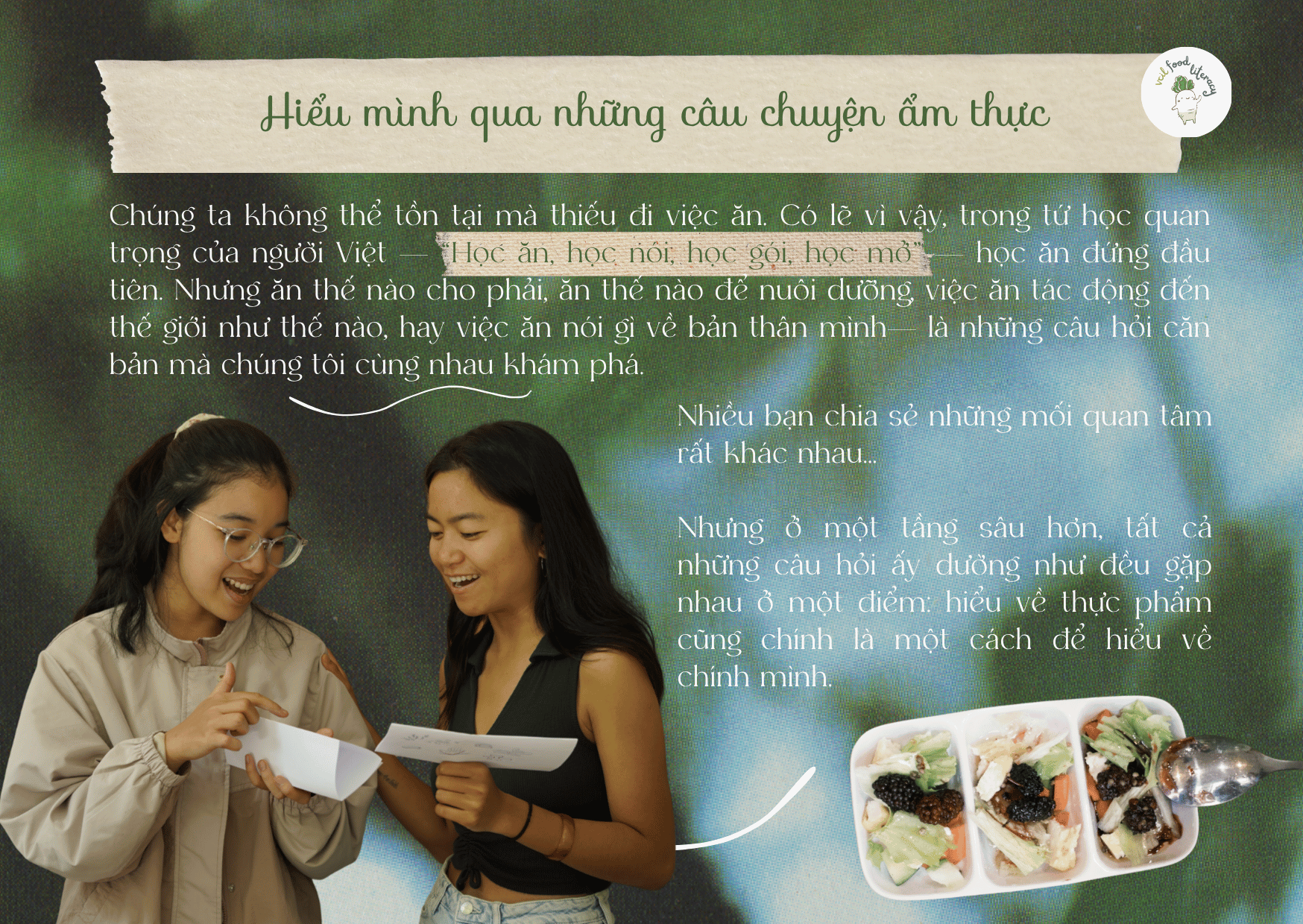
On a deeper level, however, all these questions converged on one point: understanding food is also a way of understanding ourselves.
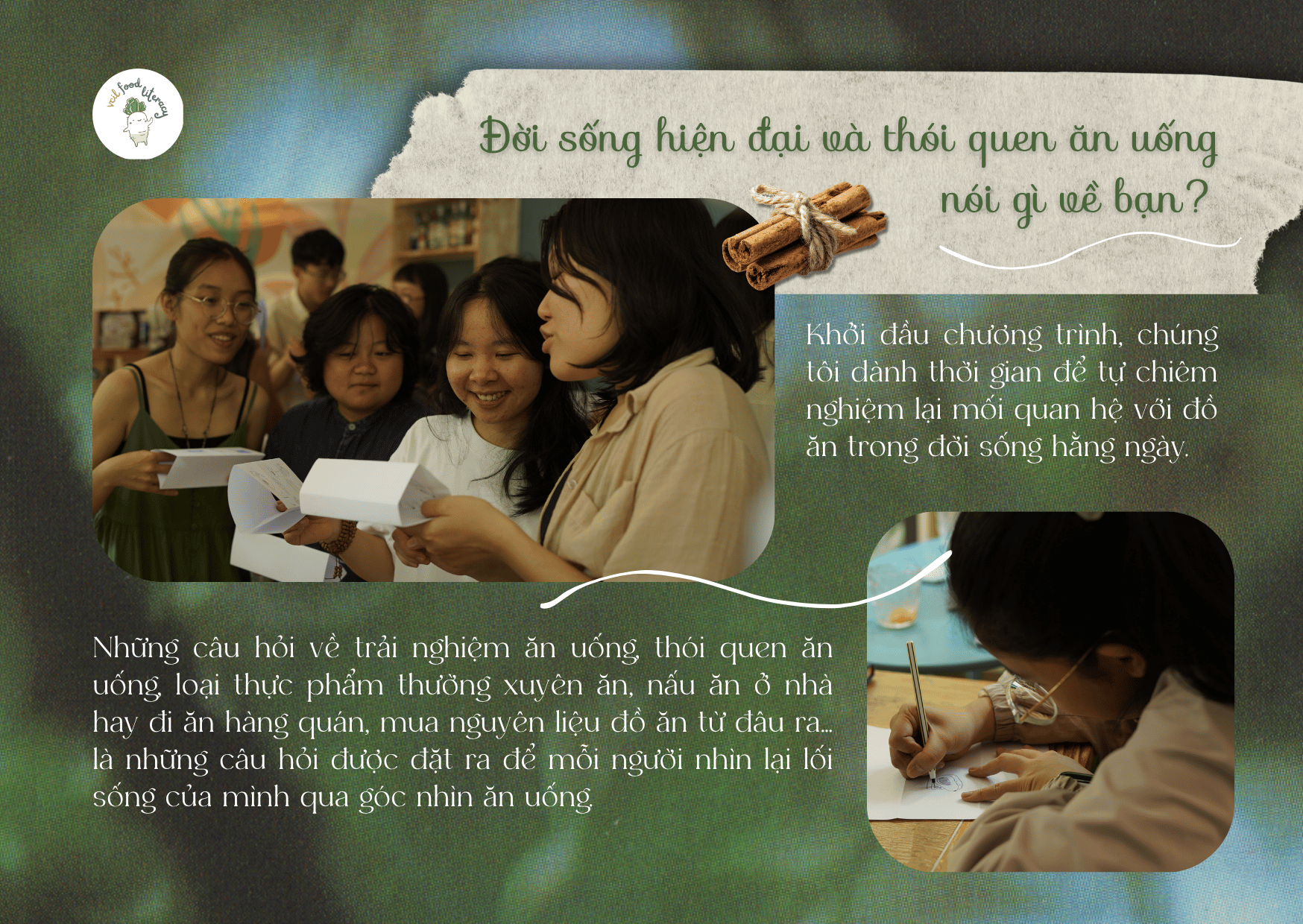
At the start of the program, we spent time reflecting on our relationship with food in our daily lives. Questions about our eating experiences, habits, the types of food we regularly consume, whether we cook at home or eat out, and where we source our ingredients were all raised, allowing each person to re-examine their lifestyle through the lens of food.
Many participants were surprised to realize they had been maintaining harmful habits for years without knowing it. For instance, one participant realized their total time spent eating three meals a day was less than an hour—meaning each meal lasted only about 15–20 minutes. Another shared that work often caused them to skip meals entirely, leading to stomach issues from an irregular schedule. Someone else tended to overeat at night due to late-night work, resulting in constant bloating. Another participant felt fortunate to work for a company with structured hours and nutritious meals; for them, the quality of a meal also depended on who they ate with and the meaningful conversations shared during that time.
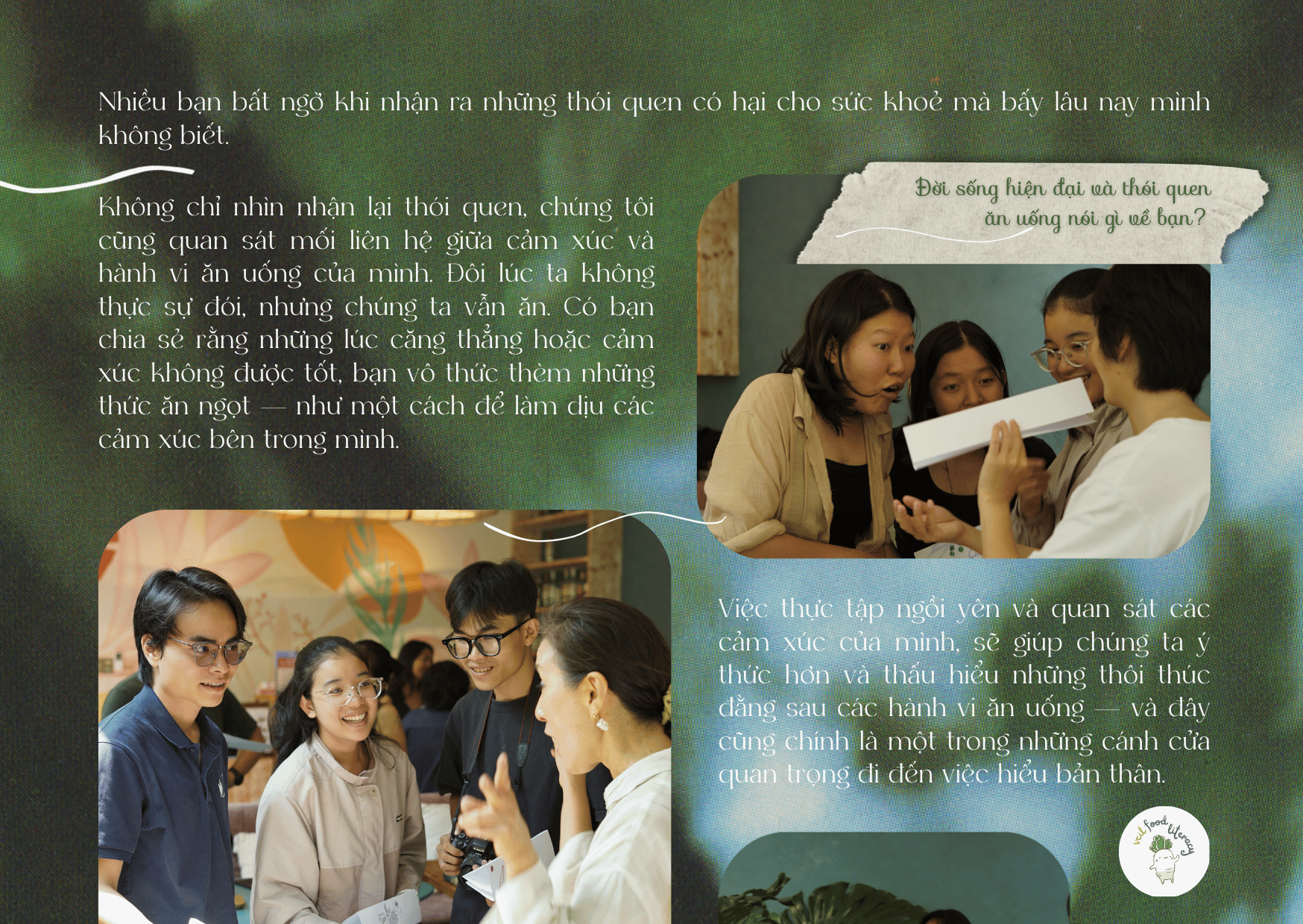
Beyond revisiting our habits, we also observed the relationship between our emotions and our eating behaviors. Sometimes we are not truly hungry, yet we still eat. One participant shared that whenever they felt stressed or emotionally unsettled, they would unconsciously crave sweets as a way to soothe their inner state. Yet, shortly after, the cravings would return. If we simply indulge these impulses without awareness or reflection, we miss a precious opportunity to understand ourselves. Practicing stillness and observing our emotions helps us become more conscious of the impulses behind our eating behaviors—and this is one of the most important gateways to self-understanding.
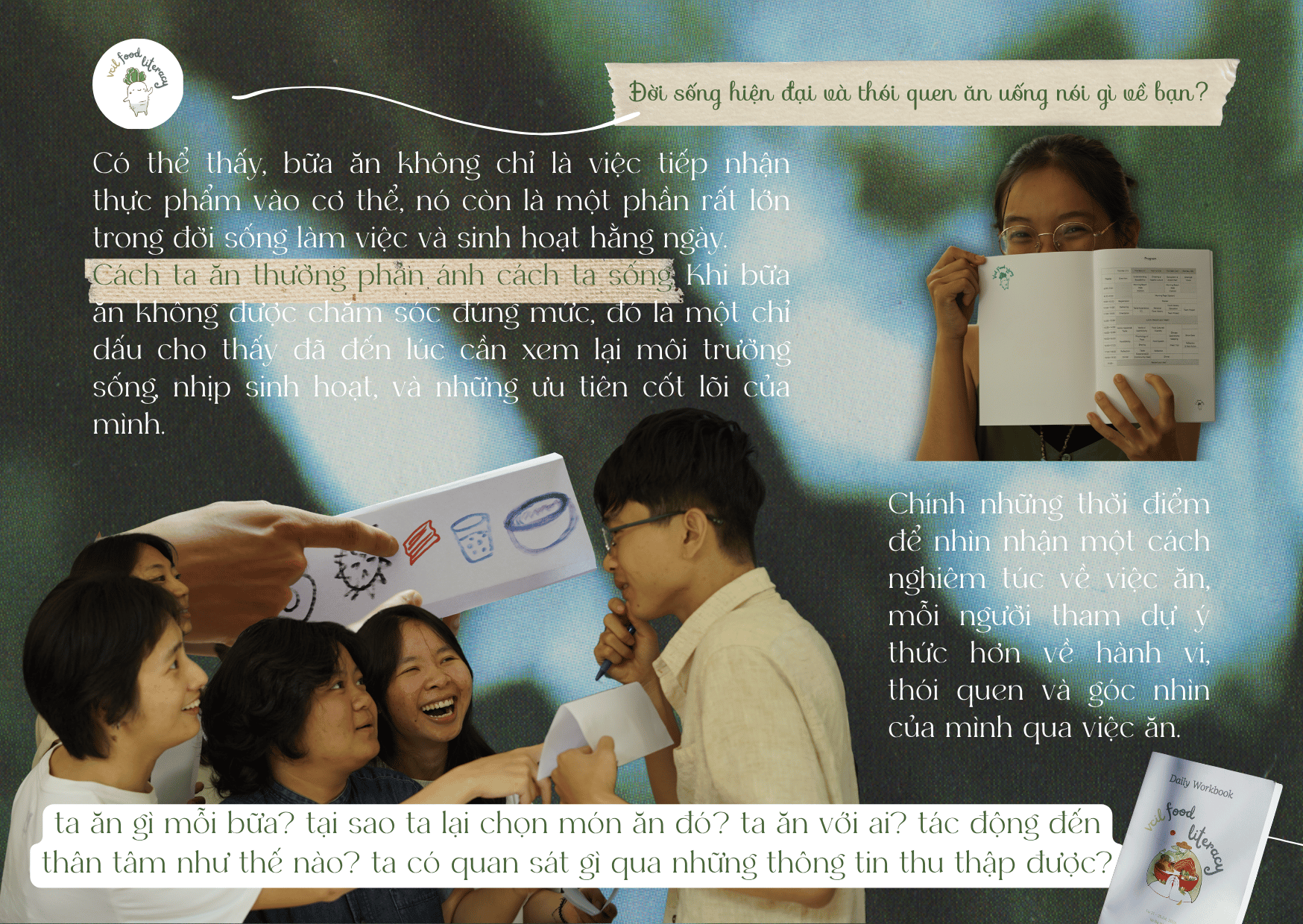
It became clear that meals are not simply about fueling the body; they are deeply intertwined with our daily working and living patterns. The way we eat often reflects the way we live. When meals are neglected, it may be a sign that it is time to reconsider our living environment, rhythms, and core priorities. After these reflective activities, each participant created personal action plans with the support and “consultation” of the collective: instead of becoming so consumed by work that they forgot to eat, one participant seriously scheduled fixed mealtimes each day and committed to eating during those periods. Another participant wanted to reduce heavy meat consumption and overeating at night, while experimenting with more grains and fruits in the morning. Someone else wanted to create more communal meals with family and friends instead of always eating alone.
Through these moments of serious reflection on eating, each participant became more aware of their behaviors, habits, and perspectives through food. This became the foundation for making long-term changes toward healthier and more holistic living.
To help learners better track their eating habits, we gave everyone a workbook called “Vcil Food Literacy” to record information such as: what we eat at each meal, why we choose those foods, who we eat with, how the meals affect our body and mind, and what observations emerge from the collected information. This workbook became a companion throughout the journey of self-understanding during the course.
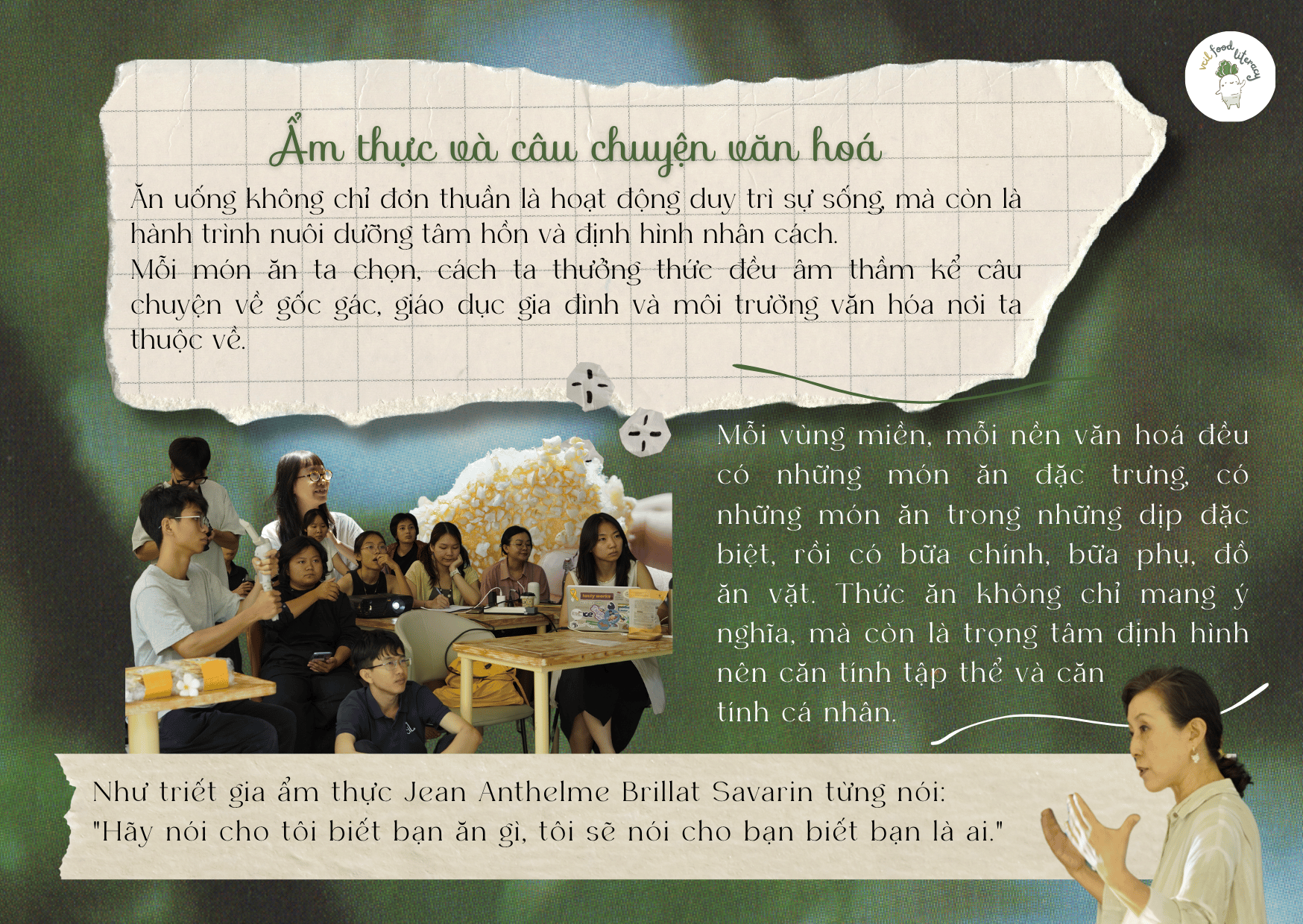
Eating is not merely an activity for sustaining life, but also a journey of nourishing the soul and shaping character. Every dish we choose and every way we enjoy food quietly tells a story about our roots, family upbringing, and cultural environment. As the gastronome Jean Anthelme Brillat-Savarin once said: “Tell me what you eat, and I will tell you who you are.” When we eat, we do not only absorb nutrients, but also the symbols and meanings carried behind them. Every region and culture has its signature dishes, special ceremonial foods, main meals, side meals, and snacks. Food does not merely carry meaning — it shapes both collective and individual identity.
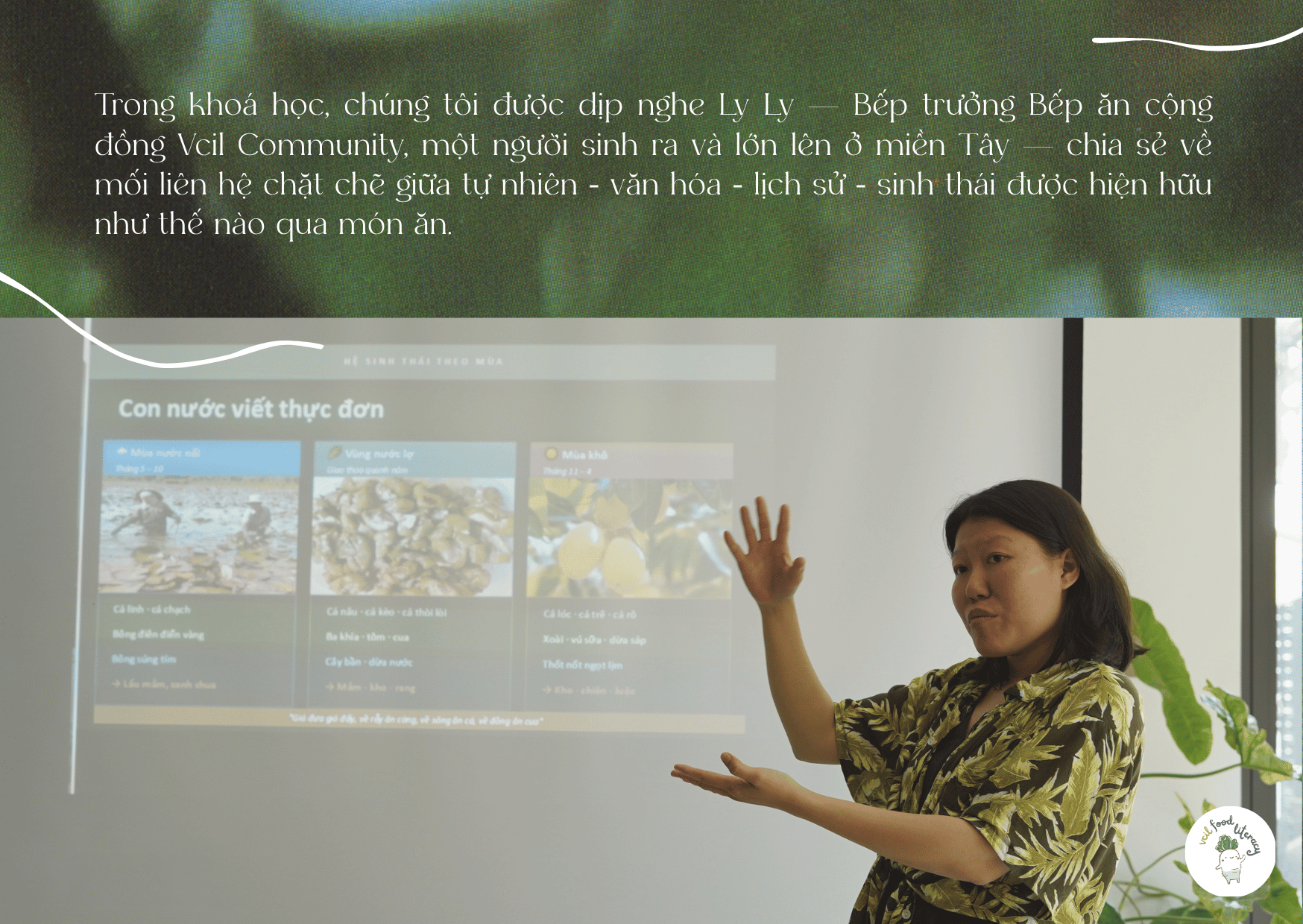
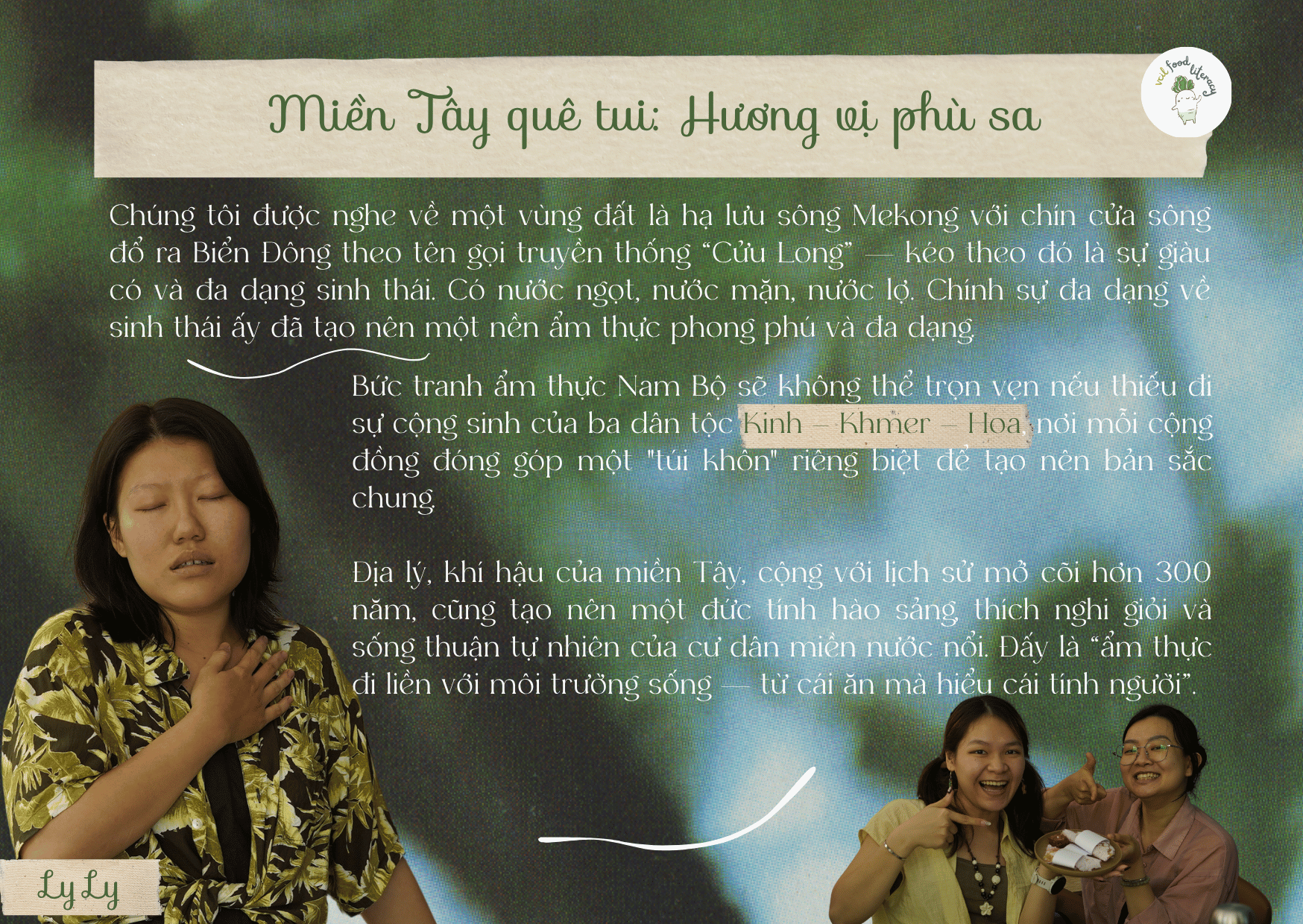
During the course, we had the opportunity to listen to Ly Ly — Head Chef of the Vcil Community Kitchen, born and raised in the Mekong Delta — share about the close relationship between nature, culture, history, and ecology as expressed through food. We heard about the Mekong Delta, where the nine branches of the Mekong River flow into the East Sea under the traditional name “Cửu Long” (“Nine Dragons”) — bringing immense ecological richness and diversity. There is freshwater, saltwater, and brackish water. This ecological diversity has created a rich and varied culinary culture.
As Ly shared: located downstream of the Mekong River before it reaches the sea, the Mekong Delta appears as a fascinating picture of biodiversity, where “all the joys and sorrows of the river depend on the upstream.” The rhythm of the tides and the circulation between salty, fresh, and brackish waters directly write the menu of the people here. From flood seasons bringing cá linh fish and bông điên điển flowers, to brackish waters filled with rabbitfish and goby fish beside lush nipa palm forests — all of this creates a cuisine that lives in harmony with nature, where people choose to coexist and blend into the rhythms of Mother Earth.
The culinary landscape of Southern Vietnam would not be complete without the coexistence of the Kinh, Khmer, and Chinese communities, where each contributed its own “wisdom bag” to shape a shared identity. The Khmer people, as indigenous inhabitants, laid the foundation with a “fermented fish sauce ecosystem” and the art of using herbs not only for flavor but also as medicine. The Vietnamese brought a flexible rice civilization, transforming rice into countless forms of noodles and cakes while skillfully balancing strong fermented flavors with wild herbs. Meanwhile, the Chinese community contributed commercial techniques and refined preservation methods with dried and salted foods, alongside a philosophy of balancing salty and sweet flavors.
From this environment emerged the generosity and adaptability of the people of the Mekong Delta. “Fish in the rivers, vegetables on the banks” — the abundance of nature cultivated an open-hearted community: simply adding another bowl and pair of chopsticks meant a traveler could immediately join a feast of local produce. The dominant sweetness and richness in Southern cuisine not only come from the region’s sugarcane and coconut abundance, but also carry philosophical meaning. Sweetness helps settlers maintain endurance during land reclamation while reflecting their own spirit: gentle, generous, and hospitable.
The geography, climate, and more than 300 years of frontier history in the Mekong Delta also shaped the region’s generous character, adaptability, and harmony with nature. This is “food intertwined with living environment — understanding personality through what people eat.” Eating cannot be separated from the sacred harmony between Earth, Water, and Humans. Nature itself is the foundation of life, inseparable from food, culture, climate, and identity.
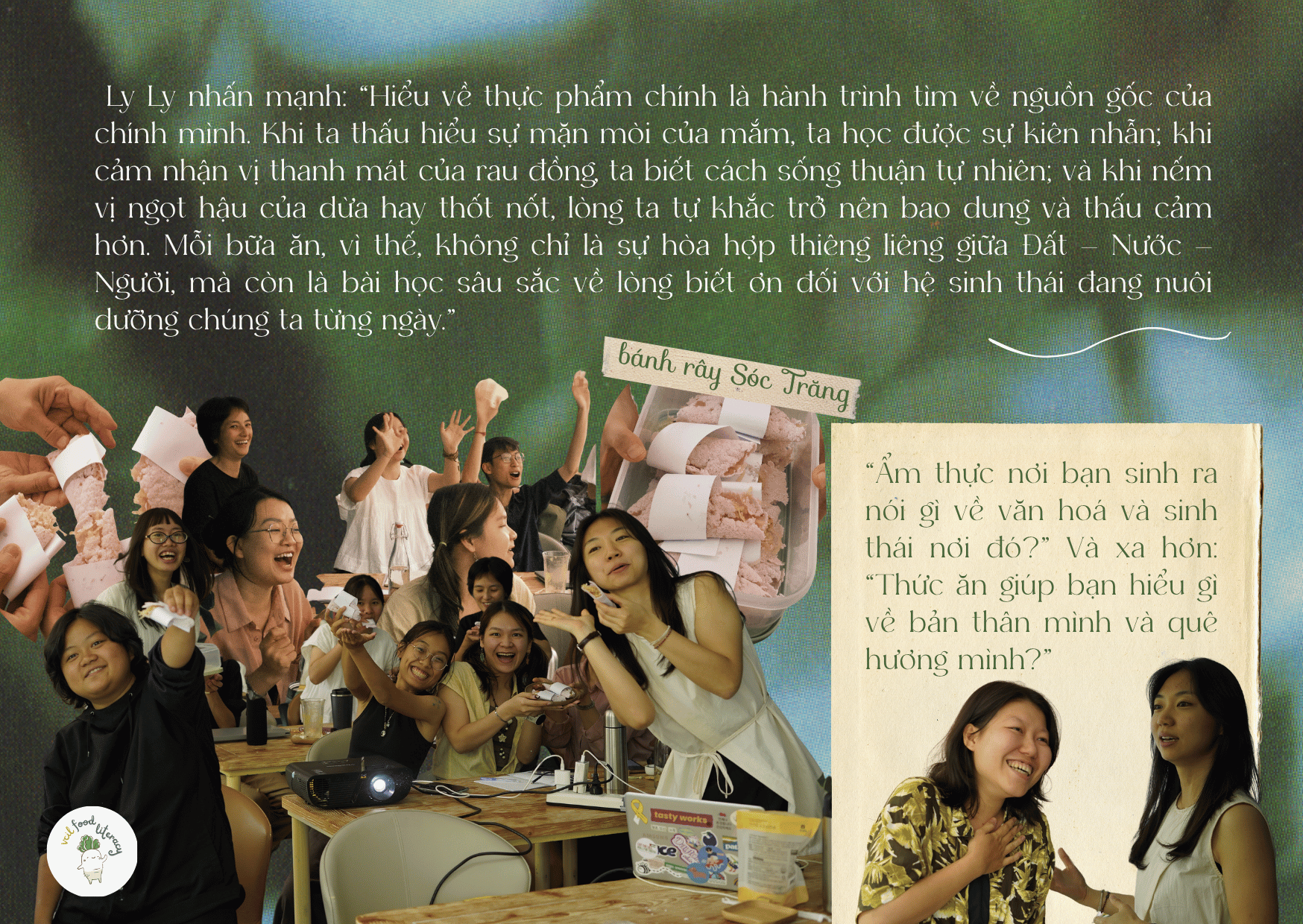
Ly Ly emphasized: “Understanding food is a journey back to our own origins. When we understand the saltiness of fermented fish sauce, we learn patience; when we feel the freshness of wild greens, we learn how to live in harmony with nature; and when we taste the lingering sweetness of coconut or palm sugar, our hearts naturally become more compassionate and empathetic. Every meal, therefore, is not only a sacred harmony between Earth–Water–Humans, but also a profound lesson in gratitude toward the ecosystems that nourish us every day.”
Listening to Ly Ly’s stories, we began asking ourselves: “What does the cuisine where you were born say about the culture and ecology of that place?” And further: “What does food help you understand about yourself and your homeland?”
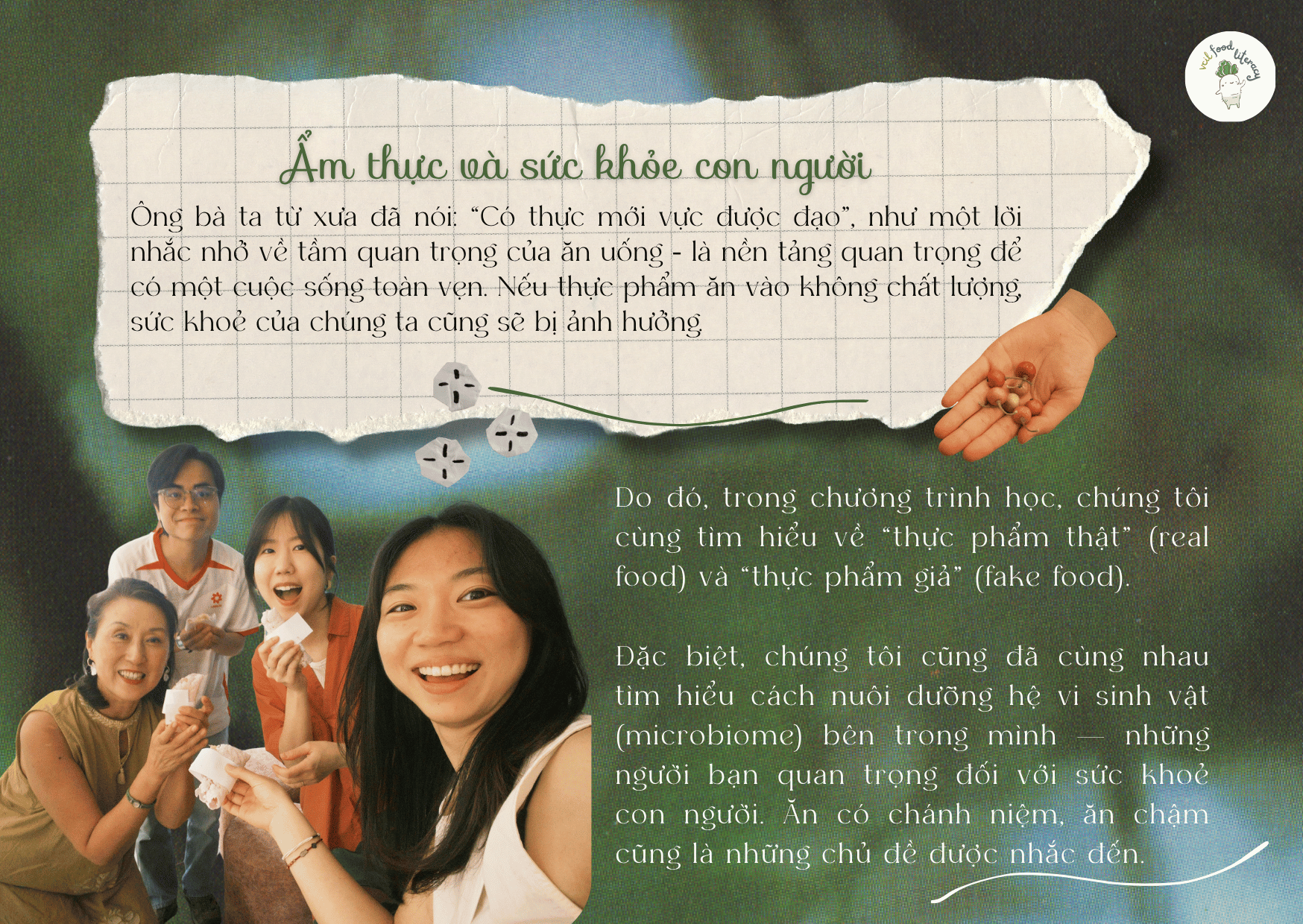
Vietnamese ancestors once said: “Only when one is well-fed can one uphold morality,” as a reminder of the importance of eating as the foundation of a complete life. If the food we consume lacks quality, our health will inevitably suffer. Therefore, during the program, we explored the concepts of “real food” and “fake food.” In particular, we learned how to nourish the microbiome within us — those vital companions to human health. Mindful eating and slow eating were also recurring themes.
However, none of this can truly happen without a healthy lifestyle and a regenerative food system.
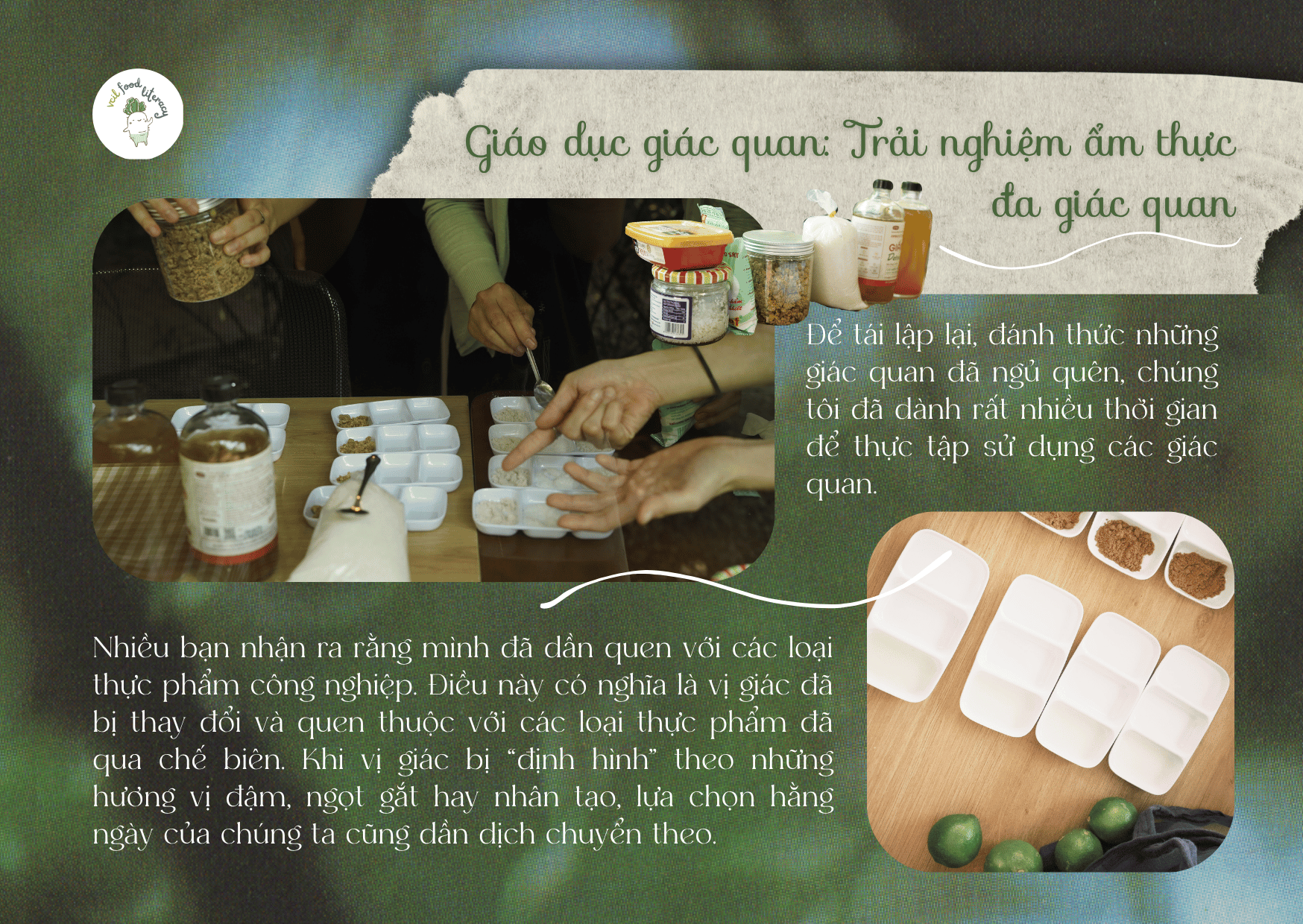
Many participants realized they had gradually become accustomed to industrially processed foods. This means that taste perception itself has been altered and conditioned by processed flavors. When our palates are shaped by intense, overly sweet, or artificial flavors, our daily choices slowly shift in the same direction. Many young people therefore feel closer to milk tea and packaged snacks than to a glass of sugarcane juice or naturally sweet, simple flavors.
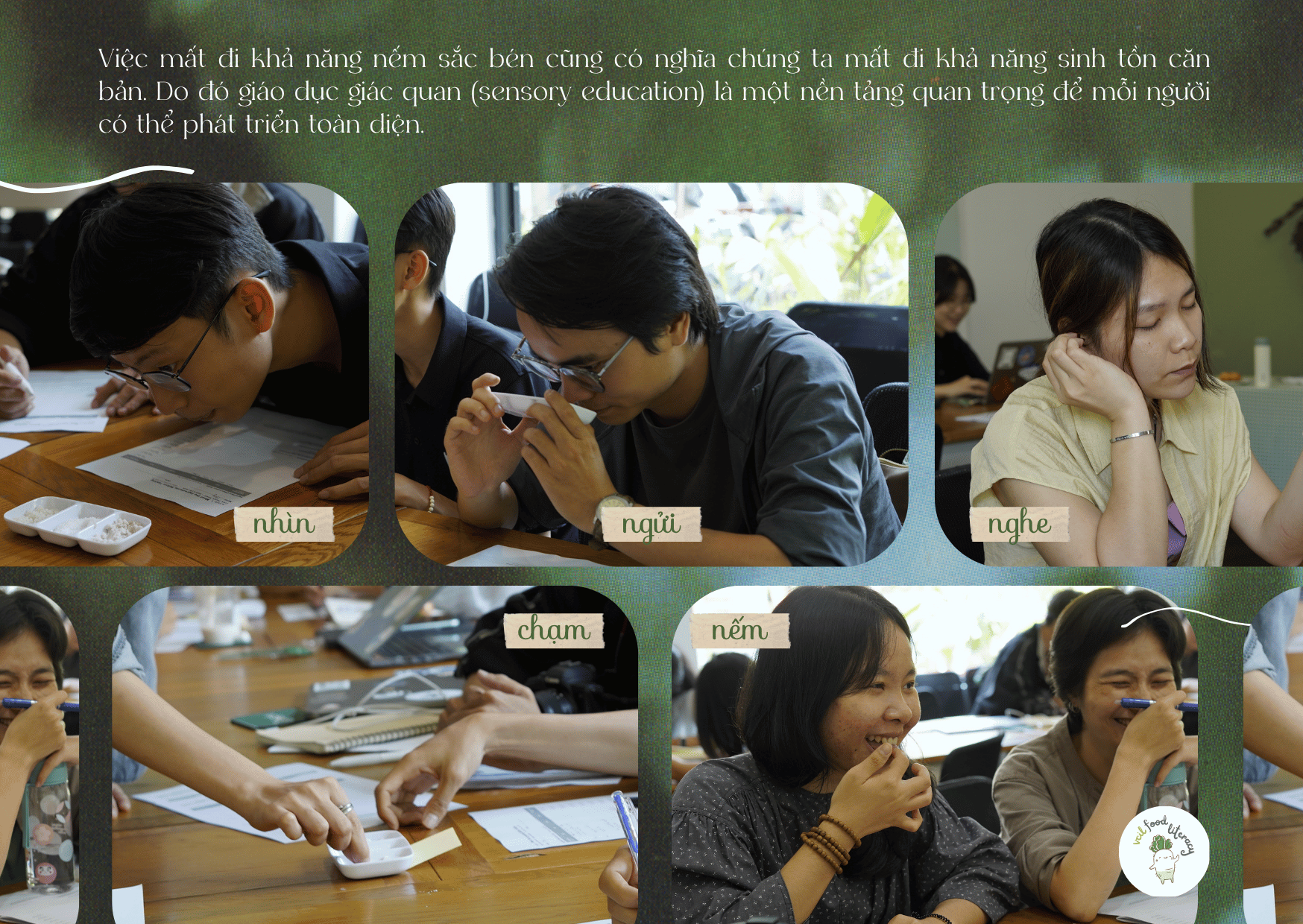
To reawaken dormant senses, we spent significant time practicing sensory engagement. By touching and guessing different vegetables, tasting different salts, observing and distinguishing unique umami flavors, we became excited when we could differentiate sugars, salts, bitterness from coffee and cacao, or sourness from vinegar and lemon. In other words, learners experienced basic tastes in entirely new ways — not blended within a dish, but isolated and standing alone.
These experiences made us become “more human.” As Homo sapiens, tasting is an innate gift. The ability to taste is also a gateway to understanding and wisdom. The five senses are channels that help us observe the world around us, our inner consciousness, and our relationships with others. Sweetness helps humans identify energy sources. Sourness stimulates digestion and mineral absorption. Saltiness regulates electrolytes and supports nerve and muscle function. Bitterness acts as a survival mechanism warning against toxins. Umami helps the body recognize important nutrients for building and repairing tissue. Losing the sharpness of taste also means losing a fundamental survival ability. Therefore, sensory education is an essential foundation for holistic human development.

Beyond tasting, we began making food ourselves. By combining different raw vegetables, spicy flavors, tomatoes, honey, fermented liquids, and bread, we created “strange” dishes. These became moments of playfulness and discovery through experimentation with ingredients. Perhaps this was one of the most memorable experiences of the course, when everyone collectively “conducted experiments,” shared recipes, suggested unusual combinations, or simply sat together enjoying unfamiliar flavors.
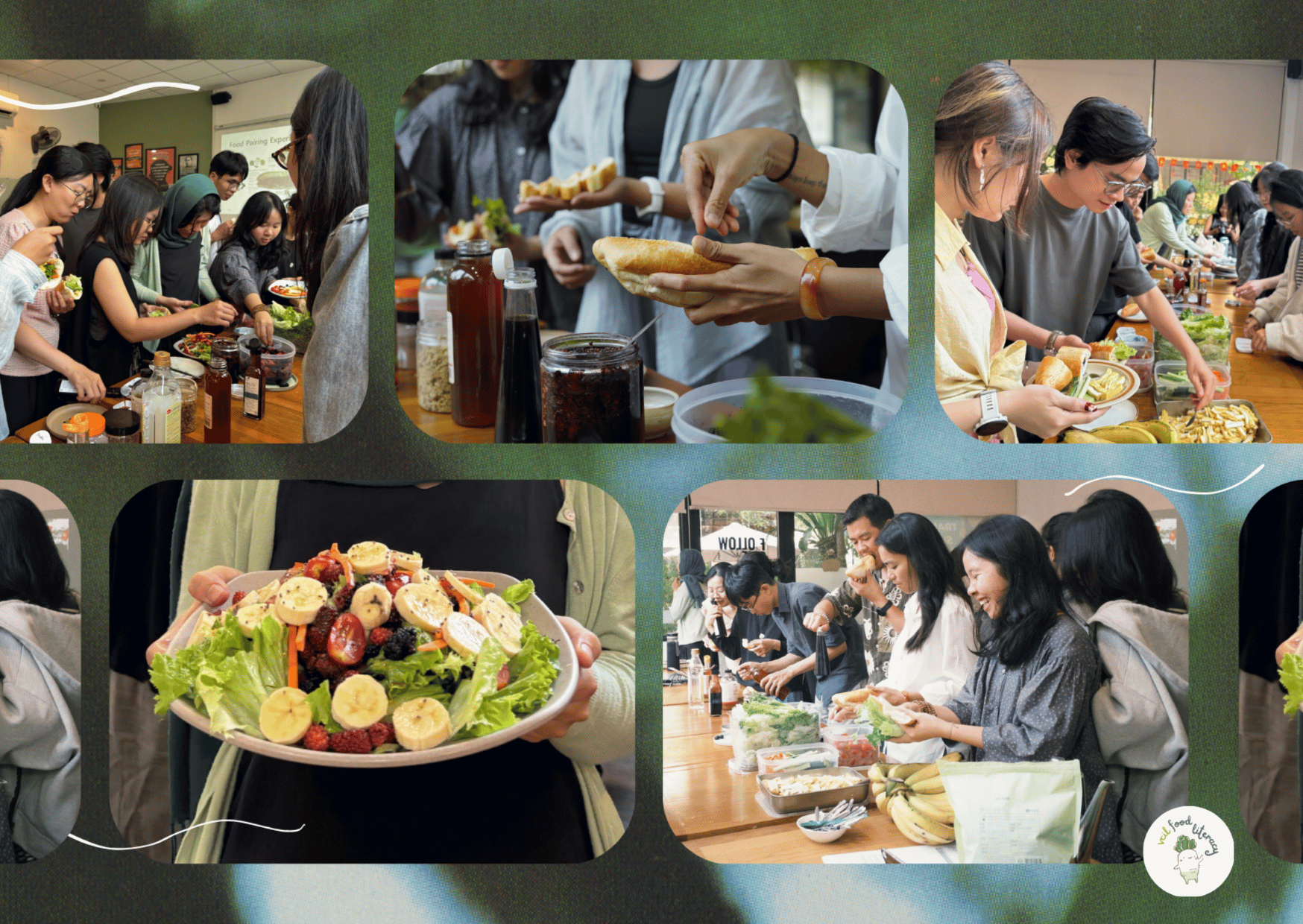
Once again, doors to deeper self-understanding opened. Each participant, depending on their personality and tendencies, approached the experience differently and learned unique lessons. Some approached systematically, testing flavors sequentially and searching for a “perfect formula.” Others experimented randomly. Some became interested in creating similar environments where children could discover themselves through food. Others paid close attention to their emotional states while interacting with ingredients.
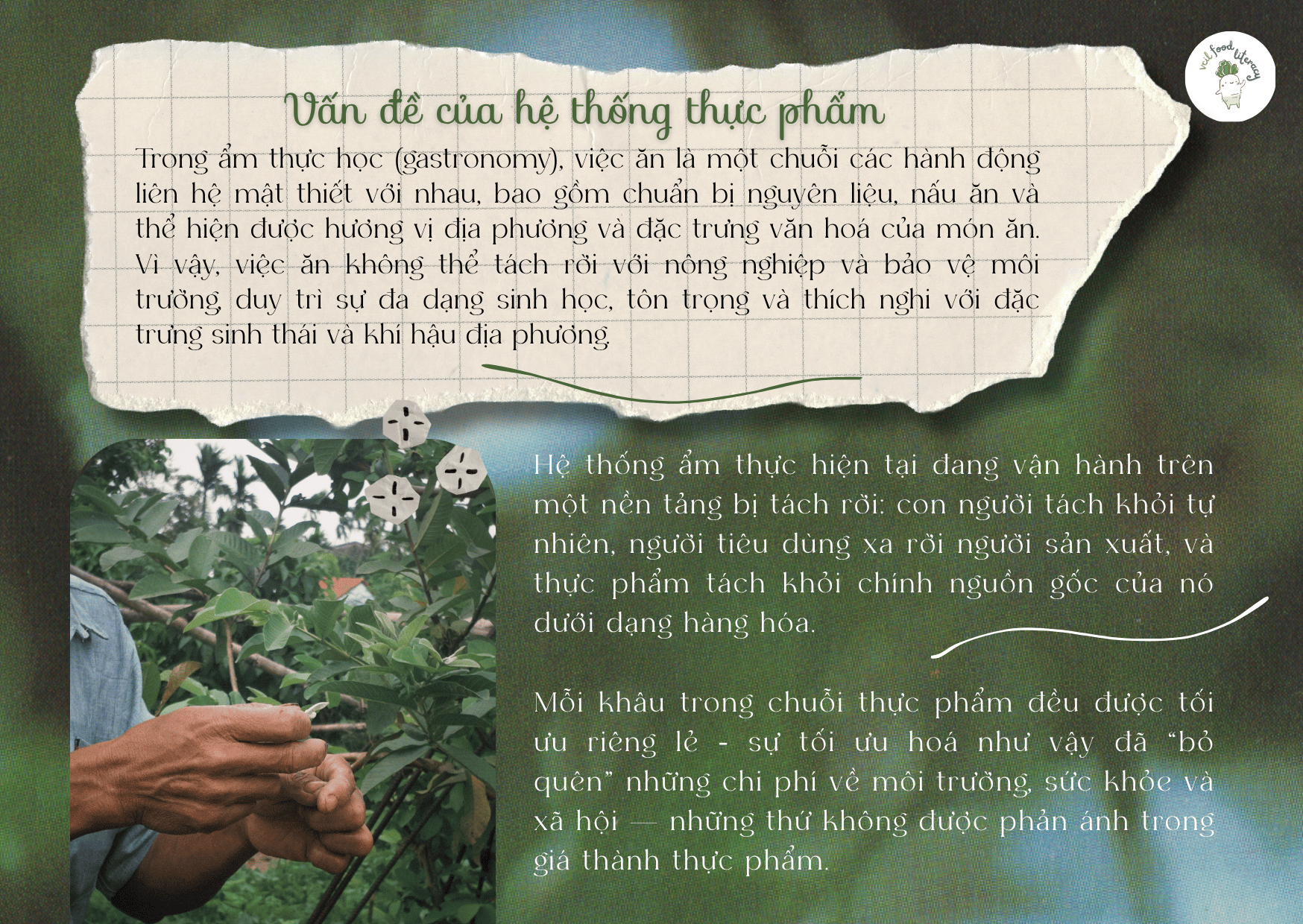
In gastronomy, eating is a chain of interconnected actions including preparing ingredients, cooking, and expressing local flavors and cultural characteristics. Ingredients are closely tied to the cultivation and production processes of farmers. The foundation for fresh, clean, high-quality ingredients is healthy land and preserved ecosystems that maintain biodiversity and nurture habitats for other living beings. These are essential conditions for producing nutritious, flavorful food. Therefore, eating cannot be separated from agriculture, environmental protection, biodiversity preservation, and respect for local ecological and climatic characteristics.
Eating, therefore, is not simply the act of chewing and swallowing food. It is the process of receiving the essence of heaven and earth, and the valuable labor that begins from the moment a seed is planted until it appears on the dining table.
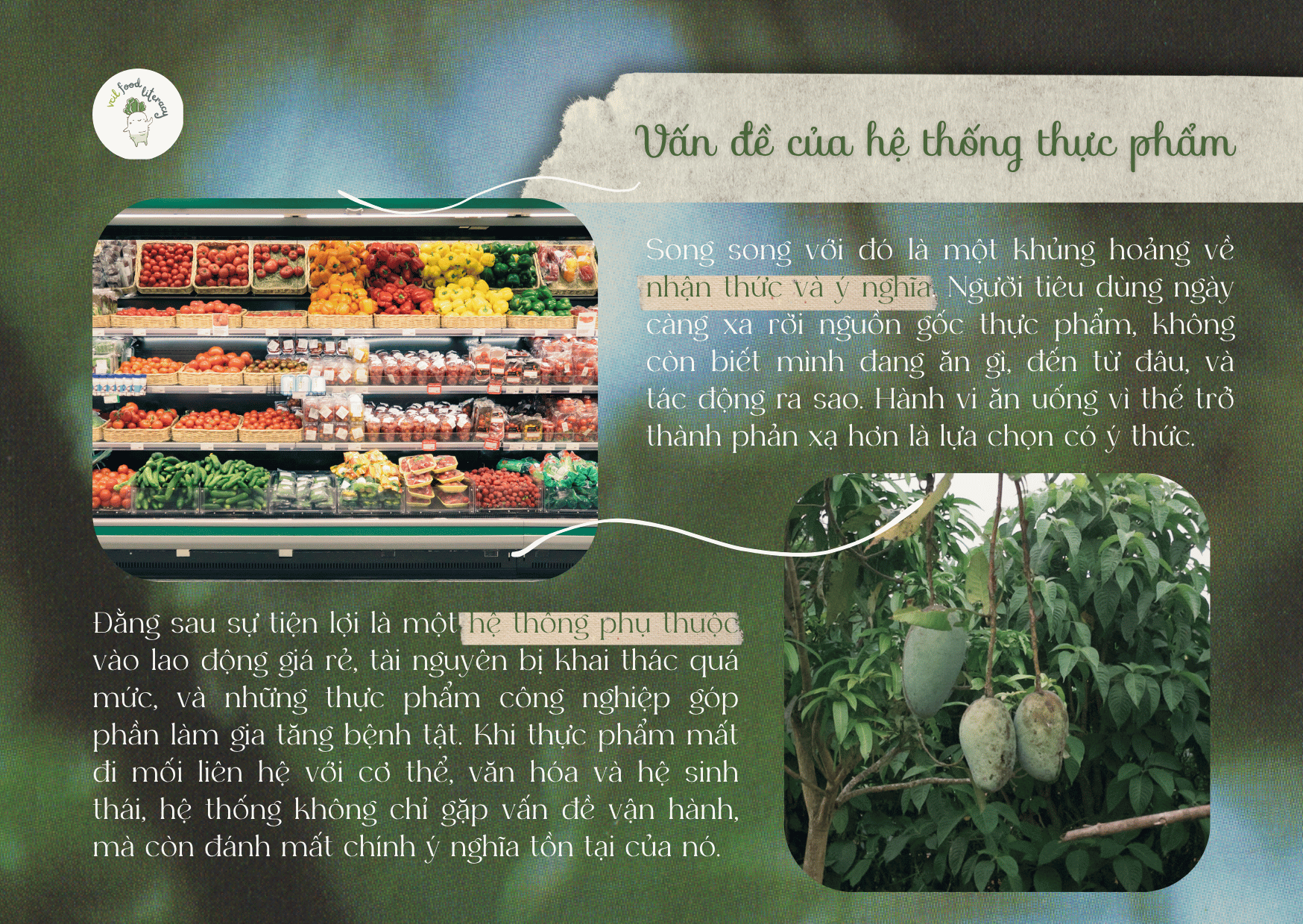
Through the guidance and sharing of Loto — philosopher of taste and author on gastronomy — we were able to reexamine the food system holistically. The current food system operates on a fragmented foundation: humans separated from nature, consumers disconnected from producers, and food detached from its origins as a commodity. Every stage of the food chain is optimized individually — yet such optimization “forgets” environmental, health, and social costs that are never reflected in the price of food.
At the same time, there is also a crisis of perception and awareness. Consumers are increasingly disconnected from the origins of their food, no longer knowing what they are eating, where it comes from, or its impacts. Eating behaviors thus become reflexes rather than conscious choices. Behind convenience lies a system dependent on cheap labor, overexploited resources, and industrial foods that contribute to disease. When food loses its connection to the body, culture, and ecosystem, the system not only faces operational problems but also loses the meaning of its own existence.
For this reason, many initiatives, solutions, and movements — from local communities to global scales — have emerged to address these issues. Eco-gastronomy and Slow Food are among the most representative examples.

From the perspective of eco-gastronomy, the modern food system is no longer merely a material supply chain, but a philosophical system reflecting how humans define their relationship with nature, community, and their own bodies. The concept of “sustainable gastronomy” does not simply mean sustainable eating in a technical sense, but raises a larger question: when a dish appears on the table, it carries the entire history of land, water, climate, labor, and culture. Eating thus becomes an act of consciousness — not merely consumption, but participation in a system.
Eco-gastronomy also restores a relationship that traditional cultures once understood clearly but modern society has fractured: the relationship between food and health. The idea of “food as medicine,” often associated with Hippocrates, is not a new slogan but ancient wisdom: food and medicine share the same origins. In many Eastern knowledge systems, such as nourishing food philosophies, tastes are not merely experiences but also nourish internal organs and regulate the body. This contrasts sharply with modern industrial systems that separate food from healthcare: one side produces food optimized for cost and flavor, while the other deals with the resulting health consequences.
From this perspective, today’s industrial food system is not only experiencing environmental and health crises, but also a crisis of perception. When people can no longer perceive the relationship between eating behaviors and their consequences, the system becomes “invisible,” while real costs — pollution, illness, ecological imbalance — are pushed out of sight.
Eco-gastronomy, therefore, is not merely an action but a transformation in worldview and lifestyle: from seeing food as a product to understanding it as a living relationship between humans and the world.
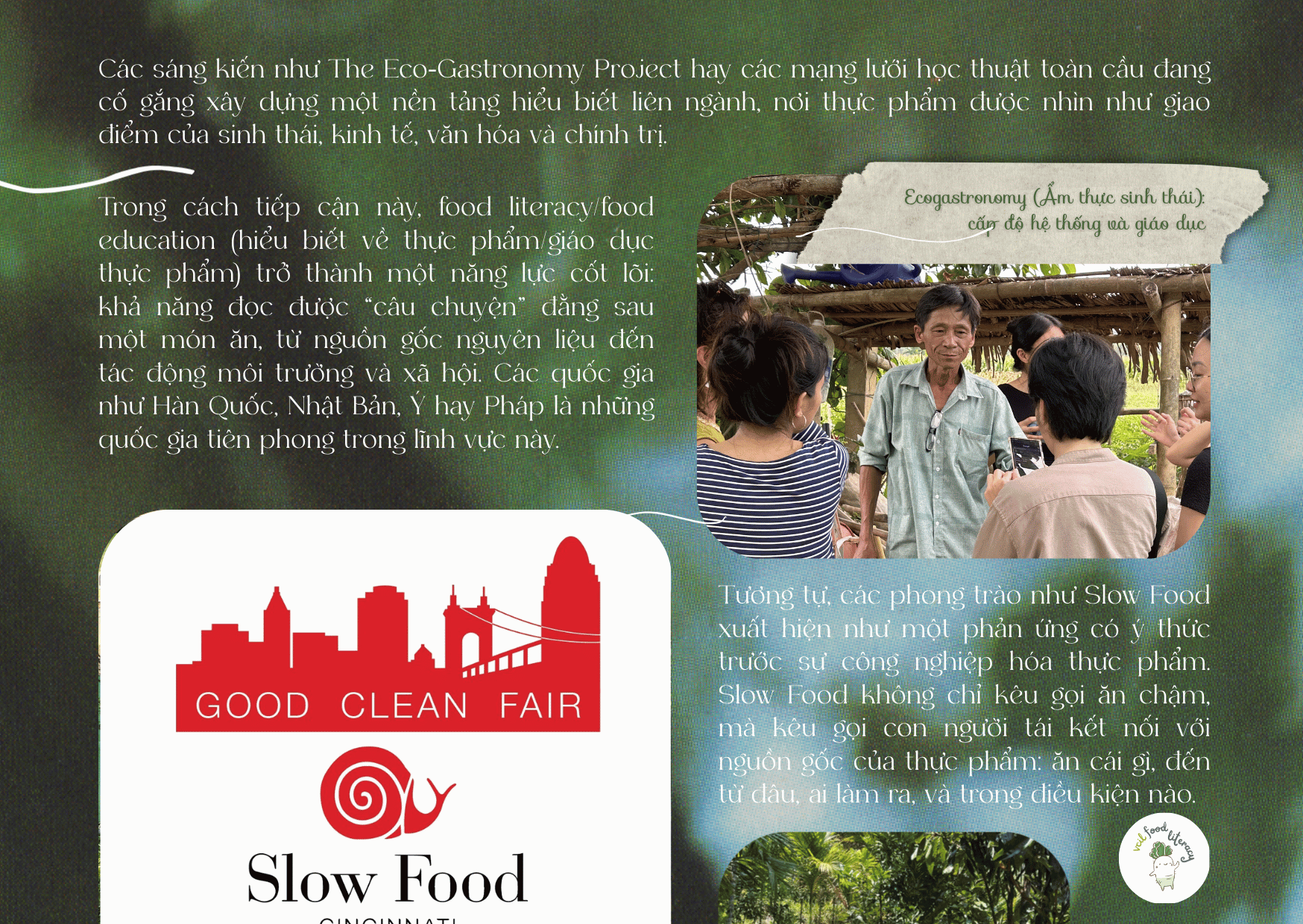
Eco-gastronomy also extends beyond personal and cultural dimensions into systems and education. Initiatives such as The Eco-Gastronomy Project and global academic networks aim to build interdisciplinary understanding where food is viewed as the intersection of ecology, economics, culture, and politics. Within this approach, food literacy and food education become core competencies: the ability to “read” the stories behind food, from ingredient origins to environmental and social impacts. Countries such as South Korea, Japan, Italy, and France are pioneers in this field. Loto shared that in the near future, Vietnam may institutionalize food education into law so that future generations of Vietnamese people can develop the essential capacities needed to build happy and holistic lives.
Similarly, movements such as Slow Food emerged as conscious responses to food industrialization. Slow Food does not simply advocate eating slowly; it calls for reconnecting with the origins of food: what we eat, where it comes from, who made it, and under what conditions. Rather than offering technical solutions, Slow Food promotes a shift in consciousness: encouraging mindful eating, respect for locality and seasonality, and fairness in the value chain. From there, branches such as “Slow Fish” extend this thinking into marine ecosystems, emphasizing that seafood consumption is not merely a personal choice but an act with direct consequences for ocean biodiversity and the livelihoods of small-scale fishers. Choosing seasonal and local food thus becomes not simply a lifestyle, but a conscious alternative to mainstream market choices.
Ultimately, when asking why we need alternative movements and initiatives, the answer lies not in needing a new eating model, but in recognizing that the current system lacks a sufficiently deep ethical and perceptual foundation to sustain itself. If food can nourish generations — as traditional cultures once believed — then reimagining the food system is not merely an option, but a condition for humans to continue existing consciously within the ecosystems upon which they depend.
These were also the core messages carried throughout the course.
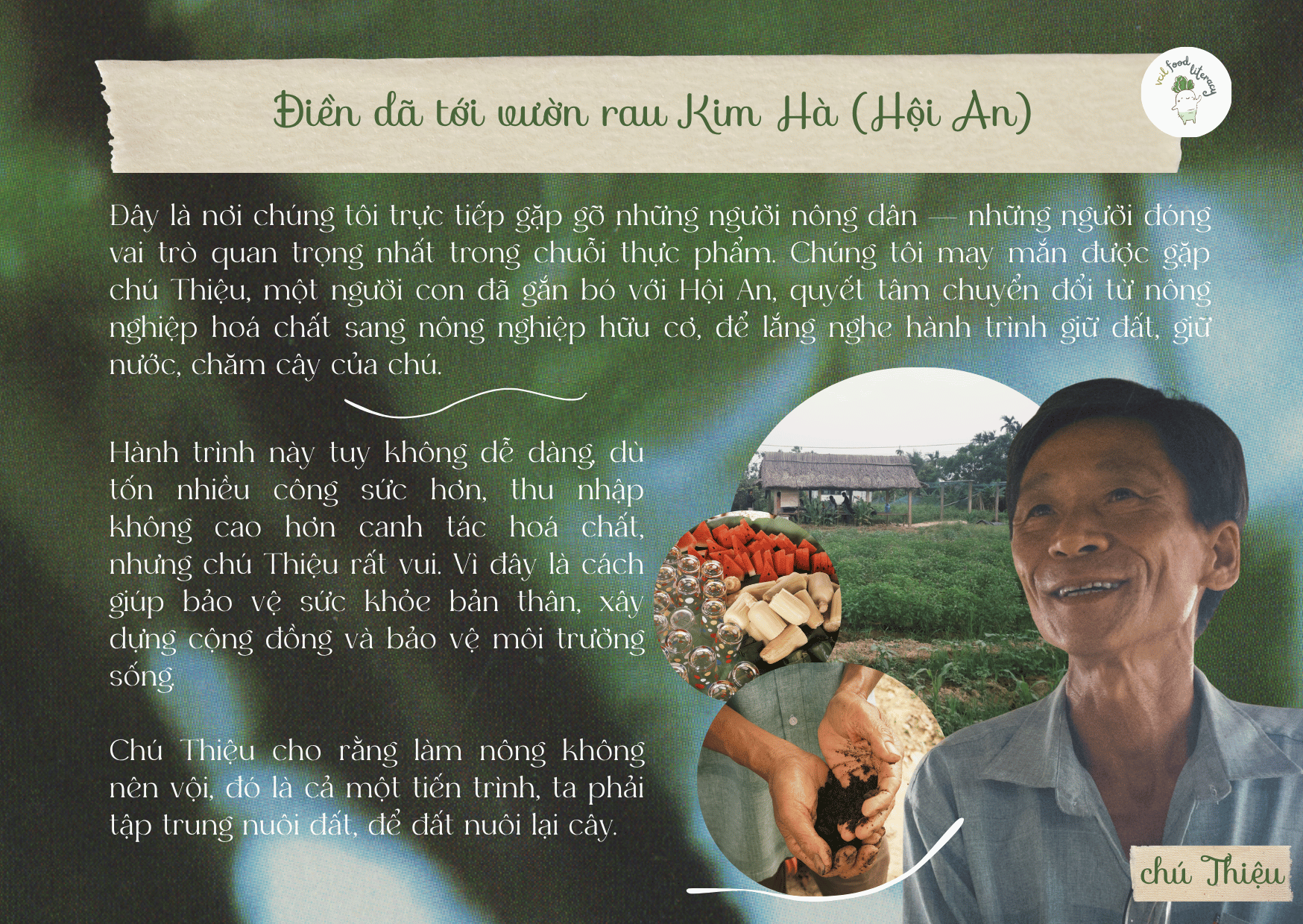
Beyond discussions and tasting sessions, we also visited Kim Hà Organic Vegetable Garden in Hoi An. This was where we directly met farmers — the people playing perhaps the most important role in the food chain. We were fortunate to meet Mr. Thiệu, a local resident deeply connected to Hội An, who decided to transition from chemical agriculture to organic farming, and listen to his journey of protecting soil, water, and crops.
One of the most impressive things about him was his sincerity and warmth. When we visited the garden, we were welcomed with foods prepared from local produce: sticky rice cakes, watermelon, sticky corn, artichoke tea, and a mixed herbal tea made from guava leaves, butterfly leaves, and mint. Everyone loved the food and drinks he prepared.
He shared that when practicing chemical farming in the past, he did not realize the harm it caused to health, soil, microorganisms, and the creatures living underground — species he called “friends of farmers.” After learning more, he became determined to transition toward organic agriculture. Though the journey has not been easy and requires more labor without necessarily increasing income, Mr. Thiệu remains deeply happy. For him, this is a way to protect personal health, strengthen community, and preserve the environment. He believes farming should never be rushed — farmers must first nourish the soil so that the soil can nourish the plants.
He is also highly knowledgeable about local geography, climate, and ecology. After our conversation, he guided us through the garden, explaining everything from medicinal uses of plants to diagnosing plant diseases and treating them biologically, as well as how to create organic fertilizers.
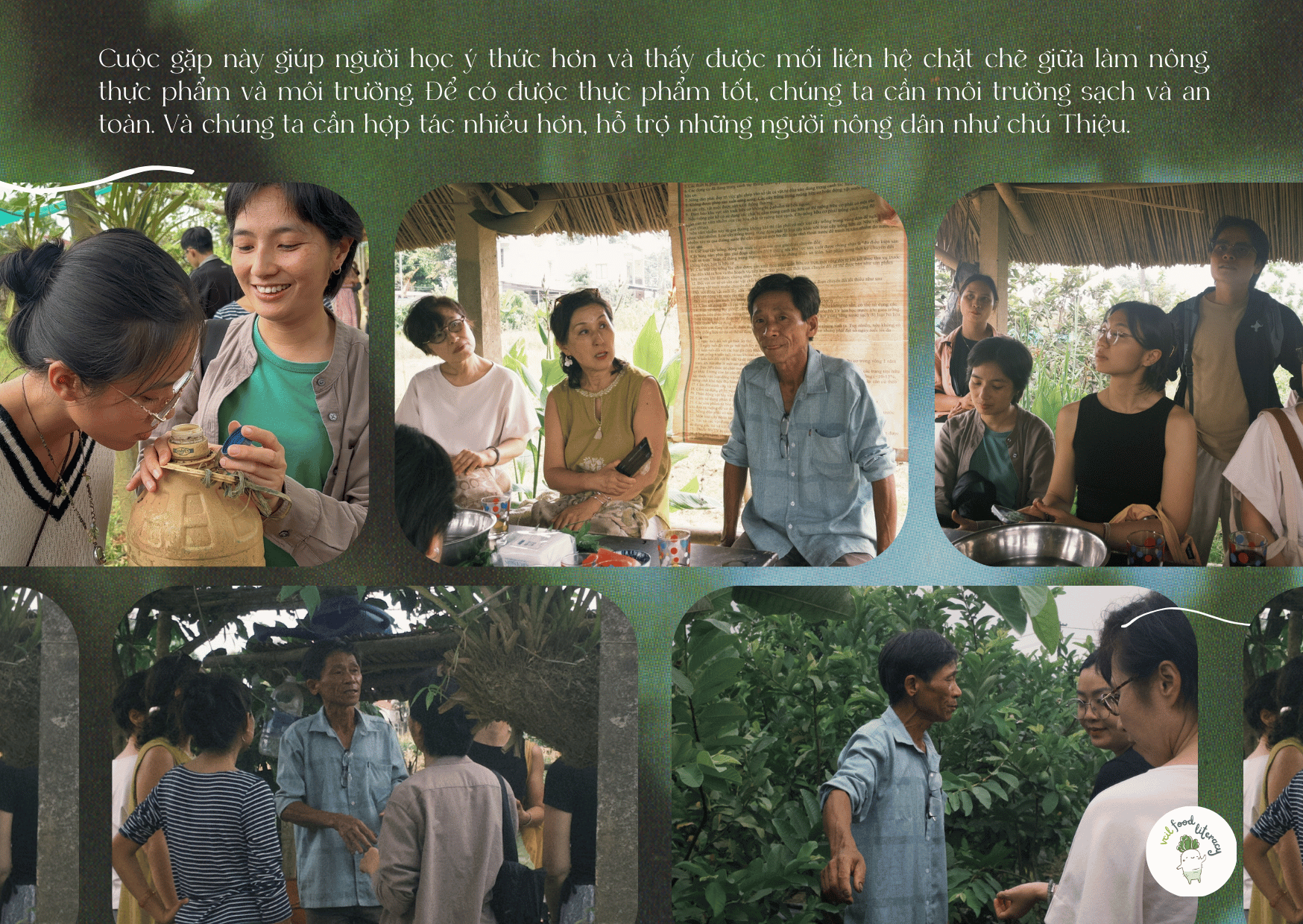
This encounter became an opportunity for the entire group to connect with farmers and listen to one another’s needs. Everyone began thinking more seriously about supporting small-scale farmers like him, so that regenerative and sustainable practices could continue spreading.
The visit helped learners more deeply recognize the intimate relationship between agriculture, food, and the environment. To have good food, we need clean and safe environments. And we need greater collaboration to support farmers like Mr. Thiệu.
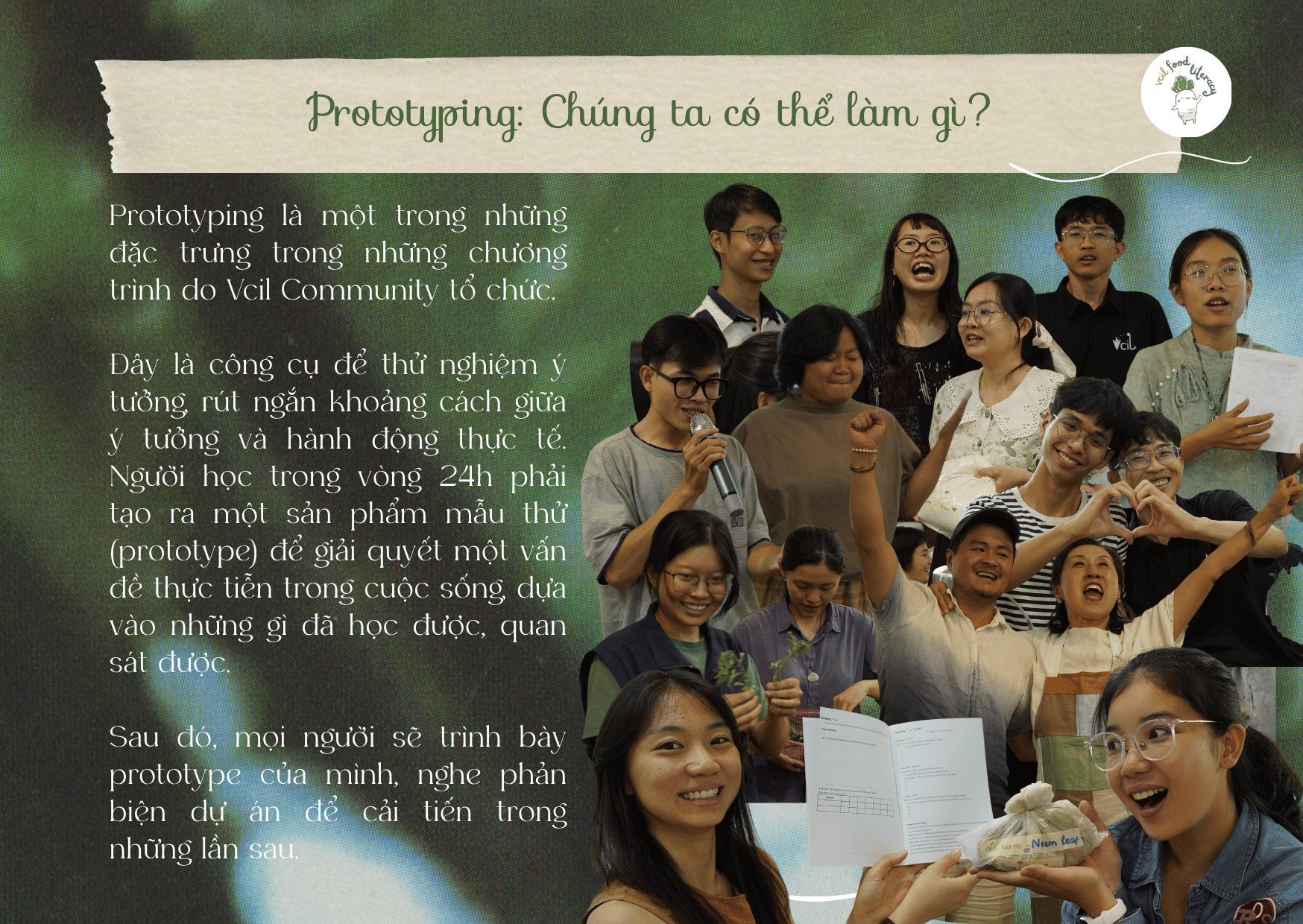
Prototyping is one of the defining characteristics of programs organized by Vcil Community. It is a tool for experimenting with ideas and shortening the distance between ideas and real-world action. Within 24 hours, learners were required to create a prototype addressing a real-life issue based on what they had learned and observed. Afterwards, participants presented their prototypes and received feedback for future improvements.
One group created educational games revealing hidden truths within today’s food system. They also experimented with rewriting song lyrics to communicate educational messages instead of the sadness and despair often found in mainstream music.
Another group proposed “Kind Market” — a platform centered on ethical/local producers and meaningful products within the community. The platform would not operate for profit, but rather support meaningful livelihoods, social entrepreneurship, and a transition toward a regenerative wellbeing economy.
Another group experimented with designing tasting sessions around different kinds of bitterness derived from local plants and foods, as a way to reconnect with indigenous knowledge and better understand bitterness — something we often avoid in daily meals.
Another group designed an AI-powered application prototype to make invisible impacts within the food chain more transparent, helping people become more conscious of their consumption choices and move toward more sustainable decisions.
One participant worked on improving the course workbook to help individuals track eating habits more comprehensively and effectively.
Another participant created a space connecting slow travelers in Seoul, where people could connect through healthy meals and joyful local cultural experiences.
Another participant created a “Slow Map” — connecting local restaurants, cafés, community spaces, and social initiatives so that travelers seeking responsible and conscious travel experiences could create more meaningful journeys with social impact.
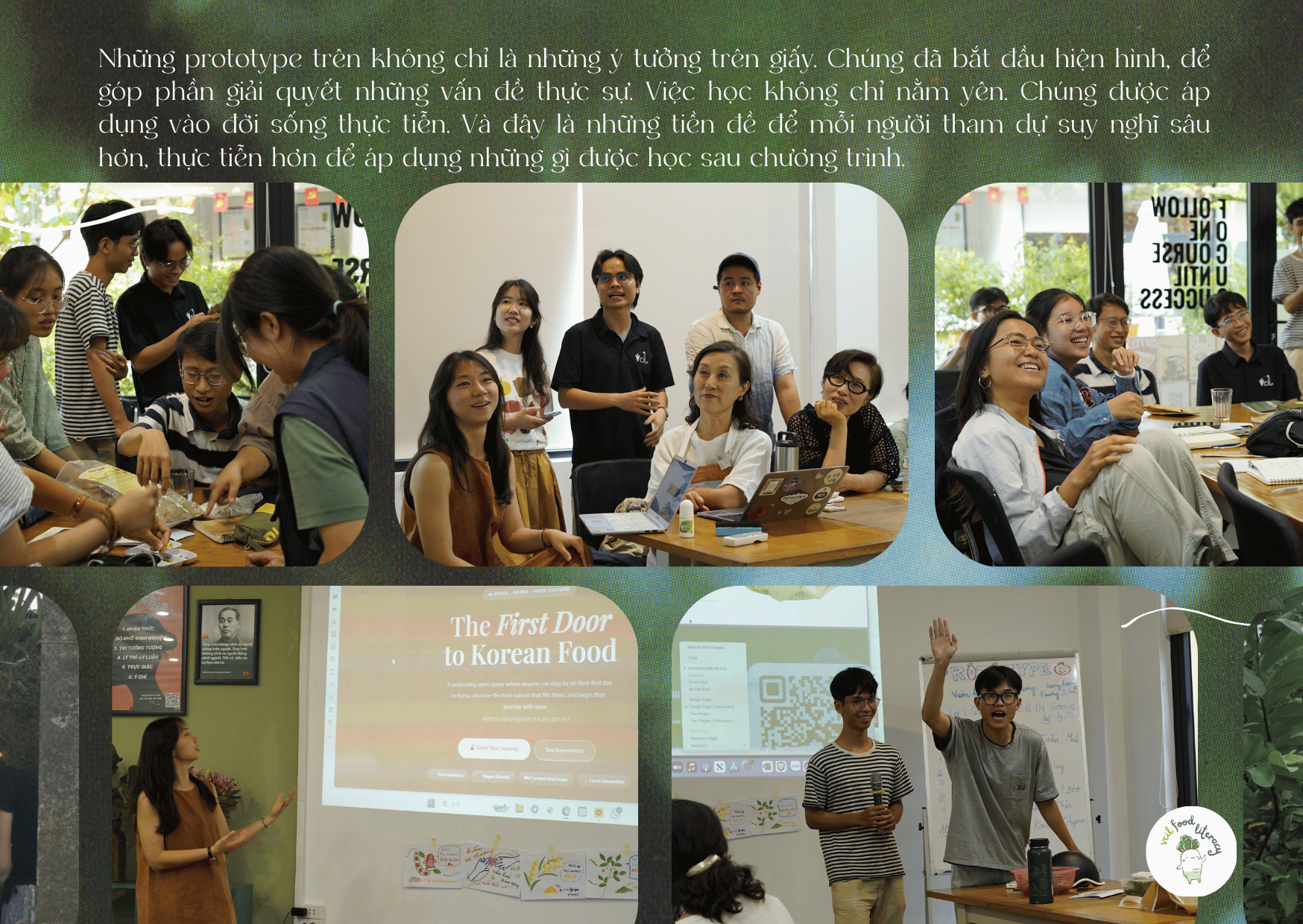
These prototypes were not merely ideas on paper. They had already begun taking shape to address real problems. Learning did not remain abstract — it was applied to real life. These became important foundations for participants to think more deeply and practically about applying what they had learned after the program.
After five days of learning, eating, observing, and experimenting together, each person returned home carrying something different. Some carried a workbook to continue documenting their meals. Others carried newly awakened senses of taste, promising themselves to eat more slowly and taste more deeply. Some carried the image of Mr. Thiệu standing in his vegetable garden — a reminder of the quiet hands protecting soil and water across the country.
But perhaps the greatest thing everyone carried was a new way of seeing eating itself. Meals were no longer hurried acts to satisfy hunger, but became conversations — with the body, with culture, with the farmers at the end of the food chain, and with the ecosystems sustaining our lives. Every bite thus came to carry far more meaning than we usually imagine.
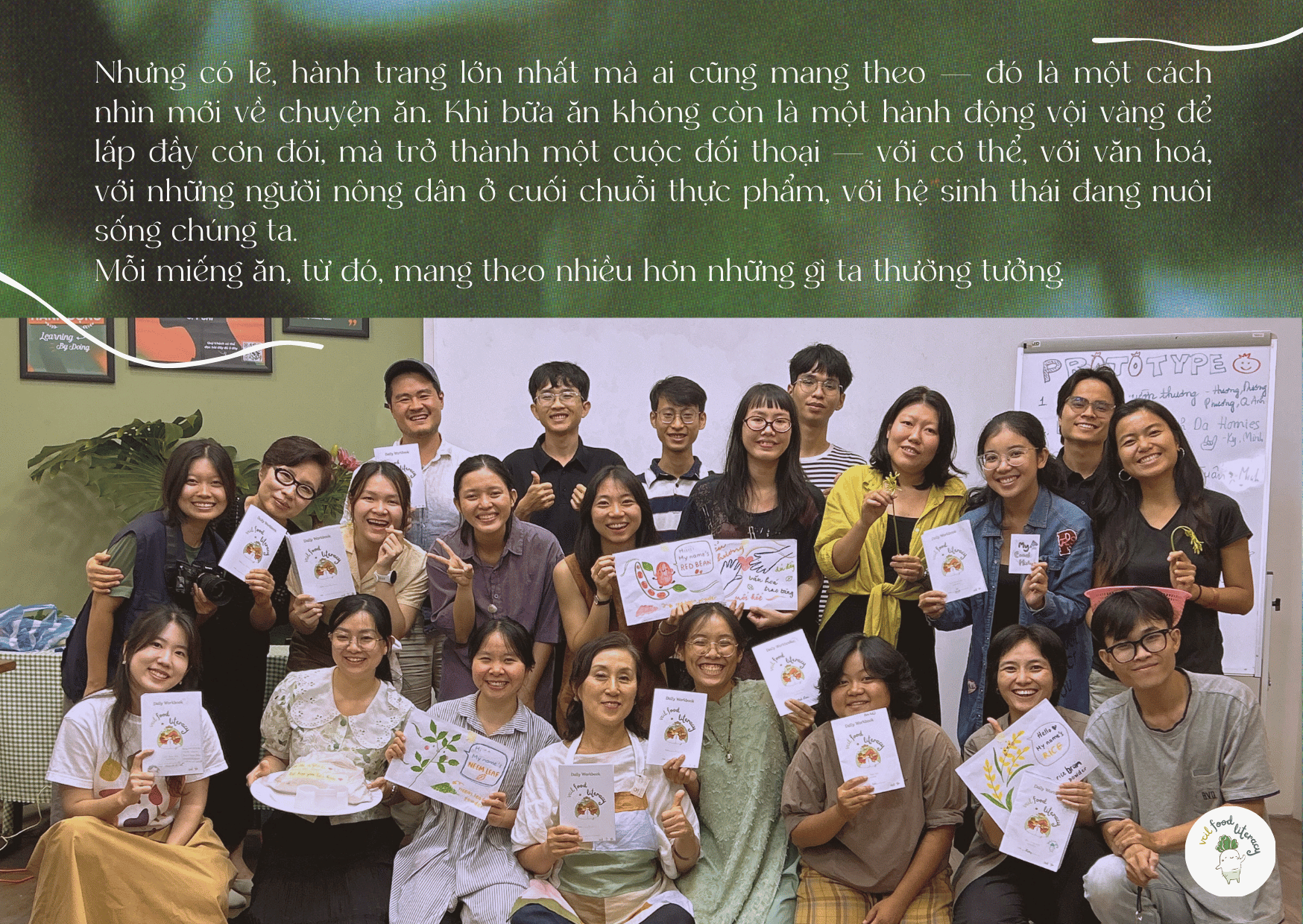
The course ended, but “food education” had only just begun. Understanding ourselves through eating, understanding the world through eating — this is a lifelong journey requiring small, persistent, conscious practices every day. We believe the seeds planted during those five days — though not yet trees — have already taken root within each participant and will continue to be nurtured and spread throughout the Vcil community and beyond.
We would like to thank Hyun-Sook Kim, the Butground team, Mr. Thiệu and Kim Hà Organic Vegetable Garden, and all participants for co-creating such a warm, sincere, and inspiring learning space. We hope the insights from the course will continue to be shared around dining tables, in kitchens, and within the communities to which each of us belongs.
—-
Nội dung đầy đủ của bài viết này chỉ dành cho Hội viên Vcil. Đăng nhập để đọc tiếp phần còn lại.

An Alternative University Designed to Nurture Individual and Collective Transformation

Sliding Scale allows people to contribute in a way that suits their financial situation