You are using the member interface.
Log out of the member interface →

 ← Bản tin
We live in a world that is more integrated than ever before. Cultural exchange, and even cultural encroachment, is occurring with increasing speed and intensity, driven largely by the rapid development of technology and social media. Coupled with migration, the fragmentation of communities, and the rise of nuclear families, this integration raises a critical question: What will become of our traditional culture and the unique beauty of our heritage?
This is a question every local culture must address if it hopes to survive and evolve in the modern era. To find solutions, Kieu Maily, a Cham researcher and author, has experimented with various ways to restore, spread, and pass on Cham culture—not only within the Cham community but also to the wider world.
Kieu Maily is known for her years of researching, practicing, and promoting Cham culture, ranging from traditional attire and cuisine to knowledge of medicinal plants and community life. Her approach to cultural preservation goes beyond merely identifying what is being lost, researching it, and documenting it; she focuses on integrating culture into modern life through new, contemporary forms.
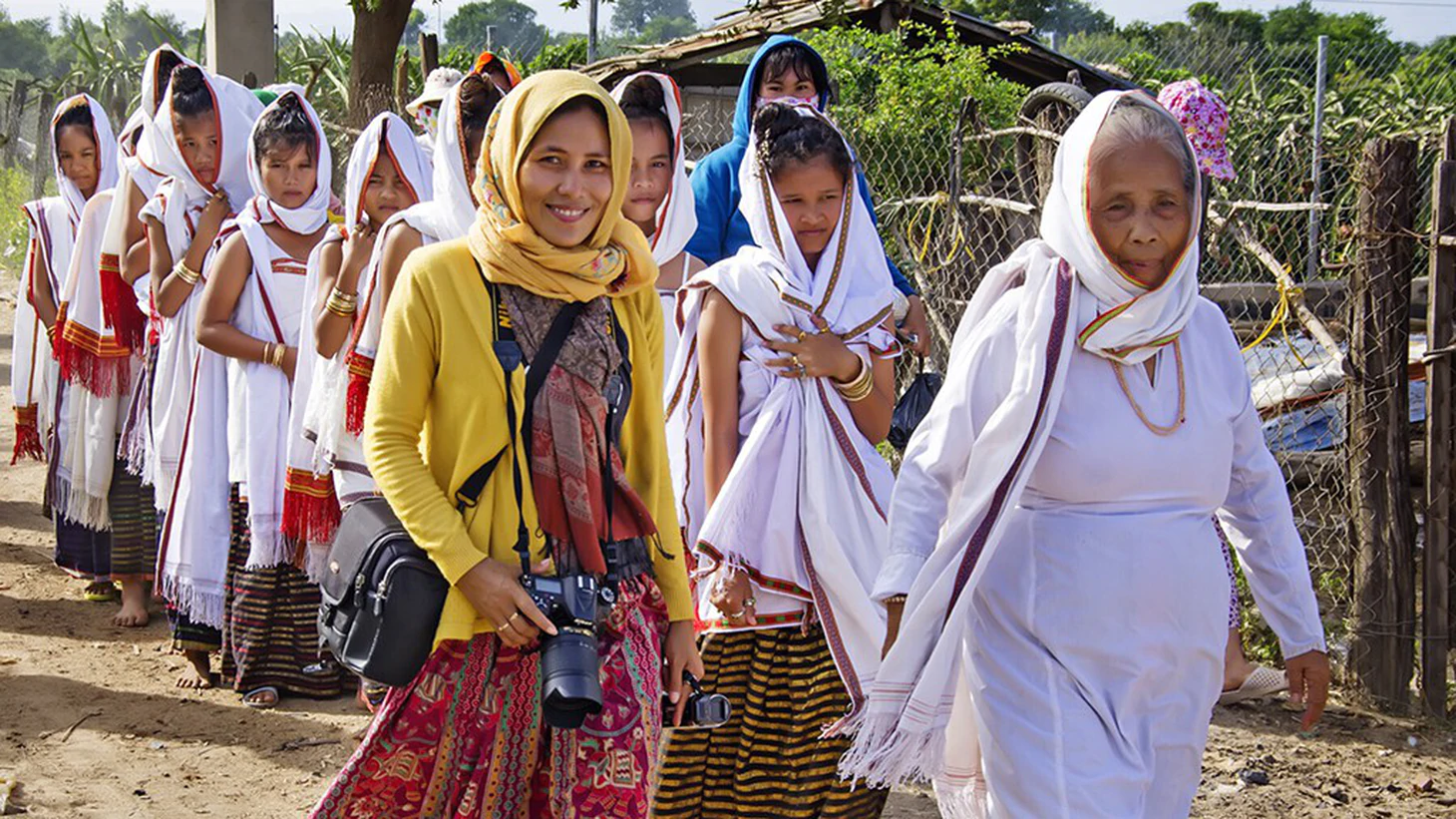
Born and raised in a culture deeply rooted in Cham identity, she was nurtured with a profound love and connection to her heritage. This connection is expressed through every dish, garment, and medicinal remedy. Yet, over time, she realized these elements were fading from the lives of the Cham people. Much of what the older generation remembers is unknown to the younger generation.
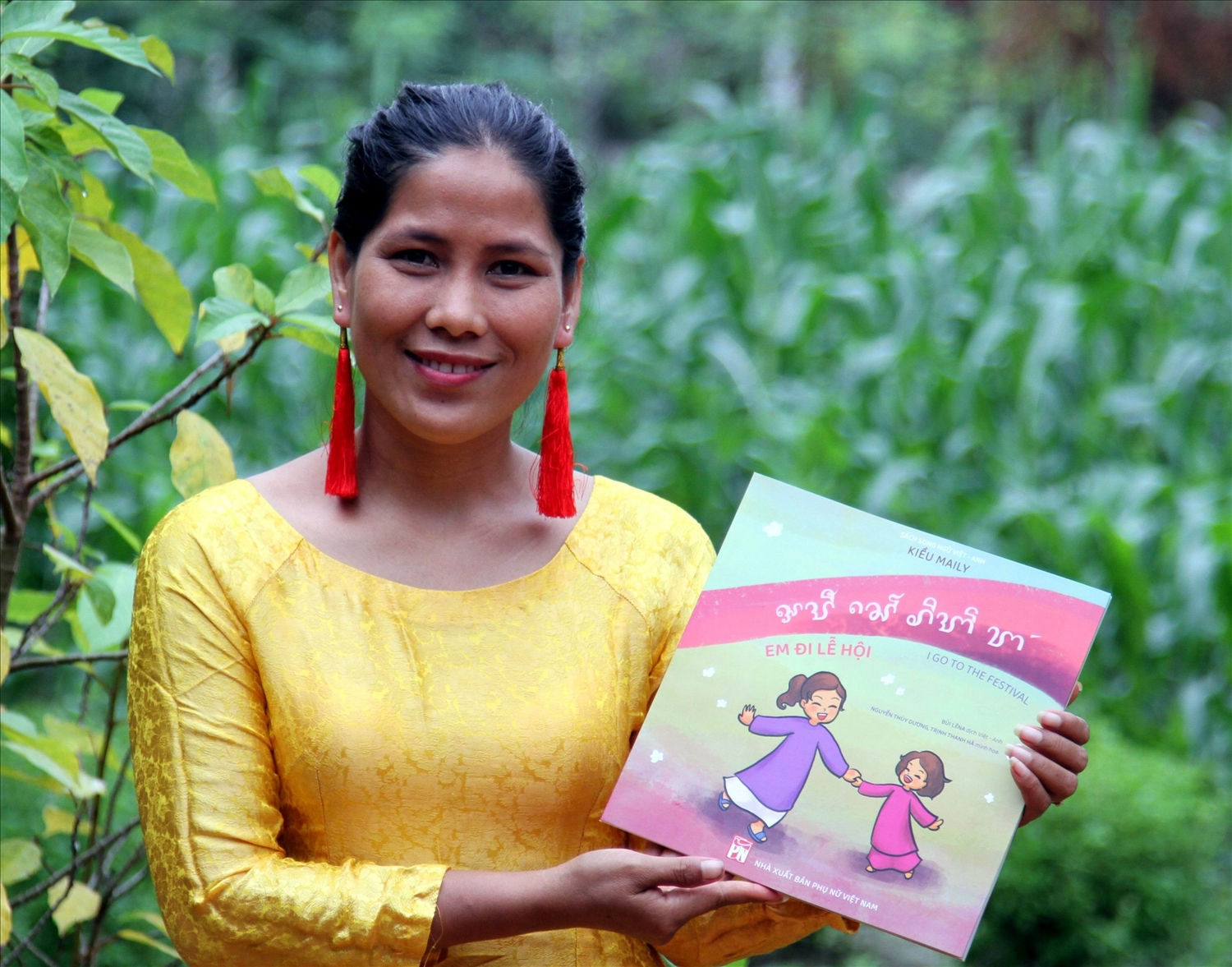
This reality compelled Maily to return to her village and embark on a new journey: to recover the fragments of Cham memory lost to time. She wanted to organize them and introduce them to the next generation. Maily traveled to many places where Cham people live to research and compare her findings. She realized that far too many cultural values had been forgotten, and she felt a deep, personal urge to preserve them. Maily turned her aspirations into action through research projects compiled into meaningful books.
But then, another question arose: what is the purpose of rediscovering it? If what is found remains only in books, photographs, or collections, can the culture truly continue to live?
Perhaps this is why Maily’s work no longer stops at finding and documenting but shifts toward creating conditions for the culture to continue living.
One of the initiatives Maily is leading is encouraging the Cham people to maintain traditional medicinal gardens in the village of Palei Phuoc Nhon. Historically, the Cham were renowned for their herbal healing practices. Over time, the number of people knowledgeable in these arts has dwindled, and the traditional gardens have fallen into disrepair.
She has replanted rare medicinal herbs on her family’s land and is encouraging local Cham residents to collaborate. Her efforts have already yielded results. Maily’s garden now even features a rare plant that the Cham traditionally used as a fabric dye.
Additionally, Maily has begun seeking out programs to promote Cham culture in Hoi An. She continues to encourage young Cham people to wear their traditional attire. Today, many young people are choosing to wear traditional garments on special occasions, understanding and taking pride in the beauty of their heritage.
Additionally, every time she returns home for the holidays, Maily hosts Cham-style buffet parties. She puts her own creative spin on the dishes, making them even more delicious, while sharing the significance of the food and the New Year—values many Cham people were unaware of, which deeply resonates with her fellow villagers. Thanks to this, the movement to learn about the New Year through Maily’s Cham buffets has spread throughout the community. Now, the Cham people in her village confidently speak their language and cook traditional dishes to treat guests from afar.
Currently, Kieu Maily operates the Champa Amaravati House in Hoi An—a space dedicated to introducing Cham culture to visitors.
In this small house, guests can listen to stories, watch dances, hear the drums, enjoy Cham cuisine, and learn about local customs and everyday artifacts. Maily herself is involved in everything there—from preparing food and brewing tea to storytelling and performing.
This has changed how outsiders engage with Cham culture.
Instead of viewing a culture through static museum artifacts or the ruins of a bygone kingdom, they can meet living Cham people from her hometown, hear stories directly from them, and experience a part of that cultural life.
However, this approach also poses a difficult question: when culture enters the realms of tourism and the market, how can it avoid becoming a mere performance of "the Cham of the past"?
Maily is not avoiding that question. The spaces she creates are also experiments in finding the answer.
KariChampa – Gourmet Lab Hoi An continues the story in a different direction: integrating Cham cuisine into a contemporary business model. Meanwhile, her research into restoring knowledge of traditional herbal medicine brings her back to another layer of heritage—medicinal plants, their uses, and the healing practices passed down through generations in the Phuoc Nhon Cham community.
Here, "preservation" is no longer just about keeping something from the past intact. It becomes a story about how to ensure that such knowledge still has a reason to exist in the present.
A living culture cannot remain static. Young people leave their hometowns. Cities change. Tourism creates new markets. Dishes are cooked in new ways. Traditional costumes are worn in new contexts. Rituals may be shortened or adapted.
So, what must be kept? What can be changed?
And who has the right to answer that question?
If everything is kept exactly as it was, culture risks becoming a framed image of the past. But if it changes too much to suit the market, will what remains still hold meaning for the very community that created it?
These are not questions for the Cham people alone. This is a story that many communities face as local culture encounters urbanization, tourism, and globalization. This question becomes even more urgent as society becomes increasingly homogenized and indigenous knowledge gradually disappears—replaced by understanding that lacks connection to local culture, lifestyles, and ecology. If each locality can preserve its core spirit and way of life while achieving economic autonomy, we will be better equipped to withstand the fluctuations of modern society.
Kieu Maily’s journey, therefore, is not just a story about preserving Cham culture. It is also a process of experimentation: researching a heritage or culture, bringing it back to life, and then facing the changes that occur when it meets new people and contexts; it is one of the solutions to addressing the challenges of the present.
Time: 7:30 PM, September 28, 2026
Format: Zoom
Language: Vietnamese
[Exclusive event for Vcil Community members]
In Nep Moi #18, Vcil Community will join Kieu Maily to delve deeper into that journey: from her years of researching Cham culture to building spaces and projects where that culture can continue to be practiced. Together, we will also raise more challenging questions regarding preservation, commercialization, and the evolution of a culture as it enters contemporary life.
Kieu Maily is a writer, poet, researcher, and cultural ambassador. She is the author of two poetry collections: "Between Two Voids" (2013) and "She, Flower of the Sand" (2019). Beyond poetry, she has authored and edited works on Cham culture, including "Unique Cham Cuisine" (2014), "My Palei Phuoc Nhon" (2016), and "I Go to the Festival" (a bilingual Vietnamese-English children's book).
She founded the Champa Amaravati House (also known as the Cham Oasis) in Hoi An, a small museum featuring traditional musical instruments, costumes, household artifacts, and images of significant festivals in Cham life, while also introducing Cham cuisine to international visitors.
Nội dung đầy đủ của bài viết này chỉ dành cho Hội viên Vcil. Đăng nhập để đọc tiếp phần còn lại.

New Ways will invite scholars, experts, and people with practical experience to share about essential and familiar topics in life