You are using the member interface.
Log out of the member interface →

Thông tin dưới đây chỉ dành riêng cho Hội viên Vcil
Để đảm bảo quyền lợi của bạn cũng như cộng đồng Hội viên Vcil, mong bạn đừng chia sẻ thông tin này nhé!
Bạn có thể chia sẻ thông tin về dự án dành cho công chúng bằng cách sao chép link này:
NẾP MỚI · RECAP: Local Futures: Globalization and the Path to Rebuilding Local Economies
Note: text in brackets [ … ] is data cross-checked and added by the editorial team; all other text follows the speaker's words.
Local Futures is advancing localization and the rebuilding of local economies. This is how we critique and question the current economic system and globalization. This is the economic paradigm dominating the world today, built on infinite growth, colonialism, industrialization, the push for exports, and ever-more production.
We critique this system because it is the root cause of most of today's crises—environmental, economic, and social. Below are the costs humanity is paying to keep this system running: a system focused solely on growth and driven by multinational corporations.
Globalization took off around 1990, when many governments pushed international trade, FDI, export-oriented production, and removed restrictions on the use of capital (i.e., the ability of corporations to invest and trade globally). Looking at the chart, you can see the rapid rise in exports. [Cross-check: world trade as a share of GDP rose from around 20% in the mid-1990s to over 50% today.][1]
One key mechanism that enabled this is the FTA (free trade agreement). From the 1980s onward, a great many FTAs were signed. Almost every country takes part in them, from India to Mexico… [Cross-check: the number of regional trade agreements in force has grown roughly six-fold, from under 50 in 1990 to nearly 300 today; every WTO member belongs to at least one.][2]
Through these FTAs, multinational corporations can easily penetrate national economies and invest; in essence it lets these corporations seek out places with lower labor standards and costs, then relocate there.
This process generates many impacts on the planet:
The above is an overview of the trends that have unfolded as consequences of more than 30 years of accelerating globalization.
As the global economy grows ever faster, Vietnam has also become one of the fastest-growing economies in recent years — around 8%, and aiming for 10%/year soon. [Cross-check: Vietnam reached 8.02% GDP growth in 2025 and has set a target of at least 10% for 2026.][14] One of the drivers of that growth is the export of machinery, components, textiles, chemicals… Recently I also saw Hanoi listed among the most air-polluted places in the world — many causes are directly tied to the factories producing the goods above, and food for the world. [Cross-check: Hanoi has repeatedly ranked among the world's most polluted cities; average PM2.5 in 2024 was about 9 times the WHO recommended limit.][15] So one could say much of Hanoi's pollution actually belongs in part to consumers in the US and Europe — the people who buy those products.
People often say the US or Europe has clean air; that's understandable, because much of the air pollution has been exported to other countries through the food chain — consumption in those countries causes pollution in others. This phenomenon is called pollution offshoring or environmental load displacement.[16]
More than 40% of global resource extraction is linked to global trade. Mining to produce electronic components and other goods mainly serves trade — making money and serving other countries — rather than local needs. [Cross-check: for metals, much extraction is tied to exports — for example, ~62% of iron ore and ~64% of bauxite mined are associated with trade.][16]
We view this as neocolonialism. Traditional colonialism was European nations invading and extracting resources, land, and labor from colonies in the Global South. Yet this continues today, even though colonialism formally ended long ago — now through the globalized economy.
Some 200 million full-time workers serve exports in China and India — solely to serve consumption in the US; and 70 million migrant workers are mobilized for that purpose. As a result, the US and Europe are in fact far larger than their territory. Consumption rates there are also among the highest in the world. This is unjust and unsustainable. [Note: the figures of 200 million / 70 million workers are as shared by the speaker; the editorial team could not find an independent public source to verify them precisely, so they are kept as stated and flagged for Members' careful reference.]
At Local Futures, we are trying to understand what is happening, why, and what the driving forces are. As shared earlier, one part is through FTAs. Another mechanism is subsidies — for the fuel (oil) industry. A subsidy is how a government promotes or supports the sectors it wants; in other words, whatever the government wants, it funds with money.
Around the world, the oil industry is funded by governments to the tune of up to 13 million dollars per minute (this is the 2023 figure; it may be higher now). [Cross-check: according to the IMF, fossil-fuel subsidies in 2022 hit a record ~$7 trillion — equivalent to ~$13 million per minute.][17] In addition, industrial agriculture is subsidized by billions of dollars. People often say local, organic food is expensive — but that's because the global food system is subsidized, so it is “artificially cheaper.” For example, when you buy Coca-Cola, the price is subsidized; or the one paying for the consequences is society at large, including the cost of treating related illnesses. So the purchase price is cheap, but the social cost is enormous.
Hundreds of FTAs and bilateral trade agreements have been signed — between countries, between multinational corporations and countries, and at the global level. The more countries sign them (from India–Australia to India–Vietnam…), the more we are essentially giving multinational corporations greater freedom to do business with fewer restrictions.
80% of trade activity is international trade. [Cross-check: according to UNCTAD, about 80% of world trade takes place within value chains tied to multinational corporations.][18] Trade happens through supply chains operated by many companies whose sole aim is to make money, with a mindset of infinite growth — while we have only one Earth and cannot keep growing forever.
And it must be said that global trade is controlled by multinational corporations, and it generates about 1/5 of total global greenhouse gas emissions, directly driving climate change. [Cross-check: studies on trade-embodied emissions estimate that roughly 1/5 to 1/4 of global CO₂ emissions are embodied in traded goods.][20]
An image shows that the number of cargo ships on the oceans has risen 300% over the past 20 years. [Cross-check: seaborne trade volume has more than tripled since 1990 — from ~4 to nearly 13 billion tonnes of cargo in 2024.][19]
Finally, global trade makes countries dependent on imports. Many countries therefore want to produce only for global trade and money, rather than to meet the real needs of their land or nation. This erodes food, water, and energy security whenever volatility strikes.
Covid was an event that proved the unsustainability of this globalized system — and many came to understand that we cannot fully depend on it. Similar disruption and instability recur when war in West Asia (the Middle East) blocks and chokes the flow of oil. When oil isn't transported, the food system is directly affected — especially in countries deeply tied to industrialized agricultural chains, an agriculture heavily dependent on industrially produced chemical fertilizers, which are made from natural gas. These very inputs are restricted when Iran threatens to close the Strait of Hormuz. Countries are therefore now facing shortages of chemical fertilizers, threatening food security and creating the risk of hunger.
And so, once again, we are experiencing an economy in turmoil much like during Covid. That is why building a local, resilient economy — an alternative economy — is essential.
Localization means reducing dependence on export markets and instead promoting production for local needs. At the same time, it strengthens local ownership and local control over the economy. This means that economic decisions affecting communities and stakeholders must give those affected a voice, ownership, and a role in deciding — rather than being shaped and controlled by corporations.
We usually think globalization increases responsibility and accountability, but in reality it's the opposite. Many people care only about consumption, while remaining completely unaware of the impacts that producing those goods creates — on local communities, culture, and ecology — simply because those impacts happen in another country.
Localization brings costs and benefits close together; at the same time, that economy must adapt to local ecological, cultural, and social realities, and protect cultural and ecological diversity.
Localization is also a multifaceted initiative for addressing today's problems. It produces clear benefits: reducing inequality and reconnecting people with the environment (this matters especially now, as we are disconnected from land, ecology, and local community; the loneliness driven by globalization is amplified by technologies like e-commerce, where we can order online anytime). Localization is a plausible answer to today's crises: it encourages meeting face to face and connecting with the local ecosystem; it increases transparency, responsibility, and accountability; and it promotes community wellbeing and production grounded in ecological limits and regenerative principles.
Many movements and initiatives have been created, set up, and run. Broadly speaking, they too can be grouped under the localization movement. “Localization” is just one name — different organizations and communities call it different things:
Looking at the image, you can see localization happening across nearly every sector: media, food, Indigenous knowledge, banking, energy, health, business… The aim of these initiatives is not to make money but to create wellbeing for the community, meet its needs, and ensure social and ecological justice.
Another form is the solidarity economy — an economy based on care and values. The solidarity economy encompasses many things, especially thinking about the commons and protecting them together — for example clean air, ecosystems, organic food — and taking them out of the market economy. This economy focuses on needs and life's essentials; it also tells a story that we can live happily without much money. In a capitalist economy, you struggle if you don't have a lot of money.
There are also many other initiatives: Cooperatives, Food Policy Councils, the Deccan Development Society, Vikalp Sangam (Alternatives Confluence), and the Global Tapestry of Alternatives.
1. If localization relies largely on community-based development, how can we ensure consistent quality in areas like food and education?
In Local Futures' experience and research, communities usually set their own quality standards — and these are often even higher than the host country's national standards. For example, India has a system for assessing food quality, but it is always a standard meant for industrial food. Meanwhile, communities typically grow food for their own needs, so those general standards have little meaning in a local context: they usually cover packaging, preservatives, additives… things that simply don't exist in local food. Throughout history, communities have sustained themselves stably without national standards.
Of course, communities will also have quality-related issues, but these are handled and resolved within the community without general regulations. Personally, I don't believe we need no laws at all — we still need them, especially for large corporations. Because the general context is that countries tend to be lax with big corporations while being stricter with small local businesses.
2. How can conflicts within the community be effectively managed?
Conflict is normal in human social interaction. Even in very peaceful places like Ladakh, we still see conflict present as anywhere else — they have plenty of conflict, in fact. But they have their own conflict-mediation system, built and developed over hundreds of years of living together in villages. Though imperfect, it brings people together and resolves conflicts directly, face to face. Usually there are mediation councils to support such cases.
This is also where models like citizen assemblies or citizen democracy come into play, because they let conflict be handled in a healthy way rather than producing anger and division. Sometimes a conflict isn't resolved and remains within the community; but spaces for meeting create opportunities for participants to express themselves, and people tend to compromise more.
3. Localization sounds idealistic to me. Are there any bad parts of localization?
If people apply localization superficially, negativity will appear: they may think localization is everything, better than every other approach, even consider themselves superior to others. But if applied with a spirit of learning and humility, it becomes healthier. Otherwise it can turn into “ego localization.”
So we often remind one another that localization does not mean separation, and that we should avoid dualism — the kind where anything foreign is bad and only local is good. We need to promote international cooperation and understanding, bringing production and consumption closer to where we live, rather than depending on multinational corporations. For example, instead of consuming food industrially produced somewhere far away that we know nothing about, we can connect and build relationships with local farmers.
Localization is also not the kind the US is doing. For instance, with a right-wing government wanting to bring industrial production back to the US — many people confuse this with localization. Essentially, that kind of industrial development still just gives big corporations more power. So we must be careful about what kind of localization we practice, and in what spirit.
For example, sometimes there are shops run by locals — which is good, since they're small enough and belong to local people — but the products sold there aren't local; while sometimes a supermarket sells plenty of local products. Everything is in a process of transition. If we want a local economy owned by locals and produced locally, it will help create more jobs and keep more value in the locality. And when we consume products that aren't local, we need to be more conscious of how they were produced — for instance, when Alex drinks coffee, he prioritizes products that are organic, ecological, and fairly traded; otherwise it's easy to contribute to exploitation through consumption.
4. Do we have any measurement or evaluation to check whether localization implementation is effective?
Alex suggests looking at the work of Michael H. Shuman — an “alternative” economist who champions local economies. One of his contributions is measuring the benefits of localization: the flow of wealth within a locality through concrete indicators. He provides much evidence of the benefits and effectiveness of localization, and writes extensively on local currencies and local investing. [Cross-check: Shuman is associated with the “local multiplier effect” — money spent at local businesses circulates more times within the community, generating more income, wealth, and jobs, because local businesses spend more locally than large chains.][24]
On local investing: instead of investing in the stock market (which essentially hands money to large corporations), his argument is to use that money to boost the local economy.
The data in green brackets has been cross-checked against public sources (updated through June 2026). Each item below corresponds to a marker in the text.
🗓 Date: Thursday, May 28 — 7:30 PM
💻 Format: Zoom
🏞️ Language: English (Vietnamese interpretation available)
The modern economic system is revealing its limitations — at the individual level, within communities, and across nations. This is the consequence of a global industrial economy obsessed with growth, which has damaged local economies, ecology, culture, and the long-term sustainability of communities.
But the overall picture isn't always bleak. Individuals, organizations, businesses, and communities are actively working to build a new economy oriented toward people and ecosystems, while continuously questioning and challenging the current system.
Around the world, different models are being built and tested. Consumer cooperatives owned and managed by their members are shortening supply chains between producers and consumers. CSA (Community Supported Agriculture) models allow consumers to purchase directly from farmers by the season, sharing both the risks and rewards of the farming process. Collectively-owned enterprises within solidarity economies are measuring social and ecological impact alongside profit. They are all telling a new story about what an economy can be — and proving that a different economy is entirely possible.
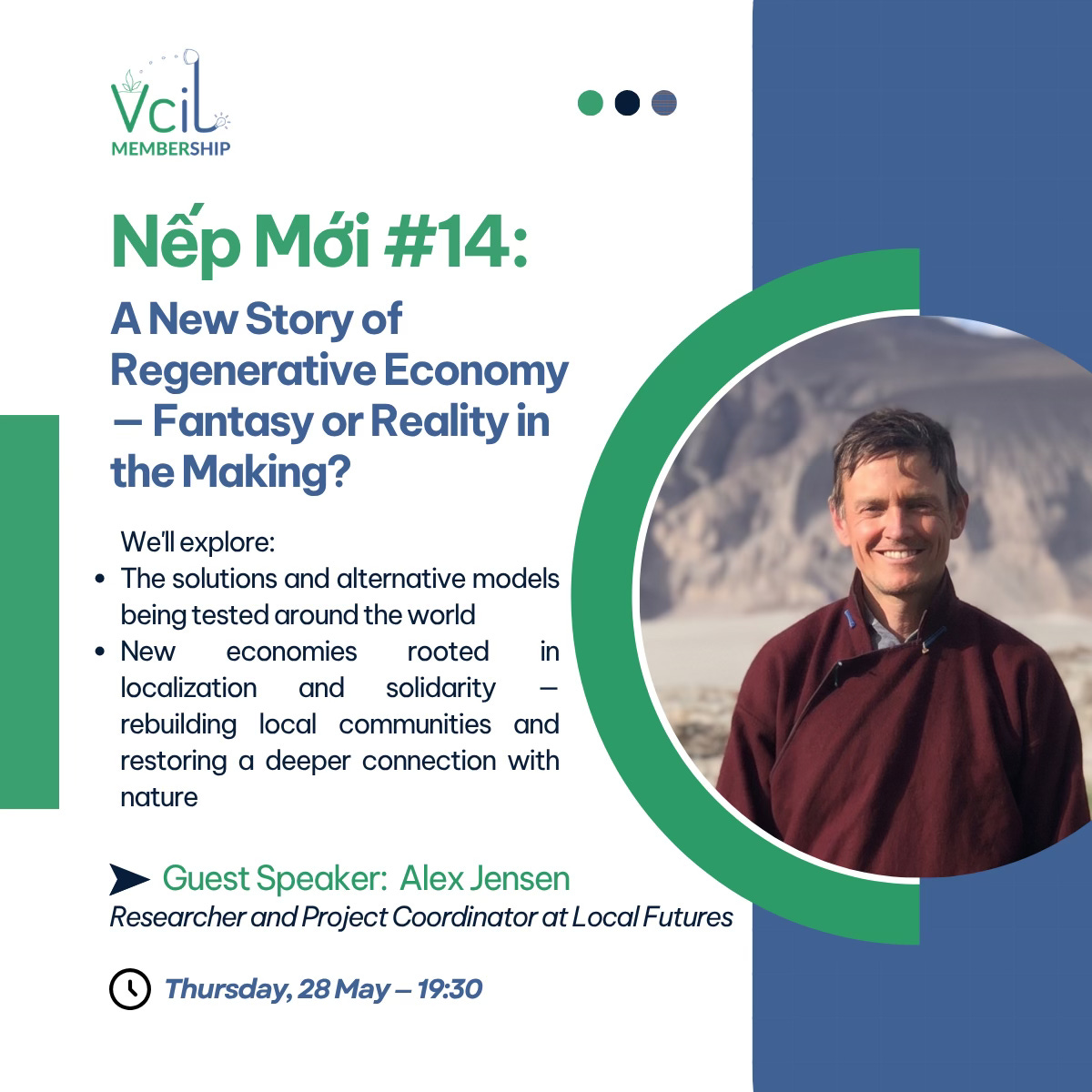
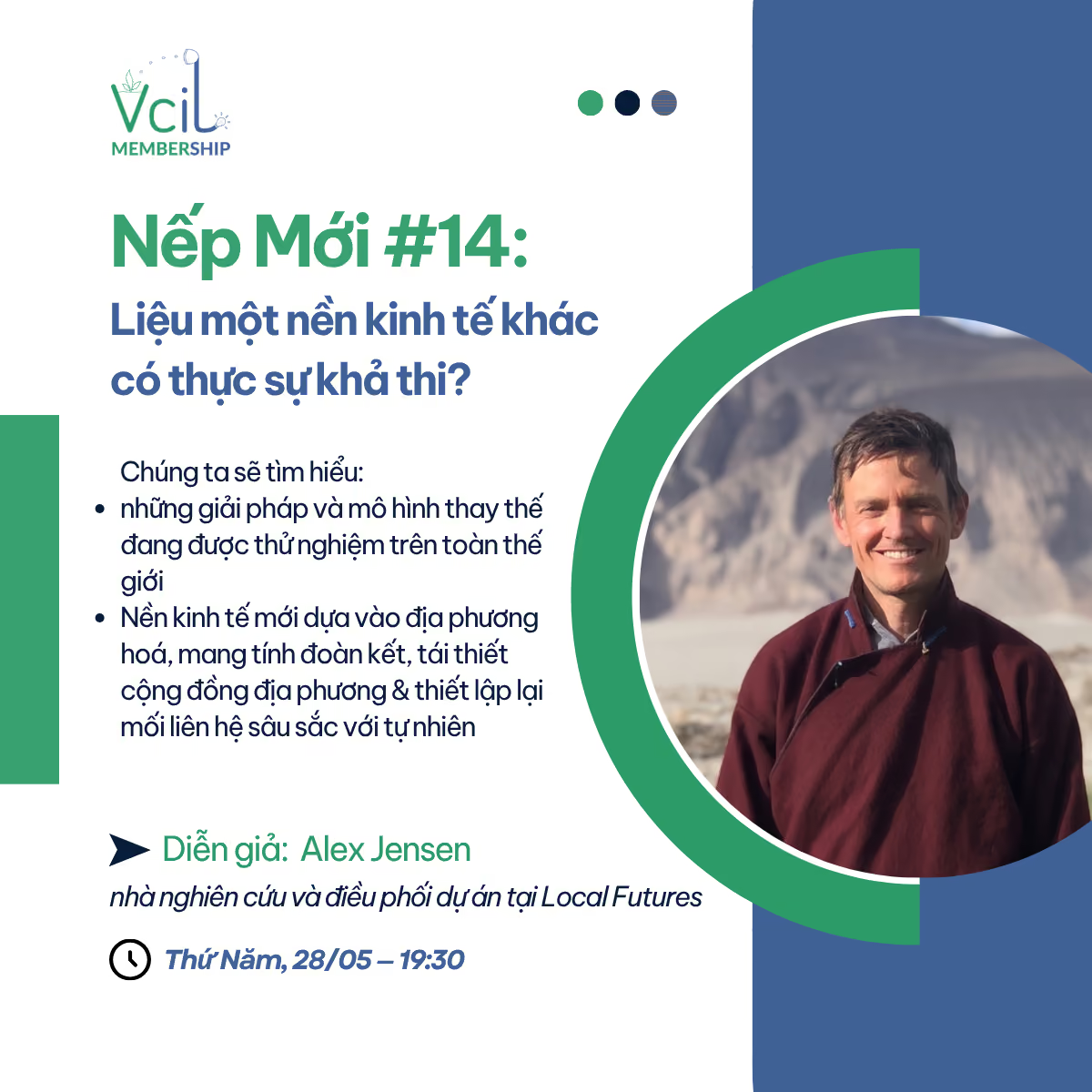
In this session of Nếp Mới #14, we'll explore these models together with Alex Jensen from Local Futures. Alex will focus on the solutions and alternative models being tested around the world, grounded in the principles of localization and solidarity — rebuilding local communities and restoring a deeper connection with nature.
Alex is a Researcher and Project Coordinator at Local Futures. He currently focuses on the Ladakh Project in India, one of the longest-running field studies on local communities and the process of rebuilding after being drawn into the global economy. He also represents Local Futures in the Vikalp Sangam network — a platform connecting hundreds of grassroots initiatives currently operating across India. Alex has direct experience working with farming communities in multiple countries on agricultural biodiversity, cultural preservation, and environmental health.
See you at Nếp Mới #14!
Fanpage: Vcil Community
Phone / WhatsApp / Zalo: 0836243541 (Huy)
Email: vcil.group@gmail.com
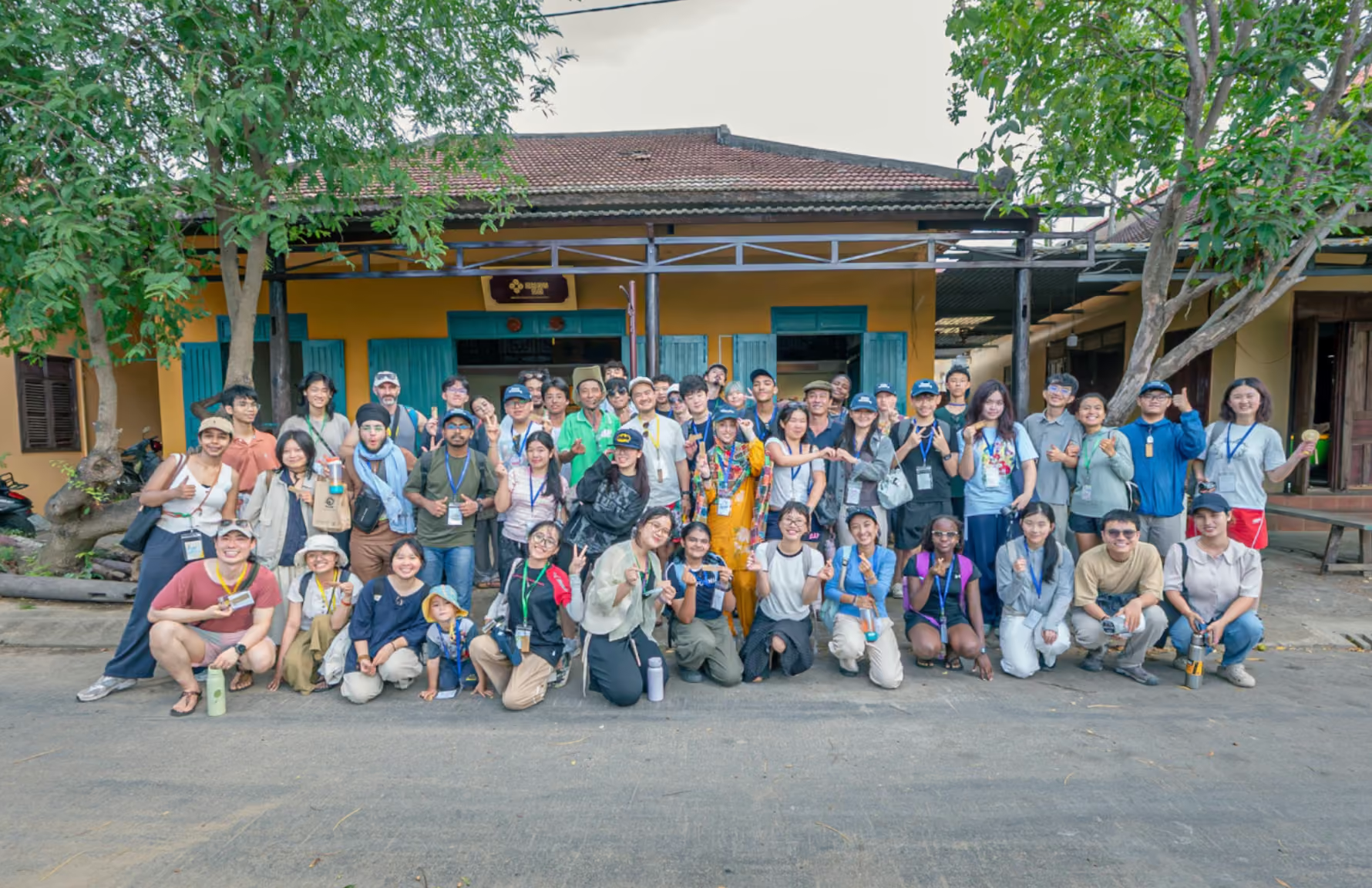
Inspired by the Vietnamese word "Nếp"—which embodies the ingrained patterns of culture, habit, and daily life—Vcil Community launched Nếp Mới to create a space that nurtures new ways of living, prioritizing lasting well-being and the regeneration of genuine wealth. It is a community space designed to help people recognize and move beyond outdated patterns, learn from collective wisdom, and reimagine how we live, connect, and learn.
Each month, community members explore a different topic in depth. Nếp Mới invites scholars, experts, and practitioners to share insights on essential topics relevant to everyday life. Participants have the opportunity to engage in dialogue, deepen their understanding, find solutions to personal and collective challenges, or begin meaningful work.
Nội dung đầy đủ của bài viết này chỉ dành cho Hội viên Vcil. Đăng nhập để đọc tiếp phần còn lại.

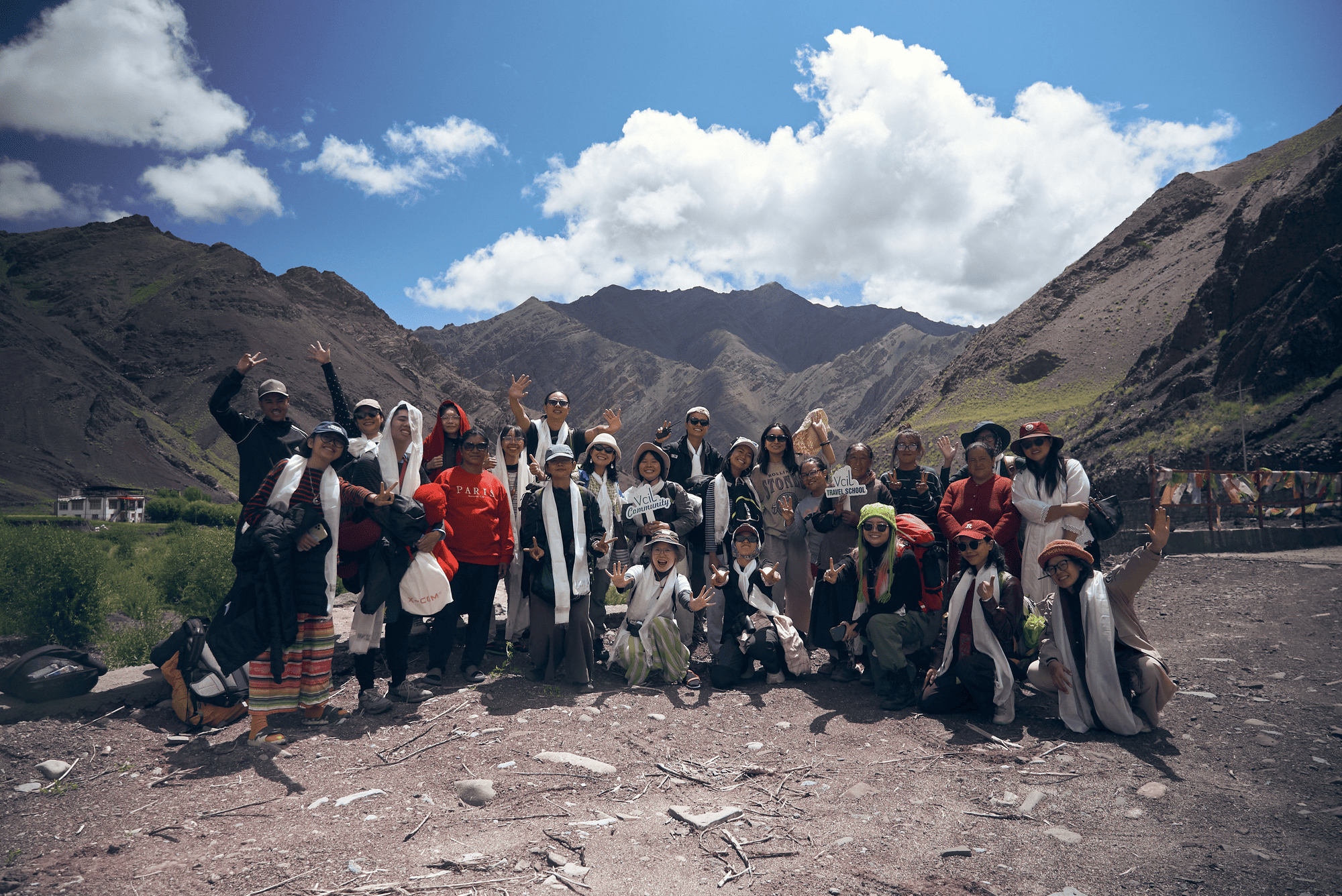

New Ways will invite scholars, experts, and people with practical experience to share about essential and familiar topics in life