You are using the member interface.
Log out of the member interface →

 ← Bản tin
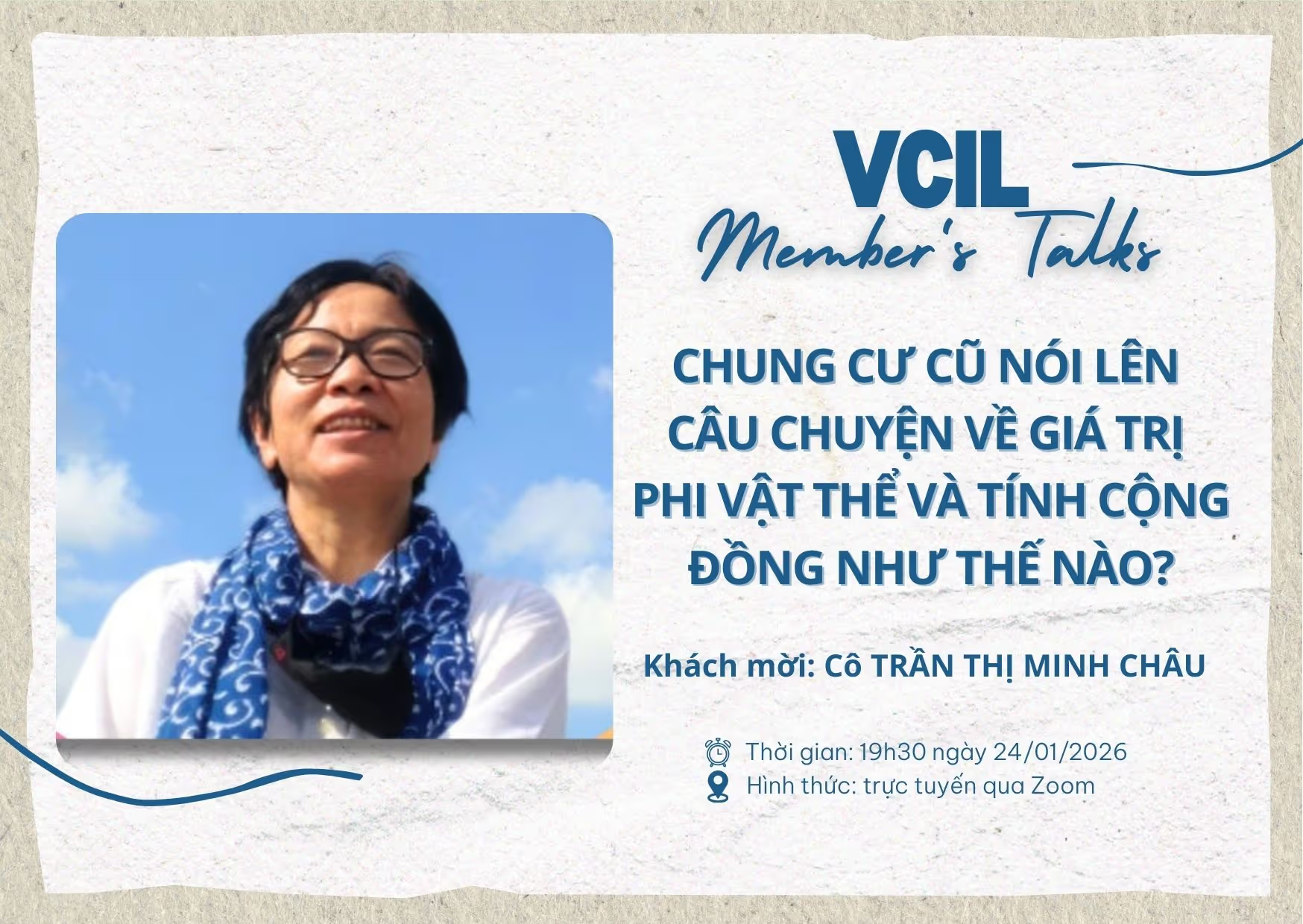
Recently, Vcil Members' Talks #5 took place with the presence of Ms. Minh Chau – an expert in community-based urban development and a long-time member of programs improving poor neighborhoods and housing in Vietnam and the Asian region.
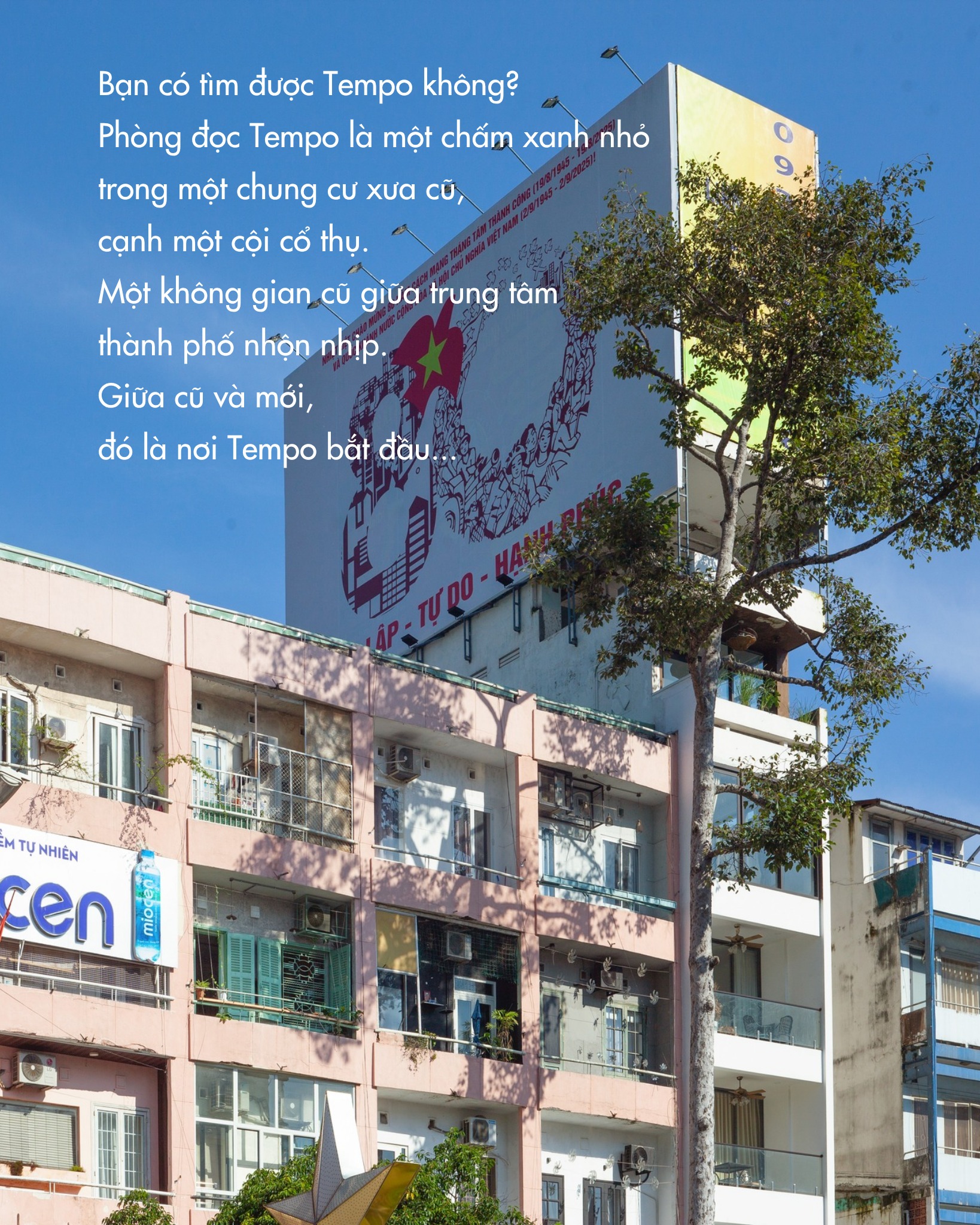
The conversation began from a very concrete space: an apartment in an old residential building in the city center – where the Tempo Reading Room was formed. From Tempo's story, Ms. Chau guided listeners back in time, returning to the early years of community work, to better understand the relationship between people, living space, and urban memory.
Throughout this sharing, there was one overarching and consistent question: 'As the city changes increasingly fast, what are we preserving, and what are we sacrificing?'

Ms. Minh Chau began her story with an observation that the elderly like to talk about the past, while the young prefer to discuss the future. The sharing session that day became a point of connection between the two as she recounted what had passed, like transmitting memories and experiences, while the future she "entrusted" into the hands of young people, trusting that they would continue the next chapter of that journey.
Tempo Nexus is a reading room born from this spirit, formed from the encounter and accompaniment between Ms. Chau and groups of young friends. "Tempo" – short for Temporality – evokes the relationship between people and the flow of time, of memory in the rhythm of urban life, with layers of values gradually being obscured in the city's development process.
Therefore, Tempo was not born merely as an ordinary "reading space," but as a pause point in the urban flow, where everyone is invited to listen more deeply to old apartment buildings from a different perspective – not from the viewpoint of demolition or relocation, but from the values of memory, life, and community that deserve respect and continued nourishment.
Looking back at Ms. Chau's long journey, in the late 1980s and early 1990s, when she was a young official at Ho Chi Minh City's Department of Land and Housing, she participated in community work programs in poor urban neighborhoods. This was a time when many concepts of community-based development were still very new in Vietnam, and the prevailing approach still heavily reflected top-down management thinking.
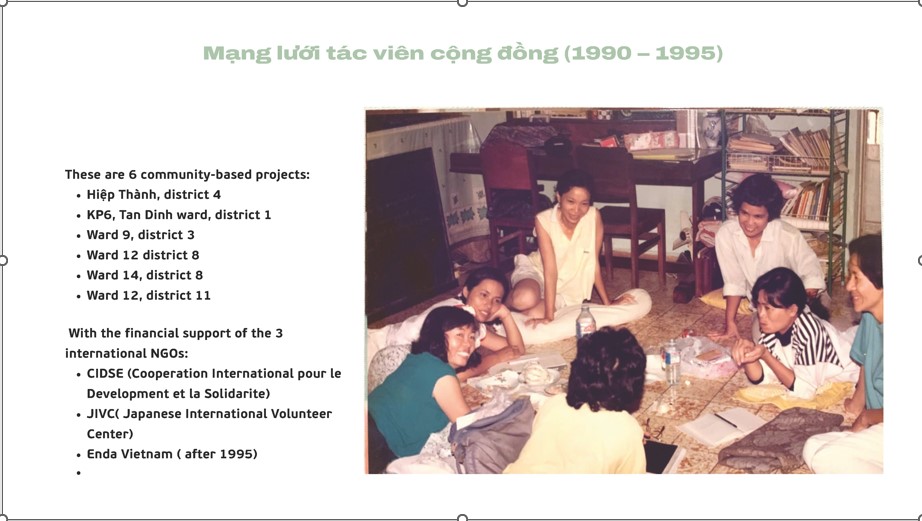
A turning point that left a deep impression on her occurred at an international workshop on housing at the Rex Hotel. Instead of maintaining the usual formality, the Japanese professor – who was chairing the workshop – removed his tie and said something very simple: "I don't want to just stand here and talk. I want to go down to the community to sit and learn." At that moment, Ms. Chau felt that this suggestion was not just a humble gesture, but the beginning of a completely different approach to community engagement.
When going to the field, instead of sitting on chairs and tables, the working group spread a mat and sat on the ground with the community. It was precisely in this posture that she learned an important lesson: when we actively "sit low," the community will have the space to stand up, to speak, to share, and to lead their own story more easily.
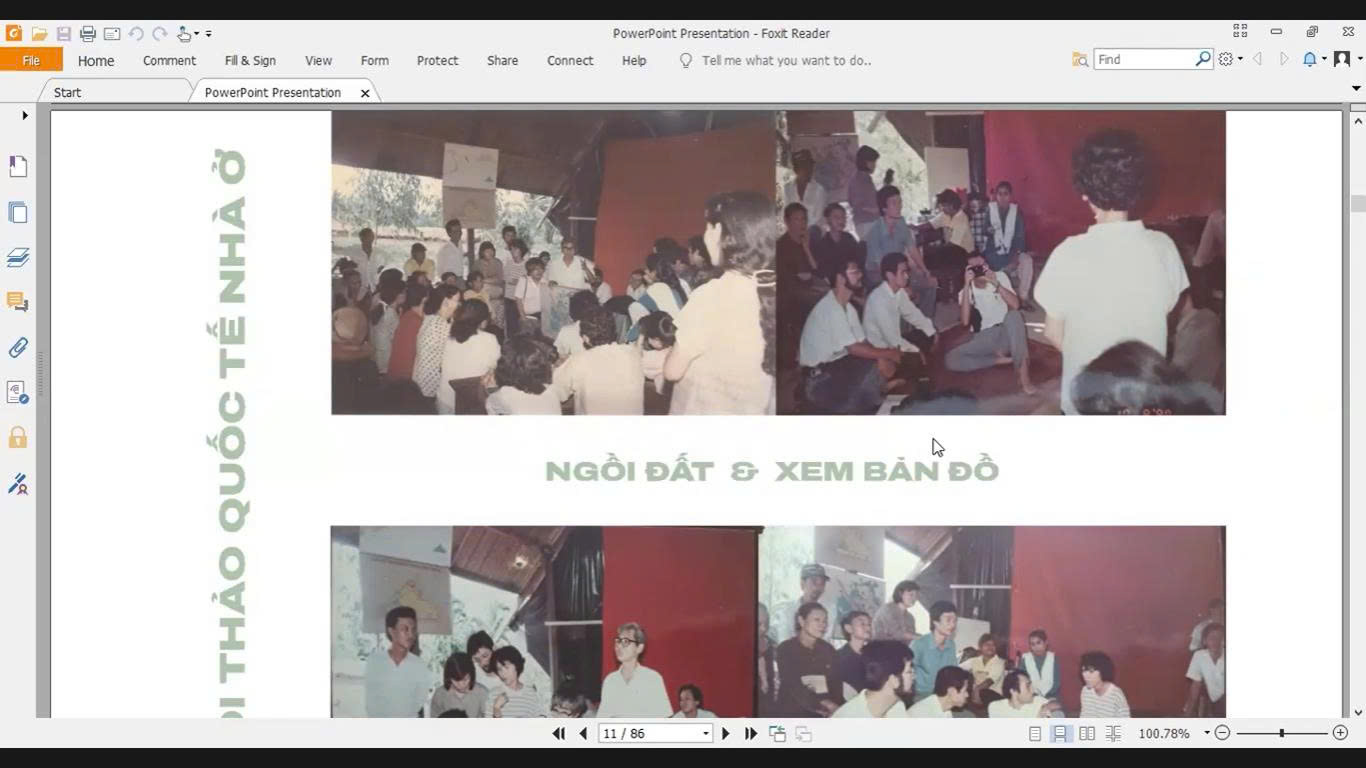
Along with this came a change in how familiar urban management tools were used. Maps – which were typically hung on walls as symbols of power and planning – were placed on the ground, so people could point, discuss, and debate about the place where they live. That moment blurred the boundary between "policymakers" and "beneficiaries," opening up a more equal dialogue space.
The apartment in the old residential complex – which later became the Tempo Reading Room – was also connected to that period. Back then, it was both a living space and "headquarters" for the community work group. Late-night community meetings, nights of exhaustion returning home and then sleeping right on the floor – these very experiences became the foundation for how Ms. Chau views the city until today.
From these very concrete experiences, Ms. Minh Chau gradually formed a consistent way of viewing the city and people in the city. The city is not only constituted by infrastructure, planning, or development indicators, but first and foremost by relationships. Between people and people. Between humans and the spaces they inhabit. And between the present and the layers of memory that have accumulated over time.
Ms. Chau shared that in society there always exist two opposing forces. One force pushes people apart – promoting independence, individualization, and competition. And another force pulls people together – the need to be supported, to be connected, and to exist together. Urban development, if it only follows the pushing force, will easily create comfortable spaces but empty ones, where people live next to each other but don't truly live together.
Precisely in this context, she posed a question to architects and planners: "Who are we serving?" The reality shows that most architectural projects are designed for a very small group in society, while the majority – those living in old residential areas, low-income neighborhoods, informal settlements – are rarely heard in the process of creating their own living spaces.
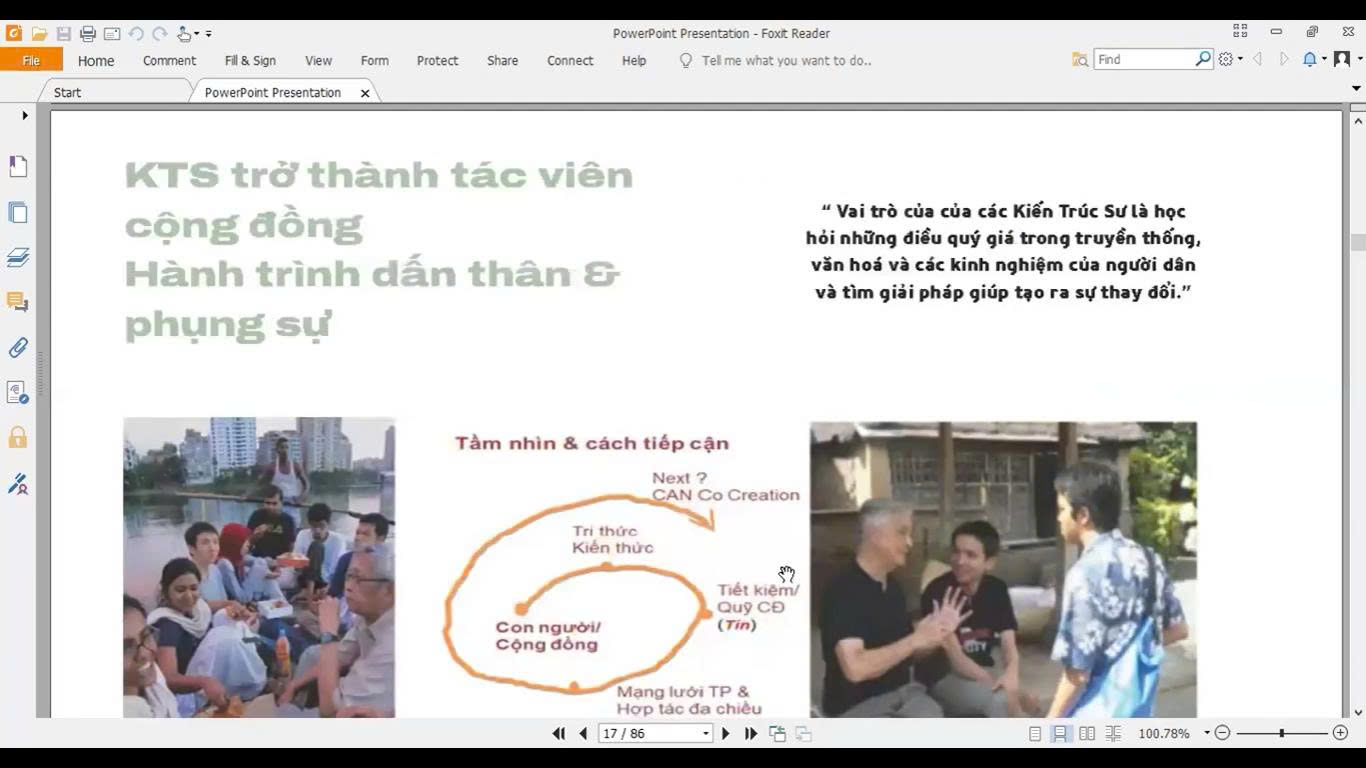
From this concern, the concept of "community architect" is emphasized as a role that needs to be reconsidered. According to her, a "community architect" does not stand in the position of "the one who draws out solutions," but rather as someone who opens up the map – where residents can participate, envisage together, and collectively decide the future of spaces they care about. This is a process of work based on dialogue, patience, and respect for local knowledge, rather than imposing pre-existing models.
This approach also helps us reconsider how we are currently treating old apartment buildings in cities. When we see apartment buildings only as deteriorating concrete blocks, the easiest solution is to demolish and rebuild. But when we see apartment buildings as a "living body," where decades of memory, relationships, and community life have accumulated, the question is no longer "to demolish or preserve," but "how to continue."
Returning to Tempo, Tempo is not a "big project," and certainly not a complete model to replicate. It began very humbly, from the very apartment where she once lived and worked, as a small experiment to ask the city a reverse question: can we heal the city without destroying it?
In the process of accompanying groups like K59 and Tản Mạn Architecture, a concept was introduced: "urban acupuncture." Just as a traditional medicine doctor uses acupuncture needles at meridian points for the body to self-heal, architects gently intervene at small points within the apartment building to activate its vitality without breaking the structure or harming the aging "body" of the building. The spatial rhythm of Saigon's apartment buildings from decades past – such as old stone washing layers, decorative iron window frames – are intervened with restraint, just enough to allow the space to continue being used while still permitting memory and history to be present.
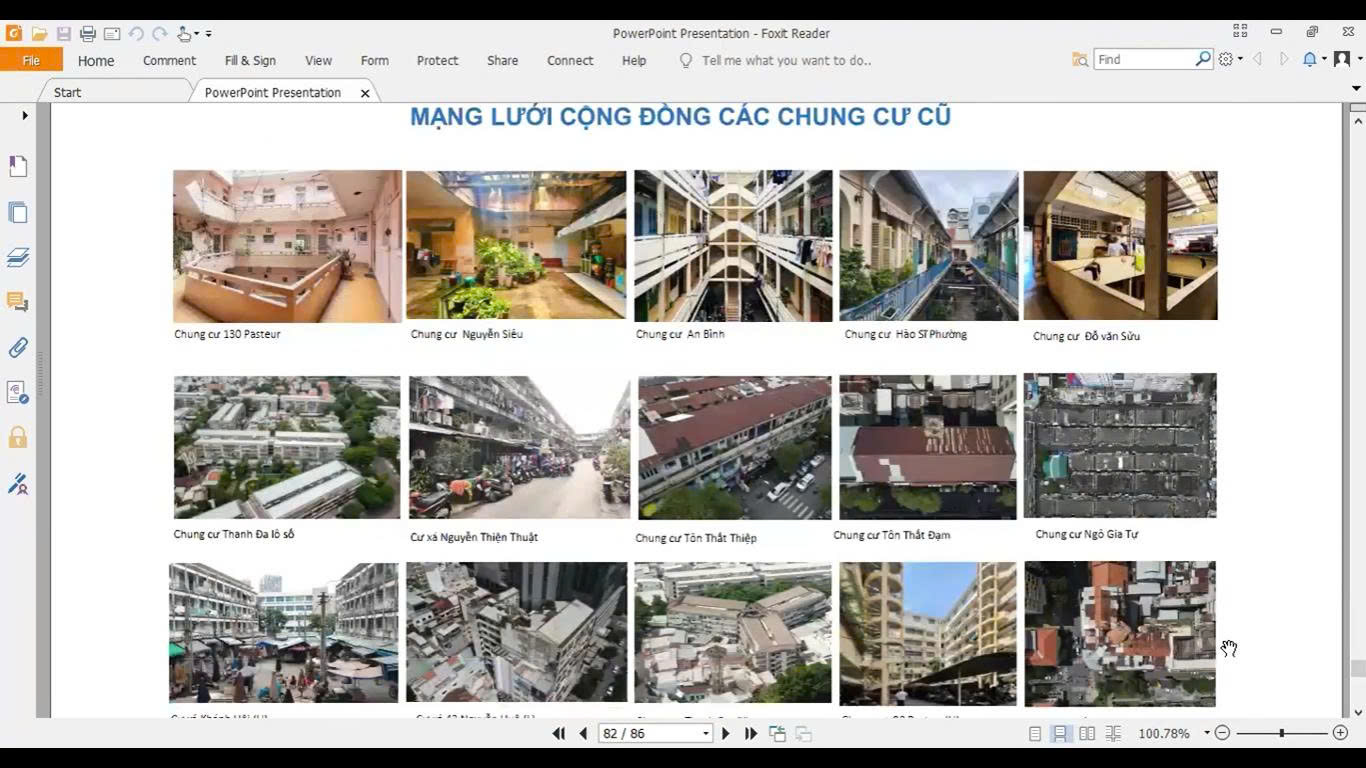
Entering the implementation phase, Tempo faced very concrete and also very "urban" challenges. Renovating an apartment in an old residential building is like working with an aging body – its structure is literally fundamental – requiring a light touch, without loud drilling, without imposing rough interventions.
Moreover, Tempo is located right on the bustling Le Loi Boulevard, facing the City Theater and Ben Thanh Market, posing the challenge of providing effective soundproofing while preserving the inherent quietness of old apartment buildings.
__
At the end of the conversation, Ms. Minh Chau summarized her personal capacity-building journey through three steps: Observe – Connect – Create. At the same time, she conveyed: "I am grateful to those who came before and guided me, and grateful to young friends who helped me develop new thinking. Now, I step back so that young friends can lead. I hope this model spreads, creating a network connecting old apartment buildings, not only in Saigon but also in Da Nang (like fishing village apartments) and other cities. Let us cherish and revive the community values in those places."
___
Anh Nam (Founder of K59 Atelier – partner in designing Tempo) believes the most difficult task lies in maintaining the reading room's operations with very low fees for students, while still covering electricity, water, and operational costs in an expensive central area. This forces the design team to think beyond conventional form, moving toward spatial flexibility. Tempo is imagined as an open-function structure: by day it's a place for quiet reading and studying, in the evening it can transform into a film screening space, exhibition hall, or other community activities.
Anh Nam recounts that when he received the brief from Ms. Minh Chau, his first emotion was both joy and worry. Joy because it's very rare for a homeowner to possess such a prime location on the bustling Le Loi Boulevard – a commercial hub of the city – yet choose not to commercialize it, instead dedicating the space to a non-profit community project. Worry because he understood that this path would not be easy. It was precisely respect for her dedication, long-term vision, and responsible social choice that led K59 to decide to accompany the design work.
Anh Nam shares that making things beautiful is relatively easy, but making them right and appropriate is the hardest. Architects don't just work with forms and materials, but need to "read" both the building and the people who will use it. A space for elderly or disabled people cannot only be solved through technical standards like ramps or handrails, but requires deeply understanding their psychology, living habits, sense of safety, and comfort. "Right" architecture is when space naturally becomes part of life, rather than being imposed on the user.
____
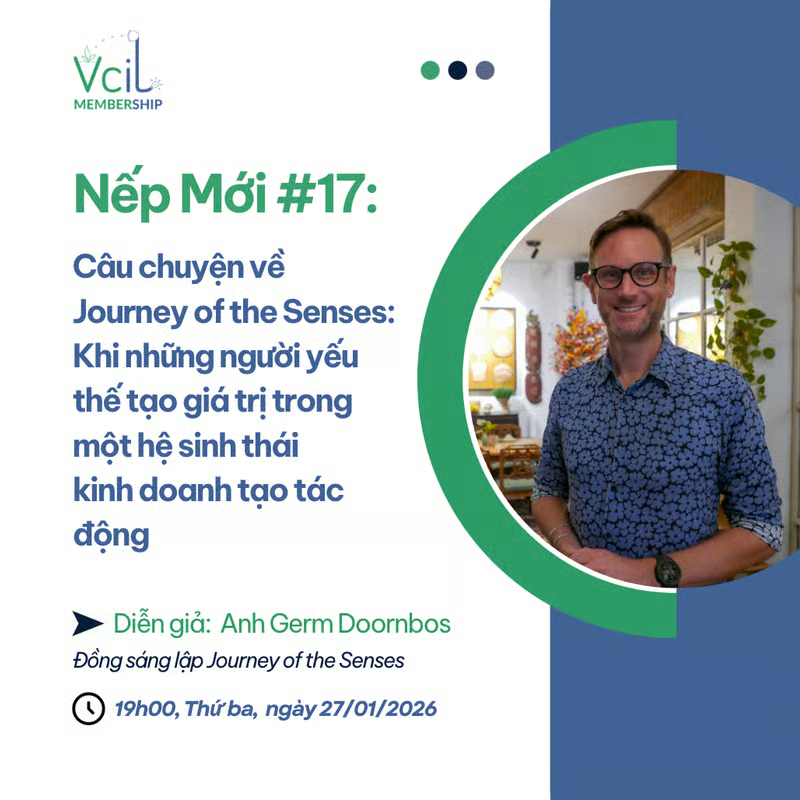
Vcil Members' Talks is a series of monthly public events where stories, initiatives, and models of regeneration from the ecosystem of Vcil Community members are shared. Vcil Members' Talks is not just a place to listen, but a space to learn together, expand networks, and nurture the spirit of cooperation for a regenerative future.
Information about Vcil Members' Talks #6 will be announced soon via the Fanpage. You can follow the Zalo group, Substack, or Facebook for the latest updates. See the comments section for invitation details.
You can review Ms. Chau's sharing here:
If interested in sustainable/regenerative production models, or connecting with individuals, organizations, and communities creating a flourishing and regenerative society, Vcil Community invites you to learn about and join Vcil Community Membership to have the opportunity to engage, learn, work, and collaborate with members who share the same values.
#VcilMemberTalks #VcilCommunity #SustainableDevelopment #OldApartments #UrbanAcupuncture #CommunityArchitecture #TempoNexus #CommunityPreservation
Nội dung đầy đủ của bài viết này chỉ dành cho Hội viên Vcil. Đăng nhập để đọc tiếp phần còn lại.

Vcil Members' Talks are a series of public sharing event