
[The Soil Project '23] Building Organizational Culture and Learning Space Based on Mindfulness
Topics Cộng đồng & Địa phương hoá, Câu chuyện thành viên
From 22 to 25 March 2023, the SEEDS of The Soil Project and members of VCIL Community joined the retreat "Establishing communication in the family: untangling inner knots, reconnecting family bonds", guided by the Plum Village sangha at Hoằng Pháp Monastery, Củ Chi, Ho Chi Minh City. Below is a reflection from a VCIL Community member on the experience.
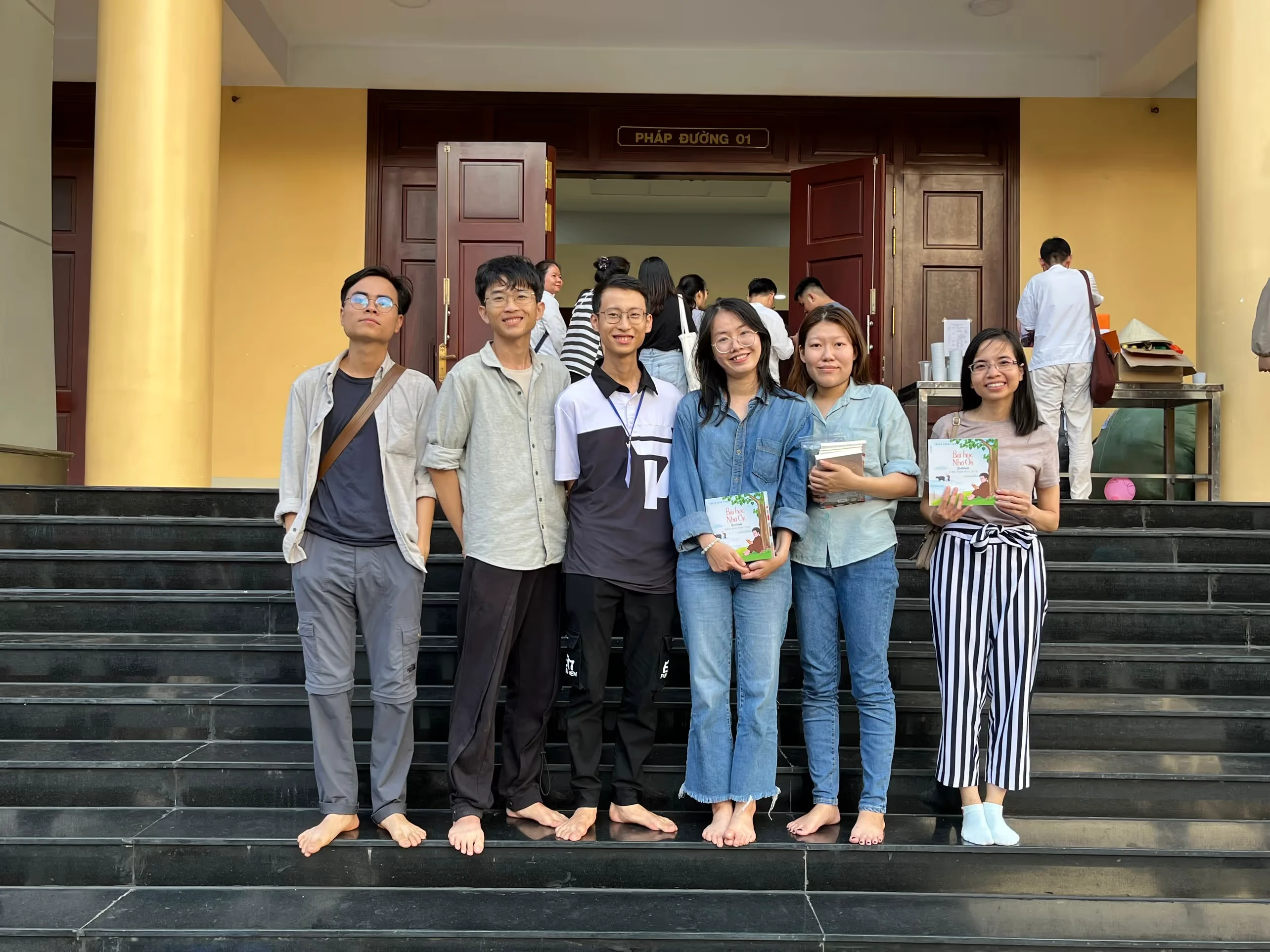
An important foundation for everyone on the journey of discovery and understanding oneself is the practice of mindfulness. From March 22-25, 2023, the SEEDS of The Soil Project and members of VCIL Community attended a retreat titled "Establishing Communication in the Family - Resolving Internal Knots, Reconnecting Deep Love" guided by the monastic community of Plum Village, organized at Hoang Phap Pagoda, Cu Chi, Ho Chi Minh City. Below is a reflection from a VCIL Community member about this retreat experience:
Plum Village and Thich Nhat Hanh's mindfulness practice methods are very familiar and well-known to everyone, but this was my first time participating in a mindfulness retreat according to Plum Village's practice tradition. Therefore, I will not share much about the practice teaching but will share my observations about organizational culture - which is also why all the brothers and sisters in VCIL Community and The Soil Project participated together - not only to learn about practice but also to learn about organizational culture and internal communication.
This was perhaps the most "gentle" retreat I have ever participated in. There was no requirement to surrender phones, no requirement for "silence", no 8 hours of sitting meditation per day, and no "internal rules". Throughout the entire retreat period, I never heard anyone announce any internal rules, requirements, or constraints. Everything was very natural, very free, but also very organized and surprisingly successful. If at other retreats meditators would only have activities of eating, sleeping, meditation, then at this retreat, the community also had the opportunity to engage in "work practice" - labor, contributing to sweeping, wiping, cutting vegetables, etc., serving the retreat - and this was not just volunteer work or simple merit-making, but a meditation practice. The Dharma talks in small groups, magnificent meditation chanting, mindful tea, and private consultations with teachers all created very unique colors of the practice tradition.
This also surprised me greatly. Without rules but with everything being very organized and proper, and everyone practicing wholeheartedly made me feel very curious. If such a retreat were to be described, I would say it was "gentle but structured". What creates this is that within this retreat, there was already a core group of experienced meditators already practicing, and when they blended with the stream of new meditators practicing, it helped the newcomers quickly adjust to the flow, adapt to the culture and communication style of the practice tradition.
BUILDING ORGANIZATIONAL CULTURE AND LEARNING SPACE:
Each organization needs to choose its own core values to serve, the goals it pursues, and build a healthy organizational culture with distinct colors that express the values and goals of that organization. In organizational culture, I believe that an organization's process of scaling up and scaling out needs to be gradual according to the depth of core team members' understanding and ability to embody the values and culture before taking on new members or expanding activities. Once core values and culture are firmly established, there is no need for grand announcements or extensive communication - each member will clearly show it and carry the organization's energy. Like how the monks and nuns of Plum Village organized this retreat.
I want to emphasize this because deeply understanding values, mission, and building a healthy culture for the organization is crucial for the organization's long-term development, as well as creating an effective, meaningful, cohesive work environment full of happiness. And it must start with the deep understanding of each individual in understanding and embodying those values, mission, and culture. KPIs, profit, or work efficiency are things that will come after we create a favorable, positive work environment, an adorable team, clearly understanding where we are going, where we are now, and where we are heading. But we cannot call for these things; they must come through continuous practice and shared experience.
The next element is the "culture of praise" in organizations, groups, and families. I noticed how the organizers and monks wanted meditators to do something, instead of issuing commands, requests, or threats (which is what we usually do when we want someone to follow our will or perform something), the monks used praise to encourage such actions. When hoping meditators would go to bed early, the monk praised how last night he saw everyone practicing going to bed early so lovingly and wholeheartedly, the monk was grateful for that practice and hopes we can continue. Instead of using stick, the monks used carrot very skillfully and sincerely. Everyone likes to be praised and recognized, right?
To questions from the community - the meditators - monks usually answer based on the intention and purpose of the question, not based on the content of the question. To understand the purpose requires practice, observation, and certain sensitivity. The question asked is: how can in daily relationships and communication we look deeply into others' intentions and purposes instead of just superficially engaging with words or clinging to words. How can we give feedback to someone without hurting them - meaning how can we express the energy of love and good intention instead of forcing blame or anger or resentment. How can we always be fresh, gentle, positive, and full of love and compassion for anyone we meet, including trying to see the lovely side in people we do not like or trying to understand someone we "hate". In organizations, communities, and families, how can we build a culture where everyone feels safe enough to confidently and openly share their thoughts without fear of judgment or evaluation; how can everyone be listened to, listen to the parts they do not say, listen deeply to the psychological processes or pain that person is facing, instead of just listening to the surface words.
In the retreat, there were many tears, many psychological traumas were shared and many pain and suffering were embraced to be seen and held. These are wounds from childhood when we were children, wounds from loved ones, family, wounds from work, from work environments. We grow up from family and spend much time working, so we attach ourselves to the organization, community, workplace that we care about. Therefore, I believe if each individual, family, or business organization can practice values and culture to create a healing and nurturing environment, the world will have less suffering.
To do this, we need continuous practice on a sound method where understanding body and mind is an important part to be able to build a healthy and nurturing family or community culture. This is the reason, in the recent time, I and my team have spent much time talking about shared mission, desired values, and practicing the culture that the whole organization wants to build. Those retreats, opportunities to observe the Sangha of Plum Village, courses on psychotherapy, understanding body and mind, or transforming conflict, communicating with compassion are all precious opportunities for me and my team to learn from real experiences.