The River That Shapes the Land: Lessons in Localization from Kim Bồng
Topic Cộng đồng & Địa phương hoá
Understanding localization through a cooperative economic model with the Kim Bồng community
On this pageOn this page (8 sections)
UNDERSTANDING LOCALIZATION THROUGH A COOPERATIVE ECONOMIC MODEL
WITH THE KIM BỒNG ECOLOGICAL AGRICULTURE AND COMMUNITY-BASED LEARNING TOURISM COOPERATIVE (Community-Based Learning Tourism of Kim Bồng Village – Hội An)
The "Treasures of Our Own Place" week in Đà Nẵng is gradually drawing to a close. It opened with a conversation with Helena about localization, followed by a series of events and activities to connect the Đà Nẵng community.
While earlier activities focused on the food system and the globalized economic system—along with local solutions and actions—this journey down the Thu Bồn River seeks to tell the story of an alternative economic model: the collective economy, a locally-rooted model of development co-created and operated by the community.
That is why we partnered with the Kim Bồng Ecological Agriculture and Community-Based Learning Tourism Cooperative to organize the "Down the Thu Bồn River" program—connecting people, the river, culture, and sustainable transformation. A cooperative is an economic organization founded by a community and co-owned by its members, who work together and support one another to meet the needs of the group and the wider community, based on autonomy, self-responsibility, equality, and democratic management. The Kim Bồng cooperative is one embodiment of this model. The community formally established its cooperative in 2025, growing out of a cooperative group that had been operating for many years.
Throughout the program, XomTour used products and services provided by cooperative members. We listened to farmers, boat-building artisans, and mat-weavers share their stories. The food and drinks were grown and prepared right in Cẩm Kim by the farmers themselves, using sustainable, nature-aligned methods. Through this, we wanted to convey a different way of consuming: one that is more conscious and responsible—actively choosing local products and services produced according to ethical and regenerative principles.
In designing and running the program, principles of equality and horizontality were always emphasized. Decisions about where to go, what to eat, what places to visit, and even the cost of the program were all discussed based on fairness, ensuring the voice and co-creative spirit of local residents. The local people themselves set the itinerary, divided the work, and shared the profits based on individual contributions, drawing on exchanges with Vcil Community and XomTour - Conscious Travel, Local Impact.
As we can see, localization is not only about consuming locally and supporting the local economy, but also about making economic and ecological decisions in a democratic, fair, and equal way. This is precisely the message we wanted to convey through this journey down the Thu Bồn River.
But localization is not a concept that lives on paper. It appears very concretely in each stretch of the river, in each surviving craft village, and in each story we were told throughout our journey down the Thu Bồn.
THE RIVER THAT SHAPES THE LAND
The journey began with a simple question that invites deep reflection: What does the river tell us?
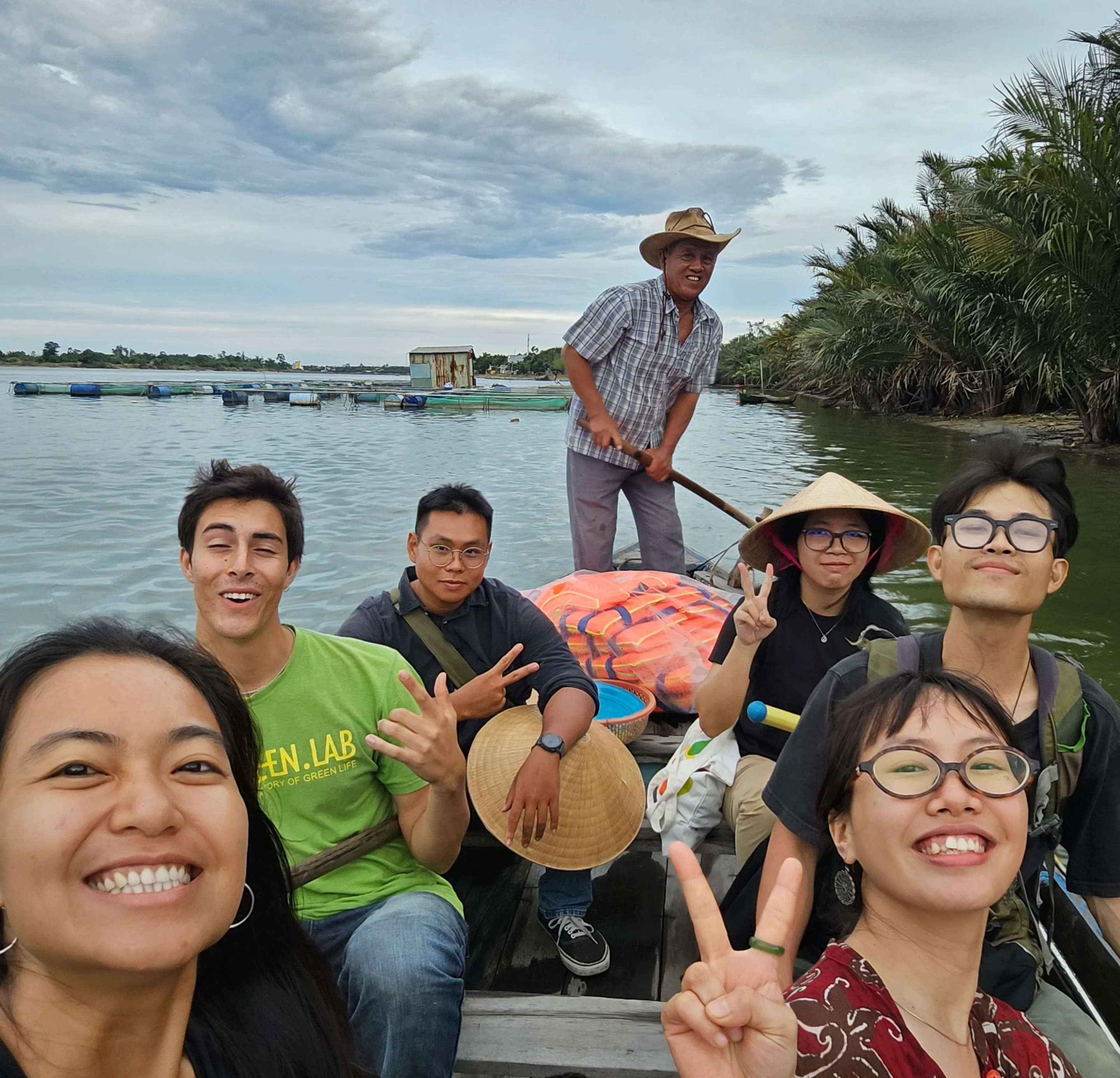
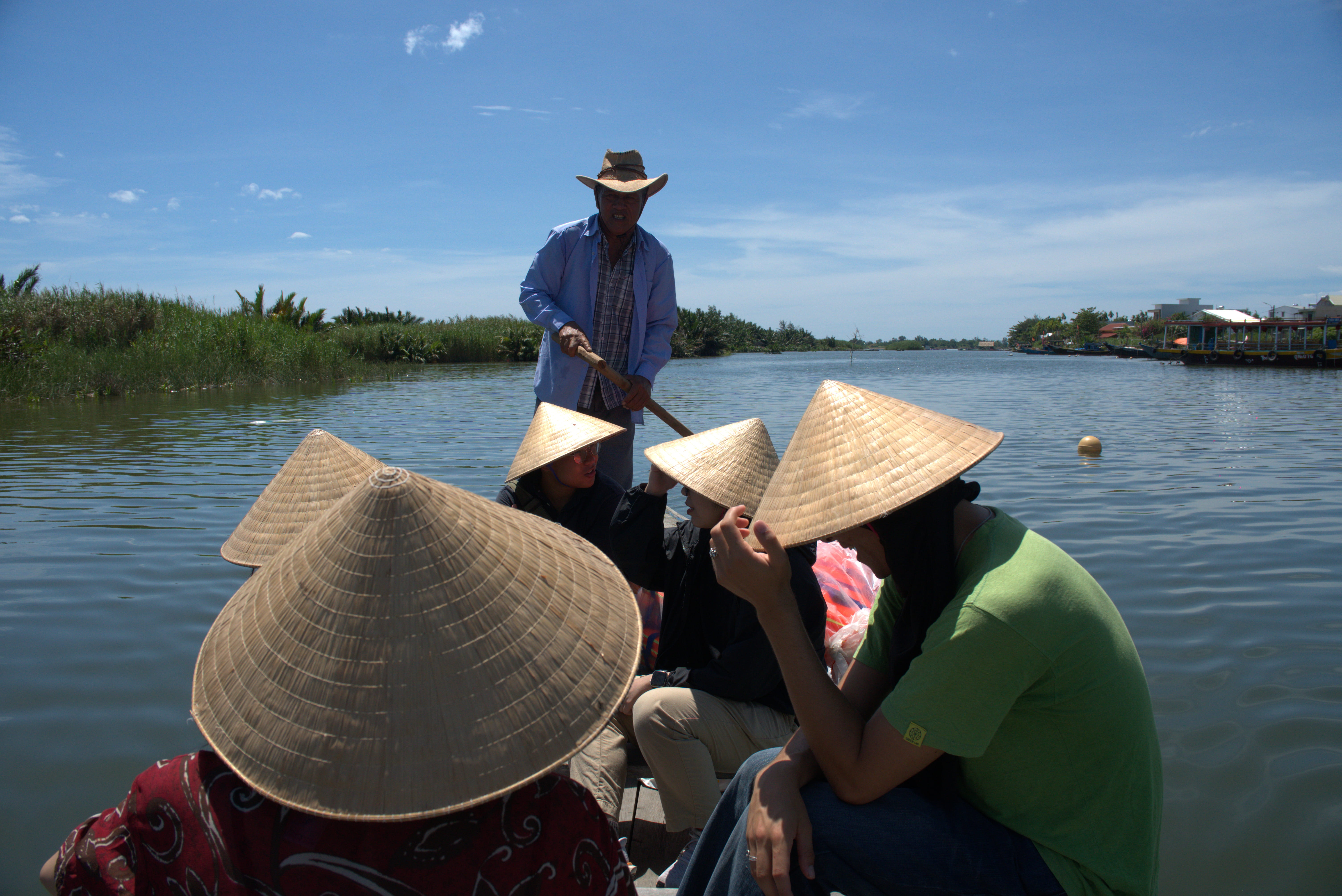
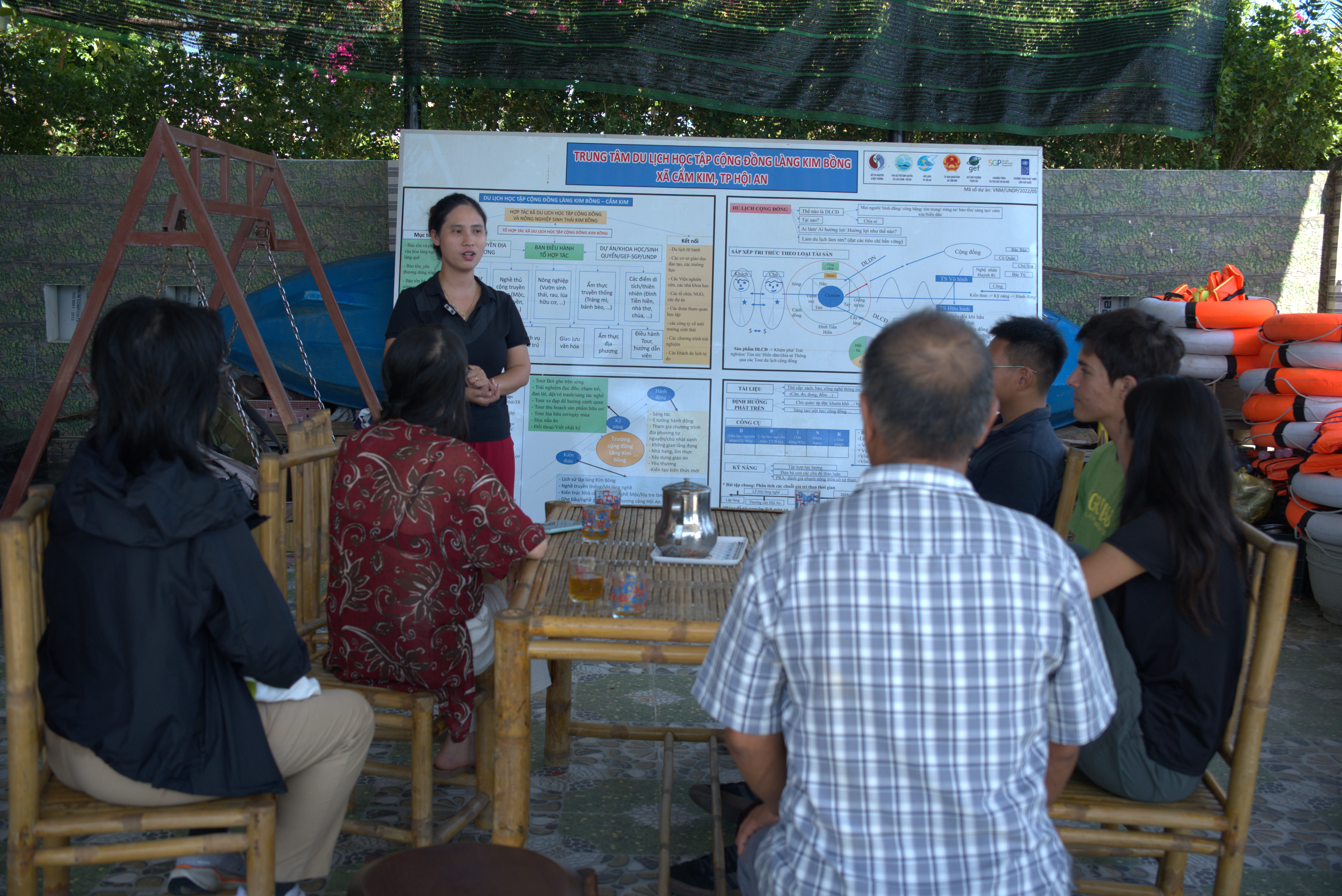
To find the answer, we joined Mr. Nhất—a son of Kim Bồng and a fisherman bound to these waters for more than 50 years—rowing along the Thu Bồn River, which has nourished the lives, culture, memories, and livelihoods of countless generations. We came to hear stories "only locals know," to hear social insights and Indigenous knowledge conveyed through a life weathered by wind and storm. We also visited Mr. Thấn's boat-building workshop to understand a craft that once flourished and drove commerce across the vast Quảng region. Additionally, Ms. Cúc, director of the cooperative, joined us to share how the cooperative was formed, developed, and operated, along with the achievements and difficulties the community faces.
The Thu Bồn originates from Mount Ngọc Linh (Nam Trà My district), flowing through headwater forests and fertile plains, embracing Hội An Ancient Town before merging into the East Sea at Cửa Đại. Along that journey, the river connects forests, plains, and the estuary–coastal zone, forming a diverse ecosystem rich in water and abundant alluvial sediment.
This connection has laid the foundation for life. Alluvium enriches fertile fields, the water nourishes fish and shrimp, and the river becomes a vital transportation route giving rise to many livelihoods for riverside residents—fishing, boat-building, agriculture, and traditional crafts such as mat-weaving, rice-noodle making, and wood carving. Across many generations, the Thu Bồn has been not only a river but the foundation of the community's entire economic and cultural life.
Sitting on Mr. Nhất's boat, we realized that each stretch of the river holds a story about nature, people, and the changes of the land.
He told us that in the old days, people did not dare to build their houses right at the river's edge. In some years the river would build up vast stretches of land, but after only a few flood seasons, those very deposits would be swept away and become the riverbed once more. That is why our forebears distilled the saying: "A river has its bends, a person has their moments." The river, like human life, is always moving and changing. Only once the state and the people built embankments against erosion did residents feel secure enough to settle for the long term along the river.
AN ECOSYSTEM ALWAYS IN MOTION
The branch of the river we passed through lies in the lower reaches of the Thu Bồn, within the buffer zone of the Cù Lao Chàm World Biosphere Reserve. This is where freshwater from upstream meets saltwater from the sea, creating a special ecosystem.
In summer, when the flow from upstream decreases, the tide pushes saltwater deep into the river, creating a brackish environment. By the rainy season, the volume of freshwater rises, pushing the saltwater back to the sea and returning the river to a freshwater state. This cycle repeats season after season, creating a nutrient-rich environment that attracts many species of fish and shrimp to grow and spawn. For this reason, the area is regarded as a "natural nursery," helping to sustain the richness of the estuary's ecosystem.
WHEN THE RIVER CHANGES, LIVELIHOODS CHANGE TOO
The Thu Bồn is also a witness to the transformations of society.
In the past, fishermen mainly fished using manual methods. Each trip out to the water required the coordination of 20–30 people; the catch was not large, but it drew on only a portion of the natural bounty, leaving fish and shrimp to continue growing and spawning.
As the market economy developed alongside the arrival of modern fishing gear, many people switched to trap nets, bottom trawls, or even electrofishing to increase their catch. These methods yielded more fish in the short term, but they also rapidly depleted aquatic resources, destroyed the spawning grounds of many species, and threw the river's ecosystem out of balance.
Mr. Nhất recalled childhood memories of a time when the Thu Bồn was so bountiful that "you only had to reach your hand into the water to catch a fish." Over time, that memory has gradually become a rare thing. There were trips out to the water when fishermen returned with their boat holds nearly empty.
The decline of aquatic resources is not only a story about nature; it also poses a livelihood problem for the very people who depend on the river. If they continued to fish as before, both the fish stocks and the people's livelihoods would be hard to sustain for long.
FROM HARVESTERS TO STEWARDS
Out of these concerns, many people in Cẩm Kim chose a different path.
They took part in the community-based learning tourism model, step by step reducing their dependence on extracting natural resources, returning to traditional fishing methods, and at the same time restoring the ecosystem by planting trees, protecting spawning grounds, and creating environments for fish and shrimp to grow.
Learning tourism not only opened up a new livelihood but also created motivation for the community to preserve the river's inherent values. The people are no longer merely those who live off the river, but those who protect it and tell its story.
Ms. Cúc, the cooperative's director, told us that this model did not form overnight. From a cooperative group that had worked together for many years, it was not until 2025 that the community formally established the cooperative, where decisions about livelihoods, conservation, and welcoming guests are all discussed and agreed upon together by the members. Behind it all remain enduring concerns: how to keep tourism from breaking the existing rhythm of life, how to share benefits fairly, and how to help young people see a future right in their own homeland.
Beyond their role as fishermen, they are also boat pilots, guides, and storytellers, sharing with visitors the history, the ecosystem, and the lessons that the Thu Bồn itself has taught them across many generations.
As he rowed, Mr. Nhất pointed out to us the small schools of fish, the beds of moss and algae, the rows of mangrove trees, and the clusters of water lilies that the people themselves had planted to restore the habitat for many aquatic species and water birds. These seemingly small things are the very foundation for life to gradually return to the river.
THE RIVER THAT NURTURES TRADITIONAL CRAFTS TOO
Beyond giving rise to fishing, the Thu Bồn has also helped shape many of Cẩm Kim's traditional crafts.
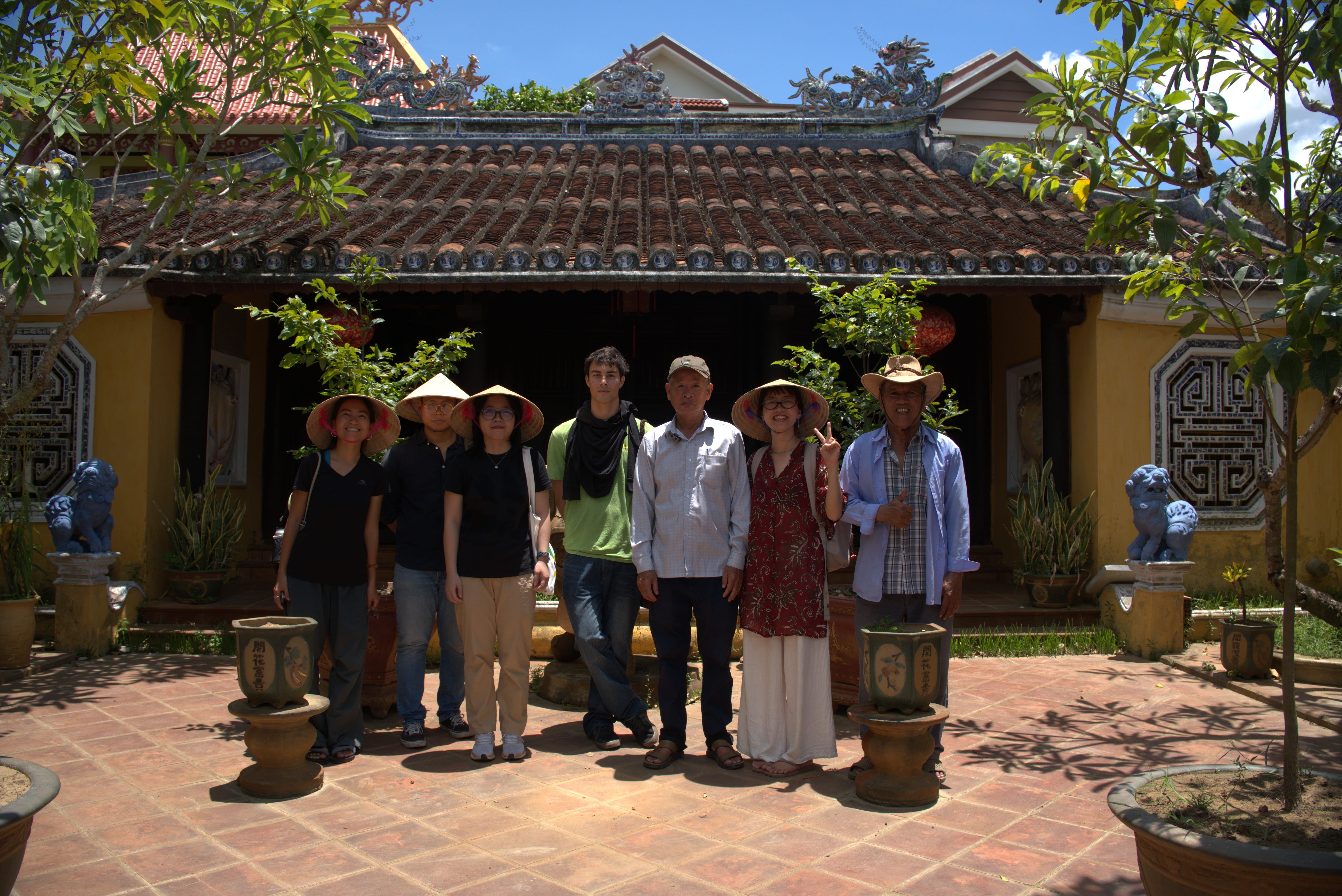
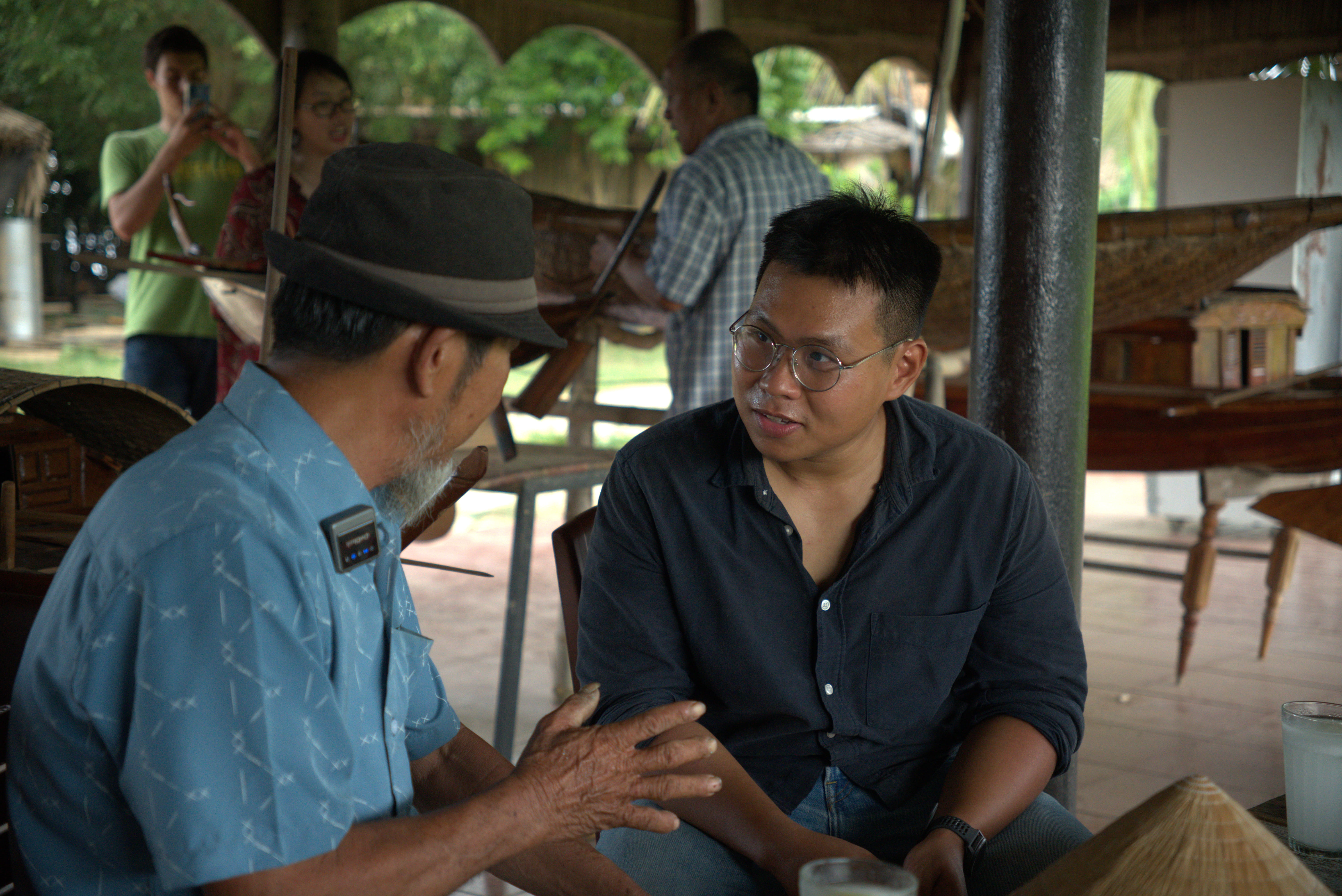
We stopped by Mr. Thấn's boat-building workshop, a man bound for many years to the Kim Bồng woodworking craft. In a workshop full of ghe bầu (traditional junk) models and boats still under construction, he told us about the boats that once carried our forebears up and down the Thu Bồn to open up the land, to trade, and to make a living.
We also visited the organic fields of 18 local farming households—people who have shifted from chemical-based farming methods to organic agriculture. From the river, to woodworking, to the fields, everything reveals the close bond between nature and the community's livelihoods.
WHAT THE RIVER LEAVES BEHIND
As we closed our journey, what we carried home was not only stories or knowledge about a place, but also a different way of seeing the river.
A river is not merely water flowing from its source to the sea. It is a living system, where nature, people, livelihoods, and culture are always intertwined and act upon one another. When the ecosystem is healthy, livelihoods are nourished; when livelihoods are sustainable, people gain further motivation to protect nature; and when these stories continue to be told, memory and Indigenous knowledge also have the chance to be passed on to future generations.
And perhaps that is the answer to the question posed by the whole "Treasures of Our Own Place" week. The treasure of a place lies not in glamorous destinations, but in the river, in the old crafts, in the fields, and above all in the very community that owns and retells its own story. When the people are those who decide together, benefit together, and safeguard together, then the Thu Bồn—along with the memory and knowledge of so many generations—can continue to flow on for years to come.