You are using the member interface.
Log out of the member interface →

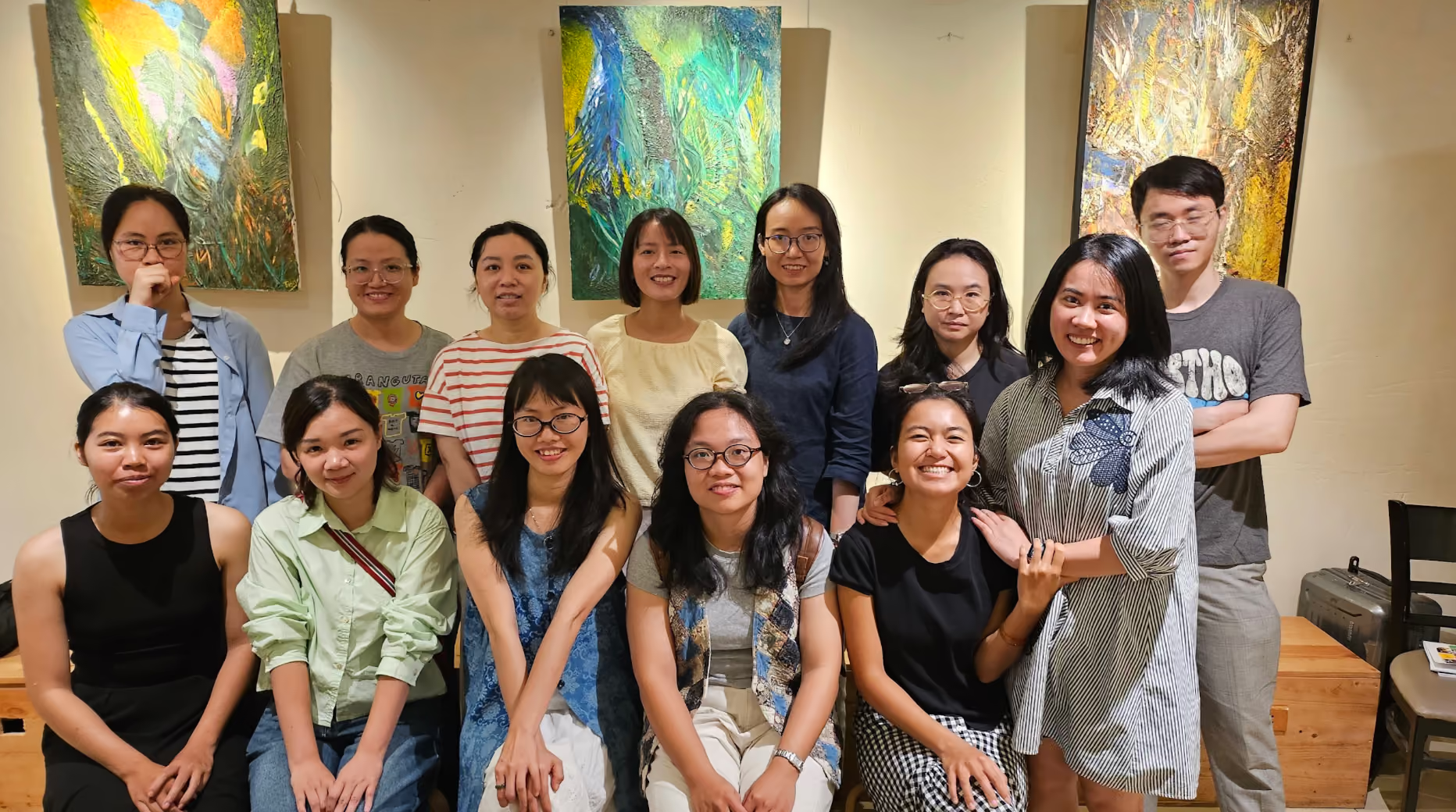
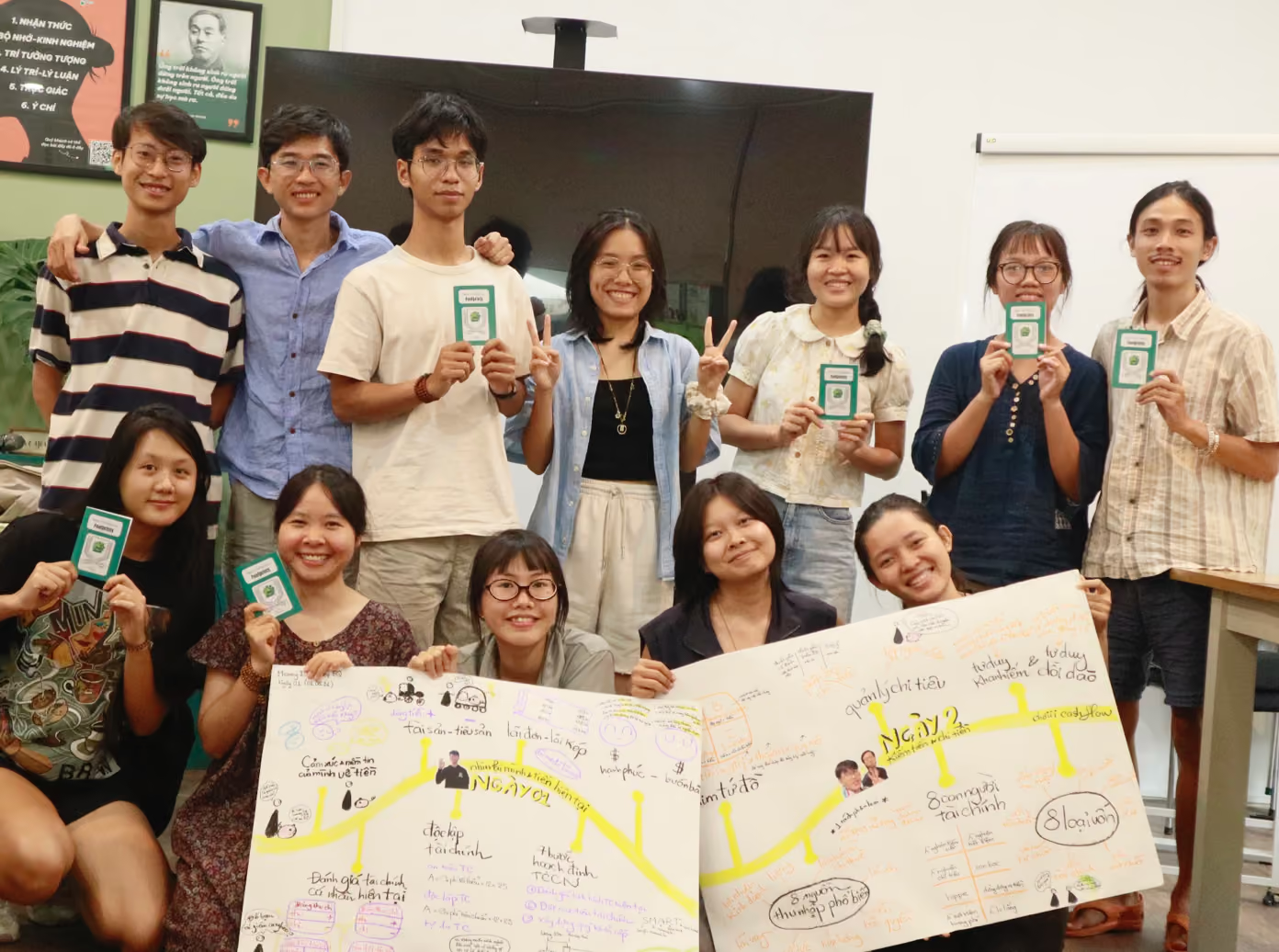
On the morning of May 31, 2026, the VCIL Community hosted the Food Literacy: Cinnamon Tasting Experience mini-workshop at STUDIO 13 & Coffee – Culture Hub & Art Space.
The workshop began with a simple question: Why is our sense of taste so important?
The scientific name for our species—Homo sapiens—is derived from the Latin verb "sapere," which carries two meanings: to taste and to be wise. In other words, humans perceive the world not only through reason but also through sensory experience. The ability to use fire, process food, and distinguish flavors played a crucial role in the evolution of the human brain, expanding our cognitive capacity and consciousness.
Yet, in the rhythm of modern life, we are gradually falling into a state of "eating without tasting"—eating faster, more, and more conveniently, but becoming less present in the experience itself. When food becomes a mere commodity and meals are reduced to a hurried activity squeezed between countless tasks, our sensory perception begins to fade.
In an era of increasing automation and artificial intelligence, where many human capabilities can be replaced by machines, the ability to perceive through the senses—especially taste—has become one of our most unique and irreplaceable qualities. It is not just a biological function; it is a fundamental part of what it means to be human.
Furthermore, our sense of taste is a vital gateway to understanding the food we eat. Flavor is not just a sensation on the tongue; it reflects many underlying factors, such as plant variety, soil composition, water sources, seasonality, and farming practices.
During a field trip to Da Lat, we had the opportunity to hear Mr. Thang from Thien Sinh Farm share his observations on the differences between naturally grown produce and industrially farmed crops. According to him, vegetables nurtured in natural conditions often possess more complex flavor profiles, with subtle notes of sweetness, astringency, bitterness, or distinct aftertastes depending on the variety and harvest time. In contrast, many modern crops are selected and cultivated to optimize market-driven traits like sweetness, size, or appearance.
This raises an intriguing question: when we enjoy our food, are we truly sensing the stories of the land, the seasons, and the ecosystems hidden within its flavor? Do we know how the food we eat every day was nurtured in the soil and water? Who grew it? What journey did it take before appearing on our table?
In the modern industrial food system, the distance between producer and consumer has become increasingly vast and anonymous. What we see on our plates is merely the final point of a complex supply chain, where food passes through many intermediaries: production, processing, packaging, transport, distribution, and retail. Consequently, the paradox of our time is that while we eat every day, we understand less and less about what we are consuming.
Therefore, this workshop served as an invitation for participants to reconnect with food through their own senses. Through the experiences of seeing, touching, hearing, smelling, and tasting, participants embarked on a journey to discover the authentic flavor of Tra My cinnamon—a specialty native to Quang Nam.
Tra My lies at the foot of the Ngoc Linh mountain range, one of the most biodiverse regions in Vietnam, where the rare Ngoc Linh ginseng also grows. Here, cinnamon trees are nurtured within a natural forest ecosystem, absorbing minerals from the soil and moisture from the forest, growing without reliance on agricultural chemicals.
It is this specific combination of soil, climate, altitude, and ecosystem—what the French call "terroir"—that creates the unique identity of Tra My cinnamon. As a result, the cinnamon here has a very high essential oil content, around 6%, which is significantly higher than many common varieties on the market. The aroma of Tra My cinnamon is therefore deeper, warmer, and more complex. But the value of the cinnamon tree lies in more than just the quality of the raw material.
What is remarkable is that a cinnamon tree takes nearly 20 years to reach maturity for harvest. Once the bark is stripped, the tree’s life cycle ends. For this reason, the people of Tra My have long practiced planting cinnamon for the next generation. A father plants cinnamon for his children, and they, in turn, plant for theirs. Each tree is not just an economic asset but a gift of time, embodying the love, care, and hope passed down through generations.
During the sensory experience, many participants shared that this was the first time they had the opportunity to observe, smell, and taste cinnamon so slowly and consciously. Some were surprised to realize that cinnamon does not have just one familiar scent, but contains many layers of flavor, from warm spice and mild sweetness to a gentle tingling sensation on the tongue.
From the story of Tra My cinnamon, another question arises: if Vietnamese cinnamon is so highly regarded, why is the value received by farmers still so limited?
In reality, most Vietnamese cinnamon is still exported as raw material with low added value. It was out of this concern that the Minh Phuc Cooperative was established to develop processed cinnamon products, contributing to increasing the economic value for farmers and bringing the story of this exceptional native ingredient closer to consumers.
Perhaps the most meaningful takeaway from the workshop was not just learning new facts about cinnamon. It was the opportunity for each person to pause, listen to their senses, and realize that behind every flavor lies a story of land, climate, culture, people, and the relationships that bring food to our tables. And perhaps, the journey toward "Food Literacy" begins with such simple things: learning to taste more deeply and understand more fully, so that we can make more conscious choices for our food, our farmers, our ecosystems, and our own lives.