You are using the member interface.
Log out of the member interface →

 ← Bản tin
On the evening of April 25, Vcil Members’ Talks #8: Green Careers in Nature Conservation – A Livelihood for Those Who Love the Environment took place with guest speaker Thu Thủy, a member of the Vcil Community who is currently working in the field of nature conservation at GreenViet. During the conversation, Thủy shared her journey of becoming connected to nature conservation, and how her love for nature has gradually seeped into every career choice she has made.
Looking back on her childhood, the moments of fascination and happiness while watching wildlife documentaries on television remain vivid in her memory. Those films about people venturing into forests, introducing different species of plants, explaining the uses of herbs, or describing the fragrances of flowers quietly planted within her a sense of wonder toward the magical natural world. Although at the time she did not yet know how to name that feeling, it clearly appeared in the pages of her diary: “My dream in the future is to work at the Institute of Ecology and Biological Resources.” Encounters like these gradually helped her imagine the kind of work she would one day love.
That affection continued to grow through school and everyday life. At school, Biology was always her favorite subject and the one in which she achieved the highest scores. At home, she planted a small garden for herself and patiently observed every change in the plants. She still remembers the moment she spotted a damselfly in the garden — an insect notoriously difficult to photograph clearly. With all her passion, she used her old “brick phone” to take hundreds of photos, simply to preserve that beautiful and shimmering moment. It was precisely the repetition of these simple yet emotionally rich encounters that made her love for nature gradually become clearer — no longer a fleeting interest, but a growing inner urge: the urge to touch, to connect with, and eventually to protect the natural world.
When she entered high school, despite constantly being guided toward more “stable” careers such as medicine, she made an incredibly bold decision: secretly changing her university application from her parents’ chosen path to the Environmental Ecology program at University of Science, Vietnam National University Ho Chi Minh City. She told herself that she was willing to take responsibility for that decision.
However, once she entered university, reality slowly appeared different from what she had imagined. She realized there was no clearly defined path called “nature conservation” as she had once thought. There was no specific major, nor an obvious career roadmap for people who loved the environment. At the time, she imagined that studying Ecology would mean becoming a researcher, carrying binoculars and doing fieldwork in the forest every day. But the deeper she explored, the more she realized how complex and challenging the field actually was, especially for women, as the work demanded constant travel, harsh conditions, and even certain risks. There were moments when she questioned whether she should choose an “easier” path instead, such as working in nature-based agriculture.
Yet an important “stroke of luck” arrived while she was still a student. Through activities in university clubs, she had opportunities to participate in community projects, including directly teaching children about plants, clean water, and living environments, as well as helping organize the program “Children Love Clean Water” in the Mekong Delta. Through these experiences, she came to understand her own inclinations more deeply: she felt genuinely excited about designing experiential educational activities and guiding children to explore the natural world. From these real experiences, she gradually realized that her heart was not only oriented toward nature itself, but also toward connecting people — especially children — with nature through education.
From there, she discovered another path: environmental education. Though it may sound simple, at that time this was far from being a clear or accessible path for her, especially in the context of limited information in rural areas. Her understanding of the field did not come systematically, but accumulated little by little through learning experiences, work, and real-life encounters. Ironically, this process of “feeling her way through the dark,” despite all its uncertainties, became the very thing that helped her gradually shape her own path.
After graduating, Thủy went through a period she herself described as “going off course” when she chose to work as a teacher at a kindergarten following the Steiner Waldorf Education method. At first, she thought this seemed like a detour away from nature conservation. But later, she realized it was actually a space where her love for nature could express itself through small daily interactions with children.
She recalled a memorable moment during nap time when a child was cranky and upset. Instead of forcing the child to lie down quietly or comforting them in conventional ways, she spontaneously came up with a simple idea: inviting the child outside to play a small “game” — searching for bird sounds. “Can you hear the birds? Maybe we can stay quiet for a little while and see what kind of bird it is.” Over the next half hour, the child gradually calmed down through being guided to pay attention, listen, and connect with the surrounding environment.
Experiences like these led her to see nature not merely as an object of study, but as an “emotional space” capable of supporting and healing people, especially children. At the same time, her years working in the Steiner environment helped her build a stronger educational foundation and cultivate a deep connection with children — something that later became an important part of how she approaches environmental education.
Therefore, when she later began working at GreenViet, she no longer viewed her work simply as “teaching,” but rather as “taking children to play in the forest” — a journey of nurturing deep connections between children and the magical natural world.
When people think about nature conservation, many imagine tall men carrying backpacks and binoculars, venturing deep into forests to live among wildlife. In reality, however, the field is far more diverse. In Vietnam, there are at least ten common groups of jobs within conservation, and each role contributes in very different ways.
First are researchers — the people who directly conduct fieldwork, observing, collecting, and analyzing data about plants, animals, marine life, and forest, river, and marine ecosystems. Their work goes far beyond simply “admiring nature”; it aims to understand the impacts humans have on the environment in order to find ways for humans and nature to coexist harmoniously. Their work also forms the foundation for developing and evaluating conservation programs later on.
Alongside them are animal caretakers, especially those caring for animals injured because of human activity, helping them live in the best possible conditions. Their work requires not only love for animals but also strict adherence to care protocols and medical support processes to help animals recover and eventually return to the wild.
Closely connected to this are veterinarians specializing in wildlife — people who carry out emergency care, surgeries, and treatment for animals such as elephants, bears, langurs, monkeys, or pangolins under often extremely difficult conditions, from rescue centers to illegal wildlife trade sites.
In another direction, community officers act as bridges between conservation and local communities. They do not merely work “on paper,” but truly live with, understand, and share life with local people in order to find sustainable livelihood solutions that reduce dependence on forest resources. Meanwhile, conservation educators focus on changing awareness — one of the greatest challenges in the field. Instead of imposing ideas, they communicate knowledge through experiential activities that help people develop genuine understanding and emotional connection with nature, such as changing misconceptions about feeding wild animals.
The conservation field also greatly needs communicators and creative content creators. If you can write, photograph, make films, or design, you can absolutely contribute to spreading messages of environmental protection through emotionally resonant creations. Sometimes those messages are even more powerful than dry scientific data because they help people feel before they understand.
Another indispensable force is forest rangers — the people directly protecting forests through patrols, removing traps, preventing illegal hunting, and responding to forest fires. Their work requires endurance, involves considerable danger, and often means spending long periods away from family. On a broader scale, policymakers and legal professionals help shape legal frameworks that allow conservation activities to be implemented effectively and sustainably.
In addition, positions such as management, human resources, accounting, and administration play important operational roles within conservation organizations. They form the “backstage support” that keeps systems running smoothly. Finally, there are fundraisers and project developers — the people connecting resources, securing financial support, and building partnerships so that conservation initiatives can become reality.
When she later came to see the broader picture with its many interconnected roles, Thủy realized how deeply conservation depends on collaboration between many different people and organizations working toward a shared goal. And perhaps most importantly: you do not need to become a scientist or a “forest explorer” in order to contribute to conservation. Any strength, when placed in the right context, can become part of this larger picture.
One of the most interesting aspects of Thủy’s sharing was the way she approaches conservation education through emotion rather than merely scientific information. From her perspective, if we only talk about climate change or biodiversity through data, people rarely feel personally connected. But when people directly touch nature, smell forest leaves, taste the bitterness of wild fruits, listen to birdsong, or run freely through natural spaces, they begin forming a much deeper connection.
Coming originally from a research background, when she transitioned into education she constantly searched for ways to make scientific language “softer,” more understandable, more vivid, and more engaging for children. Toward that goal, instead of teaching through rigid memorization, she chose storytelling.
For example, when explaining how frogs lay eggs, rather than dryly describing that “the frog creates a ring of bubbles here and covers it with leaves,” she transforms the language and tone into a vivid image: “In this picture, you can see the father frog searching for a safe place for his children, somewhere the sunlight doesn’t shine directly, where the cool stream still flows nearby. The father frog and mother frog are building a home together for their family…”
This approach becomes even more important when working with children. Children may not yet fully understand big concepts like “environmental crisis,” but they can feel joy playing with soil, curiosity while observing insects, or excitement stepping into the forest. These positive emotional experiences gradually ignite a natural bond with nature from within. When children truly love nature, the desire to protect it follows naturally afterward.
However, when asked about the greatest challenge of her work, Thủy said the hardest thing is not going into forests or enduring difficult conditions, but changing human awareness. She shared a story from teaching in Lang Co. There, trapping birds, keeping birds in cages, or even eating birds was completely normal in everyday life because nature around the children was still abundant and close to them. In such a context, the goal of environmental educators could no longer simply be introducing species names or providing scientific facts, because while technically correct, such information rarely created genuine shifts in awareness.
Instead of judging or forbidding the children, she chose to gently evoke empathy through questions such as: “If I were a bird trapped in a cage all day, I think I would feel very sad”; “What do you think would be best for this bird friend?” Through such gradual conversations, one student slowly shifted from hesitation and uncertainty to eventually agreeing to release the bird back into nature.
Thủy shared that conservation cannot aim to change the entire world overnight. Rather, it is through persistently nurturing these “small seeds,” accumulated over time and through many different people, that true transformation gradually happens within communities.
Toward the end of the conversation, Thủy shared her dream of building a true “Forest School” in the future — a place where children do not simply grow up within urban rhythms surrounded by classroom walls, packed schedules, and familiar phone screens, but are truly able to step into nature and learn through all of their senses and lived experiences.
In her vision, nature is not merely “a topic to study,” but becomes the learning environment itself. Children can get muddy, observe insects, listen to birds, feel changes in weather, learn how to care for plants, or simply play freely in the forest. These seemingly small experiences help children develop curiosity, observation skills, connection, and a sense of belonging within the natural world — things that are difficult to cultivate if nature is encountered only through books or screens.
Thủy sees “Forest School” not merely as an educational model, but as a way of re-establishing the relationship between humans and nature from an early age. Because when a child carries memories of playing beneath trees, feeling joy at seeing a butterfly, or experiencing the peace of a forest, nature no longer remains an abstract concept that must be “protected.” Instead, it becomes something emotionally woven into their own life and identity.
Thủy’s story and journey are inspiring perhaps because she does not see nature simply as a field of work, but as a relationship that must be continuously nurtured between human beings and the world around them — especially in a time when people are becoming increasingly disconnected from their living environments.
Vcil Members’ Talks is a monthly public event series where stories, initiatives, and regenerative models from the Vcil community ecosystem are shared and amplified. Vcil Members’ Talks is not only a space for listening, but also a place to learn together, expand networks, and nurture collaborative spirits toward a regenerative future.
Information about Vcil Members’ Talks #9 will soon be announced via the Fanpage. You can follow the Zalo group, Substack, or Facebook for the latest updates.
You can also rewatch Thủy’s sharing session in the comments section here:
If you are interested in sustainable/regenerative production models, or wish to connect with individuals, organizations, and communities building a regenerative and wellbeing-oriented society, Vcil Community invites you to explore and join the Vcil Community Membership program for opportunities to live, learn, work, and collaborate with members who share similar values.
#VcilMemberTalks #VcilCommunity
Nội dung đầy đủ của bài viết này chỉ dành cho Hội viên Vcil. Đăng nhập để đọc tiếp phần còn lại.
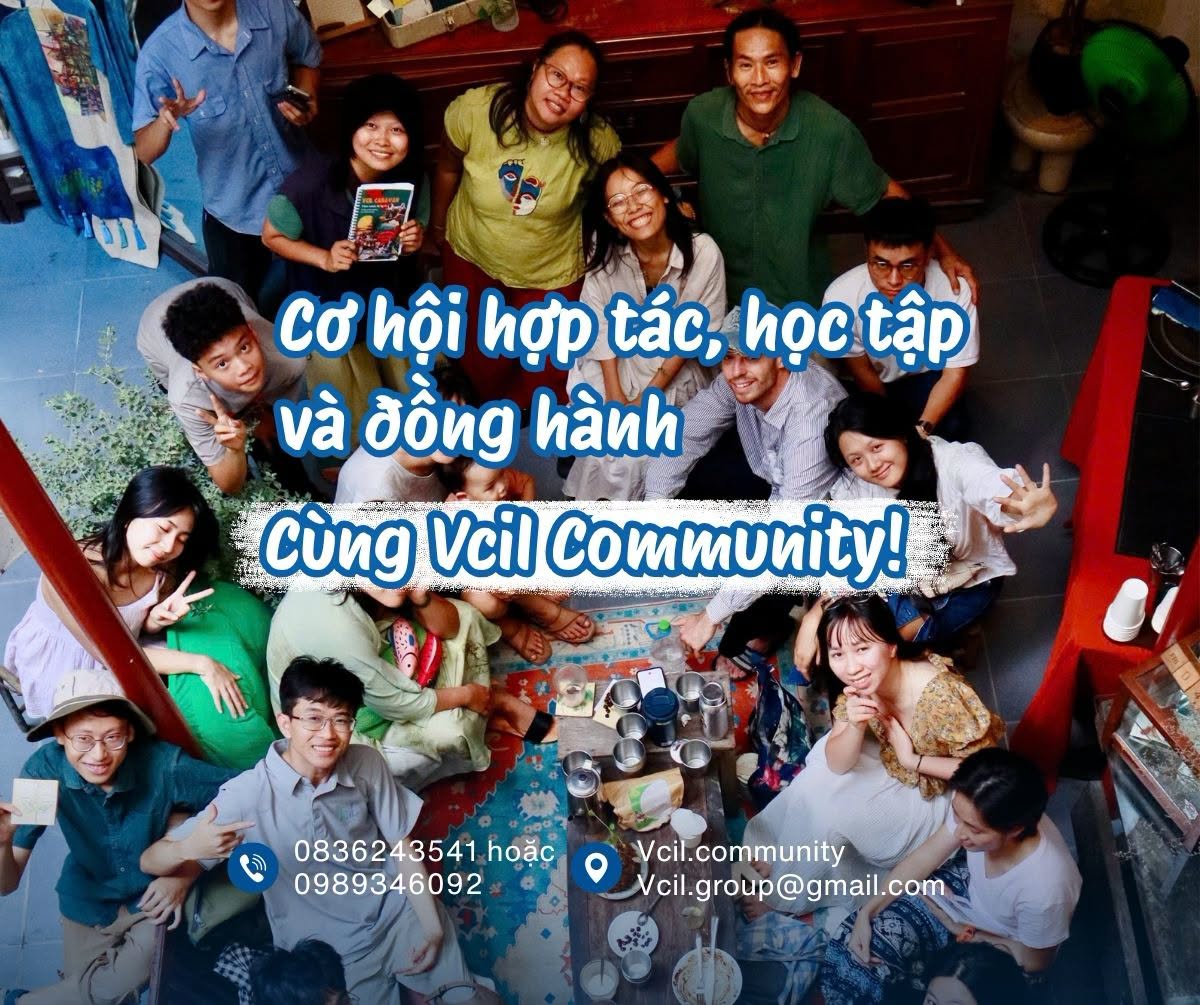
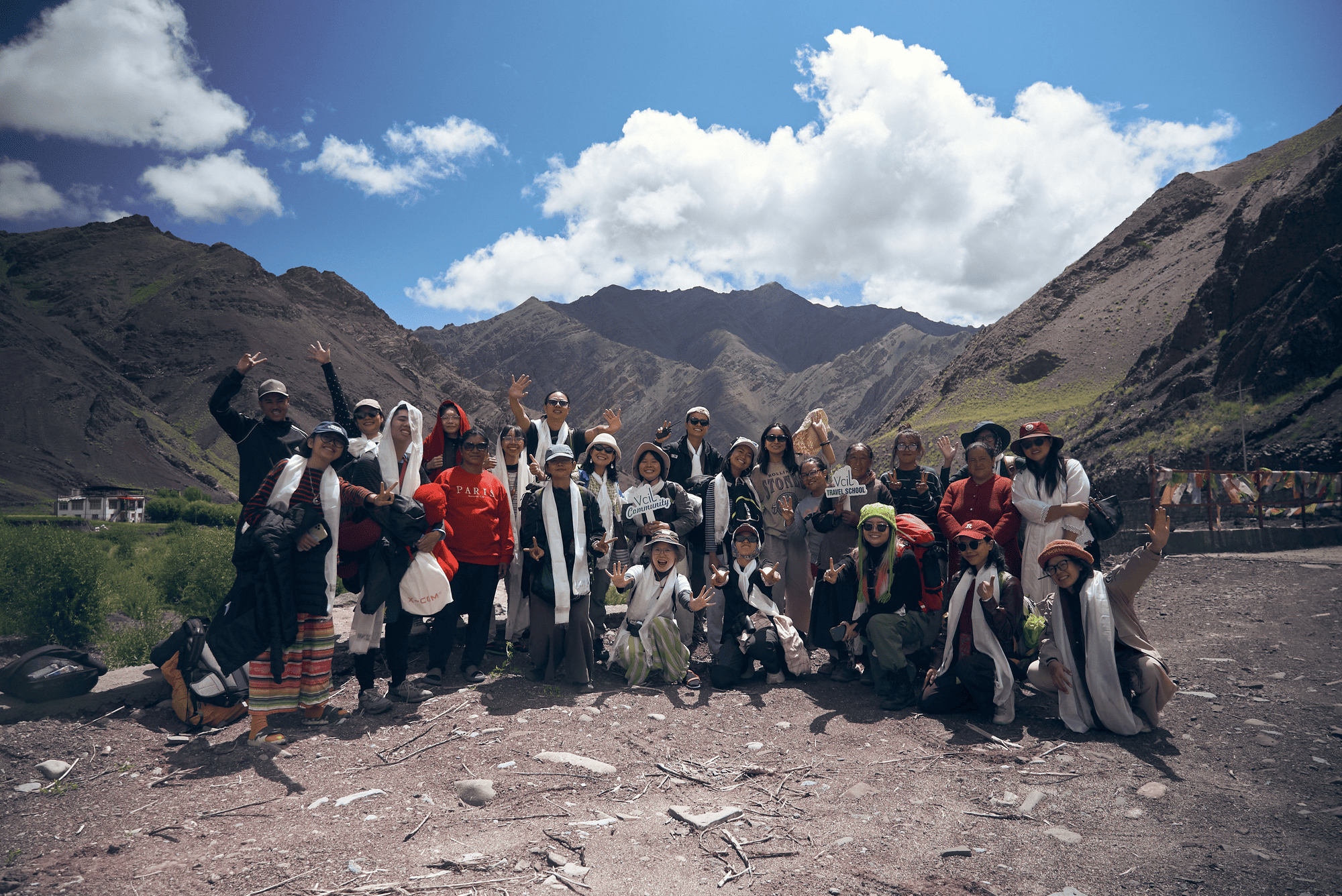

Vcil Members' Talks are a series of public sharing event