You are using the member interface.
Log out of the member interface →
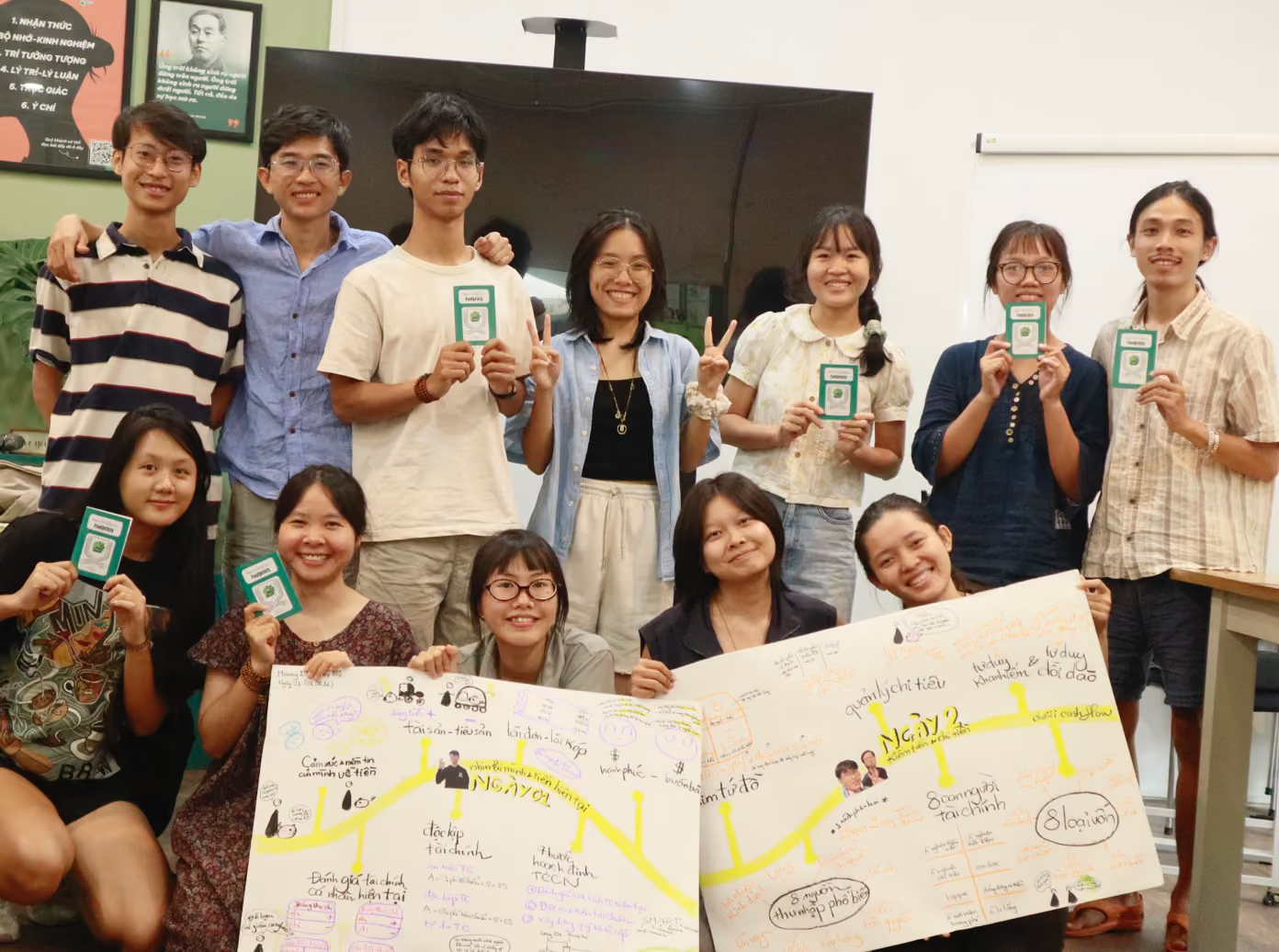
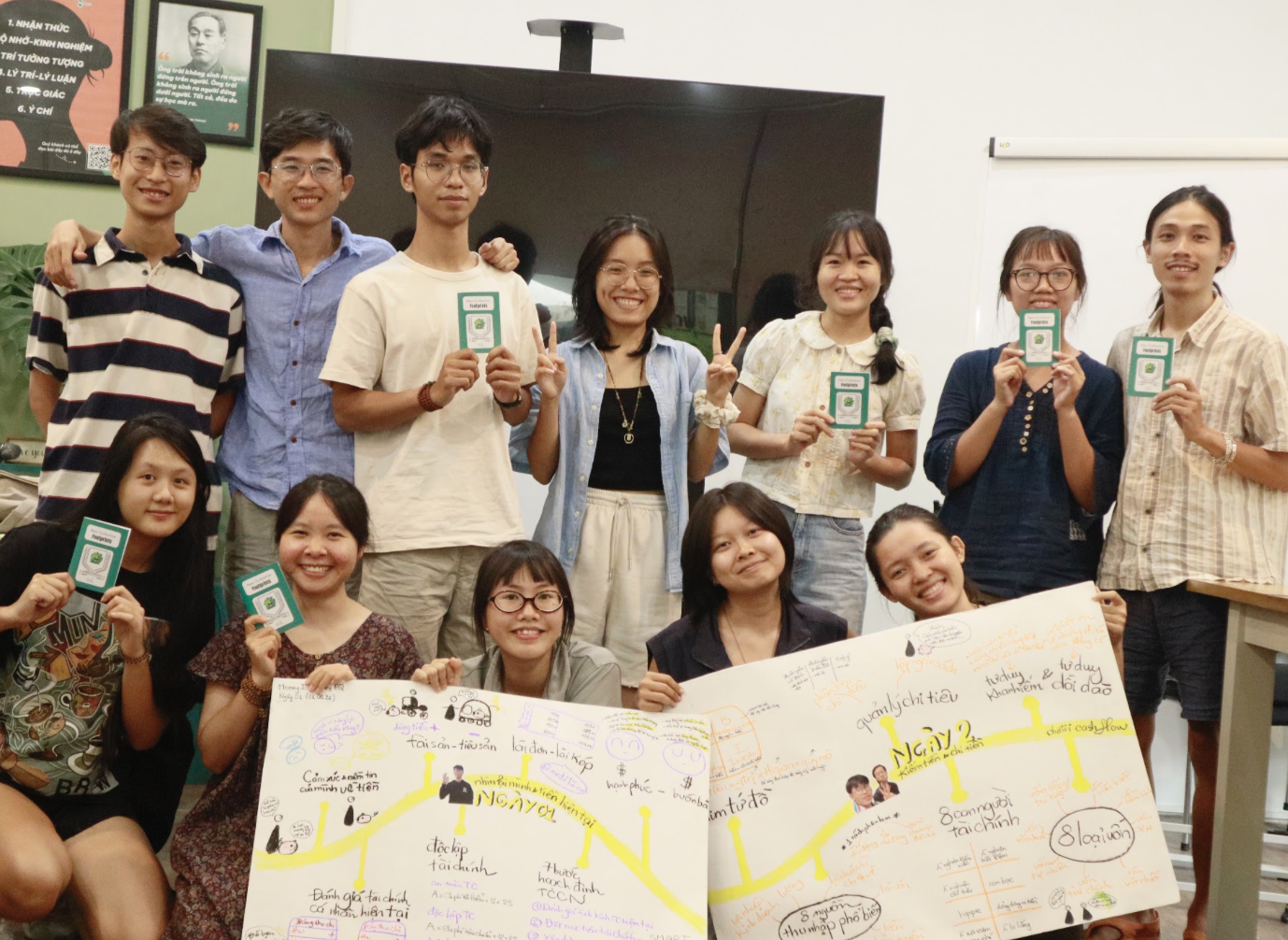
After more than two months of preparation, the personal-finance course Money IQ – Money EQ took place in Đà Nẵng from 01 to 05/08 with many new members taking part. It is a learning programme of the Ecoversity for New Civilization, an alternative university for Vcil Members.
In this course, members discussed not only finance but, even more, the emotions and experiences tied to money; and, going further, took a fresh look at the capitalist economic and financial system and explored other paths towards an economy for the common good. Over five days together we “stretched our brains”, but we also shared joyful, eye-opening moments and very down-to-earth lessons about money.
The course's starting point was a wider question: what kind of life is money serving for us? Money should give people more choices, peace of mind in the face of shocks, nourish relationships, enable meaningful work and contribute to a kinder economic system; rather than becoming a source of pressure that makes us chase only income, consumption or accumulation.
In this programme, Vcil Community holds that Money IQ is essential knowledge: reading cash flow, understanding assets and liabilities, interest rates, insurance, banking, credit, investing and economic fluctuations. But Money EQ, our relationship with money: recognising the fears, beliefs, habits, feelings of lack, ambitions, shame or avoidance that drive financial decisions, is an equally important foundation. A person may know a great deal about markets and still spend to soothe emotions, buy out of FOMO or be unable to look at their own debt. Conversely, someone very calm about money but lacking basic knowledge can easily lose out.
This was also the first time the course expanded to Money ECO: placing personal finance within a larger system and looking together at other possibilities in different economies for the common good.
Before managing money, each person needs to look at how they feel about money and the story they tell about it. Financial behaviour does not come only from formulas; it is shaped by family, environment and very early experiences.
Vcil Community holds that people rarely have a “direct” relationship with money. Money is a tool for storing and exchanging value, but the way we earn, keep, spend, invest, give away or worry about it passes through the stories we have accumulated over a lifetime. Some grew up in households that were often short of money and remain anxious even though their income is now stable. Some watched their parents work themselves to exhaustion without being respected, and came to believe money only brings suffering. Others tie consumption to success, to love, or to the feeling of having “lived enough”.
The programme page calls these unconscious beliefs Money Scripts: “scripts” about money absorbed from family, school, culture and early experience. They can appear as sentences like “rich people are all greedy”, “I don't deserve to have much money”, “talking about money is mercenary”, “earning a lot will cost me my friends”, or the opposite, “only spending money proves I'm successful”. Right or wrong in a given situation, these scripts can quietly steer our choices as adults.
So the first lesson is not to open an investment account but to observe. We can ask ourselves: what is my earliest memory of money? What tone of voice was money spoken about in at home? What do I fear most when I think about money: not having enough, losing it, being judged, being dependent, or becoming a certain kind of person? When I have money, do I usually feel relieved, guilty, excited, or an urge to spend it immediately? These questions are not about blaming the family, but about noticing what is running on autopilot.
Money EQ also involves the ability to separate self-worth from the amount of money we have. A low income at one stage does not prove a person is worth less; likewise, great wealth does not automatically speak to character, security or happiness. When money becomes the only measure of success, we easily choose jobs, investments or purchases just to prove something to others. When we see money as a tool, we have the chance to return it to its proper role: serving a life that has been thought through.
In the programme, everyone worked together to widen the concept of financial freedom. What matters is not only “not needing to work”, but having enough resources and freedom of choice not to be completely trapped by an unsuitable job.
In popular discussions of FIRE (Financial Independence, Retire Early), financial freedom is often imagined as accumulating enough assets to stop working early. We do not deny the value of independence, but we ask: is what we really want to escape work itself, or the feeling of being forced to do a meaningless, exhausting job with no time left for life?
Work does not only generate income. It can also give structure to time, a sense of usefulness, community, friends, opportunities to learn and a social role. So someone who quits work without alternative relationships, projects, joys or rhythms of life may still feel empty. This is especially worth considering for the period after retirement: the challenge is not only money, but isolation, loss of role and lack of connection.
From there, we suggest shifting the question from “how much money counts as rich?” to “what is my level of enough?” Enough is not a universal number. It includes living costs, housing, health, obligations to dependants, time off, learning needs, a buffer, and room for the things that make life meaningful. The enough of a single young person, a parent with small children, a freelancer or someone supporting elderly parents will all differ.
Financial freedom, in this line of reasoning, is the ability to have more choices: to leave a toxic environment; to reduce working hours to care for health or family; to try a new career direction; to refuse a loan beyond one's means; or to keep doing a job one loves without having to prove one's worth through maximum income. It is not a destination detached from the quality of life today.
We use the six pillars of personal finance: income, spending, saving, protection, borrowing and investing. These six pillars are closely linked. A person cannot judge an investment by its rate of return alone without knowing whether they have expensive debt, an emergency fund, or obligations that will require money soon.
Three tools are emphasised: the balance sheet, the income-and-expenses statement and cash-flow tracking. The balance sheet answers: what do I own and what do I owe? Assets may include cash, deposits, receivables, funds, shares, real estate, equity stakes, skills and other assets; liabilities may be credit cards, consumer loans, mortgages, payables or financial responsibilities to family. The income-and-expenses statement answers: over a month or a year, where does money come in from and what does it go out for? Cash-flow tracking answers the most practical question: on the due date, do I have enough to pay?
The course distinguishes between “having assets” and “having liquidity”. A person may own valuable assets and still hit a crisis if they lack readily usable money to cover living costs or obligations falling due. So before talking about growing assets, one needs to see clearly the payment dates, debts, fixed costs, unstable income sources and the funds available right now.
Financial goals should be divided into short, medium and long term. The SMART method is introduced as a way to turn vague wishes into goals that are specific, measurable, achievable, realistic and time-bound. For example, instead of “I want to feel safer”, one can define “build a buffer equal to a certain number of months of essential costs by a specific date”. The more a goal is tied to real life, the easier it is to check and adjust.
The image of the asset pyramid reminds us that the foundation must be built first. The bottom layer is the ability to earn, controlled living costs, liquidity and the capacity to withstand shocks. Only the higher layers are long-term or riskier assets. This is not a rigid formula: someone with irregular income needs a different liquidity base from someone with steady pay, and someone with a large loan needs a different level of caution from someone with no debt. But the general principle is not to use money needed for living to chase uncertain returns.
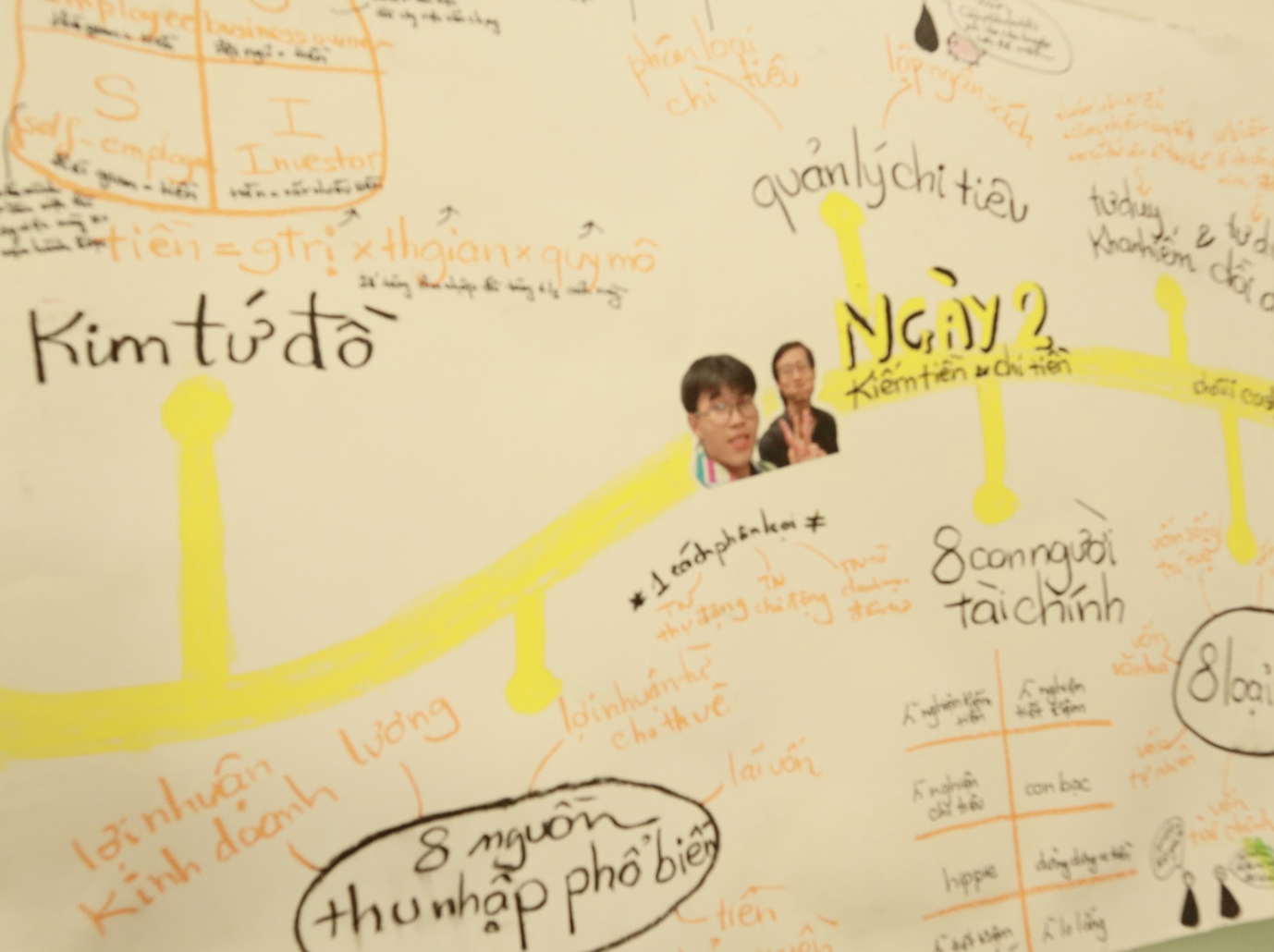
During the sharing, Vcil Community stressed that if, after cutting non-essentials, there is still not enough to live on, further “tightening the belt” can erode quality of life, health and the capacity to work. In that situation, the direction to consider is increasing income: raising the value of your current work, learning new skills, changing position, taking suitable extra work, developing a service, product or side job.
We call capabilities, skills, health, knowledge, experience and professional reputation human capital. This is the capital that creates future earning power. Alongside it is financial capital: money and assets that can generate returns. For many people at an early stage, investing in human capital, learning an in-demand skill, improving health, building a professional profile, widening one's network, can have a greater impact than trying to optimise a small pot of money.
We divide the paths to income into three easy-to-picture groups. The labour market is exchanging time and expertise for wages. The market for goods and services is creating, selling or providing products and services. The capital market is putting capital into assets or activities to receive interest, profit, dividends or capital gains. This is a general way of viewing income sources; it does not mean everyone must take part in all three, or must start a business or invest right away.
We do not treat “spending less” as living in hardship, nor “earning more” as doing as many jobs as possible. They are two ways of widening the gap between money in and money out, so that each person has more capacity to build reserves, learn and choose.
Spending less begins with seeing your real expenses and distinguishing essential costs from adjustable ones. Housing, basic food, healthcare, commuting, obligations to dependants and debt repayments usually belong in the high-priority layer. Then we observe the spending that arises from convenience, habit, the pressure of comparison, promotions or shopping to soothe emotions. The aim is not to cut at any cost, but to pay for what we truly need and value.
Spending less has limits. When a person is already living at a bare minimum, cutting further can reduce nutrition, health, the capacity to work, learning opportunities or the quality of relationships. So we always ask: which expenses should be reduced because they no longer serve life, and which should be kept or increased because they nourish human capital, health and long-term earning capacity?
Earning more means designing your livelihood so that it does not depend on a single source of money, something very risky when job loss strikes. A person can start by improving the quality of their main income, and only then consider extra sources that fit their skills, time, health and risk tolerance. Extra income can come from professional side work, providing services, selling products, business partnerships, royalties, renting out under suitable conditions, interest or dividends from assets, or other lawful sources. Not every income source is good: one that exhausts you, requires excessive borrowing or breaches your commitments to your main job does not create lasting freedom.
What was emphasised more in the course was focusing on building passive cash flows, rather than earning by trading your own energy and time, which are very limited.
Earning more also does not necessarily mean having many income streams right now. For a beginner, it may be a pathway: strengthen the main income; build a sellable skill; try a small income source; measure real time, cost and cash flow; then decide whether to expand or stop. What we want to stress is that increasing the number of income sources must go together with better self-management, not more scattering.
We use the Cashflow Quadrant as a map for conversation about four positions for earning income, not as a ladder for ranking people.
The employee exchanges expertise, time and responsibility for a salary. The strengths are usually a clearer work structure, more regular income, and not having to handle all the customer-finding or business operations alone. The trade-off is that income is usually tied to the position, the hours and the organisation's decisions; when the job changes or is lost, concentration risk can appear.
The self-employed person practises a trade directly, sells their expertise or runs a small operation for customers. They may have more control over how they work and whom they serve, but the operation usually depends heavily on them. If the owner stops working, revenue can drop immediately. That is why it is necessary to price effort, costs, tax, insurance, days off and sustainability fully, rather than looking only at revenue.
The business owner builds a system that can create value through a team, processes, products, brand and customers, rather than everything resting on one individual. The potential to scale can be higher, but so are the responsibilities: capital, staff, quality, legal compliance, cash flow, contracts, ethics in labour relations and the business's impact. A business without a system may in reality be self-employment on a larger scale.
The investor uses capital to own or fund assets or activities, expecting interest, dividends, profit or future appreciation. This path requires idle money, an understanding of risk, time and discipline. Investors do not “earn passively” without doing anything: they still need to decide on allocation, check costs, understand products, manage emotions and accept that returns are not guaranteed.
Many people pass through more than one position in life: working as an employee to build skills, self-employment with their expertise, building a team once the operation is stable enough, or investing part of their money for the long term. There is no mandatory route. What matters is understanding which income depends on your direct time, which needs capital, which can scale, and which risks you are taking on.
In the programme, we use the formula “income or financial assets can be expanded through value × time × scale” as a thinking tool. It is not an economic or asset-valuation formula for every situation; it helps each person see three practical levers instead of only thinking about working more hours.
Value is the usefulness, quality, reliability, problem-solving power and willingness to pay that a job, product or service creates. Raising value can come from upgrading skills, understanding customer needs more deeply, doing better work, differentiating, improving the experience or collaborating with others. Raising value does not mean pushing prices up unreasonably; sustainable value must be genuinely felt by the recipient, with a real basis for paying.
Time is the time we spend creating value, as well as the time for skills, reputation, customers, savings and compound interest to accumulate. When income is exchanged entirely for personal hours, time is a very clear limit. So we need to protect time from unnecessary tasks, invest time in skills, and build processes that let one unit of time create more value.
Scale is the ability to bring value to more people, more times, or through a system that depends less on an individual's direct presence. For example, a standardised service, a product that can be sold many times, a well-run team, an asset that generates cash flow, or a reliable distribution system can all create scale. Scale does not necessarily mean infinite growth: for many people, the right scale is enough to live stably, pay fairly and not break health, relationships or ecosystems.
These three levers must go together with ethics and what life can bear. A model that scales by exploiting labour, hiding risk or pushing costs onto the environment is not a direction of growth we want to encourage. The formula only becomes meaningful when the value created is real value, time is used consciously and scale does not trade away human dignity or nature's capacity to regenerate.
On the spending side, the course asks: where does money come from and where is it going? An expense is not just a number. It may be an essential need, a reasonable want, an investment in health, skills or relationships, or a passing emotional reaction. The concepts of Happy Money and Unhappy Money are used to observe the spending that genuinely makes life better versus spending that only creates a short-term high, a feeling of proving oneself or compensation for stress.
Not every purchase is bad, and not every saving is good. A person may spend on a meal, a trip, a course or an item that creates experience, connection, health and long-term value. But they may also shop out of loneliness, stress or the pressure of comparison. Conversely, extreme saving can make people postpone healthcare, relationships or opportunities to grow. What needs observing is the motive, the impact and the affordability, not just the amount spent.
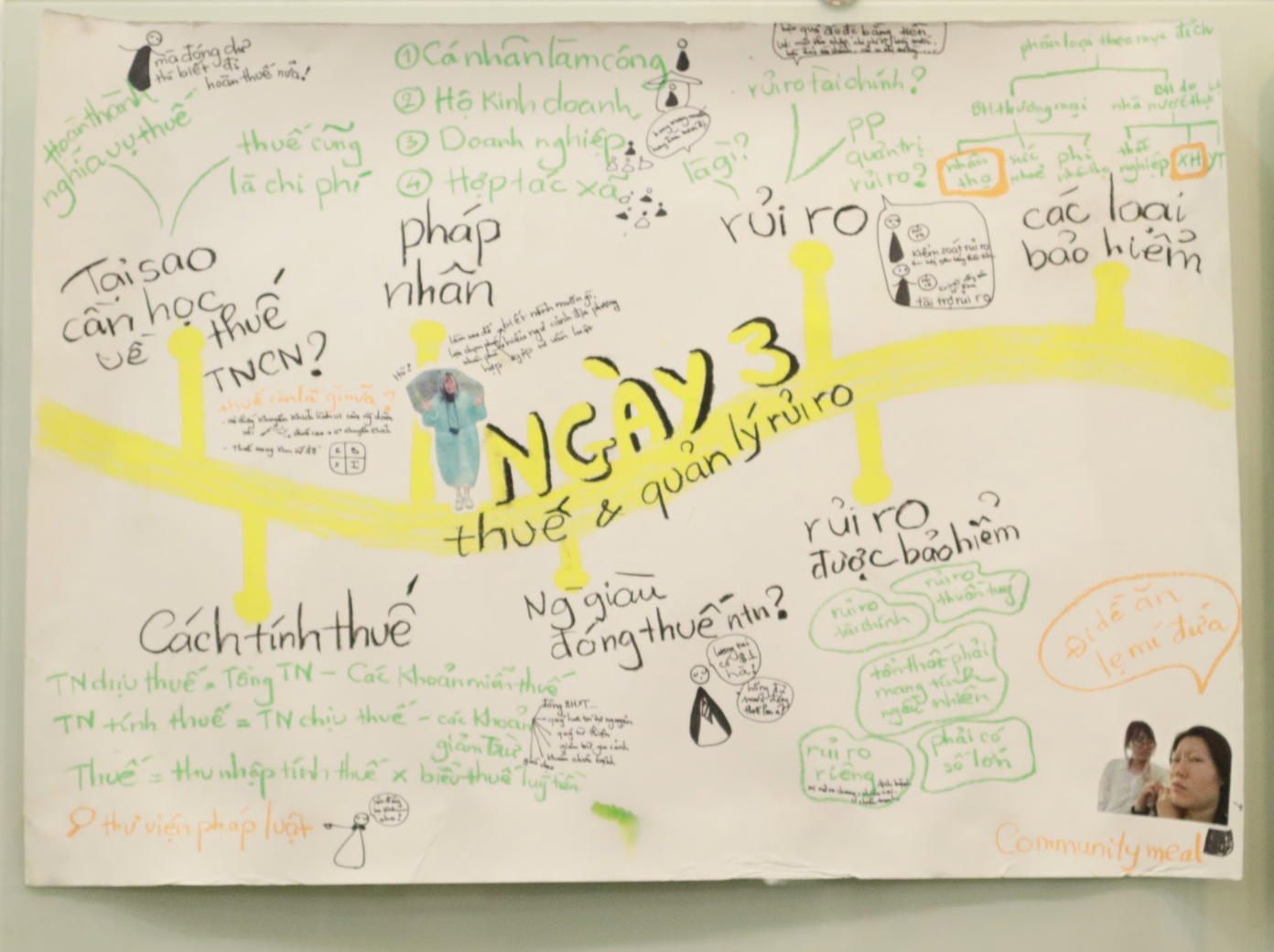
The course calls this the “risk and protection” section. Life can bring illness, accidents, job loss, natural disasters, loss of the ability to work, family responsibilities or damage to property. Since we cannot fully control events, the point is not to eliminate all risk but to determine which risks we can bear ourselves and which we need to avoid, reduce, transfer or share.
The emergency fund is the liquid layer of protection: money, or assets easily converted into money, for urgent expenses. The right size depends on essential spending, income stability, the number of dependants, existing insurance and access to support. The course stresses that this fund is not for maximising returns, but for creating time and space to decide when something goes wrong.
Insurance is presented as a mechanism in which many people contribute so that some are paid out when they meet a risk covered by the contract. With life insurance, the root question is: if the income earner suffers a shock, who is affected, how much do they need and for how long? With health, property or liability insurance, one needs to consider which risks could cause losses beyond one's capacity to absorb.
The course does not treat insurance as the only answer. One must distinguish pure protection insurance from combined insurance-investment products; read the terms on fees, benefits, exclusions, duration, surrender value, loans or advances (if any) and the risk of lapse. There is no general rule that all insurance payouts are tax-free, or that borrowing against a policy is always cheap and beneficial; it depends on the contract and the regulations in force.
Another layer of protection we emphasise is the social and community safety net. When a family faces illness, bereavement or job loss, the need is not only money. It may also be someone to look after the children, someone to accompany a hospital visit, temporary housing, job information, help with paperwork, or a community that does not judge. Stories of the support around a life event were used to show the value of trustworthy relationships.
However, community should not be romanticised as a substitute for all insurance, reserves or legal responsibility. A family fund or mutual-aid group is only sustainable with voluntary participation, transparency about contributions and payouts, confidentiality rules, someone accountable and a mechanism for when resources run short. If a model holds, raises or lends money, it must comply with the appropriate legal framework; not every community fund should be called a “bank”.
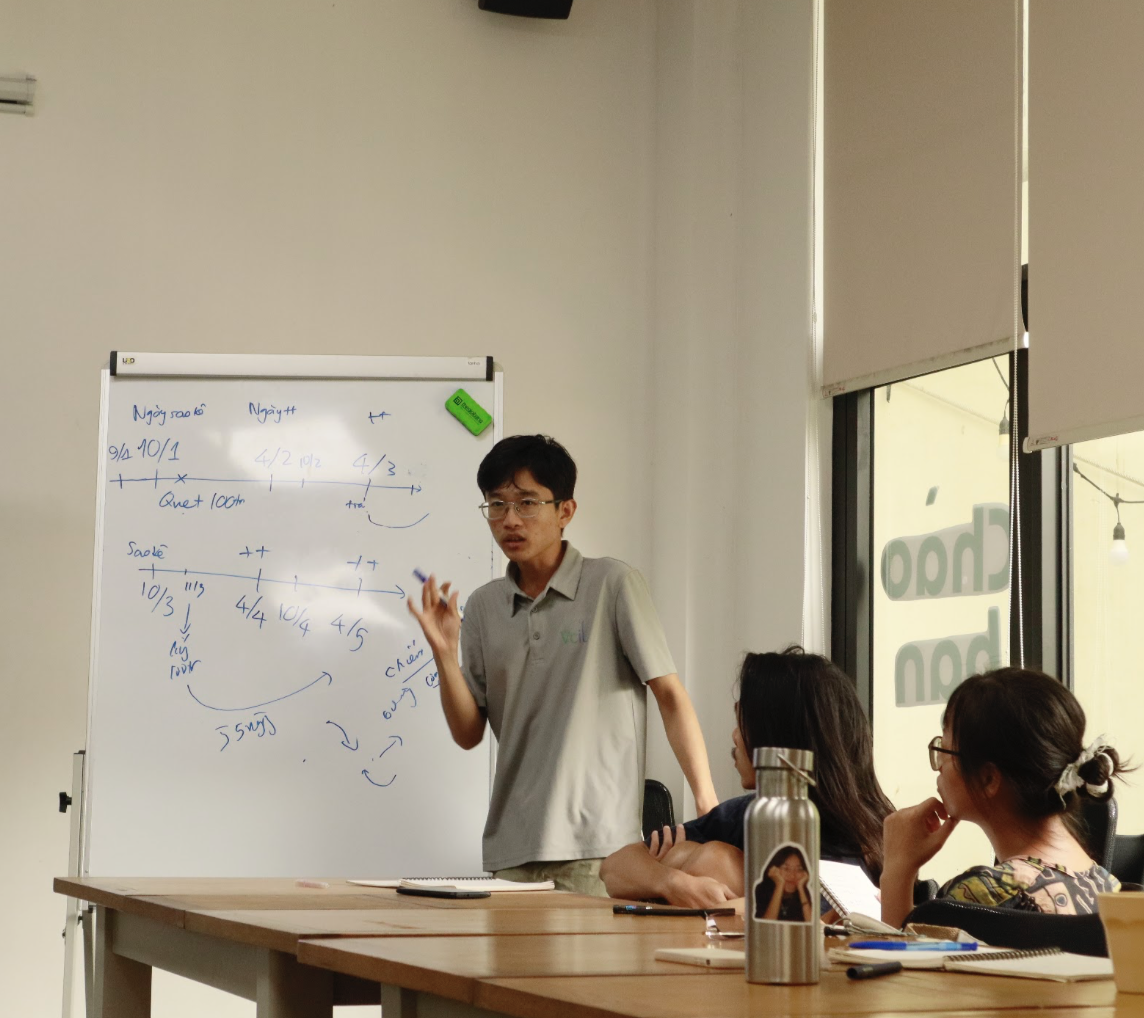
Personal finance always takes place within a larger system. A basic understanding of banks, credit, interest rates and inflation helps an individual know what they can control and what they need to prepare for.
We hold that money in the modern economy is not only banknotes. Most transactions happen through deposits and payment systems. Commercial banks do not merely store money; through lending, new deposits can be created within the system. Our phrase “money is debt” is meant to stress this relationship: a deposit balance is the bank's obligation to the depositor, while a loan is the borrower's obligation to the bank. This is a simplification, but a useful one for seeing that money, credit and trust in the system are bound together.
Central banks play different roles from commercial banks: implementing monetary policy, regulating liquidity and payment systems, and supervisory functions depending on the country. When interest rates change, the effects can reach mortgage costs, deposit returns, asset prices, the cost of capital for businesses and the labour market. Individuals cannot control interest or exchange rates, but they can avoid basing their whole life plan on the assumption that those variables will always be favourable.
Inflation is described through three common mechanisms: demand growing faster than supply capacity; rising input costs such as energy, transport, materials or labour; and monetary or credit factors. In daily life, inflation is the erosion of purchasing power: the same amount of money buys a different quantity of goods and services in different years. So the nominal deposit rate is not the whole story; one must think about inflation, tax, fees, term and the safety of where the money is kept.
We used historical examples of monetary policy in Britain, the United States and Japan to suggest that macro shifts usually have many causes and consequences. These examples should be understood as context for thinking, not as forecasting formulas. For instance, the Plaza Accord is linked to the period of sharp yen appreciation, but it cannot be seen as the sole, direct cause of Japan's prolonged stagnation; the asset bubble, macro policy and structural problems also mattered.
With deposits, two extremes should be avoided: panicking that money in the bank “isn't real”, and believing there is no risk at all. In Vietnam, the published deposit-insurance limit is a maximum of 125 million VND, including principal and interest, per depositor at one insured institution when the obligation to pay arises. Product details, institutions and conditions should be checked directly before any major decision.
Debt is not good or bad by default. One must consider the purpose of the capital, the cost of borrowing, the ability to repay, collateral, liquidity and adverse scenarios.
The course uses the image “cash flow is blood” to stress that an individual or business may have assets and still be in danger if they cannot meet obligations falling due. So before a loan, the important questions are: what is the borrowed money for, where will the repayment cash flow come from, what happens if income falls, and how might the collateral be affected?
Borrowing for an activity that creates value or cash flow may differ from borrowing for consumption. Even so, no loan is “naturally good” just because the asset bought with it seems to be rising in price. When interest rates change, living costs rise or the market falls, the monthly payment must still be met. With a mortgage or long-term loan, read carefully the promotional period, the interest formula after it ends, the margin, early-repayment fees, collateral conditions and repayment obligations under bad scenarios.
The concept of “using others' capital” was mentioned in relation to managing the timing of receipts and payments. In a business, that may mean how customer payments are collected, inventory managed and suppliers paid by agreement. For an individual, shifting a payment date only makes sense if the obligation is honoured as committed and the money to pay in full is already there. It is not a justification for delaying payment at any cost.
Credit cards are a clear example. Users need to know the transaction date, statement date and due date; the interest-free period depends on the product and the issuer's conditions. A card can be useful for planned expenses that can be paid in full on time. But overdue interest, cash-advance fees, service fees and revolving debt can quickly make problems bigger. A credit card does not replace an emergency fund: when income is interrupted, it only converts part of today's pressure into a costly future obligation.
The course also suggests looking at simple and compound interest not only from the investing side but from the debt side. Compound interest can be a force when time is on the side of the saver or investor; but it can also be a burden when an interest-bearing balance, fees and late payments drag on. So the first step with debt is to record clearly the balance, interest rate, fees, term, due dates and minimum payment; only then discuss strategy.
Investing is committing resources to the future under uncertainty.
We used the image of a garden many times. A healthy garden does not have just one kind of plant: there are short-season vegetables, perennials, layers of soil, a water source, a fence and biodiversity. A financial portfolio is the same: it may need cash for near-term needs, a defensive layer, long-term growth assets and diversity so as not to depend entirely on one income source or one asset class. This image does not yield a fixed allocation, but it helps resist the urge to “put everything in one place”.
The course draws a simplified distinction between assets that can generate future cash flow or value and items that mainly make money flow out. In practice, the boundary is not absolute. A home to live in may be an asset on the balance sheet yet still create cost pressure; a course or healthcare activity may not generate cash flow immediately but increases human capital. What is needed is to see the whole impact, not just apply a label.
The asset classes introduced include cash and deposits, bonds, shares, real estate, businesses and investing in yourself. Each has different volatility, liquidity, term, cost, risk and ways of generating benefit. Before allocating, learners are encouraged to determine when this money will be used; if the horizon is short or the money is for mandatory obligations, the capacity to absorb volatility is usually lower.
With shares, a direct investor needs to consider the economic context, the industry, the business model, governance quality, debt, cash flow, valuation and risk. A cash dividend or stock dividend does not create additional value instantly; the reference price is usually adjusted on the ex-rights date. A company paying high dividends is not automatically better, and a company retaining profits does not automatically grow better. The question is how the business uses capital and whether it creates sustainable value.
Index funds and ETFs are introduced as a way to access a basket of assets rather than picking individual shares. However, “ETF” does not mean absolute safety. One needs to understand which index the fund tracks, whether the portfolio is concentrated or diversified, the costs, the liquidity, currency risk (if any) and the suitable holding period. Diversification reduces some concentration risk; it does not remove market risk.
With bonds, we stress that a high interest rate should not be seen as an unconditional reward. One must look at the issuer, its ability to repay, the terms, collateral, priority of claims in the event of trouble, transferability and disclosure. A promise of high, certain, low-risk returns is a signal for deeper scrutiny, not an automatic conclusion about legality or illegality.
The course also points out behavioural traps: FOMO when seeing others boast of gains; the sunk-cost bias of not wanting to reassess after buying; panic when prices fall; or tying one's identity to a ticker or asset. The defence is to write down in advance the reason for buying, the maximum weighting, the horizon, the main risks and the conditions for review. A useful question is: “If I did not own this asset today, would I buy it with the information I have now?”
In the course, instead of only discussing stock-market investing, the discussion widened the investment question: beyond returns, what kinds of business, labour relations, community and environment is the money nourishing?
Vcil Community believes investing is not simply finding the highest return. Every decision about where to put capital can help sustain a business model, a supply chain and a way of distributing benefits. So learners are invited to observe both “where the profit comes from” and “which costs are being pushed onto workers, communities or nature”.
Slow Investing and investing in the real economy are introduced as an alternative line of thinking to short-term trading. Instead of only reacting to price movements, an investor can focus on a longer horizon, understand the business or activity they fund, and balance financial benefit with social and environmental values. This is a guiding philosophy, not an investment product or a guarantee of returns.
The course discusses impact investing, socially responsible investing and “green/sustainable” labels. These labels can be a starting point for enquiry, but not enough for a conclusion. One needs to read the screening criteria, the actual portfolio, the measurement method, how impact is reported, conflicts of interest and the degree of independent verification. The risk of greenwashing, using green language to create an image better than the substance, must always be taken into account.
“Conscious” choice does not require anyone to be perfect or to solve every systemic problem alone. It simply widens the questions before sending money out: how does the business make money? who benefits, who bears the costs? is the business transparent? does my choice fit my needs, risk level and values? When information is lacking, healthy scepticism is usually better than believing a beautiful story.
The pressure of not having enough money does not only cause material hardship; it also hijacks attention. So building a base of safety and reducing the burden of decisions is part of financial capability.
We spent a lot of time on the scarcity and abundance mindsets. The scarcity mindset is not just “having little money”; it is a state of mind in which all attention is sucked into the current shortfall: the bill about to fall due, the unpaid debt, the unexpected cost, the precariousness of the job. In that state, taking a long view, comparing complex options or being patient with a plan can be much harder.
This is not a judgement that people short of money lack discipline or ability. Research on scarcity also suggests financial pressure can occupy cognitive “bandwidth”. So an emergency fund, simplified financial processes, time off, social support and reducing the number of decisions that have to be made in a crisis all have real value.
The course does not understand “sufficiency” as denying hardship through positive thinking. Sufficiency is recognising the resources one has, skills, health, relationships, time, the ability to learn, community, while still looking squarely at shortfalls and financial obligations. A person can be grateful and still budget; can be generous without committing beyond their means; can invest in the future without sacrificing all of life today.
In the protection and spending sections, the class connected emotions to anxiety, control and fear. Some people buy insurance, hold cash or accumulate out of a reasonable need for safety; but there may also be times when decisions are pushed too far by fear. Conversely, avoiding talk of illness, accidents, death or debt does not make risk disappear. The more mature way is to name what we fear, gather information, break down what needs doing and seek suitable support.
Money is tied to how we make a living. The course invites learners to evaluate work not only by salary, but by life energy, meaning, impact and how power and benefits are distributed.
In the section on “Alivelihood and Deadlihood”, the course re-asks: are we working to live, or living to work? Vicki Robin's concept of “life energy” is mentioned as a way of seeing the true cost of an hour of work. Income is not only exchanged for time at the workplace; sometimes there is also commuting time, clothing costs, food, healthcare, psychological pressure and absence from family life. Conversely, a job whose pay is not the highest can still bring learning, relationships, a sense of belonging and a better living environment.
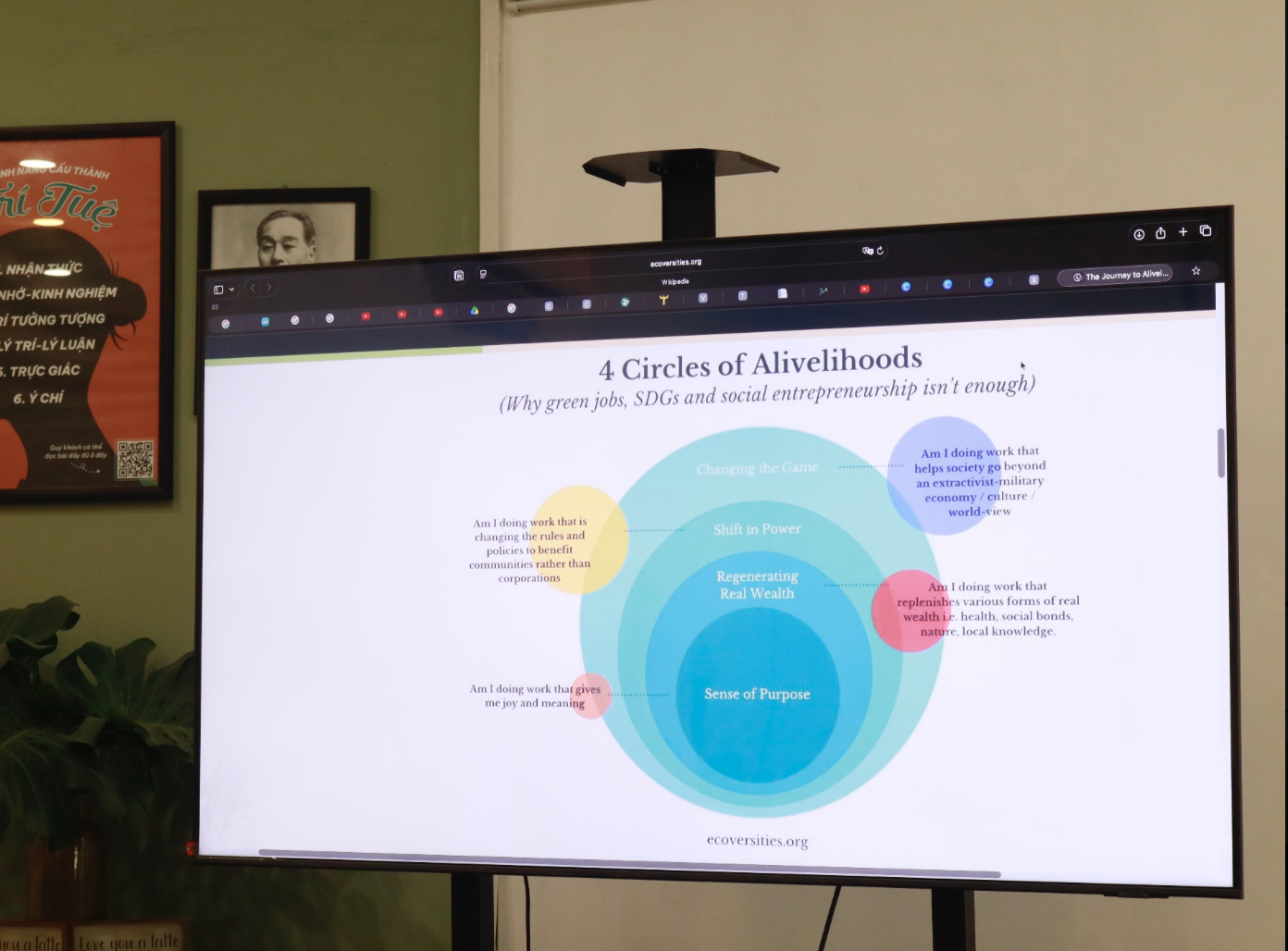
The “Alivelihood” and “Deadlihood” framework is not meant to pass absolute judgement on each profession. It is an invitation to see whether work is nourishing life, one's own, others', the community's and the environment's, or depleting it. The answer is usually complex: a job may provide income a family needs but come with hard working conditions; a social project may have a beautiful mission but unsustainable finances. So reflection must go together with reality.
We analysed the tendency to maximise shareholder profit while costs are pushed onto workers, suppliers, communities or the environment. This is a discussion of externalities: social and environmental costs not fully reflected in prices or financial statements. Not all joint-stock companies are alike; assessment must rest on data and specific context, rather than only on labels.
Models such as cooperatives, employee-owned businesses, post-growth entrepreneurship and steward ownership open up other ways of allocating control and benefits. Cooperatives emphasise democratic member control. The social and solidarity economy includes many forms such as cooperatives, mutual funds, associations, social organisations and social enterprises, with a focus on people and social goals rather than maximising returns to capital.
Patagonia is cited as an example of steward ownership: voting rights placed in the Patagonia Purpose Trust, while most of the economic benefit flows to the Holdfast Collective to support environmental goals. This example shows that ownership structures can be designed differently, but it is not a template that can be copied unchanged in every country. In practice one must consider the law, articles of association, tax, voting rights, accountability and operability.
An important point in our sharing is the refusal to romanticise sacrifice. Doing social or environmental work does not mean one has to be poor, exhausted or always dependent on goodwill. An initiative that wants to last needs a suitable revenue model, pay levels, governance and resources. “Having impact” and “being financially sustainable” need to be built together.
Main idea: the course sees the current economic system as a historical choice, not the only choice. From there, it introduces practices that emphasise cooperation, resilience, the common good and the regeneration of nature.
The course page names several frameworks and practices: the Economy for the Common Good (ECG), Doughnut Economics, Thailand's Sufficiency Economy, ethical banks, credit cooperatives, cooperative consumption models, impact investing, the gift economy and community finance. These frameworks are not identical, but all reject the idea that GDP, profit or unlimited material growth is the only measure of success.
The Economy for the Common Good proposes seeing a business or organisation not only through profit and loss but through its impact on human dignity, solidarity and social justice, ecological sustainability, transparency and co-determination. A “common good” report can help raise further questions about employees, suppliers, customers, financial partners, community and environment. It is a voluntary framework, not a state certification, and does not replace financial due diligence.
Doughnut Economics is mentioned as a way of picturing an economy that must operate between two boundaries: not letting people fall below the essential social foundation, but also not exceeding the planet's ecological limits. The Sufficiency Economy suggests the values of moderation, self-reliance and immunity or resilience to shocks. In the course, these frameworks are used to widen the question of “enough”, rather than to provide a set of personal investment formulas.
Examples of ethical banks, community banks, credit cooperatives, Hansalim and iCOOP are given to illustrate that finance and consumption can be organised around cooperation, membership and shared goals. It is important not to confuse the lessons from these models with an invitation to deposit or invest money in any structure. Any product that holds money, raises capital, lends or promises returns needs independent due diligence on legality, governance, risk and transparency.
We also told stories of communities in Thailand, in Egypt at SEKEM, and within the Vcil ecosystem to show that economic security can be built in many layers: producing needed goods and services together, sharing skills, buying collectively, mutual aid in crises, redistributing part of the surplus and building long-term alliances. The main point is not that every community should be alike, but that a community can create social infrastructure that a lone individual finds very hard to build.
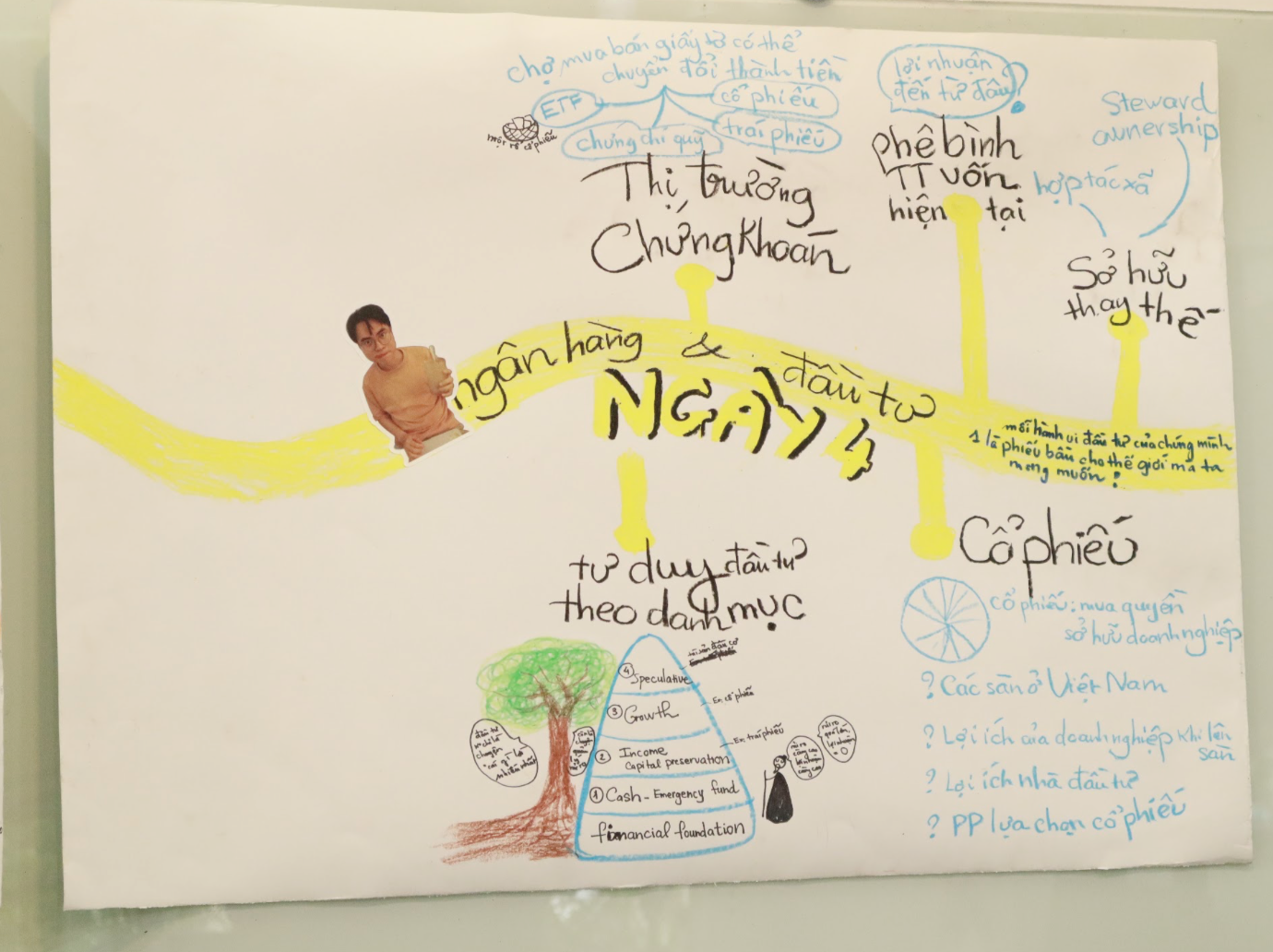
The models below are not “recipes for success” to be copied as they are. They show that money, ownership, consumption and business can be designed with goals other than maximising short-term profit.
Triodos Bank is the example the course uses to talk about ethical banking. According to Triodos itself, it has operated since 1980, has banking operations in five European countries and states its mission as “making money work for positive change” in society, the environment and culture. The core point is not that the bank rejects profit, but that it treats profit as a condition for long-term survival rather than the only goal.
What is worth learning from the model is the order of questions in a funding decision. Triodos describes a three-layer approach: can the activity create positive social, environmental or cultural change; is it financially viable; and does it have roots and support in society. The organisation then considers impact, risk and return together, instead of only risk and return. It also publishes information about the organisations it lends to, so that depositors and investors can know how their money is used.
This case illustrates that transparency and criteria for selecting economic activity can be put at the core of a financial institution, rather than only in a CSR report on the side. But the limits must be seen: Triodos is a licensed bank, supervised and operating in the European legal context. It cannot be inferred that any group calling itself a “community bank” can take money, lend or promise similar impact. The lesson at the individual level is to ask what the place where you deposit or invest discloses about the use of capital, governance and risk.
Sources: Triodos, About us: https://www.triodos.com/en/about-us; Triodos's impact approach: https://www.triodos.com/en/impact-vision.
iCOOP Korea is mentioned in the course as an example of a consumer cooperative. According to the International Cooperative Alliance Asia-Pacific, iCOOP is an organisation set up by consumers and producers, pursuing a safe food system that cares for the environment and Korean agriculture. The model has developed activities from organic and safe food, stores, online shopping and school meals to production infrastructure.
Unlike an ordinary retail chain, the idea of a cooperative is that the buyer is not just a customer at the end of the chain. They can be a member, join discussions, help set standards and create stable purchasing power for producers. The ILO has described iCOOP as a federation founded by six primary cooperatives in 1997; the model pursues ethical consumption, food security, protection of agriculture and the environment, and respect for human and labour rights. Monthly community meetings are a mechanism for members both to voice opinions and to learn about the cooperative movement.
Hansalim appears in a similar thread of discussion: not only selling “organic” goods, but seeking a longer-term relationship between consumers and producing communities. A notable detail from Hansalim's participatory guarantee system is that producers and consumers take part together in the certification process, self-inspection, assessment and monitoring of improvement. This differs from buyers simply trusting a ready-made label.
This case shows that consumption can become an act of economic organisation: consumers pool demand, set standards, share information, support producers' sales and create more direct relationships with producers. But the model also has trade-offs: it requires genuine democratic governance, transparent prices and costs, quality and food-safety assurance, handling of disagreements between buyers and producers, and the capacity to run logistics at sufficient scale. A “cooperative” is not automatically good without these.
Sources: ICA Asia-Pacific, iCOOP: https://www.icaroap.icaap.coop/AboutUs/icoop-0; ILO, Consumer cooperative in the Republic of Korea: https://www.ilo.org/resource/article/consumer-cooperative-republic-korea; Hansalim Participatory Guarantee System: https://www.hansalimpgs.or.kr/.
SEKEM is the example we mentioned when talking about the regenerative economy and community. According to SEKEM's official history, the initiative began in 1977, founded by Ibrahim Abouleish on 70 hectares of desert land about 60 km north-east of Cairo. The starting point was applying biodynamic farming to restore the soil; later, SEKEM grew into an ecosystem of agro-industrial companies and non-profit organisations.
What makes SEKEM important in the course is not a “business tip”, but the way it connects four fields: ecology, economy, society and culture/education. SEKEM's official site describes a mission of individual, social and environmental development under one holistic concept; business activities sit alongside agriculture, education, healthcare and community life. It is an example of the idea that a business may need land, knowledge, people, markets and social institutions together to create lasting impact.
What can be drawn from it is ecosystem thinking: do not only ask “which product sells?”, but which capacities, relationships and infrastructure need nurturing so that participants can make a living. However, building such an ecosystem requires a very long time, capital, governance skills, risk tolerance and trust. The SEKEM story should not be used to dismiss the need to assess the finances, operational efficiency or governance quality of each organisation within the ecosystem.
Sources: SEKEM, History: https://sekem.com/en/about/history/; SEKEM, Sustainable Development since 1977: https://sekem.com/en/home/.
Patagonia illustrates steward ownership. According to Patagonia's announcement, all voting shares were transferred to the Patagonia Purpose Trust, and all non-voting shares to the Holdfast Collective. The Purpose Trust holds the voting rights to protect the mission, while the Holdfast Collective receives most of the economic value to support work against the climate crisis and for the protection of nature.
The message of the case study is that a business's long-term goals are not only declared through communications; they can be partly “locked” into the ownership structure and voting rights. When a business is sold or handed to the next generation, such a structure seeks to limit the risk of the mission being displaced simply by the pressure to maximise short-term profit.
But this is not a certificate that every Patagonia product or decision is socially and environmentally perfect. A good ownership structure still needs transparency, impact measurement, supply-chain governance and accountability. Moreover, the US trust mechanism cannot be transplanted wholesale to Vietnam; any idea of steward ownership must be designed with qualified lawyers, accountants and governance professionals.
Source: Patagonia, Ownership: https://eu.patagonia.com/mt/en/ownership/.
Doughnut Economics is often misunderstood as a complete economic plan. The Amsterdam case shows it is more practical than that: it is a guiding framework that poses questions for policy. According to the Doughnut Economics Action Lab (DEAL), Amsterdam was the first city to develop a “City Portrait” under the Doughnut framework, in 2020. The framework was then used to guide the city's 2020–2025 circular-economy strategy, its urban development vision to 2050 and its mobility vision.
The central point is to see a city through two boundaries. The inner boundary is the social foundation: housing, health, education, opportunity, safety and the conditions for everyone to live with dignity. The outer boundary is the ecological ceiling: climate, resources, pollution and the limits of ecosystems. A “successful” policy in this view does not merely raise GDP or property values; it must improve life without pushing costs beyond ecological limits or onto other communities.
This case is useful because it clarifies the scale of application: Doughnut Economics is not only about individual consumer choices but also a tool for dialogue in government, planning and policy. At the same time, it shows the limits: a guiding framework does not implement itself; results depend on budgets, laws, data, conflicts of interest, administrative capacity and residents' participation.
Source: Doughnut Economics Action Lab, Amsterdam case study: https://doughnuteconomics.org/stories/local-government-case-study-amsterdam-nl.
ECG is not a single business but a practice framework mentioned in the course. It uses the Common Good Balance Sheet, based on the Common Good Matrix, to view an organisation's contribution across 20 topics. The topics relate to human dignity, solidarity and social justice, ecological sustainability, transparency and co-determination in relation to suppliers, owners and financial partners, employees, customers and the social environment.
The value of ECG is that it adds questions that conventional financial reports rarely answer: how the organisation treats workers, whether it shares information, how its supply chain has impact, whether stakeholders have a chance to take part in decisions, and whether its activities align with ecological goals. The framework can be applied to businesses, and ECG also notes its applicability to schools and cities.
The point of caution is that ECG is a voluntary mechanism; it does not replace financial audit, statutory reporting or independent assessment. A good scorecard still needs to be read alongside operational data, verification mechanisms and critical information. The main lesson is: if you measure only one thing, an organisation usually optimises for that thing; so widening the measures can widen the conversation about economic goals.
Sources: ECG, Apply the Common Good Balance Sheet: https://www.econgood.org/apply-ecg/; ECG, What is ECG?: https://www.econgood.org/what-is-ecg/.
The Lúa, Gift Bank, Pay-it-Forward Fund, Offers & Needs Market and Consumer Club models are mentioned in the course as Vcil Community's experiments. In the story of the course, their job is to expand imagination: instead of only buying and selling with money, a community can try exchanging needs and resources, flexible contribution levels, a pay-it-forward fund, collective buying, or connecting those who can give with those who need.
The design idea here is to bring relationships, trust and the capacity to give and receive into economic life, while recognising that people have different capacities to contribute. A “sliding scale” or flexible contribution is a way for those with more means to add more, widening access for those in difficulty. “Pay it forward” directs support not only to the recipient in the moment, but to their ability to support others once they are able.
This case should be read as a community experiment, not a financial model tested for investing or depositing money. The conditions for such practices to be healthy are voluntary participation, a clear purpose, appropriate bookkeeping and transparency, protection of personal data, accountability mechanisms and limits on commitments. Once it comes to holding money on behalf of others, lending, taking money to generate returns or providing financial services, the legal requirements are very different from ordinary community support.
Context source: Vcil's Money IQ – Money EQ: https://vcil.community/ecoversity/money-eq-money-iq.
Consumption, labour and investment are all points at which an individual takes part in the economy. The course encourages learners to see these decisions in relation to community and ecosystem, rather than as isolated choices.
At the individual level, one suggestion from the course is to observe where we spend, deposit and apply our labour. Where quality, price, safety and real circumstances allow, we can consider supporting local businesses, responsible producers or organisations whose values are close to our own. This is a direction for conscious consumption, not a rule that “local” is always better than every other option.
At the community or organisational level, experiments may include collective buying, resource exchange, study groups, mutual-aid funds, flexible contribution models, customer–producer networks or participatory governance. At the system level, issues such as housing, credit, social insurance, tax fairness, environment and urban infrastructure require change in policy and institutions, and cannot simply be left to each individual to “optimise their finances”.
Vcil presents the initiatives in its ecosystem such as Lúa, Gift Bank, Pay-it-Forward Fund and Consumer Club as experiments in the gift economy, resource exchange, flexible contribution and community support. We see these initiatives in their proper role: internal examples to widen the imagination about community economies.
The concept of “ecosystem” we share stresses that a personal project or impact business struggles to last on ideas alone. It usually needs capacity, people, capital, customers, partners, knowledge, infrastructure, markets and trusting relationships. Building community is therefore not only about creating a sense of belonging; it can be a way of enabling many people to access opportunities, information and resources together.
The course reminds us that many financial difficulties are not solely the individual's fault. Interest rates, inflation, exchange rates, the labour market, planning, tax, housing and inequality all shape everyday choices.
When interest rates rise, mortgage borrowers face different pressure from savers. When inflation rises, people on fixed incomes or with high essential costs may be hit harder. When the labour market changes, some skills become scarce while others are replaced. None of this removes personal responsibility, but it shows why simply saying “try harder” is not enough.
The course raises questions about the limits of GDP, financialisation, inequality, infinite growth on a finite planet and the decline in quality of life. These are major debates in economics and policy, not simple conclusions. Their value in the course is to create a pause: does an economy growing in quantity necessarily improve well-being, fairness and ecosystems? Where are the unaccounted costs?
Here, Money IQ is understood more broadly than knowing how to calculate interest. It is the ability to read the link between micro decisions and macro shifts: not blaming oneself endlessly for things beyond one's control, but also not neglecting the choices that can be made now, such as upgrading skills, sensibly diversifying income, maintaining liquidity, understanding contracts and building a safety net.
The closing session helped each person connect their understanding of themselves, cash flow, risk, investing and the system into a design that fits their own life.
A financial life design can begin by recording the current state: net income, essential costs, variable spending, debts, liquid assets, family obligations, existing insurance, career goals and the risks currently worrying you. From there, instead of drawing up a very long wish list, choose a few priorities in order.
The final spirit of the course is this: money is not the only limit deciding career choices or quality of life. But for money to be less of a limit, we need knowledge, a healthy relationship with money, and a clear view of the system we live in. Well-being does not only come from more money; it also comes from being safe enough to choose, clear-headed enough not to be led by fear, and connected enough not to face every crisis alone.
1. Which money story from my family or past is still steering me?
2. What does my “level of enough” for the next 12 months consist of, and is that number based on real costs or a vague feeling?
3. Can I see my assets, debts, cash flow and due dates in full?
4. What does my current income depend on? Which human capital needs investment to widen my options?
5. Which expenses genuinely nourish health, relationships or life values; which only release emotion for a moment?
6. If I lost my income or faced a health crisis, which layers of protection do I have: reserves, insurance, skills, family, friends, community?
7. Do I understand the interest rates, fees, terms and risks of the loans and cards I use?
8. When will each sum of money be used? Does that horizon match the risk level of where I have placed it?
9. Before an investment, can I explain in simple language where the return comes from, what the risk is and when I will review it?
10. What are my money, my labour and my consumption helping to nourish? Is there one small change that fits my life values and my real capacity?
Nội dung đầy đủ của bài viết này chỉ dành cho Hội viên Vcil. Đăng nhập để đọc tiếp phần còn lại.