You are using the member interface.
Log out of the member interface →

 ← Bản tin
EcoBuddha (에코붓다) is a non-profit environmental organisation within the Jungto Society ecosystem. What sets EcoBuddha apart from many environmental organisations is not a particular technology or campaign, but the question it asks: if the ecological crisis stems from the way people desire, consume and organise their lives, can protecting the environment become part of daily practice?
In this approach, waste is not just something to be collected. Waste is the material trace of a value system: how much we buy, how much we prize convenience, who does the work of dealing with it, and which communities the environmental cost is passed on to. An emptied bowl, a reused box or a compost bin is therefore both an environmental act and a tool for observing one's own desires and responsibilities.
According to its official history, the organisation began on 5/3/1988 as the Korean Buddhist Institute of Social Education. Its early years focused on training in thought, culture, women's issues and reunification. From June 1990 it shifted its focus to the environment; in 1994 it was incorporated by the Korean Ministry of Environment as the Korean Buddhist Institute of Environmental Education. In April 2005 it was renamed EcoBuddha.(Source 1)(Source 2)
1988: the Korean Buddhist Institute of Social Education is founded.
1990: activities turn towards environmental issues, with an ecology school, a course on Buddhism and the environment, a life-movement academy and environmental classes for women.
1994: recognised by the Korean Ministry of Environment as a legal entity for environmental education.
May 1999: the Zero Waste Movement begins at the Jungto Center in Seoul.
2001–2003: experiments with treating food waste with earthworms, and around 100 items on waste, water, energy and daily life summarised in the Zero Waste report.
2004: launch of the campaign for 100,000 people to pledge not to leave food uneaten.
2005: the Empty Bowl campaign passes one million pledges and the organisation is officially renamed EcoBuddha.
2012 onwards: development of the “clean living space” model, swap fairs, environmental schools, film activities and local practice networks.
2020: during the pandemic, an online environmental school for 3,467 people and a home-composting pilot for 2,260 people, according to its own published history.
2024: the organisation reports 1,074 attendances at the Environmental School, 91 learners at the Climate School, 1,457 attendances at Eco Cinema, 660 people at environmental Dharma Talks and 308 participants in composting.(Source 2)
The changes of name reveal an important shift: from education in ideas to environmental ethics, and then from ethics to concrete experiments in daily life. EcoBuddha did not start with a grand national project. It started where its own community eats, lives and produces waste.
EcoBuddha emerged as Korean civil society flourished after the democratisation of the late 1980s. Ku Do-Wan's research on alternative ecological movements in Korea suggests that from the late 1990s many movements not only opposed pollution but sought to move beyond industrialism, consumerism and dependence on the state, experimenting with cooperation, mutual-aid communities and ecological culture through direct relationships.(Source 3)
EcoBuddha sits within that current but adds a Buddhist foundation. According to the Stanford Encyclopedia of Philosophy, Jungto Society does not focus on political revolution in the traditional sense; it combines individual happiness with creating a harmonious world, based on the non-separation of people and environment.(Source 4) EcoBuddha is where that outlook becomes material practice.
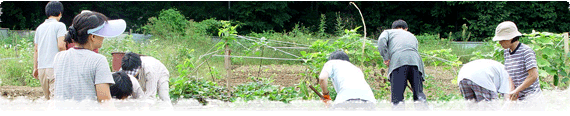
EcoBuddha holds that dealing with waste after it has been produced is not enough. The environmental crisis must be addressed before the moment of buying, building or organising an activity. Its four Zero Waste principles are:
1. Move from treating consequences to prevention at source.
2. Move from treating convenience as absolute to voluntarily accepting some inconvenience.
3. Move from haste to slowness and persistence.
4. Go beyond frugality to form an attitude of respect for people, living beings and even the objects in use.(Source 5)
The fourth principle deserves particular attention. An object is not valuable only because it saves money. It should be used to the end of its life because of the materials, energy and labour crystallised in it. This is a shift from “efficient resource management” to an ethics of relationship.
Yet the idea of “accepting inconvenience” needs a critical eye. The voluntary inconvenience of someone with time and resources is very different from a burden placed on women, care workers or the poor. A just ecological movement cannot make endurance the measure of virtue; it must ask who is paying for other people's convenience.
The most valuable feature of EcoBuddha's method is that it does not stop at calling on individuals to be aware. The Zero Waste materials define three layers of action.(Source 5)
The first layer is changing individual lifestyles: how we buy, eat, use water and energy, sort and reuse. EcoBuddha argues that energy-saving technology means little if habits and attitudes do not change.
The second layer is changing systems. An organisation must design processes so that good behaviour becomes easy and normal: a tray of single-sided paper beside the printer, someone responsible for collection, purchasing rules, reusable tools ready to hand, regular waste measurement. Newcomers need no extraordinary willpower to act rightly, because the system carries them.
The third layer is changing physical infrastructure: water-saving taps and toilets, water reuse, rainwater harvesting, solar energy and low-consumption building design. If the structure still forces people to waste, moral appeals quickly exhaust themselves.
The three-layer model resolves a common debate in environmental activism: what matters more, individual behaviour or systemic policy? For EcoBuddha, the two are not mutually exclusive. Individuals create the culture and the demand for change; systems sustain behaviour; and structures make ecological behaviour less dependent on willpower alone.
The Empty Bowl Movement began in September 2004 with a simple pledge: “I will not leave food uneaten.” In 2005 it grew into a one-million-person campaign. EcoBuddha's website now records around 1.5 million people who have signed the pledge, with the participation of schools, businesses, the military, local governments, religious organisations and civil society.(Source 6)
This is a self-reported figure of cumulative pledges, not 1.5 million people currently maintaining the practice. The OECD has recorded that Jungto Society launched the Empty Bowl campaign nationwide in September 2004, an independent confirmation that this was a campaign of national scale.(Source 7)
The movement links four meanings: preventing food waste; eating just enough; saving resources; and using what is saved to share with those in need. Its inspiration is barugongyang, the meal practice of the Buddhist tradition in which the eater takes just enough, leaves no food behind and cleans their own bowl.
The campaign's strength is that it turns an abstract problem into a behaviour everyone can see after every meal. Its weakness is that a signature does not prove lasting change, and a focus on what is left on the plate may overlook the far larger waste in production, distribution, retail and food-safety regulation.
Some figures on the Empty Bowl page, such as 30,000 children under five dying of hunger each day, food-waste losses of 15 trillion won, or Korea importing 70% of its food, carry no clear date and should not be reused as current data.(Source 6)
From 1999 the Jungto Center became a laboratory for a low-waste life. The community formed groups responsible for water, energy, recycling, food and waste sorting; changes were discussed, tested, recorded and revised.(Source 5)
According to a report published by EcoBuddha, average waste at the centre fell from 4.8 kg per day in May 1999 to 0.8 kg in December 2002, a drop of around 83%; toilet waste fell by 89% over the same period.(Source 8) This is an internal, small-scale case study, not an independent evaluation. Its greatest value lies in the method: measuring the composition of waste, identifying its sources, redesigning processes and publishing the experience for others to test.
Practices tried included restricting plastic packaging brought into the centre, reducing canned drinks, using paper on both sides, reuse, strict sorting, and saving water and energy. Some practices were very radical and bear the mark of a closed community; not all are suitable to apply unchanged in homes, schools or workplaces.
EcoBuddha experimented with earthworms from the early 2000s and developed home-composting programmes. The aim is not simply to move waste from one bin to another, but to return organic matter to the soil and help urban people see the material cycle that collection systems usually hide.(Source 2)(Source 9)
Self-reported figures show that this activity can mobilise significant numbers: 2,260 people in the 2020 pilot group; 1,107 people in 114 groups in 2021; 937 in 2022; 325 in 2023 and 308 in 2024.(Source 2) The decline after the pandemic peak may reflect a change of programme or falling interest; there is not enough data to conclude.
EcoBuddha runs an Environmental School, a Climate School, environmental Dharma Talks, ecological film screenings and workshops for activists. These programmes connect knowledge with practice, rather than merely conveying climate science.
In 2024, according to the organisation, the Environmental School had 1,074 attendances; the Climate School 91 learners; Eco Cinema 1,457 attendances; environmental Dharma Talks 660 people at five venues; and workshops were held in four regions.(Source 2) In 2023 the corresponding figures were 1,313 Environmental School learners, 93 Climate School learners, 906 Eco Cinema attendances, 633 people at Dharma Talks and 231 participants at events for activists.(Source 2)
These are output data, the number of people present; they do not tell us how far learners changed their behaviour, their emissions or their organisational capacity.
From 2012 EcoBuddha expanded its practice into the “Clean Living Spaces” model. In 2018 it reported 120 participating sites; boards listing 12 environmental practices were installed at 161 sites, alongside experiments with zero-waste buildings and water-saving equipment. In 2019, 150 localities took part in building clean living spaces and 151 sites carried out waste-composition surveys.(Source 2)
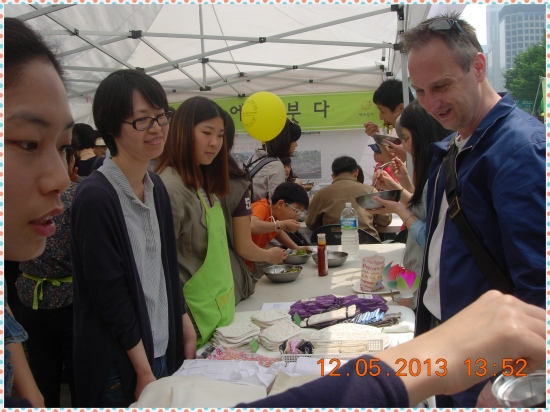
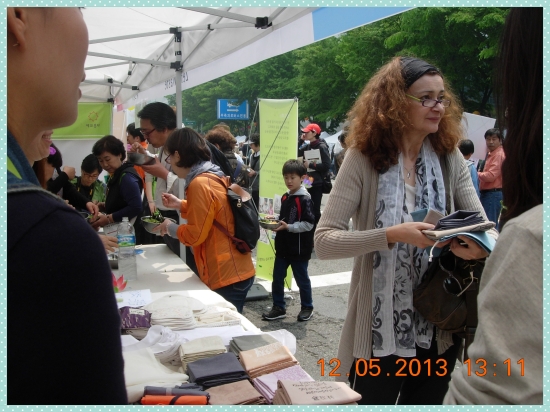
Local activities include urban gardens, second-hand swap fairs, plastic reduction, soap and scrubber making, cigarette-butt collection, bringing your own container, and monthly campaigns. This is the mechanism by which the movement moved from one centre in Seoul to small, dispersed groups.
EcoBuddha publishes books and reports on zero waste, international food waste, ecological toilets, environmental ethics, ecology, the life movement and ecofeminism.(Source 8) The inclusion of ecofeminism in its library shows the organisation has approached the ecological crisis as a matter of domination, gender, war and extraction, not only waste management.
The organisation also takes part in social alliances: it has played a role in the network of Korean environmental organisations, organised interfaith dialogue, joined the critical response to the Four Rivers project and taken part in discussions on alternative ecological models.(Source 2)
EcoBuddha is currently a non-profit legal entity registered under the Korean Ministry of Environment. Its website names the current representative as Choi Gwang-su, with its address at the Jungto Social and Cultural Center in Seoul.(Source 1)
Its resources come from members and regular supporters. Supporters are invited to join campaigns, forums, volunteering and the organisation's programmes. Published volunteer roles include campaign design, communications, membership management, data entry and digitising documents.(Source 10)(Source 11)
EcoBuddha publishes annual reports on the use of donations. The 2023 report records 23,593,751 won spent on the listed activity groups, including zero waste and composting, publishing and communications, education and research, alliance activities and operating costs.(Source 12) The 2021 fund-use report records income of 120,607,834 won, mainly from membership fees and donations; 27,362,121 won was spent during the year and 93,245,713 won carried over to the following year to prepare activities.(Source 13) The figures show that the organisation is financially transparent, but the full accounts should be read before comparing performance across years.
EcoBuddha does not prominently publish, on its Korean site, a detailed governance chart, the number of paid staff or the number of regular volunteers. This is a gap to ask about directly if one wants to understand its degree of independence from Jungto Society, its decision-making process and how representative its membership is.
The Empty Bowl campaign passed one million pledges and was noted by the OECD; many education programmes draw from hundreds to more than a thousand attendances a year.(Source 2)(Source 6)(Source 7)
In addition, the Jungto Center reported an 83% reduction in waste over 1999–2002.(Source 8) This is a concrete result, but self-measured by the organisation, at one site with a distinctive culture and community discipline.
Tools such as waste surveys, practice boards, schools, composting groups and swap fairs have been rolled out in many localities. This shows that EcoBuddha is able to package experience into processes.(Source 2)
Finally, EcoBuddha has helped make not leaving food, reducing waste and living moderately part of the language of practice and social responsibility. Independent research on Jungto Society finds that the organisation has sustained environmental, human-rights and peace movements systematically, connecting the teachings with the lives of lay practitioners.(Source 14)
1. Turning the environment from a “topic” into a daily discipline
At EcoBuddha, the environment shows up in meals, toilets, printers, electricity bills and the way events are organised. This removes the comfortable distance between campaigners and their own lives.
2. Using the community as a laboratory before campaigning to society
Instead of only asking others to change, EcoBuddha experiments inside the Jungto Center, measures the results, debates them and then publishes. This is the model of “prefigurative politics”: trying to live, in advance, part of the society you want to create.
3. Not choosing between the individual and the system
The three layers of individual, system and structure form a very strong practical framework. It avoids both extremes: dumping all responsibility on the consumer, or waiting for policy to change before acting.
4. Seeing moderation as freedom, not loss
EcoBuddha tries to define using less as liberation from desire and the pressure to consume. This is a direct challenge to the idea that development means ever-increasing possessions and comfort.
5. Linking waste reduction with fair distribution
The Empty Bowl is not only about reducing waste; it ties saving to sharing. Although the link between a meal without leftovers and global hunger must be interpreted carefully, it widens environmental ethics into a question of justice: whose surplus stands beside whose need?
6. Putting material care work at the centre
Washing bowls, composting, sorting waste and maintaining systems are usually invisible labour. EcoBuddha turns them into shared knowledge and practice. But the movement is only truly radical if that labour is distributed fairly, rather than defaulting to women or devoted volunteers.
In Vietnam, many environmental campaigns stop at communications, a clean-up day or handing out “green” products. EcoBuddha suggests a deeper cycle: measure the current state; choose one clear behaviour; test it in a small community; design the process; change the infrastructure; measure again; publish both successes and failures; and only then scale up.
A school might start not with a zero-waste slogan but by weighing and sorting its waste for seven days, finding the three biggest sources, designing solutions with students and kitchen staff, and measuring again after three months.
A social organisation might check where environmental values appear in its budget, purchasing, catering, travel and events, rather than only in its communications.
A residential area might combine an organic composting point, a community garden, swap fairs and a study group; but it must design payment or rotation of labour so that “living green” does not become an invisible burden.
The most important lesson is not that everyone must live austerely. It is to create systems that make the less harmful choice easier, cheaper, fairer and more meaningful to the community.
While living with Jungto Society, EcoBuddha should not be learned only through a presentation. The group's own daily life is the data.
Participants can follow a single day: how much food is taken and how much is left; how drinking water is supplied; where single-use items appear; how waste is sorted; who does the washing, collecting and composting; whether the rules are explained or imposed; whether newcomers can give feedback; and whether results are measured or based only on feeling.
EcoBuddha helps the programme ask a wider question about development: after the “Miracle on the Han River”, when living standards and consumption rose so fast, how does a society define enough? Could an alternative pathway treat reducing desire, material care and sharing resources as signs of progress?
1. How many staff, regular volunteers and regular supporters does EcoBuddha currently have?
2. What is the governance and financial relationship between EcoBuddha and Jungto Society?
3. Who decides programme priorities, and what feedback mechanism do participants have?
4. After the Empty Bowl campaign, how does the organisation measure whether behaviour is maintained?
5. How was the figure of 1.5 million pledges collected, cleaned and updated?
6. How much waste per person per day does Zero Waste at the Jungto Center produce now, compared with the 0.8 kg benchmark of 2002?
7. How does the organisation measure waste, greenhouse gases or costs avoided?
8. How can “accepting inconvenience” avoid increasing the care burden on women and volunteers?
9. Which experiments failed or were stopped, and what did EcoBuddha learn?
10. How much activity is aimed at policy change or corporate responsibility, rather than individual behaviour alone?
11. What role do scrap collectors, sanitation workers and pollution-affected communities play in programme design?
12. Which model does EcoBuddha think would transfer best to Vietnam, and what should absolutely not be copied wholesale?
EcoBuddha is worth learning from not because it has solved the environmental crisis, but because it has spent more than three decades experimenting with how to turn an ecological worldview into observable life: a bowl, a bin, a purchasing rule, a composting group and a community that shares responsibility.
The organisation's most radical point is its claim that the ecological crisis is not “out there”. It is reproduced in the most ordinary comforts, speeds and desires. But precisely for that reason, EcoBuddha must also face hard questions: does individual change reach far enough into corporate power and policy; who carries the labour of a low-waste life; and is impact measured with stronger evidence than signatures or attendance figures?
The lesson to take home is not a list of green tips, but a method: turning values into habits, habits into systems, systems into structures, and always checking whether that transformation is truly fair.
1. EcoBuddha, “About”: https://www.ecobuddha.org/about
2. EcoBuddha, “History”: https://www.ecobuddha.org/history
3. Ku Do-Wan, “The Emergence of Ecological Alternative Movement in Korea,” Korean Social Science Journal, 2009: https://journal.kci.go.kr/kssj/archive/articleView?artiId=ART001393108
4. Stanford Encyclopedia of Philosophy, “Korean Buddhism”: https://plato.stanford.edu/entries/korean-buddhism/
5. EcoBuddha, “Zero Waste Movement”: https://www.ecobuddha.org/zero-waste
6. EcoBuddha, “Empty Bowl Movement”: https://www.ecobuddha.org/empty-bowls
7. OECD, Environmental Performance Reviews: Korea 2006: https://www.oecd.org/content/dam/oecd/en/publications/reports/2006/09/oecd-environmental-performance-reviews-korea-2006_g1gh6ac5/9789264024045-en.pdf
8. EcoBuddha, “Publications and Zero Waste Report”: https://www.ecobuddha.org/book
9. EcoBuddha, “Worm Composting”: https://www.ecobuddha.org/worm-composting
10. EcoBuddha, “Support”: https://www.ecobuddha.org/donate
11. EcoBuddha, “Talent Donation and Volunteering”: https://www.ecobuddha.org/about-volunteer
12. EcoBuddha, “2023 Annual Donation Collection and Use Report”: https://www.ecobuddha.org/wp-content/uploads/2024/04/2023_%EC%97%B0%EA%B0%84%EA%B8%B0%EB%B6%80%EA%B8%88%EB%AA%A8%EA%B8%88%EC%95%A1%EB%B0%8F%ED%99%9C%EC%9A%A9%EC%8B%A4%EC%A0%81%EB%AA%85%EC%84%B8%EC%84%9C.pdf
13. EcoBuddha, “2021 Fund Use Report”: https://www.ecobuddha.org/wp-content/uploads/2022/03/%EC%97%90%EC%BD%94%EB%B6%93%EB%8B%A4_%EA%B8%B0%EA%B8%88%EC%82%AC%EC%9A%A9%EA%B2%B0%EA%B3%BC%EB%B3%B4%EA%B3%A02021.pdf
14. Kim Bo-Kyoung, “Social Participation Movement of the Lay Buddhist Community ‘Jungto-Society’,” Social Thought and Culture, 2018: https://www.kci.go.kr/kciportal/ci/sereArticleSearch/ciSereArtiView.kci?sereArticleSearchBean.artiId=ART002329007
15. Jungto Society, “Our NGOs”: https://www.jungtosociety.org/about/ngo
Nội dung đầy đủ của bài viết này chỉ dành cho Hội viên Vcil. Đăng nhập để đọc tiếp phần còn lại.
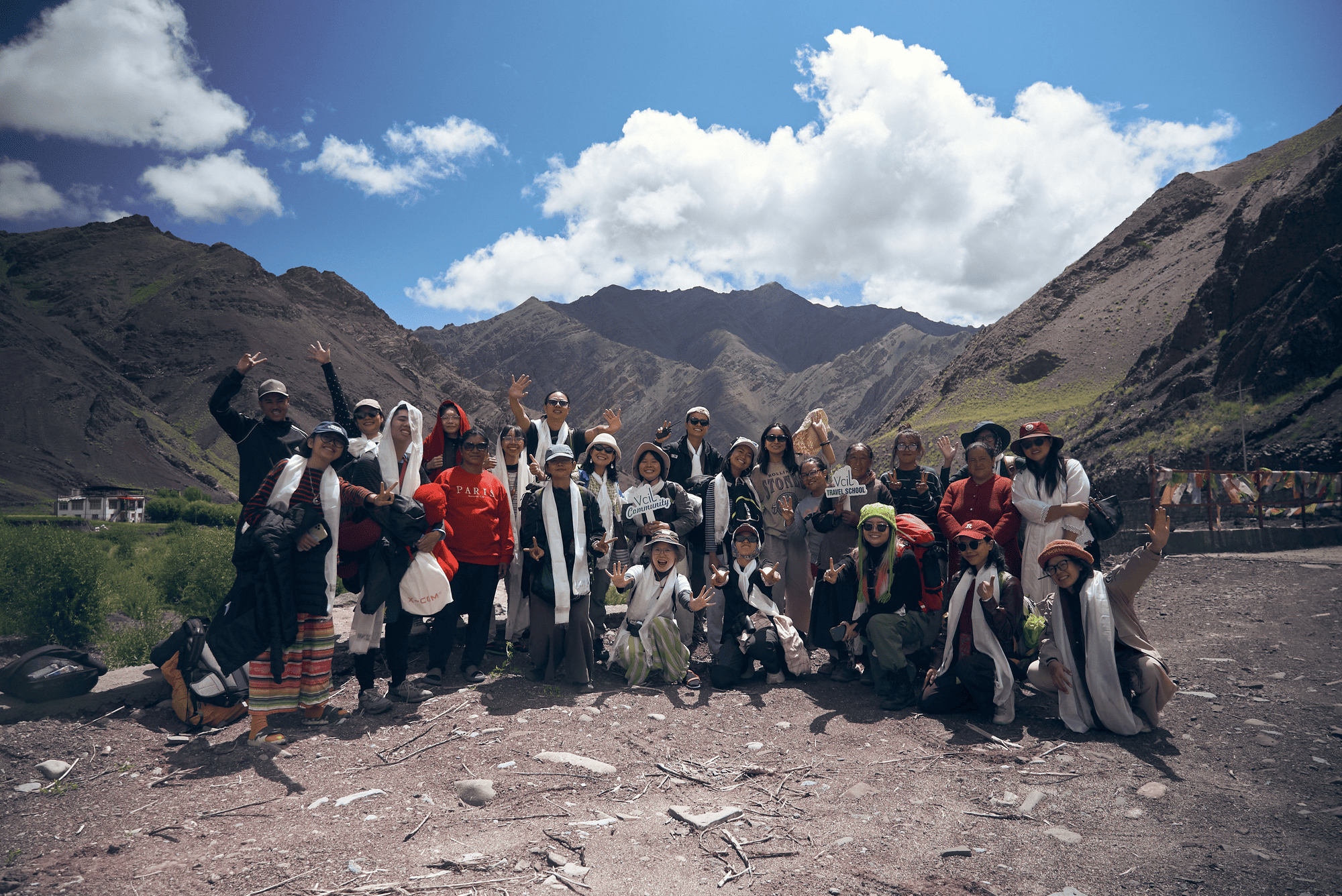

International Travel & Experiential Learning Program Uses Context-Based Learning Methods in a Multicultural Environment