You are using the member interface.
Log out of the member interface →

Thông tin dưới đây chỉ dành riêng cho Hội viên Vcil
Để đảm bảo quyền lợi của bạn cũng như cộng đồng Hội viên Vcil, mong bạn đừng chia sẻ thông tin này nhé!
Bạn có thể chia sẻ thông tin về dự án dành cho công chúng bằng cách sao chép link này:
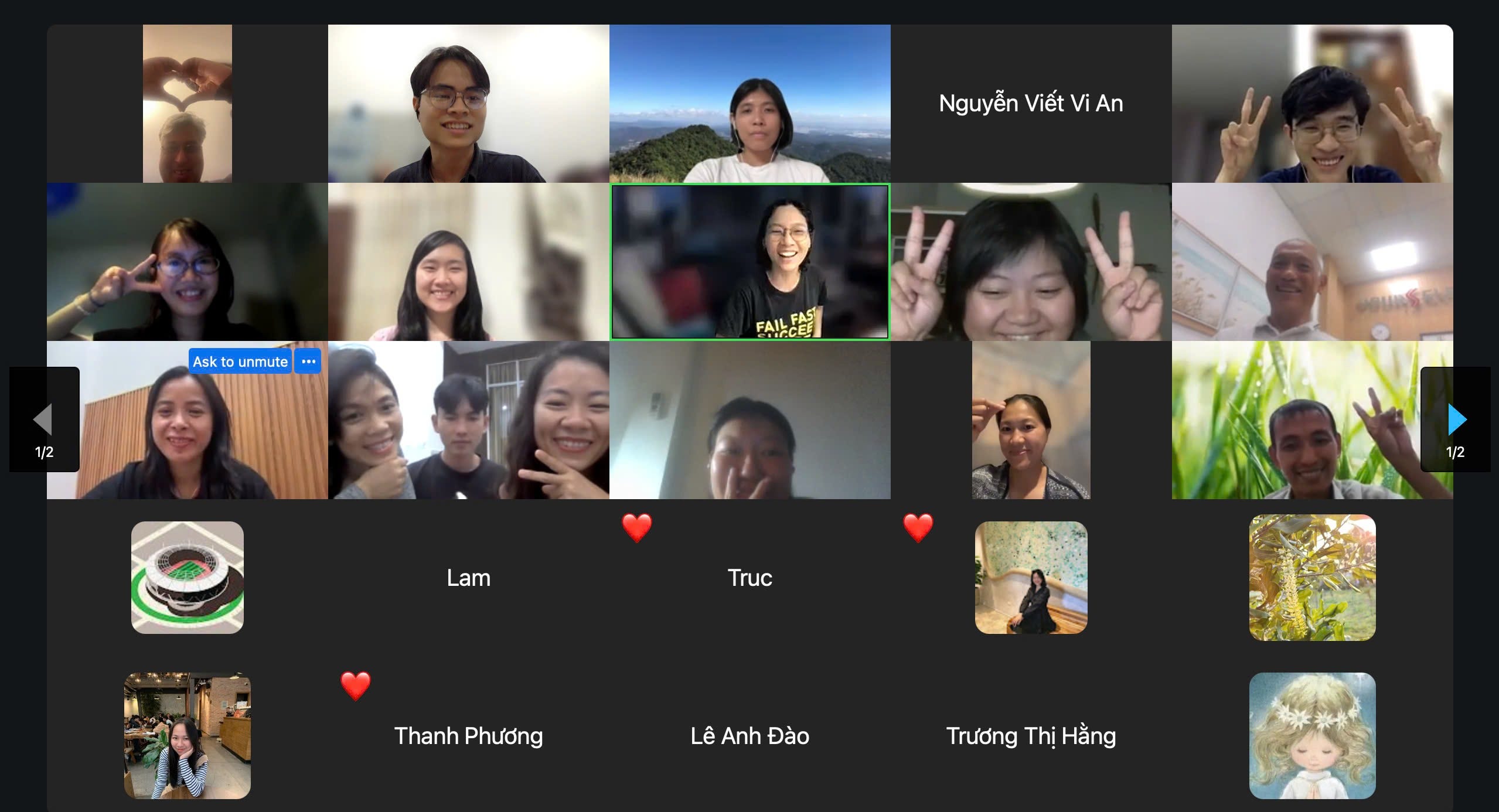
In today's world, where most work is seen as a burden — a kind of “Deadlihood”, in which people trade their time and energy to chase unlimited growth, endless consumption and material accumulation — the question is: can we find a different way of working — a path that nurtures life instead of destroying it?
To explore this question together, on 2 May Vcil Community invited Manish to speak in a conversation on the theme “Alivelihood – Reimagining work and education”. In this conversation we had the chance to look again at our current economic, educational and employment systems — to question them, analyse them, and open a dialogue about “Alivelihood”: a new, humane and sustainable approach to work and life.
Below is a summary of the talk and discussion:
Manish grew up in the United States, and so, like so many others, he was once captured by the American dream – a dream that millions of people around the world long for: to live in a multi-ethnic, free, comfortable and promising society. However, it was precisely growing up in the US, specifically in the suburbs of Chicago and attending public schools, that gave him the chance to understand the culture and system of this country more deeply.
Through lived experience, he realised that the American system and culture – so widely praised – is in fact one of the unhealthiest, most violent and most depression-inducing models. What he could not understand was why the whole world admired it, copied it and celebrated it as the most advanced model.
He shared an experience from an economics class: a professor pointed at a map and said: Do you know what the best thing to do is when the economy goes into recession? Start a war.
In fact, over the past 100-plus years, every time the United States faced an economic crisis, it started a new war. He considers it sick that when we talk about the economy we talk about needing to cause wars.
Another thing that made him question the American system was Bhutan – a country that pursues GNH (Gross National Happiness).
Does a country like the US – with all its material abundance, modern technology and overwhelming military power – really bring happiness to its own people? Meanwhile, the reality is that up to 50% of the friends around him have to take tranquillisers or antidepressants, and face problems like loneliness, a loss of direction and a lack of meaning in life.
These things made him deeply worried that the current system has caused people to lose the ability to find meaning in education, work or relationships. Beyond that, he also raised big questions about the American food system, where people face a wave of chronic diseases and obesity stemming from genetically modified food and toxic industrial products.
In Western culture, when did people start equating happiness with material wealth? He does not deny that we need money to live, but if we only chase material things, people gradually lose their core values in life.
Furthermore, while working at large organisations such as the United Nations, UNESCO, the World Bank, USAID and many other international development organisations, he grew increasingly sceptical about the nature of this system. Two things made him question it:
All of these experiences, observations and reflections led him to realise that the whole philosophy and system the US pursues is one that is destroying people, nature and all of life. He considers this system satanic, as Gandhi once said: “A system that separates people from their inner voice, from intuition, from nature, and always seeks to dominate rather than live in harmony with nature – is a system of the devil.”
After becoming disillusioned with the American dream, he decided to return to India and learn from his illiterate grandmother, which he calls Grandmother University. He realised that the key to solving the problems that had always troubled him lay in local culture and community. And so, together with his wife and sister, he initiated a movement called Shikshantar. Its main goal is to create a supportive space for anyone who wants to work on and implement alternative education solutions.
Here is some information about a few of Manish Jain's education initiatives and projects:
When asked “what is alivelihood”, Manish answered by sharing the opposite concept – deadlihood. Deadlihoods are destructive careers: any work that drains life energy, that is violent, exploitative, and cuts people off from their spiritual life. These are jobs that glorify extreme individualism and greed, while promoting, encouraging and underwriting the extraction of natural resources, war and waste. In that system, power is usually concentrated in the hands of a few.
Deadlihood appears as “soul-draining” jobs – pulling people into an endless rat race with no exit. Manish asks: “Try asking the people around you: do you love your job?” The common answer is usually: “No.”
Then: “Do you find the work you do truly meaningful?” Once again, the majority say: “No.”
This reminded him of the book "Bullshit Jobs" by the anthropologist David Graeber at Yale University – describing jobs that create no real value. Even if these jobs disappeared, it would make little difference to the world.
Manish believes the nature of the current economy is tied to extraction and exploitation, the military industry and consumerism.
Most economic activity today involves extracting resources such as water, forests, oil, gas and minerals. The result is waste, pollution and climate change.
And even wars are, in essence, a story of grabbing and seizing natural resources.
This system also drives consumerism. For the past 25 years we have talked endlessly about climate change, but the economic system runs on a model of unlimited growth that completely ignores community life, the commons and ecosystems, so every effort falls short of reducing the problem.
Because today's jobs exist within that system, they are created to support and sustain that system.
Many professions such as finance, accounting, law, consulting, psychology, engineering or pharmaceuticals – in his view – also operate within the framework of the deadlihood economy. They often create problems and then look for ways to solve the very problems they created – an endless loop.
Take the rising rate of cancer. The economic systems and professions we have create huge amounts of toxins in the environment, and so when cancer rates rise, we look to solve the problem through the pharmaceutical system.
And in this system, most power is concentrated in the hands of a few people in global corporations. Through trade agreements, international investment and the global legal system, they control the resources, money flows and economic policies of many countries.
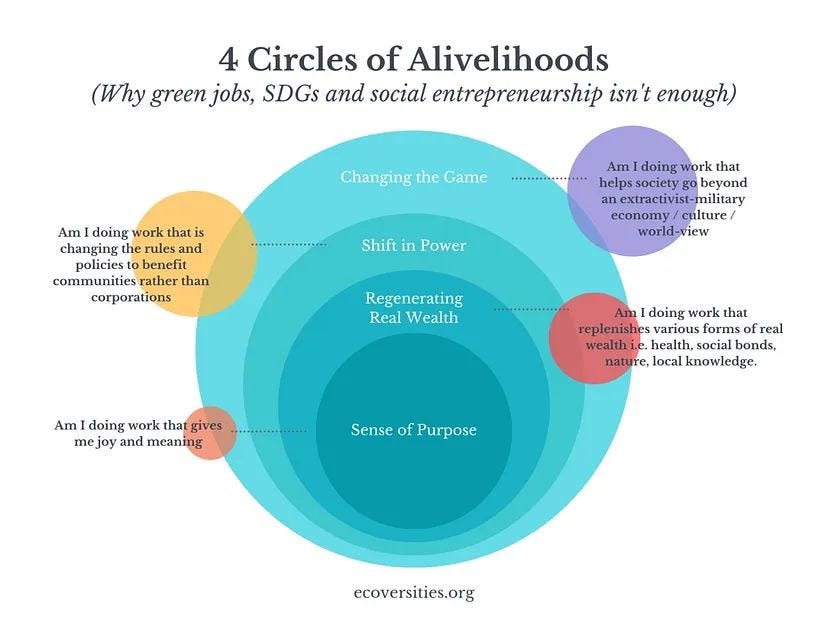
That is why, to question the current system, Manish and his colleagues have put forward a new definition of work: alivelihood – understood as right livelihood, or life-giving livelihood.
According to him, alivelihoods are forms of work that can answer the following three groups of questions:
1. Does the work you do bring you joy and happiness, and nourish your soul?
In the work you are doing, what makes your soul feel alive, radiant and happy?
What helps you feel that life has meaning and purpose?
What is your mission?
2. Does the work you do bring our communities back to life?
We live in an age where social trust is eroding, where people no longer feel bonded to or trust one another. When we lose a close-knit community, feelings of loneliness, powerlessness and meaninglessness appear. Alivelihood work is work that helps rebuild community – where people feel their own capability, connection and ability to create positive impact.
3. Does the work you do help regenerate ecosystems?
Does it help restore soil, water, forests and food systems? Because a healthy life cannot be separated from a healthy ecosystem.
He also stressed that alivelihood is not the same as concepts like "green jobs" or "social entrepreneurship". Because if we only talk about "jobs", then whether green, sustainable or social, they are still operating within the old system.
Alivelihood, on the other hand, demands a deeper understanding: understanding the old system, questioning it, and committing to changing it.
He gave two examples of things we can do. First, challenging the view: does consuming more really bring happiness? Some movements in India and Japan, such as minimalism, promote the paradox: "Consume less, and we have more" – more space for ourselves and for others, and therefore happiness.
Second, localisation. This emphasises consuming products and services from the local area, shrinking the distance between producer and consumer. Localisation also values indigenous knowledge, as he shared at the start: experts who do not understand the locality can create problems instead of solving them. Only by understanding and using local wisdom can we solve problems effectively. At the same time, decision-making power over resources and the economy must be returned to local communities instead of letting large, distant corporations that know nothing about the locality decide for us.
The central question we need to ask ourselves when talking about this: What truly makes me happy? What does a life worth living look like? What brings meaning? What is success? What is happiness?
Most importantly, we need to commit and find the answers ourselves, because most of those definitions have been imposed on us by others – what counts as success, what counts as happiness, what counts as a life worth living. It is time to question them and rewrite our own definitions.
The American dream, with its belief that consumption makes us happy, has become a disaster – a nightmare for this planet. So let each of us write our own dream.
Finally, he turned to education. He believes that mainstream schools generally do not create space to question or discuss these issues — because that system does not want us to see these deeper things. Instead, school instils in us insecurity and fear, leaving many people lonely and anxious. As a result, we are driven to consume more in search of a false sense of security. This education is tied to a system and to jobs that are helping destroy the environment and communities. It does not equip learners with the essential skills or capacities to build a genuine career path (an alivelihood).
He shared that today there are many kinds of work that regenerate nature and community. The current system not only exploits natural resources, but also erodes trust and kindness between people in communities. So any work that helps restore the environment and nurture community can be called an alivelihood.
To make it easier to picture, he gave a few concrete examples:
Beyond these, you can explore some other examples of alivelihoods here: https://shikshantar.org/initiatives/walkouts-network/fifty-alivelihoods
Manish and a friend of his wrote a very interesting article about how to sponge off your family and friends, which you can read here: https://vikalpsangam.org/article/how-to-sponge-off-family-and-relatives-and-be-appreciated-for-it/
First of all, the first thing you need to prepare is to drop your ego and set aside the fears inside you. Look around and see what spaces you have — from family and relatives to friends — where you can ask for help or temporarily lean on to reduce your living costs. This not only frees you from short-term survival pressure, but also opens up time and space for you to explore yourself and experiment with other directions in your career or life. Luckily, we live in Asia – where relying on community and relatives is still entirely possible. If you cannot stay with your parents, you can go to an aunt, uncle or friend. It is as simple as: “Auntie, can I come and stay with you for a while?” or “Hey, can I crash at your place for a bit?”
In addition, Manish shared a trick that any of us can use to travel around, explore the world, learn and grow — while still covering some of our costs, for example through volunteer programmes. However, before you go, you need to prepare a few skills you can use on the journey — especially skills you can contribute to the communities you visit. Many places need people who can do communications, photography or filming. If you can cook, he says: "You can go anywhere in the world."
He also told of a friend who makes jewellery from recycled materials. Wherever that friend goes, they teach others to make jewellery as a way of contributing and connecting. So always carry a “gift” with you — not an object, but a skill, a spirit of sharing and service that you can give away.
Next, you need to build yourself a “feedback council” — a few trusted friends who can freely question and challenge you with love and goodwill. When you choose a different path, there will certainly be negative comments like: “What's the point of this?”, “A waste of time”, “It's going nowhere.” That is exactly when you need real friends – to remind you why you started, to listen, to question you now and then, to pat you on the back now and then, and to encourage you on this journey.
That said, sometimes we need to wander a little to find a new path.
And finally, another important thing: you need a deep faith in your journey. To dare to step out of your comfort zone, you will face many challenges – both inside and outside. There will be anxiety, doubt, and voices from others that make you hesitate. But you need to believe that if you dare to leap out of where you are, you can fly high. And if you cannot fly yet, you can still swim to a new place.
On one level, you will find what you are doing deeply meaningful. On another level, others may call you crazy, or doubts may come from your own inner voice. Even so, trust that the universe always has a plan laid out for you. And that journey will have its ups and downs — what matters is that you are ready to welcome all of it. Because whether it is success or failure, behind every experience there is always a gift meant just for you.
He believes we are fortunate to have been born into Asian culture, which still preserves an extremely valuable traditional form of learning — apprenticeship, which is different from the internship of the modern education system.
Today, the school chooses our teachers for us and we have to pay to learn. But in the past, if you wanted to learn a skill, the learner had to actively seek out a skilled master, ask to study under them, and live and work with them. They learned through observation, practice and direct interaction — and sometimes were even paid to learn. In his more than 35 years of experience, most of the new skills he learned were ones that other people paid him to learn.
Now, if you want to learn a trade, you can absolutely go up to someone and say: “I would really like to learn this trade and work with you for a while. Please give me this chance.” Seek out people who are practising successfully, who have practical experience and are willing to walk alongside and guide you.
Moreover, we live in a very favourable time with countless free resources such as YouTube and other online resources, where you can teach yourself, experiment and develop your skills.
The most important thing to remember is: the first and most important teacher is the teacher inside you. For example, when you cook a new dish, the first person to taste and judge it is you, isn't it?
Monthly learning program exclusively for Vcil Community members
🌱 Register here: https://nas.io/vcilmembers/events/nepmoi2
🌱 Information about Vcil Community Membership: https://nas.io/vcilmembers or https://www.vcil.community/hoivien
⏰ Time: 19:30, Friday, May 2, 2025
🎉 Format: Online via Zoom
✨ Language: English (Vietnamese translation available)
Education and work are two inseparable elements in everyone's life. Education plays a crucial role in shaping our understanding and perspective of the world around us, directly influencing our career choices and how we express ourselves in daily work. However, the current education system often focuses solely on equipping learners with skills necessary to secure stable, high-paying jobs, rarely encouraging them to question the true meaning of work itself.
What does it mean to work? How do we choose work that aligns with our values? Can work be a path to spiritual growth and social contribution? These are questions that most education systems do not ask.
Right Livelihood – a concept from Buddhist philosophy – offers a radically different perspective. It calls us to consider whether our work contributes to human flourishing and ecological balance, or whether it perpetuates suffering and exploitation. It invites us to reimagine not just what we do, but why we do it.
In Nếp Mới #2, we have the privilege of welcoming Manish Jain, a visionary educator and social activist who has spent decades exploring alternative education models and right livelihood practices. Through his work with Barefoot College and his broader educational philosophy, Manish will guide us through questions about the purpose of education, the meaning of meaningful work, and how we can build educational systems and economic structures that serve genuine human and ecological wellbeing.
- What is Right Livelihood? Buddhist and philosophical perspectives
- Limitations of conventional education systems
- Alternative education models that cultivate wisdom and compassion
- From career to calling: reimagining work as spiritual and social practice
- Building economies centered on human dignity and ecological regeneration
See you at Nếp Mới #2!
You can register as a member to attend Nếp Mới #2 for free. Detailed information is available on our website.
Fanpage: Vcil Community
Phone/Whatsapp/Zalo: 0836243541 (Huy)
Email: vcil.group@gmail.com

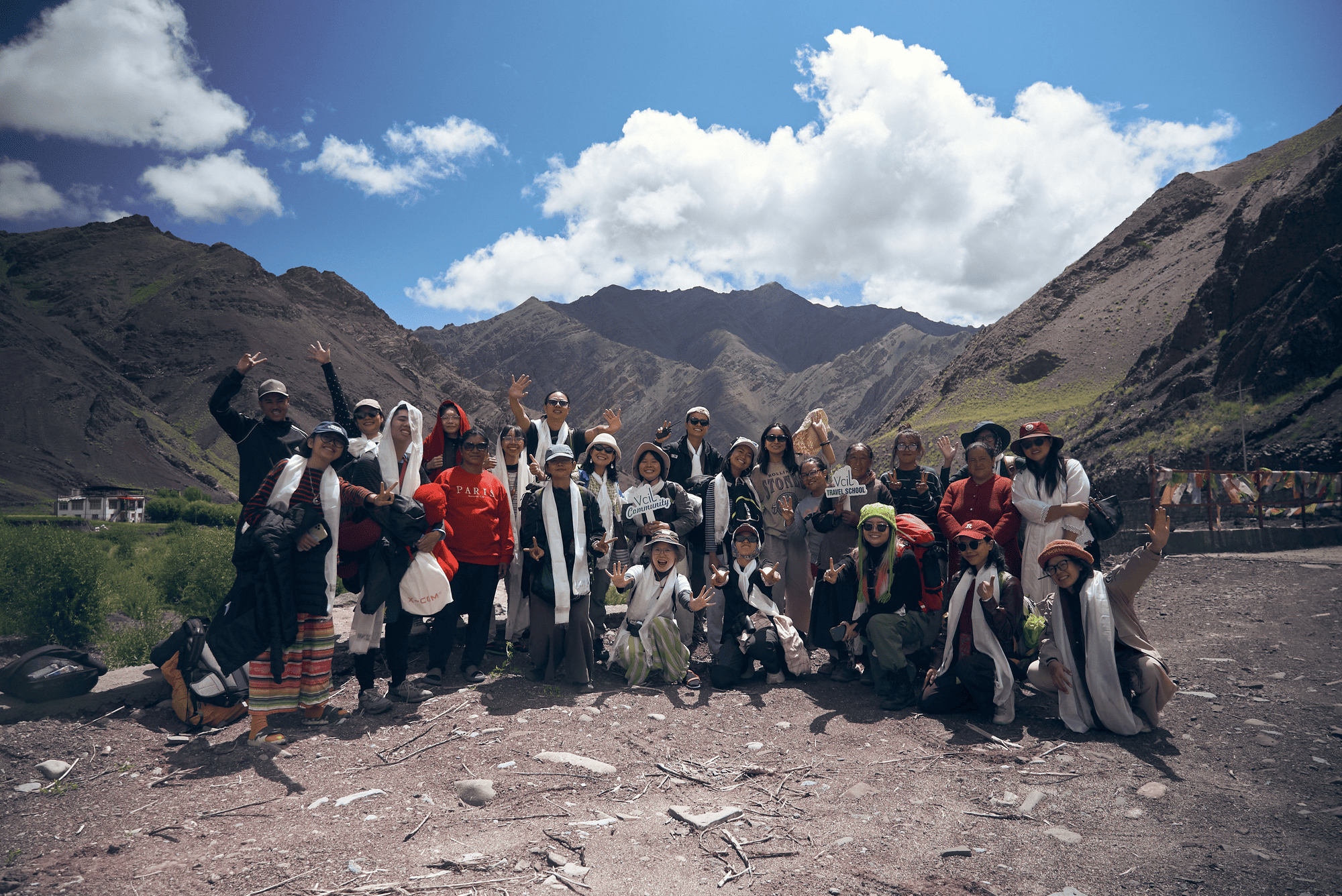


New Ways will invite scholars, experts, and people with practical experience to share about essential and familiar topics in life