You are using the member interface.
Log out of the member interface →

 ← Bản tin
Thông tin dưới đây chỉ dành riêng cho Hội viên Vcil
Để đảm bảo quyền lợi của bạn cũng như cộng đồng Hội viên Vcil, mong bạn đừng chia sẻ thông tin này nhé!
Bạn có thể chia sẻ thông tin về dự án dành cho công chúng bằng cách sao chép link này:
Since May 31st, the Vcil Community core team has been in Hanoi to begin a trip focused on connecting and expanding our network. This was a meaningful journey, providing the team with the opportunity to meet, exchange ideas, and learn from organizations and communities in the North, while also listening to their operational processes, goals, and the challenges they face. It was also an occasion for Vcil Community to better understand the Northern community and lay the foundation for future collaborations. This article summarizes the interesting meetings that took place during our week of "learning, playing, and connecting" in Hanoi.
—
( https://www.facebook.com/profile.php?id=61570099707415 )
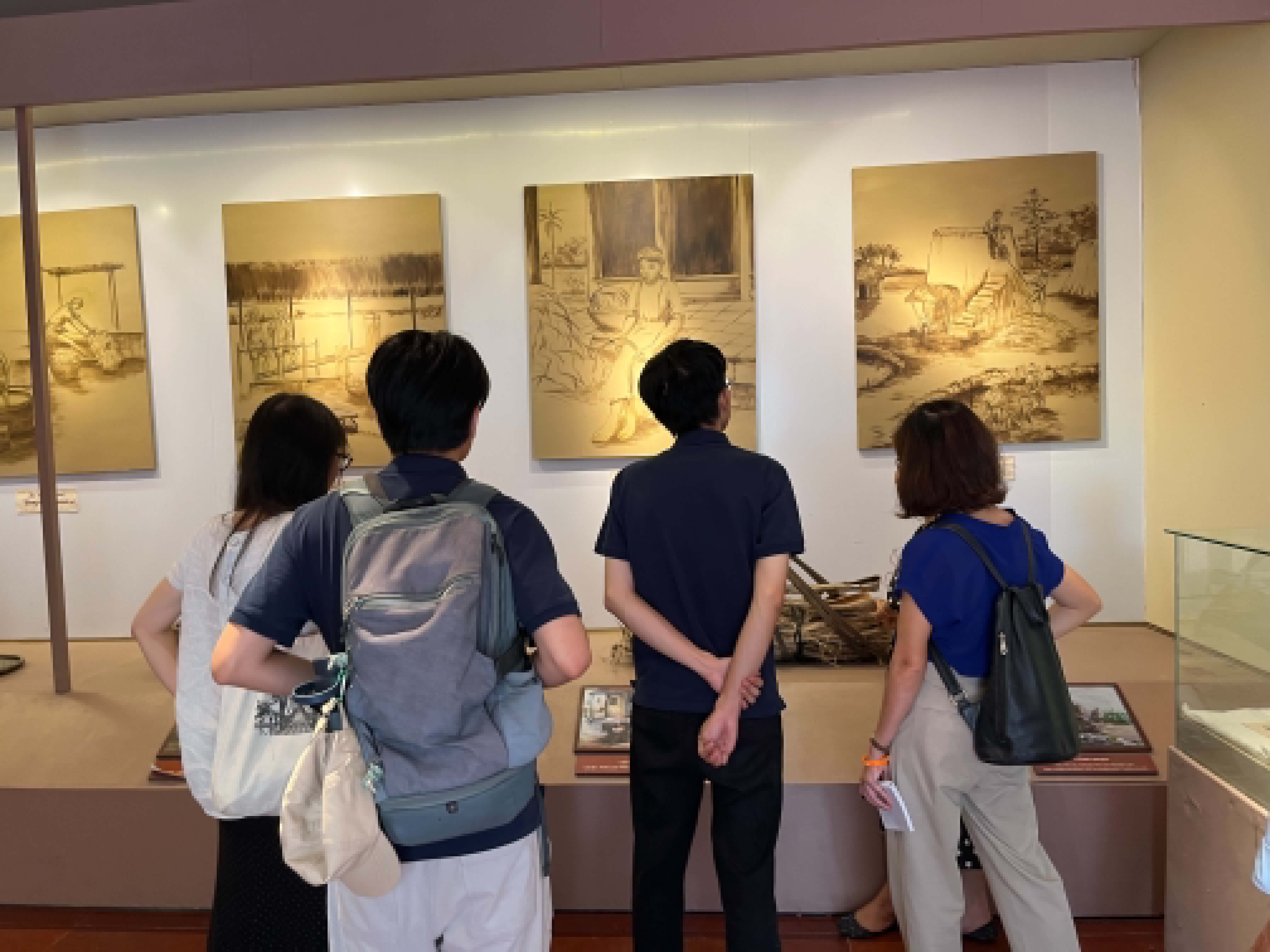
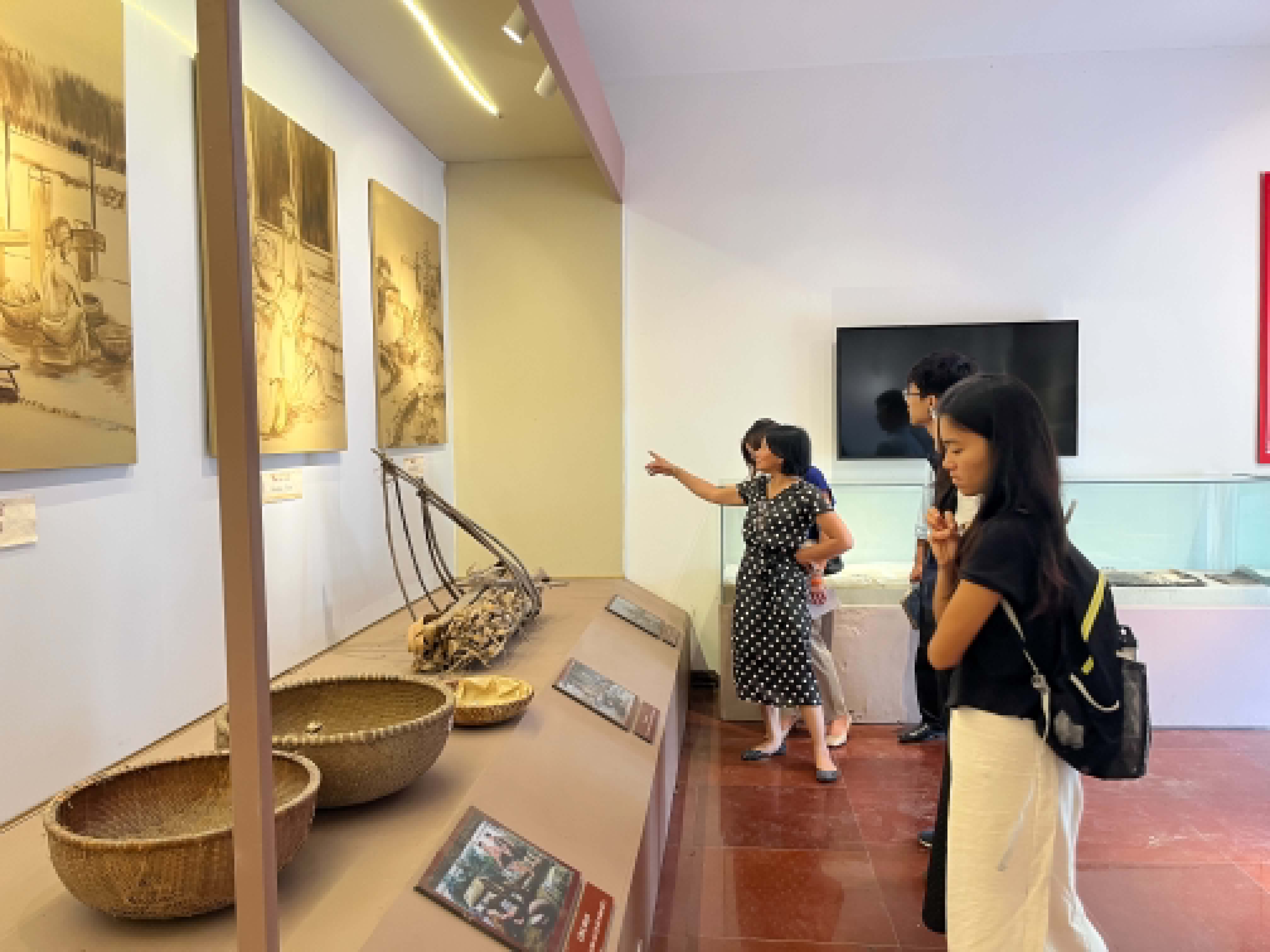
We met with the Ethnic Tourism in Vietnam: Changing Narratives team while they were hosting their exhibition, "Highland Tourism: Stories of Community Transformation." This exhibition is the culmination of a 2.5-year research project conducted by students and researchers from the University of Cumbria, VinUniversity, and Vietnam National University. The team worked closely with local communities to document the shifts in Vietnam's highlands driven by tourism. Funded by The British Academy, the project aims to amplify the stories, perspectives, and voices of ethnic minority groups in the Northwest. Collaborators included members of the Hmong, Muong, Giay, Dao, and Tay communities in Mu Cang Chai, Sa Pa, and Hoa Binh—areas that have experienced rapid tourism development in recent years. Tourism has not only transformed local economies but is also gradually reshaping cultural narratives, identities, and daily life.
At the exhibition, we viewed a selection of photos from over 700 Photovoice images captured by the local communities themselves. This project provides an opportunity and a space to listen to the voices of highland communities regarding tourism, livelihoods, and the daily changes experienced by the Hmong, Muong, Giay, Dao, and Tay people.
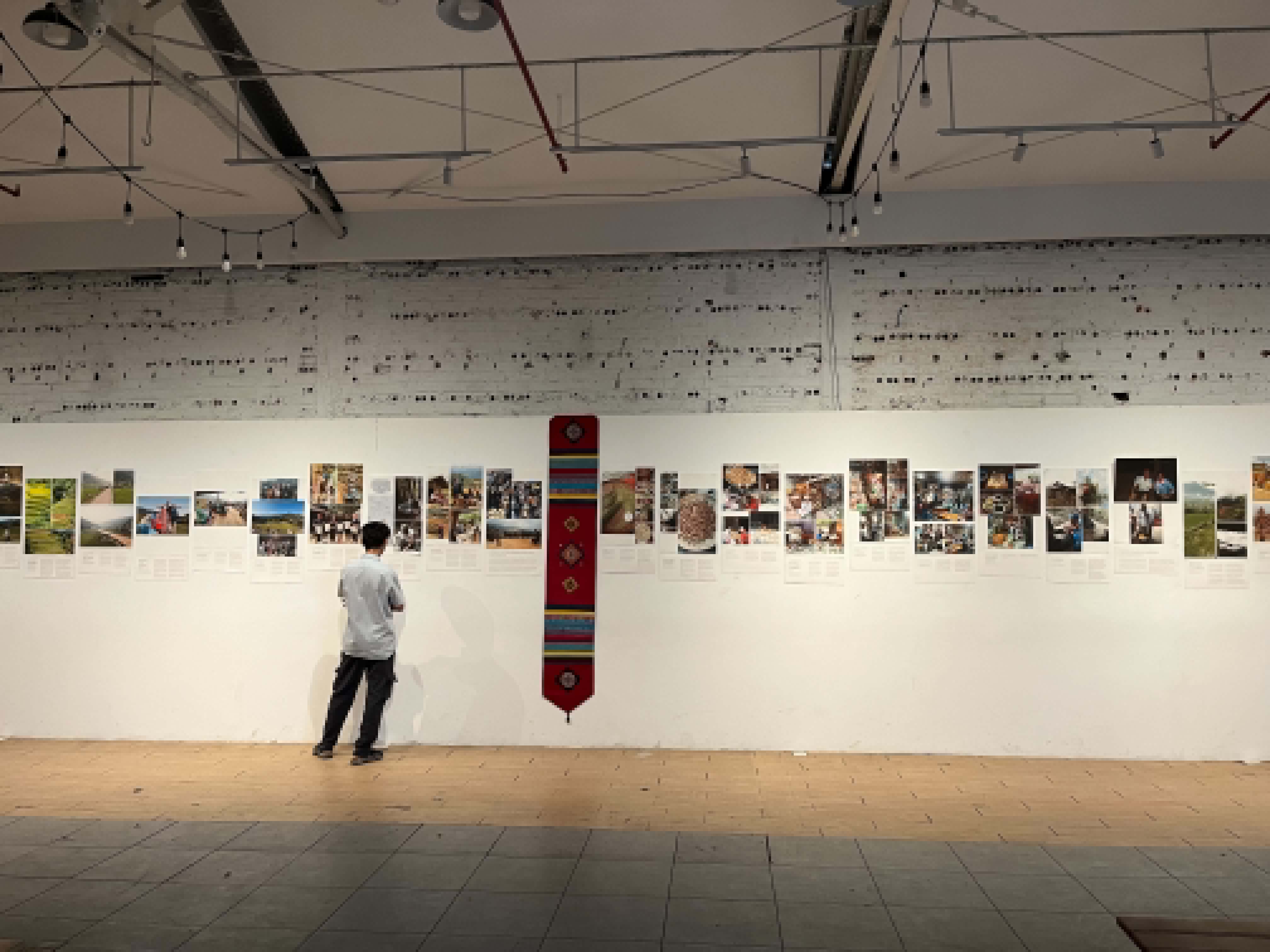
Vcil Community was welcomed by Dr. Tran Hoai, co-lead of the project, and Bao, the research assistant. Dr. Hoai shared their research approach: rather than studying the community, the team works *with* the community, where local residents become co-researchers. Through the "narrative photovoice" method, collaborators used various cameras to document their daily lives, then reflected on these images in group discussions, distilling them into the stories they chose to share here.
The project's approach is fascinating, as it places the community on equal footing, making them the primary subjects who tell diverse stories about their own homes through the lens of tourism. Through these stories, we saw how tourism quietly integrates into daily life: incense making, Dao Nom script, drone piloting skills, and the growth of homestays. These developments gradually alter both the landscape and local habits, as houses encroach upon terraced fields—a familiar scene now fading into memory. These are stories of opportunity and loss, of pride and change, all told in the voices of those living it.
During this meeting, Vcil also had the opportunity to learn more about the development of community-based tourism in the North and the varying approaches taken by different stakeholders. Some communities are supported by NGOs, others have seen tourism emerge from the efforts of passionate local guides, and some are backed by government agencies to implement community tourism models. Each approach yields different results, and the progress of these communities varies accordingly.
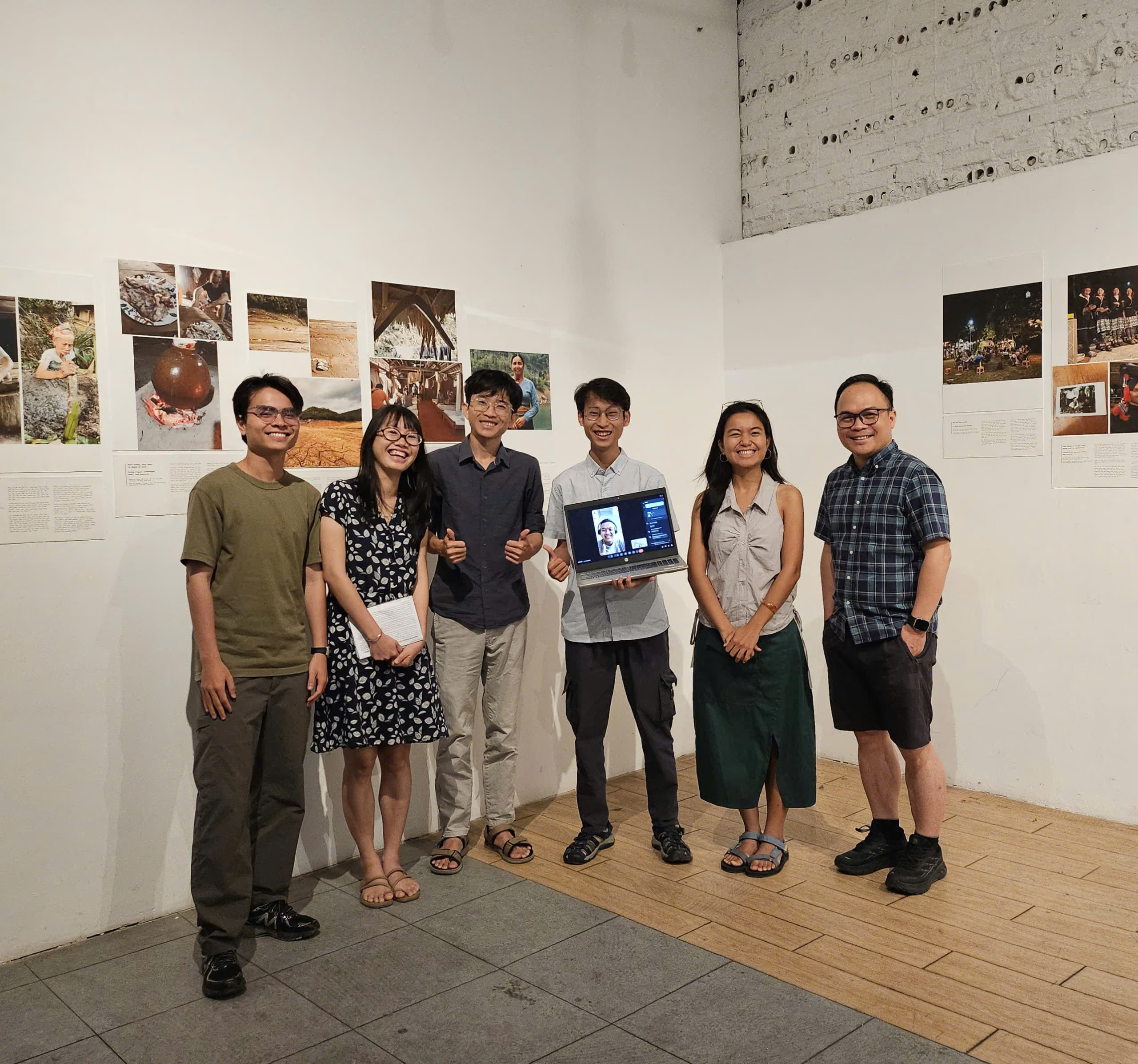
Finally, Vcil Community shared our mutual interests in the tourism industry and our experience with regenerative tourism through XomTour. The academic and research insights from Ethnic Tourism in Vietnam: Changing Narratives will be highly valuable and complementary to XomTour and other communities interested in regenerative tourism. Through this, XomTour, Vcil Community, and the research team held preliminary discussions regarding potential future collaborations.
During this trip, Vcil Community had the opportunity to meet Nguyen Vu Hai, who is well-known for his walking tours and study trips in Hanoi.
Hai describes himself as a cultural practitioner focused on place and a "walk artist" with a background in urban studies and community development.
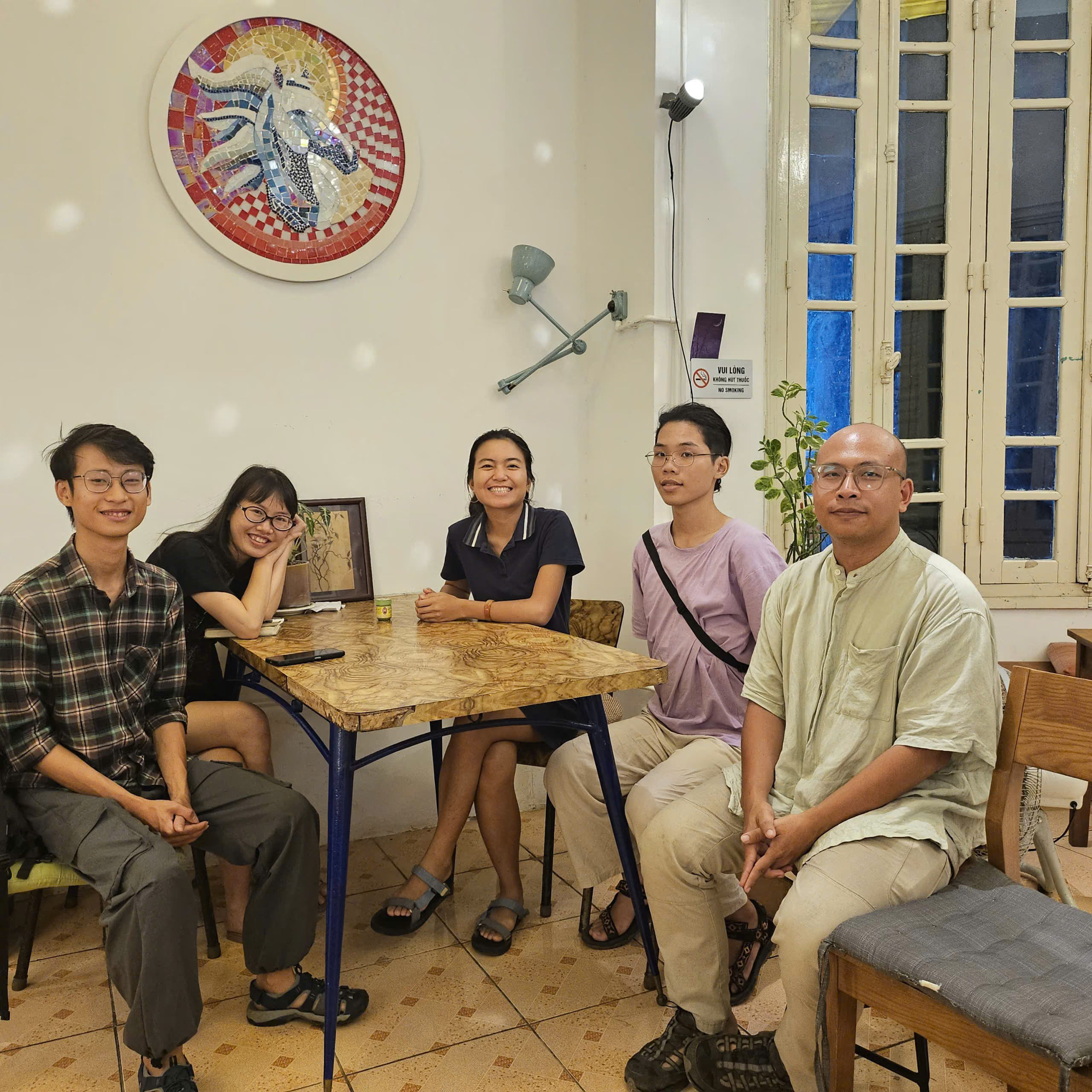
Born in a peri-urban village in Hanoi, Hai has spent many years working with various ethnic communities across Vietnam. The rapid changes in his home area around West Lake, combined with his experiences witnessing how local communities assert their cultural identities, led him to focus on the bond between individuals and their land. His practice revolves around storytelling, daily activities, the sense of belonging and disbelonging, memories of place, and urban history. Hai expresses his creativity through various forms, including walking, research, group activities, storytelling, and mapping. Consequently, his walking and study programs attract many Hanoi residents.
His recent programs often focus on the changes in Hanoi, especially in the context of the city becoming a "massive construction site" with numerous ongoing projects.
For example, the "Delathanh" walking tour ( https://hainv90.wordpress.com/2026/02/25/delathanh/ ) is a walk through the construction area on De La Thanh Street, centered on the structure and deconstruction of living spaces. The tour observes the area while construction is underway, capturing the shifts and adaptations happening in real-time—like observing a body undergoing major surgery, where cells are being discarded and adapting simultaneously.
The “River’s Traces – City’s Soul” tour is a storytelling walking journey that follows the buried path of the To Lich River from the French colonial era. Using foundational urban knowledge, eclectic archives, and layered maps, participants trace the river’s former course while reflecting on the land where they were born and raised. The tour is a long-form narrative by Hai, serving as a space to discuss how we remember and connect with our city.
Beyond his personal practice in culture and the arts, Vu Hai collaborates on urban education programs, urban and ethnographic research projects, and community development.
Noting many similarities in our approaches to XomTour, we also held preliminary discussions regarding potential future collaborations.
This may be one of the most impressive initiatives Vcil Community has had the opportunity to explore. HEPA is a nature reserve in Ha Tinh. To Kien is the daughter of Tran Thi Lanh, the founder of HEPA, and the storyteller behind the reserve’s origin and development.
The birth of HEPA is tied to the history of floods and landslides in Ha Tinh. These phenomena were caused by illegal logging and the reckless exploitation of headwater forests, which left behind barren hills and depleted soil after decades of extraction. Natural disasters were merely the inevitable consequence of these actions.
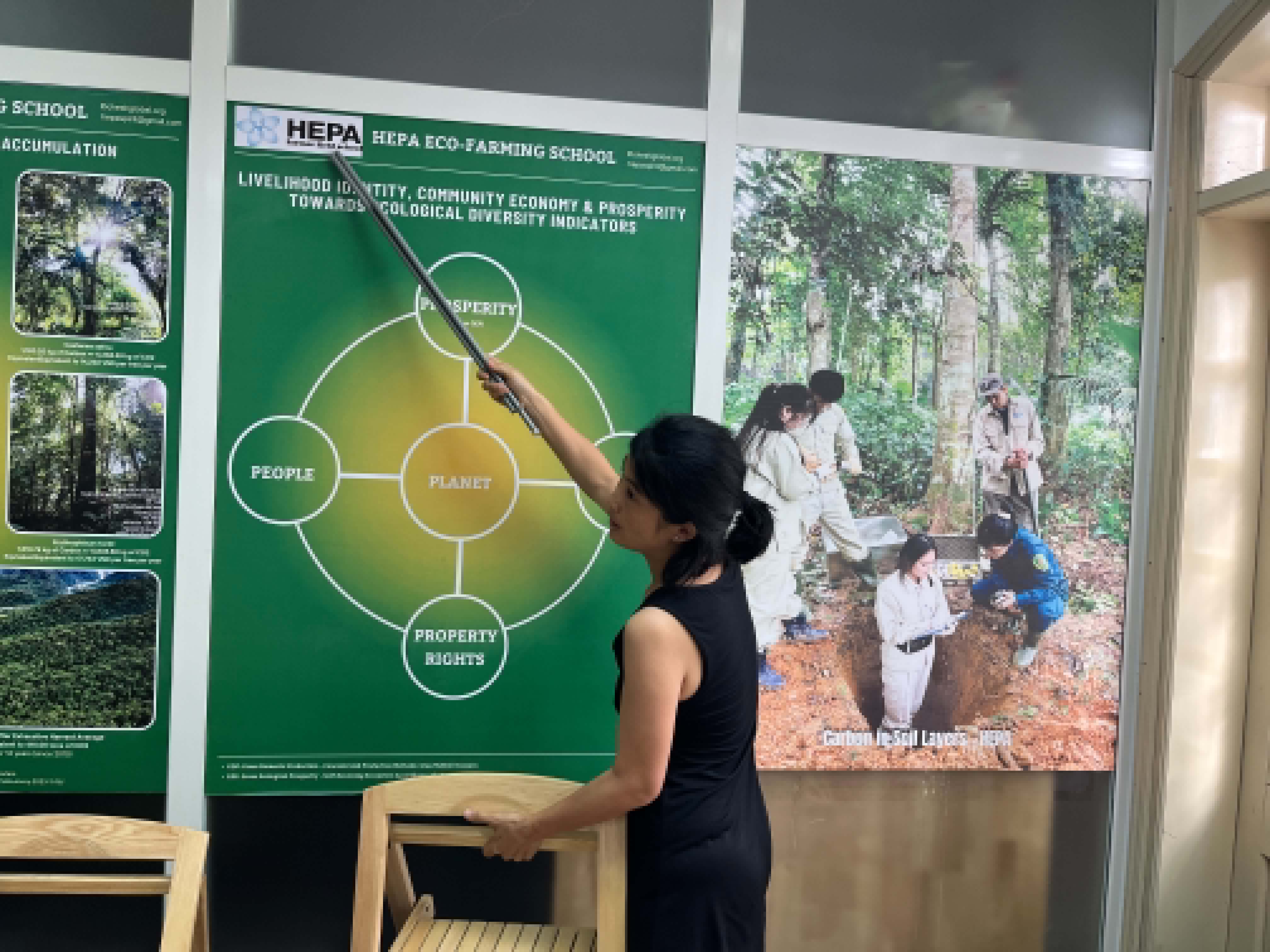
Faced with this reality, Ms. Lanh—who specialized in social impact assessment and studied Human Ecology in the U.S. in 1986 with a desire to contribute to a better society—decided to establish HEPA to conserve the forest. She drafted proposals for the local government in Ha Tinh, securing the rights for HEPA to protect a vast 500-hectare area. After 20 years of implementation, HEPA has successfully restored every inch of soil and every stream, building a natural headwater forest ecosystem spanning over 500 hectares. This is also a place where the community learns to live in harmony with the forest, utilizing solar energy, water, and wind for farming and daily life.
HEPA is planned and designed based on the theory of applied Human Ecology and Ecosystems, drawing on the indigenous knowledge of ethnic minorities. The forest is divided into three main zones: sacred forest, enrichment forest, and agro-ecological/livelihood zones. Each area carries a message about the harmony between humans and nature. Forest cover has increased from 39% to over 99% after 23 years, featuring many large native trees and rich biodiversity.
Today, HEPA is actively involved in education, training the younger generation to continue the work of forest preservation and protection in their local areas. Every year, HEPA welcomes numerous groups of students and researchers from Europe, East Asia, and Southeast Asia to study the local ecology and learn practical experiences in developing regenerative agriculture.
HEPA’s success stems not only from one woman’s dedication but also from the consensus of the entire community. A co-management method is applied: everyone monitors, benefits, and takes responsibility together. The reserve is not just a place to protect the forest and restore the natural ecosystem; it has become a "green school" for farmers and various interested social groups. Tens of thousands of farmers, researchers, and students from many countries have come here to learn and share experiences.
Inheriting her mother’s passion and respect for nature, Ms. Kien has followed in her footsteps to develop HEPA while working on research, policy analysis, and land-use management. She is particularly interested in local initiatives for forest land governance, as well as strategies for empowering and developing young indigenous and ethnic minority ecological farmer leaders under the LISO Alliance.
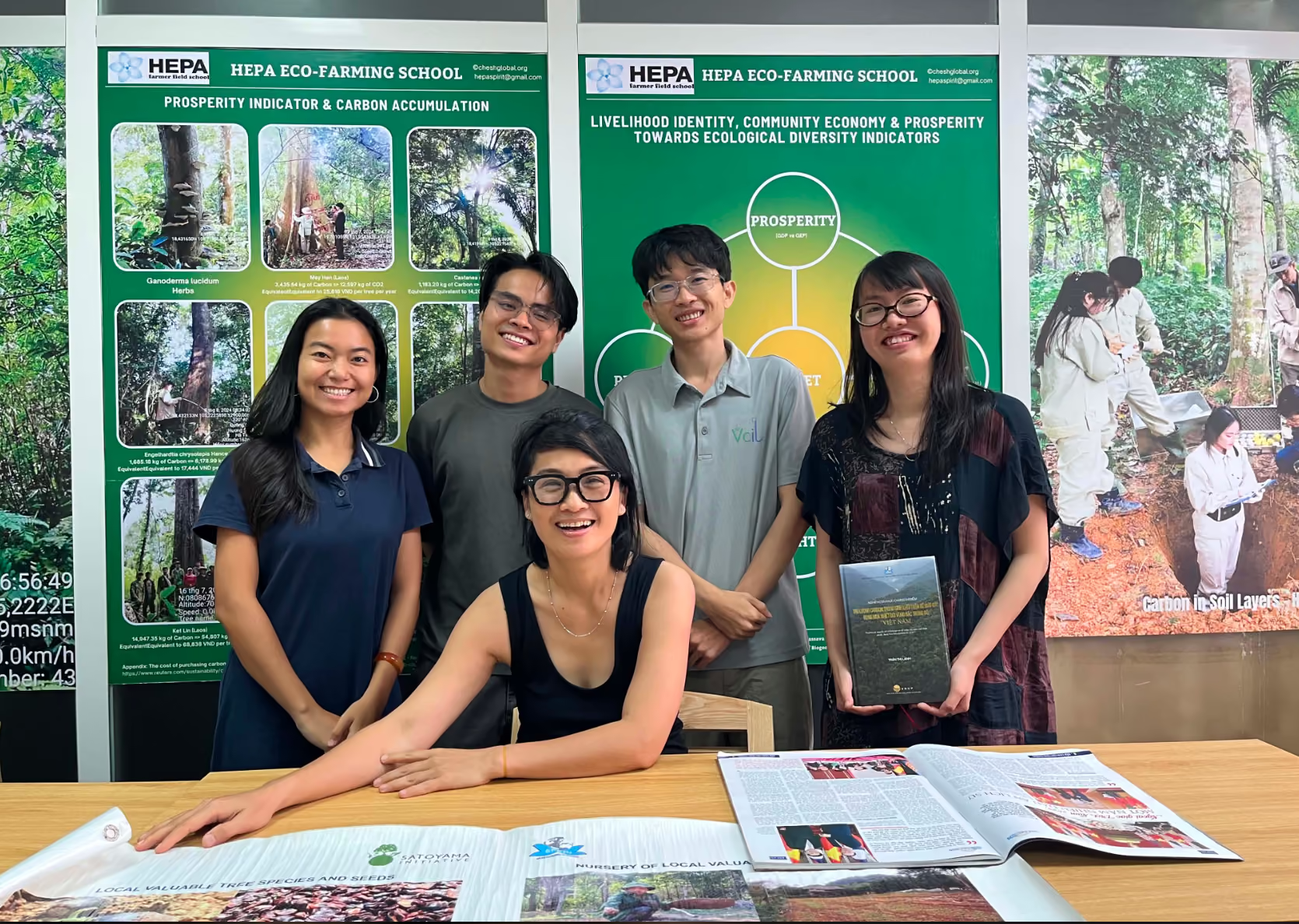
We met her through the INEB network, where both Vcil and HEPA are members. With her extensive experience working with the Thai people, she has learned the principles behind their success in alternative movements and community development. She offers a sharp analysis of the Thai people: their ability to connect civil society and build mutual support networks is exceptionally strong, whereas this remains a weakness for civil activities in Vietnam. Consequently, civil society in Thailand is very active in advocating for citizens' rights, such as farmers' rights and seed conservation. Because the community is willing to support one another and work together, civil movements in Thailand are very robust. This is a point we need to learn from them.
Additionally, we heard about her experiences working with various stakeholders, issues surrounding carbon credits, and insights into working with indigenous communities—specifically how to learn, co-create, and join hands with indigenous people to protect the forest. These were truly valuable lessons and experiences we gathered during our meeting with her.
Preliminary collaborations were also discussed. XomTour is expected to conduct a field survey at HEPA in mid-July to further explore and learn from this model.
You can read more about HEPA at: https://nongthonviet.vn/phung-duong-thien-nhien-xay-dung-nong-nghiep-sinh-thai-200.html https://vneconomy.vn/hoi-sinh-rung-gia-gieo-hat-nhan-thuc-xanh.htm
Genesis is the first Green School in Vietnam to become a member of the Center for Green Schools (CGS) – a global community for sustainable schools. Genesis’s educational philosophy honors the original values of nature and the self, aiming to cultivate a generation of young people who are responsible for themselves, constantly curious about the world, and committed to living humanely while loving and respecting our Green planet.
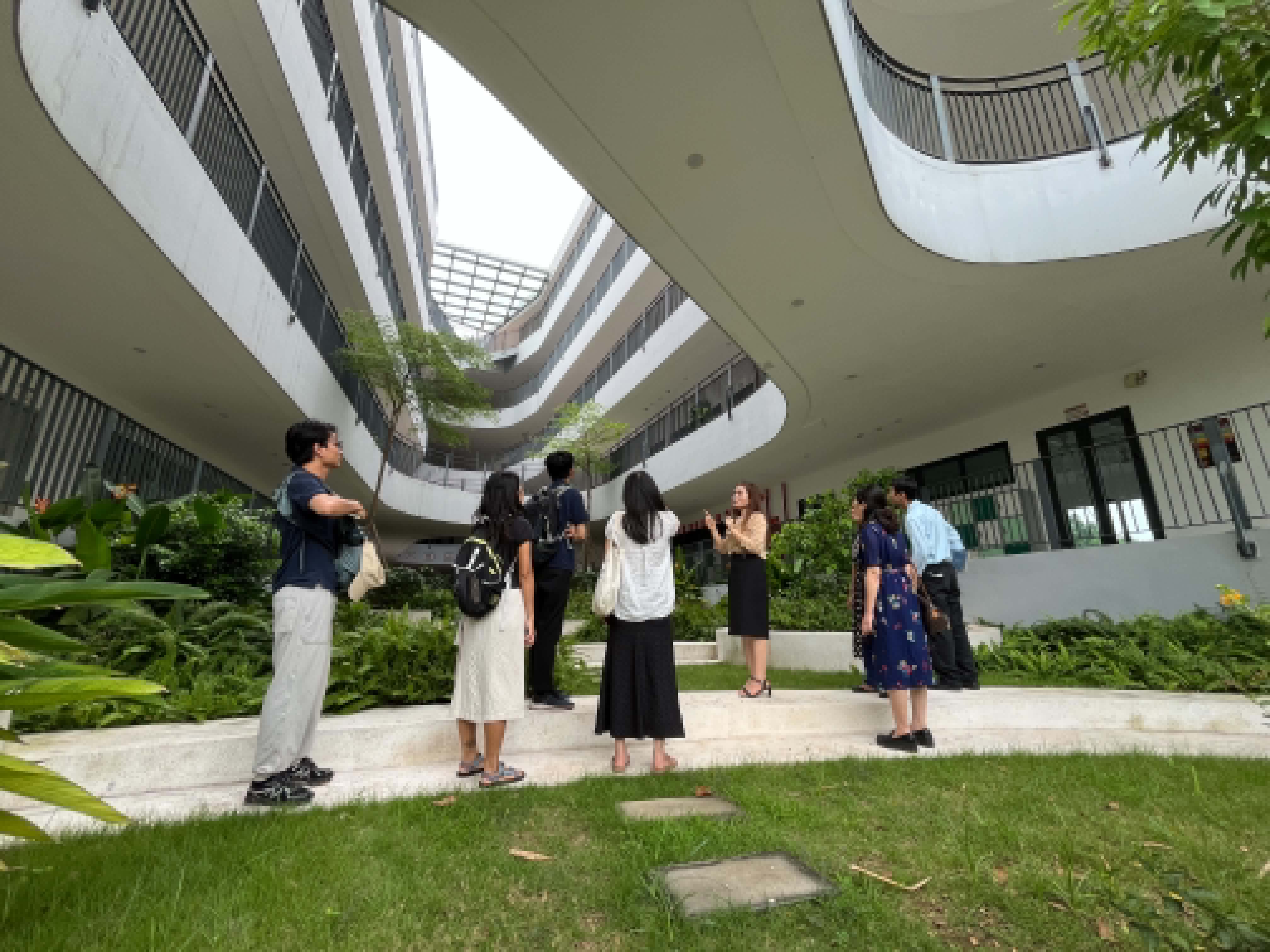
Beyond mere slogans, we were truly impressed by how this school is step-by-step building an educational ecosystem involving students, teachers, parents, and impact-driven businesses. They have created a diverse, nurturing environment where students can understand themselves and the world, gaining exposure to real-world work from an early age.
The school focuses on sustainable green education, ensuring that every activity and design choice promotes a green lifestyle. Students are educated on nutrition and physical health; they proactively say no to plastic bottles, fast food, and fast fashion, while practicing energy conservation.
The school does not just educate students; it actively invites parents to learn, understand, and contribute to building the school community. Parents serve as vital connectors, providing students with internship opportunities and learning from real-world mentors, as they share their own expertise, connect resources, and support the school’s educational mission and student learning.
The school campuses are designed with 60% greenery, featuring gardens for student experiments and soft, curved architectural lines. The statues placed throughout the school reflect a harmony between Eastern and Western civilizations. We were guided by the Vice Principal on a tour of the facilities, where we heard stories about the students' creative initiatives and experiments.
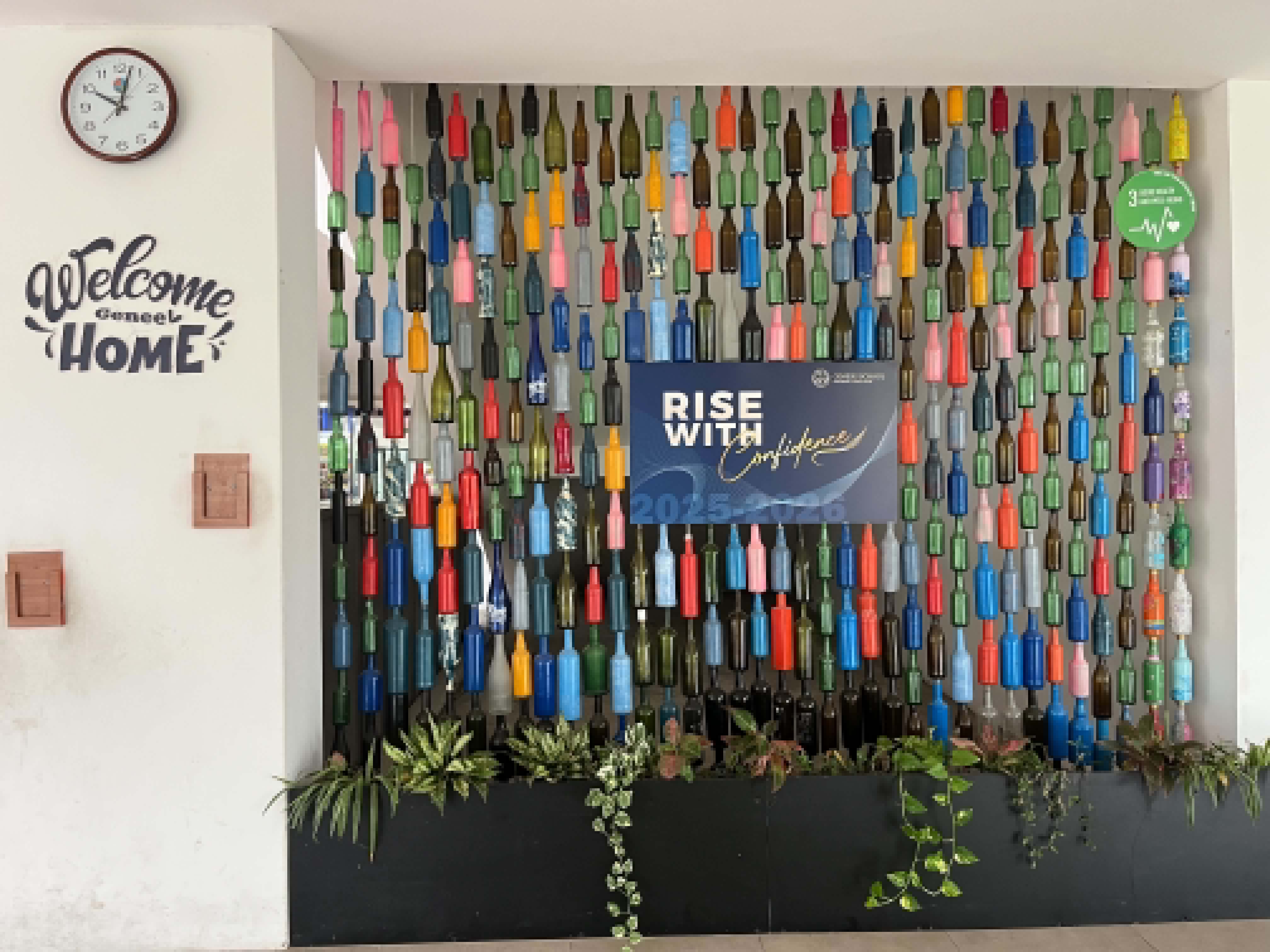
What impressed us most was how Genesis showcases the creative products and projects of its students throughout the campus. We heard about the glass wall, where families contributed discarded glass bottles to be mounted on the wall. We also learned about a black soldier fly farming project that a student experimented with for months, and a piece of art created by students who collected forest materials to recreate the school logo.
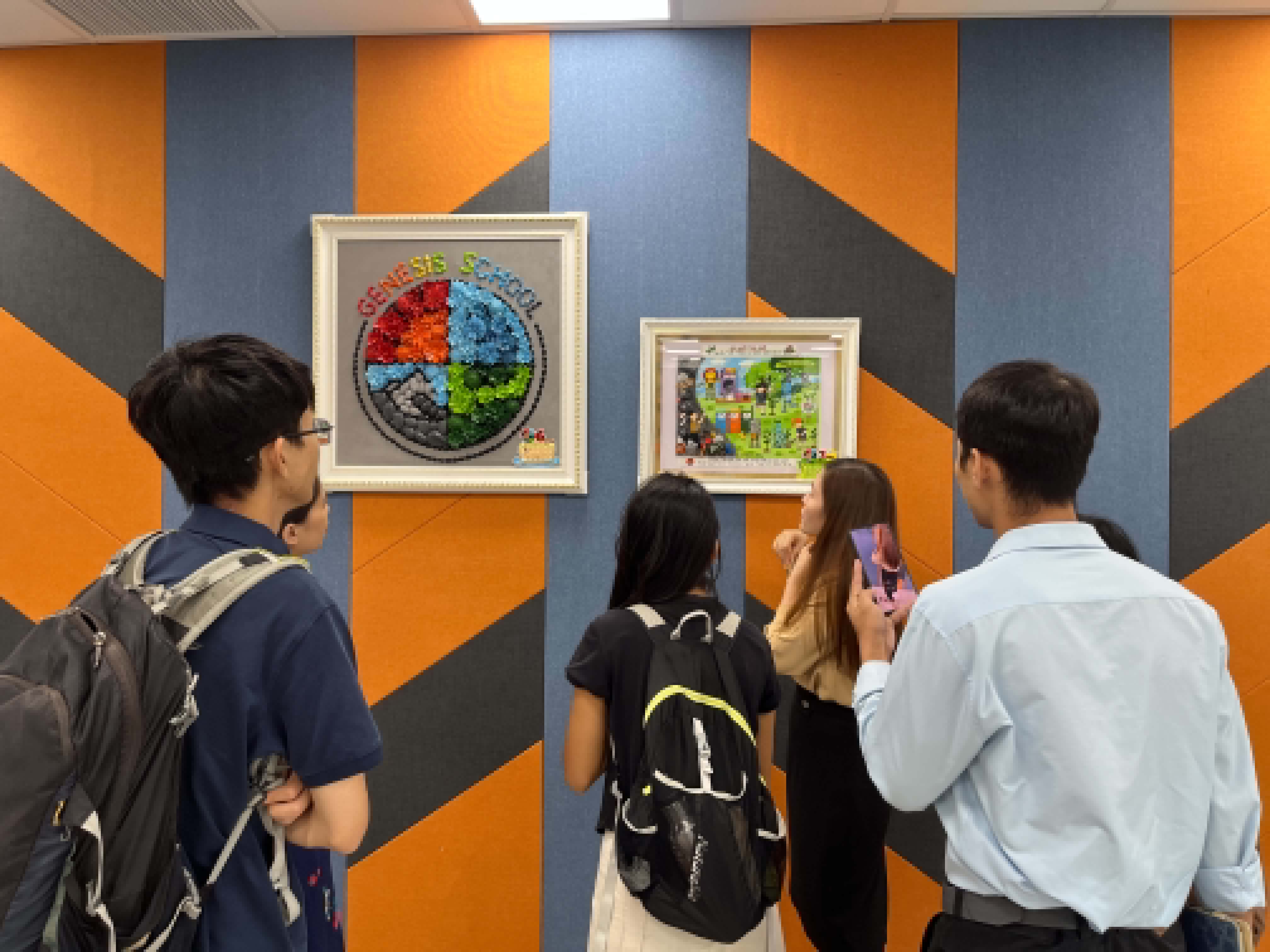
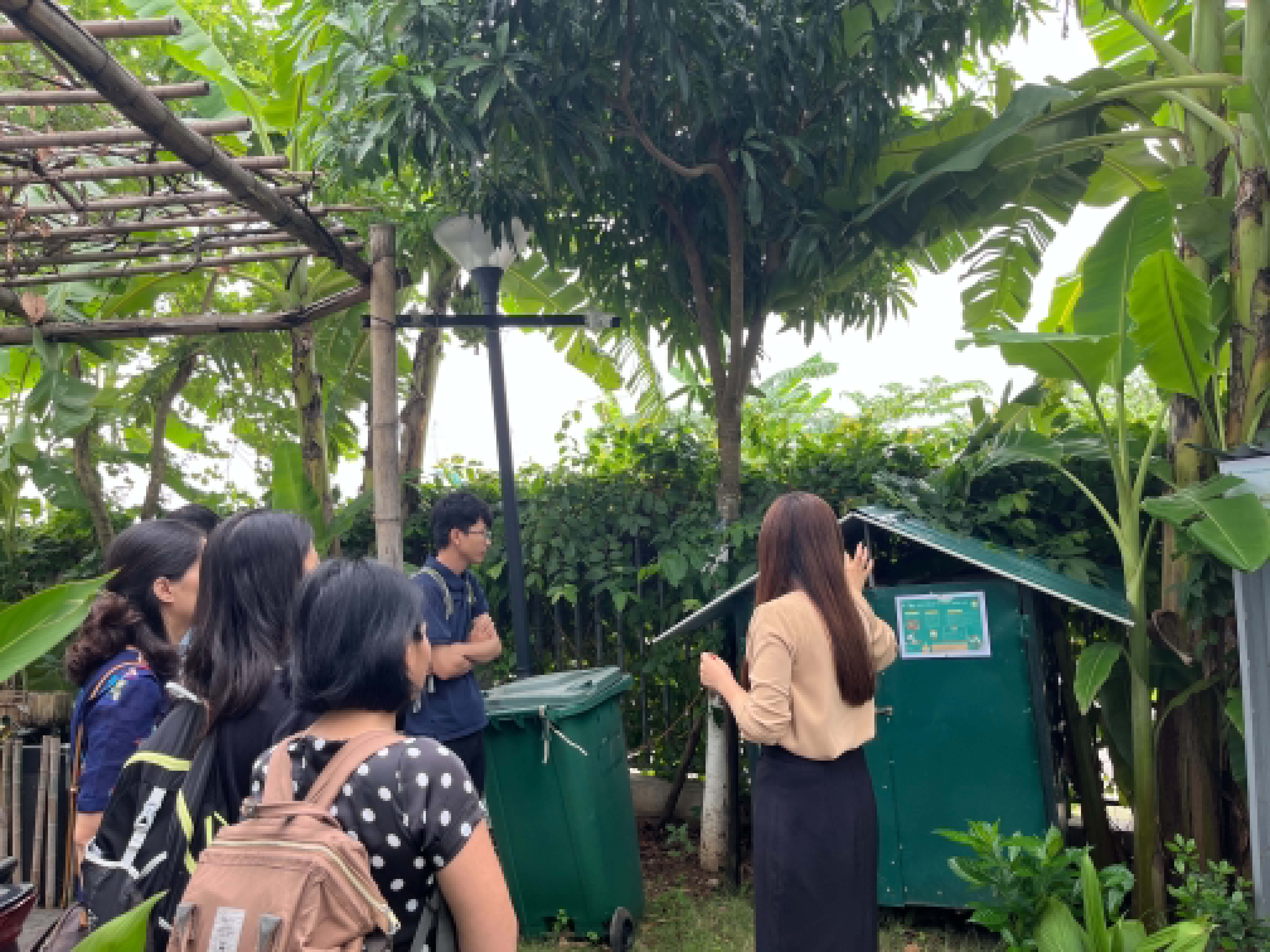
Through this visit, the school shared its desire to organize deep, impactful learning activities rather than trips that lean too heavily toward tourism, and they expressed interest in collaborating with XomTour and Vcil Community in the future. During this visit, we also held preliminary discussions about working together in the future.
Ms. Mai Chi led us to a village communal house located right next to West Lake. She began her story with four familiar lines of poetry:
“The wind sways the bamboo branches
The bell of Tran Vu, the rooster’s crow at Tho Xuong
Mist swirls through the thousand fogs
The rhythmic pestles of Yen Thai, the mirror-like surface of West Lake”
She emphasized that the "rhythmic pestles of Yen Thai" refers to the very place where we were sitting: the sound of pounding *do* bark (the raw material for papermaking) from the traditional Yen Thai craft village, right inside the Vong Thi communal house—a place of worship and community life. Nearby is a memorial for fallen soldiers, and within the same grounds lies the space where Zó Project displays its work and tells its story.
We were introduced to this complex as a result of the Capital Law, which promotes public-private partnerships. Within this historical and cultural site lies a space dedicated to the traditional papermaking craft of the ancient Yen Thai village. Zó is a social enterprise established to preserve and revive this traditional craft, while also researching sustainable and creative ways to produce handmade paper.
By reviving traditional handmade papermaking, Zó preserves the indigenous knowledge of Hanoi’s people and provides a livelihood for artisans who had previously abandoned the craft because they could not compete with unsustainable, mass-produced industrial paper.
Beyond that, Zó researches and develops new papermaking techniques based on indigenous knowledge and traditional experience to integrate handmade paper into modern life. We saw clear examples of this in notebooks, invitation cards, product packaging, high-quality drawing paper, and other handcrafted items. Dó paper has even become a product used in diplomacy, particularly cultural diplomacy.
What impressed the Vcil Community is that when harvesting Dó or other papermaking trees, the local people do not cut down the trees; they only harvest the bark. This avoids deforestation, respects ecological limits, and ensures sustainable harvesting. This directly creates livelihoods and helps protect the land and forests in areas connected with the Zó Project.
Additionally, Zó is focused on heritage education by partnering with schools and hosting workshops on handmade papermaking to raise awareness and inspire future generations, as well as those interested in preserving and developing traditional crafts and indigenous knowledge.
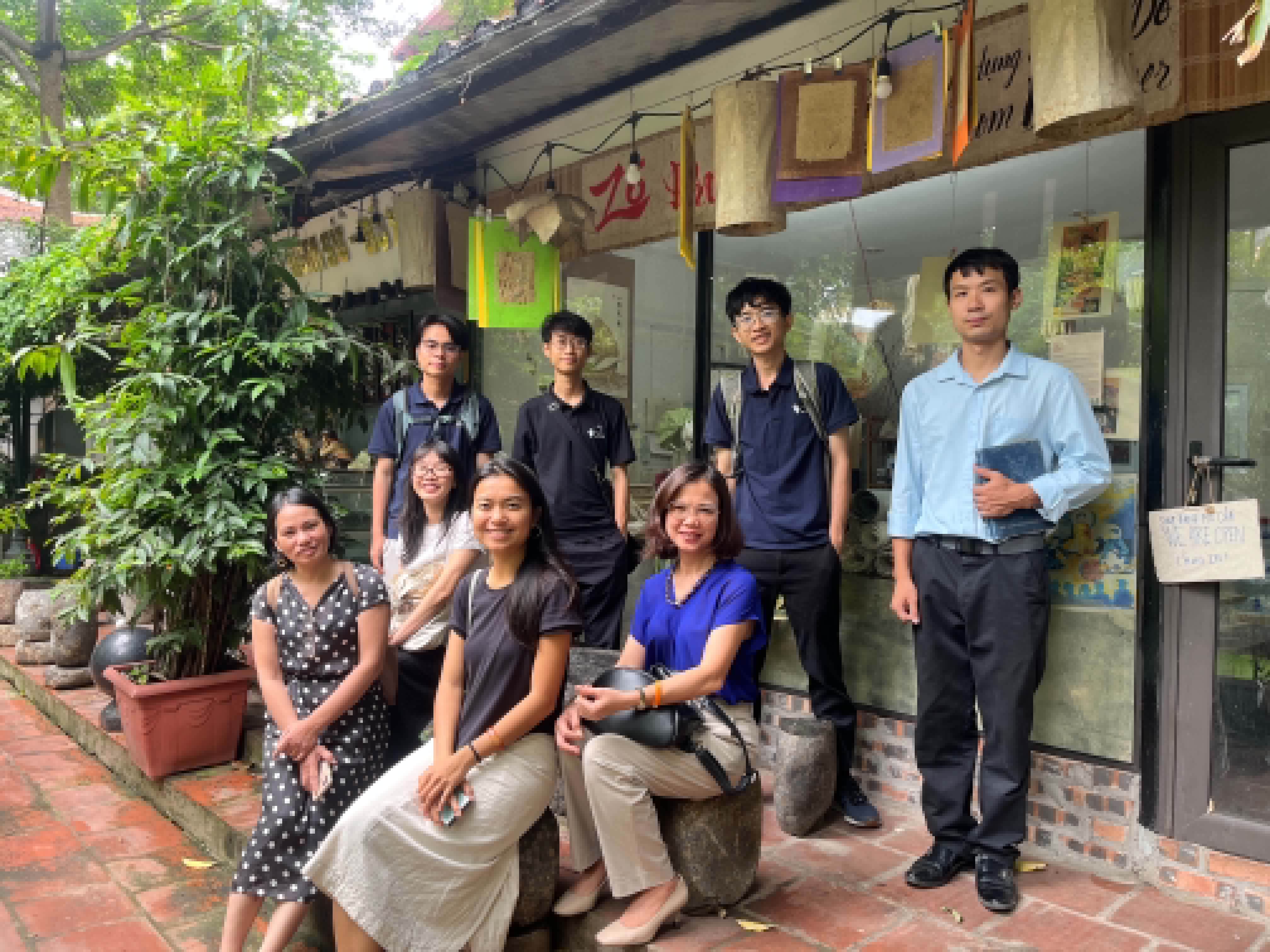
In just one morning, we were completely impressed by everything we encountered. Zó’s story is a prime example of social entrepreneurship and innovation, especially as young people become the bridge between the past, present, and future to build a meaningful career.
We met Ms. Mai Chi in Hanoi after several previous interactions online and at the Vcil Living Lab. Meeting her felt more like a learning journey than a typical meeting. Thanks to CCD’s extensive network, the Vcil Community had the opportunity to meet the management team of Genesis School and the Zó Project—two outstanding and fascinating initiatives we were able to explore.
After visiting those two projects, we met Ms. Mai Chi at the home of a mutual friend. The very space where we met is intended to be used for community activities.
Here, we enjoyed Thanh Tri steamed rice rolls and heard about her personal story, her family, and her dreams and aspirations for herself and the community. We were also fortunate to hear about policy shifts, particularly regarding big data, technological development, and future forecasts.
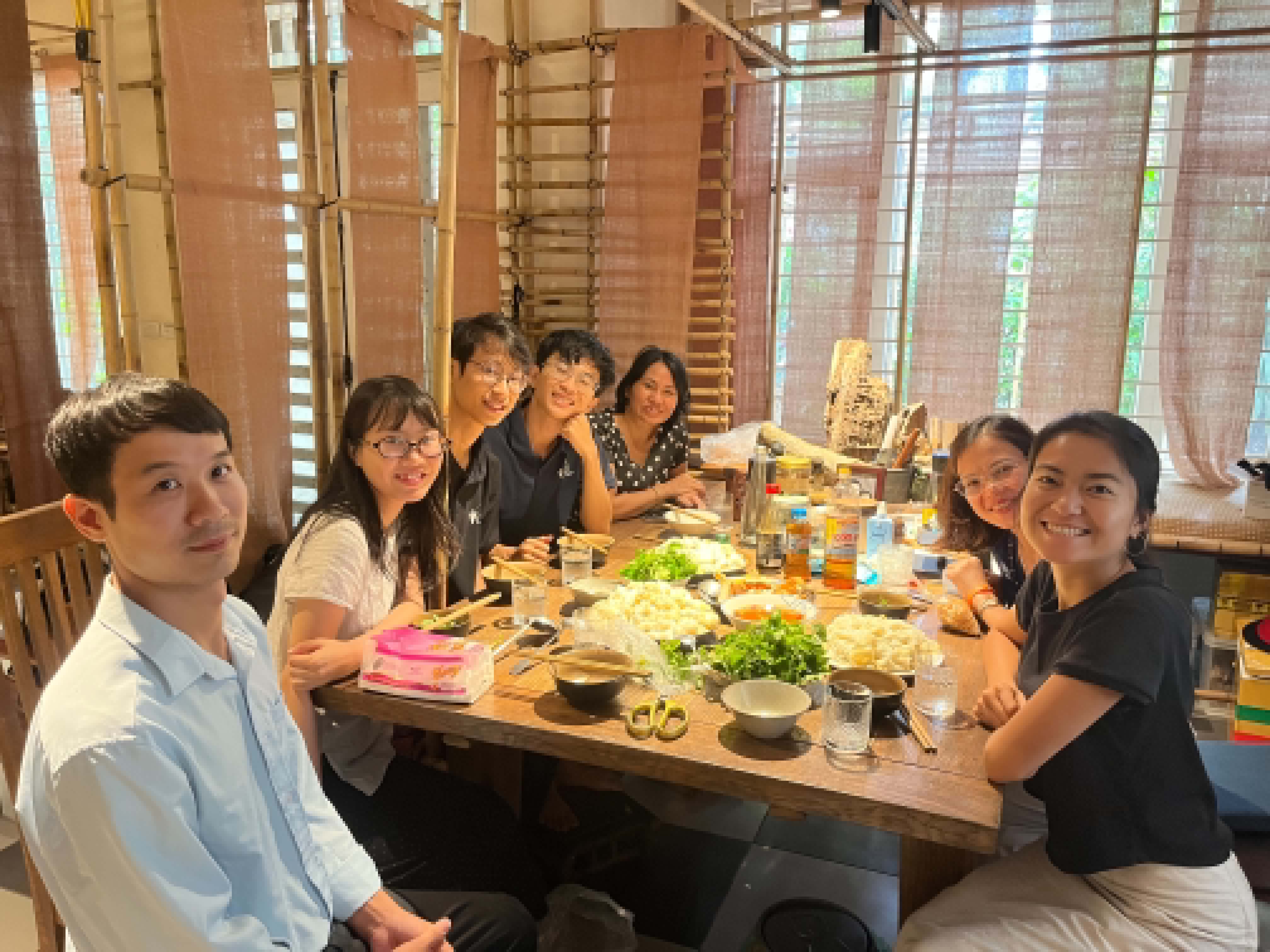
Drawing from her experience working with children and her deep interest in nurturing future generations, Ms. Mai Chi founded the Center for Children and Development (CCD), an organization established with a profound belief in the role of education in child development. CCD’s activities focus on creating spaces and providing training in foundational skills and knowledge so that children can understand themselves and reach their full potential.
During our time there, she also shared more about her needs and desires, and we held preliminary discussions regarding potential future collaborations.
( https://bookhunterlyceum.org/book-hunter-chuyen-cua-chung-toi/ )
Our meeting with Mr. Le Nam and Book Hunter stemmed from shared interests in "niche" books that challenge the current education system and development paradigm.
Book Hunter is an independent academic and creative community founded in 2011 with the mission of promoting critical thinking, fostering a spirit of self-study, and building a liberal knowledge community. Over more than a decade of operation, Book Hunter has created an open academic space through discussions, book publishing, and content creation rooted in deep, practical knowledge.
Book Hunter believes that learning is a lifelong journey that cannot be pursued in isolation, as knowledge is an infinite network connecting various fields. Each book produced by Book Hunter is the result of the self-study, deep research, and knowledge-sharing processes of its authors and translators. By accompanying community programs, Book Hunter continues to spread the sustainable value of knowledge, where every book gifted is not just a material object but a key to opening new horizons—sparking dialogue and deep reflection on literature and the human condition.
During this meeting, we had engaging discussions and learned more from Mr. Le Nam about the publishing industry in Vietnam, the challenges of starting a business, and lessons on "survival" when operating a business model with niche products.
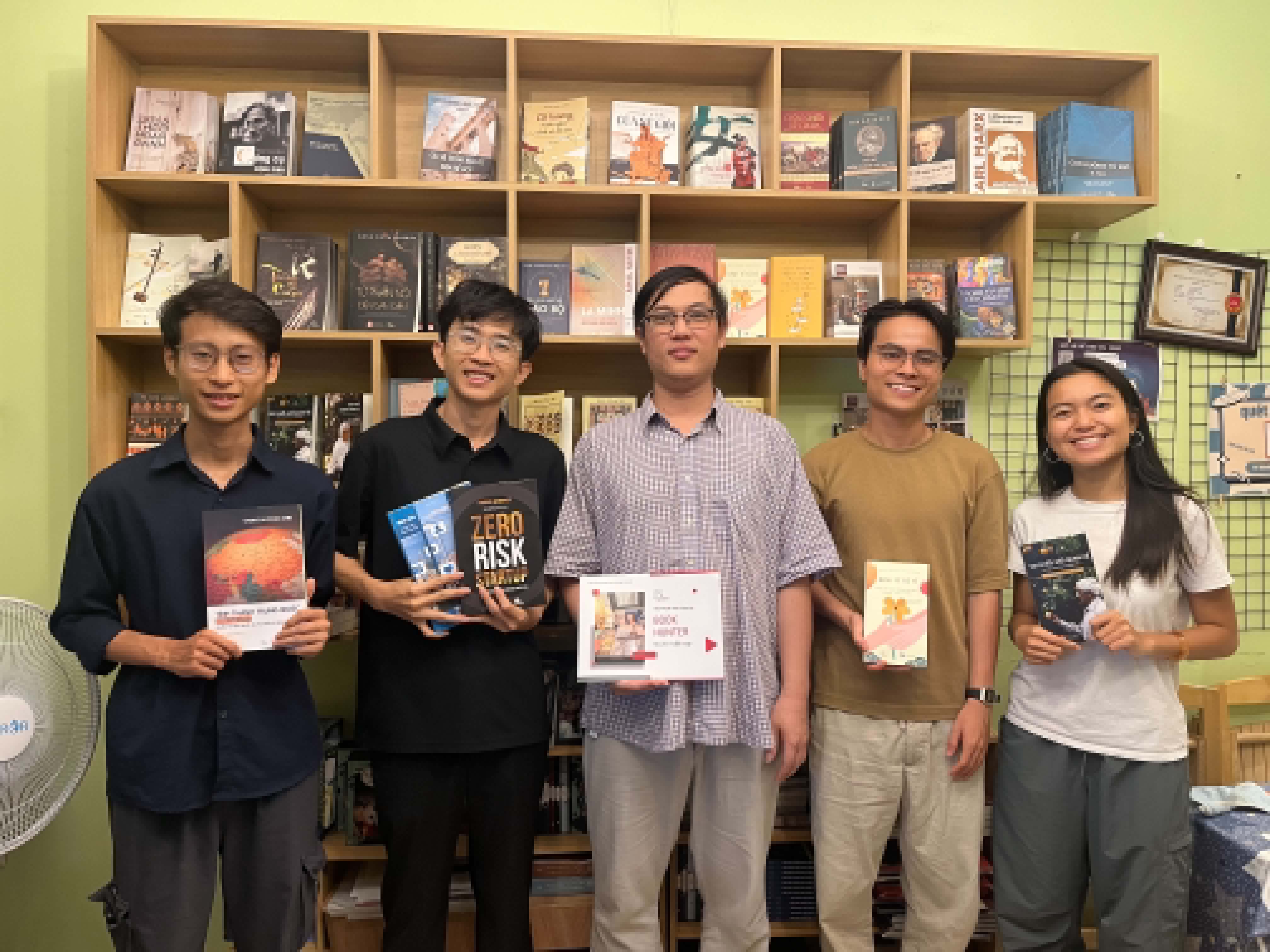
While we haven't discussed specific collaborations yet, we were delighted to connect with Book Hunter and invite Nam and his team to visit Da Nang and the local ecosystem fostered by Vcil Community. To mark this special occasion, Nam gifted Vcil Community several books translated and written by Book Hunter as a memento of our first meeting.
People often say, “You can’t rush Hanoi,” but for Vcil Hanoi members, a more fitting motto is, “When Hanoi has a group, we get it done.” During the core team’s visit to Hanoi and following our “study abroad” experience in Da Nang, Huong—an active member in Hanoi—stepped up to champion the Learning City movement. Just one day after proposing the idea, Huong and Phuong (another member) began working on a “Mini Learning City Hanoi” prototype while the Vcil team was still in town. This served as a valuable learning experience for the team as we prepare to officially join the nationwide Learning Festival taking place at the end of June.
Embracing the “think and do” spirit, Vcil members hosted various activities, including discussions, museum visits, and cycling trips, to immerse themselves in the learning culture of the Hanoi community.
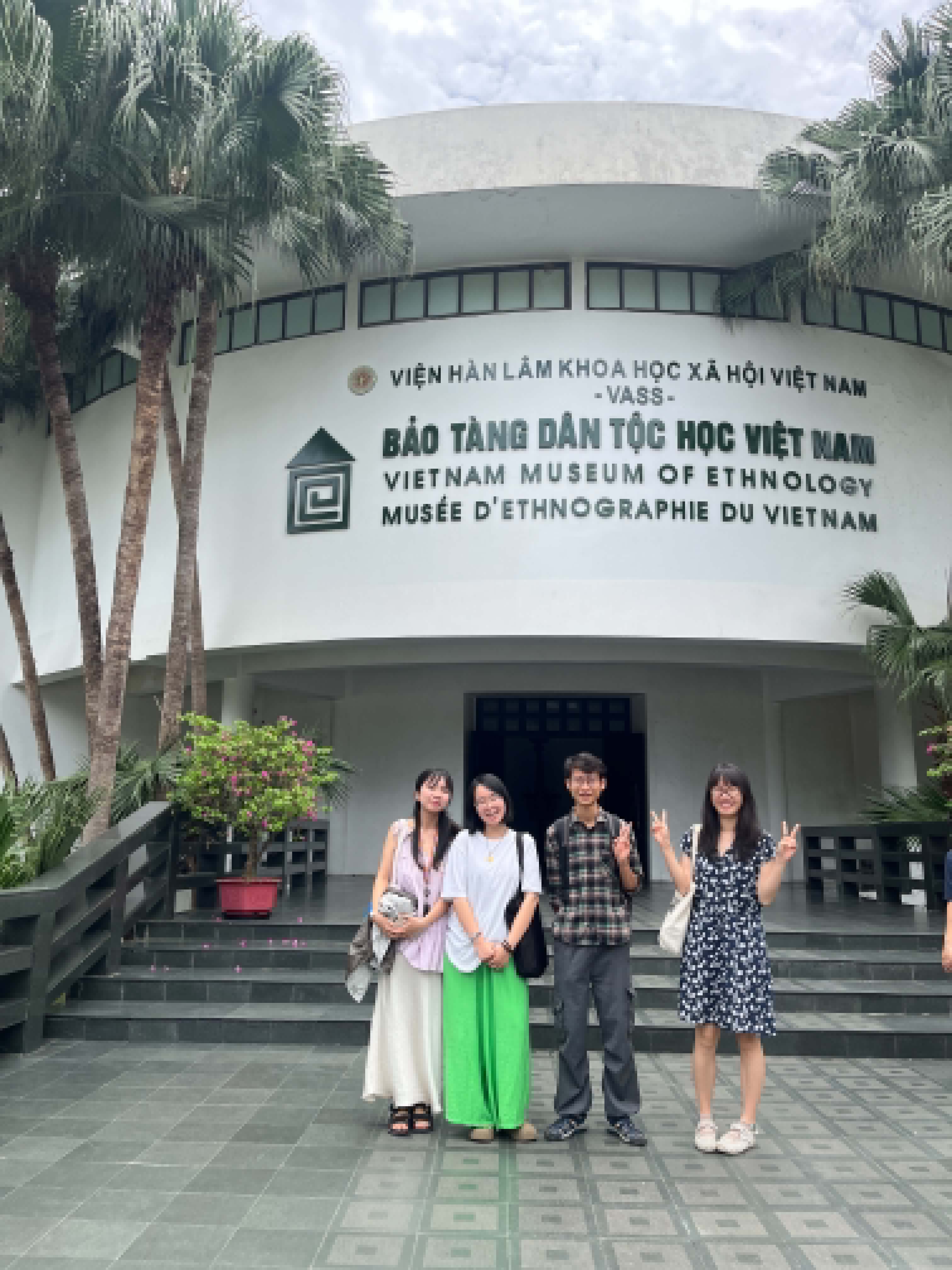
We were thrilled to participate in this kickoff event in Hanoi and look forward to more contributions, sharing, support, and participation from the Hanoi community.
In just one week, Vcil Community met with many individuals, organizations, and groups across Hanoi to listen to their stories and aspirations, and to learn from the people who live here. As a result, we feel more connected to this land and have a deeper understanding of its cultural and historical context. These are just the first steps toward our future collaboration and presence in Hanoi. We look forward to returning soon! We are deeply grateful for the connections, support, and opportunities that emerged during this journey to Hanoi.
Since May 31st, the Vcil Community core team has been in Hanoi to begin a trip focused on connecting and expanding our network. This was a meaningful journey, providing the team with the opportunity to meet, exchange ideas, and learn from organizations and communities in the North, while also listening to their operational processes, goals, and the challenges they face. It was also an occasion for Vcil Community to better understand the Northern community and lay the foundation for future collaborations. This article summarizes the interesting meetings that took place during our week of "learning, playing, and connecting" in Hanoi.
This article is for members only. Please log in to read more.